
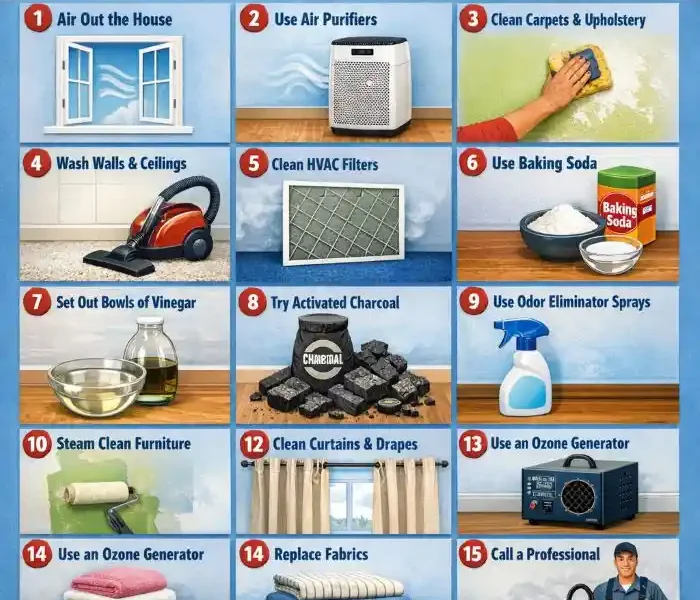
Smoke odor has a way of taking over a home.
Maybe it started after years of indoor smoking. Maybe it came from a kitchen flare-up, a fireplace issue, a nearby wildfire, or even a barbecue that got a little out of hand. Whatever the cause, the result is the same: that stale, sharp smell hangs in the air and clings to everything.
If you are searching for how to get rid of smoke smell in house, you are not alone. This is one of the most common indoor air quality problems homeowners deal with, and it can feel frustrating because normal cleaning often does not fix it. You can vacuum, spray air freshener, and crack a window, yet the odor still comes back.
That happens because smoke does not just sit in the air. It settles into walls, ceilings, carpets, upholstery, curtains, clothing, vents, and even tiny cracks around your home. The particles left behind are sticky and stubborn. They keep releasing odor long after the original smoke is gone.
The good news is that you can absolutely improve the smell, and in many cases, remove it completely. In this guide on how to get rid of smoke smell in house, you will learn practical steps that actually work. We will cover fast ventilation tricks, deep cleaning methods, natural odor absorbers, stronger commercial products, and the point when it makes sense to call in professionals.
By the end, you will know exactly where to start, what supplies to use, and how to make your house feel fresh again. Bookmark this guide on how to get rid of smoke smell in house so you can come back to it as you clean.
Why Smoke Smell Persists in a Home
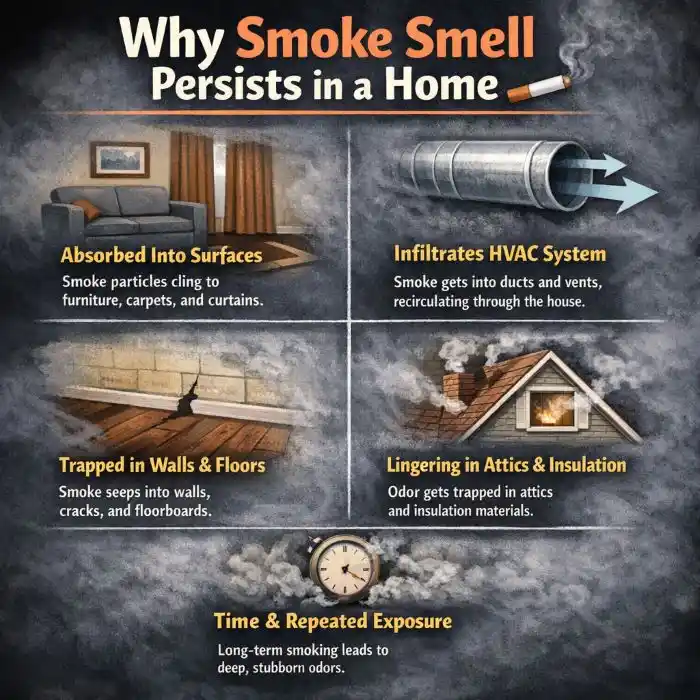
Smoke is more than just a smell. It is a mix of tiny particles, gases, tar, ash, and oily residue. When smoke moves through a room, it does not stay suspended for long. It lands on surfaces and starts sticking.
That is why smoke odor tends to linger in homes with:
- Cigarette or cigar smoke
- Wildfire smoke
- Fireplace or wood stove smoke
- Kitchen smoke from burnt food
- House fire or small electrical fire residue
The problem gets worse because many parts of your home are porous. That means they absorb odors easily. Carpets, couches, mattresses, drapes, and drywall all act like sponges. Even painted walls can trap residue. Over time, those surfaces slowly release the smell back into the room.
Cigarette smoke is especially persistent because it contains nicotine and tar, which leave a yellowish or brown film on walls, ceilings, vents, and furniture. Fire smoke can be even more intense because it often includes soot, burned plastics, and chemical compounds from whatever caught fire. Wildfire smoke may seem lighter at first, but it can still work its way into insulation, ductwork, and soft materials.
There is also a health reason to take this seriously. Lingering smoke particles can irritate the eyes, nose, and throat. They may trigger asthma, worsen allergies, and make breathing feel uncomfortable. If someone in your home has a respiratory condition, babies, or older adults, the need to remove smoke odor becomes even more important.
The reason many people start with DIY methods is simple: it saves money and often works well for mild to moderate odor problems. If the source is limited and you act quickly, you can often eliminate cigarette smell or neutralize fire smoke without jumping straight to expensive restoration services.
Still, the key is using the right methods in the right order. That is what we will cover next.
Preparation Steps Before You Start Cleaning
Before you go room by room, take a little time to prepare. This step matters more than most people think.
If you skip the assessment stage, you may clean the obvious surfaces but miss the real sources of the odor. Smoke smell often hides in places you do not notice at first, such as air vents, closet fabrics, under furniture, inside cabinets, or around windows.
Check Where the Odor Is Strongest
Walk through your home slowly and pay attention to where the smell is strongest. Common hotspots include:
- Upholstered furniture
- Curtains and blinds
- Carpets and rugs
- Bedrooms with fabric-heavy decor
- Walls and ceilings
- HVAC vents and filters
- Laundry areas and closets
If one room smells much worse than others, start there. If the smell seems to come from everywhere, the HVAC system may be spreading it.
Gather Your Supplies
You do not need fancy tools for the first round of cleaning. In many cases, the basics work very well.
Here are the most useful items to have ready:
- White vinegar
- Baking soda
- Spray bottles
- Microfiber cloths
- Vacuum with HEPA filter if possible
- Mop and bucket
- Dish soap or degreaser
- Box fans
- Activated charcoal
- Laundry detergent
- Steam cleaner or carpet cleaner
- Rubber gloves
- Face mask
If your business blog has related pages, this is also a smart place to guide readers toward your home cleaning services, air purifier recommendations, or deep cleaning checklist.
Put Safety First
If the smoke smell comes from a recent fire or heavy wildfire event, protect yourself.
Wear gloves and a mask when cleaning soot or strong residue. Open windows before using cleaning products. Never mix chemicals like bleach and ammonia. If a room has visible black soot, oily residue, or strong chemical smoke from burned plastic or wiring, stop and consider professional help.
Preparation makes the rest of the process much easier. Once you know where the odor is coming from, you can start removing it step by step.
How to Get Rid of Smoke Smell in House by Airing It Out First
The first move is simple, but it works: get stale air out and bring fresh air in.
Ventilation will not solve deep odor on its own, but it gives you a faster and better starting point. If you are wondering how to get rid of smoke smell in house quickly, this is where to begin.
Open Windows and Doors for Cross-Ventilation
Open windows on opposite sides of your home to create airflow. If possible, open interior doors too. This helps smoke particles move out instead of bouncing around the same space.
The best time to do this is when the outdoor air is clean and dry. Avoid ventilating during poor outdoor air quality days, especially during wildfire season.
Use Box Fans the Right Way
Place a box fan in a window facing outward, not inward. That setup pushes smoky indoor air outside. Then open a window in another part of the house to pull fresh air in.
If you have more than one fan, create a simple airflow path through the home. This can make a big difference in just a few hours.
Run Exhaust Fans
Turn on bathroom fans, kitchen exhaust fans, and laundry room vents. Let them run for a full day or two if needed.
Ventilation is one of the easiest steps in how to get rid of smoke smell in house, but remember this: if smoke residue has soaked into fabrics and surfaces, fresh air alone will not finish the job. You need cleaning next.
Clean Soft Surfaces Thoroughly
Soft surfaces are usually the biggest odor traps in the home. If you want to eliminate cigarette smell or neutralize fire smoke, do not skip this section.
Carpets and Rugs
Carpets and rugs absorb smoke deeply, especially in homes with repeated exposure.
Start by vacuuming slowly and thoroughly. Go over each area multiple times. Use attachments along baseboards and in corners where particles collect.
Next, sprinkle a generous layer of baking soda over the carpet or rug. Let it sit for at least several hours, but overnight is even better. Baking soda helps absorb odor from the fibers. Vacuum it up carefully afterward.
If the smell remains, move on to steam cleaning.
A simple cleaning solution for many carpets is a mix of warm water with a small amount of white vinegar. Always test a small hidden area first. The goal is not to soak the carpet but to clean the fibers and lift the trapped residue.
For older or heavier smoke odor, a professional carpet cleaning machine may work better than a light household model.
Upholstery and Curtains
Couches, armchairs, dining seat cushions, and curtains often hold smoke smell longer than expected.
For upholstery, start with a full vacuum using a brush attachment. Then sprinkle baking soda over the surface and let it sit for a few hours before vacuuming again.
If the fabric allows moisture, lightly mist it with a vinegar and water solution. Do not soak it. Let it air dry fully with windows open or fans running.
For curtains, removable covers, and washable fabric items, wash according to the care label. Adding a cup of white vinegar to the rinse cycle can help remove smoke odor without leaving a vinegar smell behind.
If curtains are dry-clean only, take them to a professional cleaner and mention that you are treating smoke odor specifically.
Clothing and Linens
Clothing, bedding, blankets, and towels can all trap smoke.
Wash them in the warmest water safe for the fabric. Use regular detergent and add white vinegar to the rinse cycle. If the odor is strong, wash the items twice.
After washing, air dry outside if possible. Fresh outdoor air often helps more than a dryer, especially in the first round. For items that still smell after laundering, repeat the process rather than masking the odor with fragrance.
If the smoke smell is inside closet spaces, remove everything first, clean the closet walls and shelves, and only then return the clean items.
Quick Signs Soft Surfaces Need More Attention
- The room smells better right after cleaning but worse again later
- Odor gets stronger when you sit on a couch or walk on the carpet
- Fabrics smell fine when dry but smoky when warm
- Bedding and clothing pick up the odor again after a day or two
When that happens, the material is still holding residue. Repeat the treatment or upgrade to a deeper cleaning method.
Clean Hard Surfaces to Remove Sticky Residue
Hard surfaces may seem easier to clean, but smoke can leave behind a greasy film that keeps producing odor. This is especially common with cigarette smoke and kitchen smoke.
If you are serious about how to get rid of smoke smell in house, this is where a lot of hidden progress happens.
Walls and Ceilings
Walls and ceilings often collect more smoke residue than people realize. Warm air rises, so smoke naturally drifts upward and sticks there.
For light odor, wipe surfaces with a 1:1 mixture of white vinegar and water using a microfiber cloth or sponge. Work in sections and rinse your cloth often.
For heavier buildup, especially after fire or long-term smoking, use a stronger cleaner made for degreasing walls. Trisodium phosphate, often called TSP, is a traditional option for serious smoke residue, but it should be used carefully and according to label directions.
If staining or odor remains even after cleaning, repainting may be necessary. Before painting, use an odor-sealing primer. This step is critical. Standard paint alone often traps the smell only temporarily.
Floors and Countertops
Hard floors, tile, laminate, and countertops should also be washed, not just dusted.
Use a mop or cloth with a vinegar solution or a cleaner designed for your flooring type. Pay special attention to edges, corners, and under furniture. Smoke residue tends to settle where air movement is weak.
For tile grout, make a paste of baking soda and water. Scrub gently with a brush and wipe clean. Grout is porous and can hold smell surprisingly well.
Kitchen and Bathroom Surfaces
Kitchens need extra care because smoke mixes with grease. That combination sticks to cabinets, appliances, range hoods, and backsplashes.
Clean cabinet doors inside and out. Wipe the top of the refrigerator, light fixtures, and vent covers. Degrease the stove and hood fan thoroughly.
Bathrooms may also hold odor in towels, rugs, vent covers, and painted walls. Wash all textiles and clean exhaust fan covers since smoke particles can settle there too.
HVAC and Air Systems: Don’t Let the Smell Keep Circulating
Many people clean every room and still wonder why the smell keeps coming back. The answer is often the HVAC system.
If smoke has traveled through your heating or cooling system, every cycle can push the odor back into the house. This is a major reason how to get rid of smoke smell in house sometimes feels harder than it should.
Replace the Air Filters
Start here. Remove old HVAC filters and replace them with fresh ones. A HEPA-quality or high-efficiency filter can help capture more particles, depending on what your system supports.
If the odor was severe, check the filter again after a short time. A filter can load up quickly after smoke exposure.
Clean Vents and Registers
Remove vent covers and wash them. Vacuum inside the visible vent openings using a hose attachment. This will not clean the full duct system, but it does remove a lot of loose dust and smoke debris near the surface.
Wipe the surrounding wall and trim too, since residue often builds up there.
Consider Duct Cleaning for Heavy Smoke
If there was a fire, severe wildfire event, or long-term indoor smoking, professional duct cleaning may be worth it. This is especially true if you notice:
- A strong smell when the AC or heat turns on
- Visible residue around vents
- Smoke odor in multiple rooms even after cleaning
- Dust that smells smoky when disturbed
Run the System with Fresh Filters
After replacing filters and cleaning vents, run the HVAC system for a while and check whether the odor improves. In some homes, this step makes a dramatic difference.
For a business blog, this section is a natural place to mention your air duct cleaning, indoor air quality inspection, or seasonal HVAC maintenance services.
Natural Odor Absorbers That Really Help
Natural odor absorbers are not magic, but they can support the cleaning process very well. They are best used after cleaning, not instead of cleaning.
If you are looking for affordable ways to remove smoke odor, these methods are easy to try.
Baking Soda
Baking soda is one of the most useful household odor absorbers.
Place open bowls in smoky rooms, inside closets, near upholstered furniture, and beside litter boxes or pet areas if there is a mixed odor problem. Replace the baking soda every few days.
You can also use it inside shoes, gym bags, and small enclosed spaces where smoke lingers.
Activated Charcoal
Activated charcoal is stronger than baking soda for many odor issues. It absorbs smells well in small and medium spaces.
Set charcoal bags or bowls in rooms, cabinets, cars, and closets. They are especially helpful when the smell is not overpowering but still noticeable.
White Vinegar Bowls
A bowl of white vinegar placed in a room overnight can help absorb lingering smoke odor from the air.
Some people dislike the vinegar smell at first, but it fades as it dries. In many cases, it leaves the room smelling much cleaner by the next day.
###+ Coffee Grounds and Citrus Peels
Dry coffee grounds can help absorb odor in smaller spaces, though they may leave a mild coffee scent behind.
Citrus peels do not absorb odor as strongly, but they can help freshen the room naturally after the deeper smoke smell is already under control.
Essential Oils, Carefully Used
A few drops of essential oil in a diffuser can improve how a room smells, but be careful not to use fragrance as a substitute for actual cleaning. Scent can cover odor for a little while, but it does not neutralize fire smoke or nicotine residue.
Natural absorbers work best as part of a full plan. Think of them as support tools, not the main treatment.
Commercial Products That Can Speed Up Results
Sometimes DIY basics are enough. Sometimes you need stronger tools.
If you are still working on how to get rid of smoke smell in house after airing out and cleaning, commercial products can help you finish the job faster.
Air Purifiers with HEPA and Activated Carbon
A good air purifier can make a noticeable difference, especially in bedrooms, living rooms, and homes affected by wildfire smoke.
For smoke odor, choose a unit with:
- HEPA filtration for fine particles
- Activated carbon for odor and gases
HEPA alone is great for particles, but activated carbon is what helps with smell. Using both gives better results.
Odor Neutralizers and Enzyme Sprays
Many odor sprays only mask smell. Look for products labeled as odor neutralizers, not just air fresheners.
Enzyme-based cleaners can be helpful if the smoke odor is mixed with pet smells, food residue, or organic buildup. They break down odor-causing material instead of simply covering it.
Ozone Generators: Use With Caution
Ozone machines are often used for severe smoke odor, but they must be handled carefully. People, pets, and plants should not be inside the home while an ozone generator is running.
These machines can be effective in certain situations, but they are not casual household fresheners. Follow safety directions exactly. If you are unsure, let a trained professional handle it.
Method Comparison Table
Here is a simple breakdown to help you choose the best starting point:
| Method | Best For | Time Needed | Cost Level | Effectiveness |
|---|---|---|---|---|
| Open windows and fans | Fresh smoke, mild odor | 1-2 days | Low | Moderate |
| Baking soda on carpets and furniture | Soft surfaces | Overnight to 1 day | Low | Moderate |
| Vinegar wipe-down | Walls, counters, hard surfaces | 1 day | Low | High |
| Laundry with vinegar rinse | Clothing, curtains, linens | Several hours | Low | High |
| Steam cleaning | Carpets and upholstery | 1 day | Medium | High |
| HVAC filter replacement | Whole-house odor circulation | 30 minutes | Low to Medium | High |
| Activated charcoal | Ongoing odor absorption | Several days | Low to Medium | Moderate |
| Air purifier with carbon filter | Airborne smoke and lingering smell | Ongoing | Medium to High | High |
| Odor-sealing primer and paint | Walls with deep smoke damage | 1-3 days | Medium to High | Very High |
| Professional restoration | Fire damage or severe smoke residue | Varies | High | Very High |
Advanced DIY Hacks for Stubborn Smoke Odor
If the basic methods help but do not fully solve the problem, these extra tricks are worth trying.
They are especially useful for hidden odor pockets and tricky spaces where smoke likes to linger.
Simmer a Vinegar Pot on the Stove
Fill a pot with water and add a little white vinegar. Let it simmer gently for a while.
This can help neutralize smoke odor in the kitchen and nearby rooms. You can also add citrus peels or cinnamon sticks later if you want a fresher finish after the main odor drops.
Use Enzyme Cleaners for Mixed Odors
If the home has smoke plus pet odor, food smells, or old spills, enzyme cleaners can work well on those layered scent problems.
Use them on pet beds, rugs, entry mats, and washable upholstery areas where regular cleaners have not solved the issue.
Stuff Newspaper into Small Spaces
Newspaper can absorb odor in enclosed spaces like shoes, drawers, storage bins, or inside furniture crevices.
It is an old-school trick, but it still helps in certain situations. Replace the paper daily until the smell improves.
Treat Closed Spaces Separately
Closets, pantries, cabinets, and drawers often stay smoky because they do not get enough airflow.
Empty them out, wipe the inside thoroughly, leave them open to air out, and place baking soda or charcoal inside overnight. Then return cleaned items only after the space smells neutral.
These small details matter. Often, the last 20 percent of smoke odor is hidden in the places you open less often.
Prevention Tips to Stop Smoke Smell From Coming Back
Once your home smells better, you want to keep it that way.
Prevention is much easier than doing another full smoke removal cleanup.
Keep Smoking Outdoors
If anyone smokes, make outdoor smoking the rule. Use outdoor ashtrays and keep them away from doors and windows so smoke does not drift back inside.
Maintain Your HVAC System
Replace filters regularly and keep vents clean. A well-maintained system helps control odors before they spread through the house.
Clean Fabrics on a Schedule
Wash curtains, cushion covers, blankets, and rugs often enough that odors do not build up over time. This is especially important in homes with fireplaces or heavy cooking.
Use Plants as a Support Tool
Some people like adding plants such as snake plant or peace lily for a fresher indoor feel. Plants are not a full solution for smoke, but they can be a pleasant part of an overall clean-air routine.
Stay Ahead of Small Incidents
If you burn food or have a minor smoke event, ventilate and clean right away. Smoke is easier to remove when it is fresh than after it has settled for days or weeks.
When to Call the Pros
DIY methods are a great first step, but some situations need expert help.
You should consider professional cleaning or restoration if:
- There was a house fire or electrical fire
- Wildfire smoke left heavy residue or soot
- The smell stays strong after several rounds of cleaning
- Walls are stained and continue releasing odor
- HVAC ducts seem contaminated
- You are preparing the home for sale or rental and need a complete reset
This is where your business can naturally mention services like smoke odor removal, fire damage cleanup, deep house cleaning, or restoration support. For severe cases, professional equipment and sealing products can save time and produce better long-term results.
FAQs About Smoke Odor Removal
How long does it take to get rid of smoke smell in house?
For mild odor, you may notice major improvement in 1 to 3 days with ventilation, laundry, and surface cleaning. For stronger cases, it can take a full week or more. Severe smoke from fire damage may take longer and may require professional restoration.
Does vinegar remove smoke smell?
Yes, vinegar can help neutralize smoke odor on hard surfaces, fabrics, and even in the air when placed in bowls overnight. It works especially well as part of a larger cleaning plan.
What is the fastest way for how to get rid of smoke smell in house?
The fastest approach combines ventilation, filter replacement, fabric cleaning, and wiping hard surfaces. Doing just one of those steps usually is not enough.
Can baking soda eliminate cigarette smell?
Baking soda helps absorb odor from carpets, upholstery, mattresses, and closets. It is very useful, but it works best alongside vacuuming and deeper cleaning.
Will repainting get rid of smoke smell?
Repainting can help, but only if you clean first and use an odor-blocking primer. If you paint over smoke residue without sealing it, the smell can come back.
Why does my house still smell smoky after I cleaned everything?
You may have missed walls, ceilings, HVAC ducts, vent covers, or hidden soft surfaces like closet fabrics and mattress sides. Smoke can also remain trapped inside padding and insulation.
How to get rid of smoke smell in house after wildfire exposure?
Start with new HVAC filters, thorough ventilation when outdoor air is safe, washing all fabrics, wiping every surface, and using an air purifier with activated carbon. If soot is visible or the odor is severe, professional help is the safer route.
Conclusion
Now you know how to get rid of smoke smell in house with a clear, practical plan.
If you want the biggest results fast, start with these three steps: air out the home, deep clean soft surfaces, and wash hard surfaces plus HVAC components. Those actions remove the bulk of the odor in most homes. Then use baking soda, charcoal, or an air purifier to keep improving the air.
Smoke smell can feel overwhelming at first, but it is usually manageable when you work in the right order and stay consistent. Whether you need to remove smoke odor, eliminate cigarette smell, or neutralize fire smoke, the answer is not one miracle product. It is a smart combination of methods.
Try these steps now, room by room, and you should start noticing a real difference. If the smell is severe or tied to fire damage, reach out to a professional cleaning or restoration team for support. And if this guide helped, share your results or save it for your next deep clean.