
If you’ve ever turned on the bathroom light at night and seen a long-legged bug dart across the floor, you probably stopped in your tracks and asked, “why do i suddenly have centipedes in my house?” It’s a common question, and the good news is that the answer is usually less alarming than it feels in the moment.
In most homes, centipedes do not appear for no reason. They show up because something about the environment is working in their favor. That usually means extra moisture, more small insects to eat, new ways to get inside, or quiet hiding spots they can use during the day. So while it may feel like they appeared overnight, there is usually a clear reason behind it.
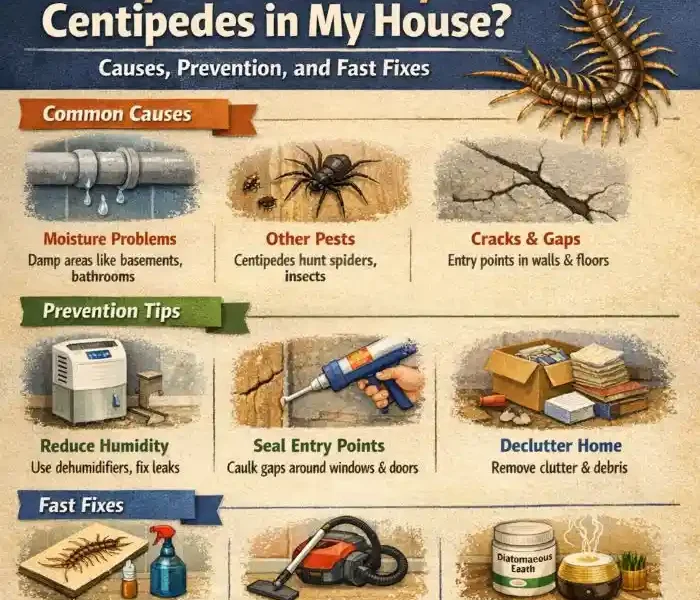
The important thing to know is this: house centipedes are often a warning sign, not the main problem. They tend to follow damp areas and prey insects. In other words, if you are seeing them, your home may be giving them the shelter and food they need.
In this guide, you’ll learn what house centipedes are, why they suddenly show up, how to inspect your home, how to get rid of them safely, and what to do so they stay out for good. By the end, you’ll have a simple plan you can actually use.
what’s likely happening
If you’re wondering why do i suddenly have centipedes in my house, the short answer is usually this: your home has become more attractive to them because of damp conditions, other bugs, seasonal weather changes, or small entry points that let them in.
Your first step should be simple: check damp areas today. Look in bathrooms, basements, laundry rooms, under sinks, and around any place where pipes run through walls. If you find moisture, musty smells, or signs of insects, you’ve likely found the reason centipedes are showing up.
What are house centipedes?
Appearance and habits
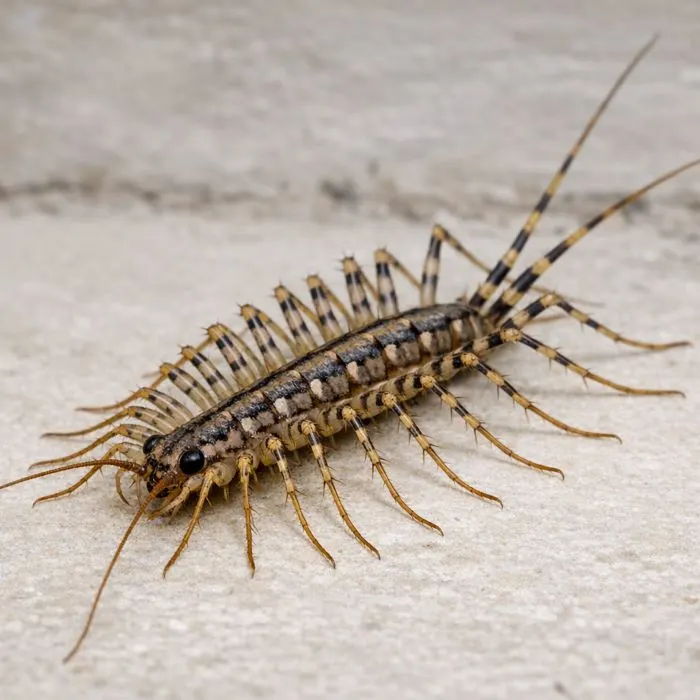
House centipedes look unsettling at first glance. They have long, thin bodies and many delicate legs that make them move very quickly. Their legs often appear longer than their bodies, which is one reason they surprise so many people.
They are mostly nighttime hunters. During the day, they prefer dark, damp, hidden places. At night, they come out to look for food. That means you are more likely to see them when you turn on a light in a bathroom, basement, kitchen, or laundry area after dark.
Unlike some pests, centipedes are predators. They do not come into your home to eat wood, fabric, or stored food. Instead, they hunt other small pests. Common prey includes spiders, silverfish, roaches, ants, and other tiny insects.
If you’re asking why do i suddenly have centipedes in my house, it helps to understand this behavior. They usually go where the environment gives them two things: moisture and food.
Common species found indoors
The centipede most people notice indoors is the house centipede. It is usually yellow-gray or brownish and has dark stripes along the body. Its long legs make it look larger than it really is.
This species is especially common in homes because it is well adapted to indoor life. It likes basements, bathrooms, crawl spaces, and other places that stay humid and quiet. It can survive for a long time indoors if the conditions are right.
Are they dangerous?
For most people, house centipedes are more unpleasant than dangerous. They are not known for spreading disease, and they do not damage your furniture, walls, or food.
They can bite, but bites are rare. When they do happen, the pain is usually mild and temporary, similar to a minor sting. Most people never get bitten because centipedes prefer to run away rather than interact with humans.
So while seeing one can be upsetting, the bigger issue is what it may be telling you about your home. Their presence often points to dampness, hidden insects, or entry gaps that should be fixed.
Why do I suddenly have centipedes in my house?
The word suddenly can be misleading. In many cases, centipedes were already around, and you are only just noticing them now. In other cases, a recent change in your home created the perfect conditions for them. Let’s break down the most common reasons.
Moisture and humidity attract them
This is the number one reason centipedes show up indoors.
Centipedes need moisture to survive. They dry out easily, so they look for places with damp air and wet surfaces. That is why they are often found in bathrooms, basements, laundry rooms, crawl spaces, and under sinks. If you recently had a leak, poor ventilation, or very humid weather, your home may have become a better shelter for them.
Even small moisture issues can make a big difference. A slow pipe leak behind a wall, condensation near windows, water collecting around a floor drain, or steam building up in a bathroom can all support centipede activity. Homes with poor airflow tend to hold humidity longer, which gives them a more comfortable environment.
You should also think about the areas you rarely inspect. Basements and utility rooms often stay damp without being obvious. The same goes for spaces behind washing machines, water heaters, dishwashers, and refrigerators.
Practical sign to confirm it: Look for a musty smell, water stains, mold spots, window condensation, peeling paint, or damp flooring. If you notice any of these, moisture may be the main reason centipedes are appearing.
An increase in prey from other household pests
Centipedes go where the food is. That means if your home has more small bugs than usual, centipedes may follow.
They commonly feed on insects and arthropods such as silverfish, spiders, roach nymphs, ants, and even tiny flies. So if you have noticed any increase in these pests, that may explain the centipedes too. In this way, centipedes are not always the first pest problem. Sometimes they are a sign that another pest issue is already active.
For example, if your home has damp cardboard boxes, crumbs in hidden spaces, dark storage areas, or moisture problems, those conditions may support insects that centipedes like to eat. Once those prey insects increase, centipedes have a reason to stay.
This is one reason people feel the problem appeared out of nowhere. The real change may have happened weeks earlier when another pest population began to grow quietly in places you do not check often.
Practical sign to confirm it: Pay attention to spider webs, silverfish in bathrooms, small roaches in kitchens, or ants around baseboards. If you see these along with centipedes, the food supply may be drawing them in.
Seasonal movement and sheltering behavior
Changes in weather can push centipedes indoors.
During very hot weather, very dry conditions, heavy rain, or sudden temperature shifts, centipedes often move in search of a more stable place to hide. Homes offer shelter, moisture, and protection from outdoor changes. That is why people often notice more activity during spring, rainy periods, and seasonal transitions.
A wet season can be especially important. Rain drives many insects and crawling pests out of the soil and into nearby structures. If your yard becomes saturated, centipedes may move toward the foundation and eventually find a way inside.
Cooler nights can also trigger movement. When outdoor conditions stop feeling safe or comfortable, indoor areas become more attractive.
Practical sign to confirm it: If you started noticing centipedes after a period of rain, a temperature change, or the start of a new season, weather-related movement may be part of the answer.
New entry points or structural changes
Sometimes the issue is not what changed inside your home, but what changed around the outside.
Centipedes can enter through small cracks and gaps. Common openings include spaces around doors, windows, utility lines, plumbing penetrations, foundation cracks, damaged vents, and torn screens. If you recently had repairs, construction work, landscaping changes, or worn weatherstripping, those gaps may now be giving them an easy path indoors.
Even small changes matter. A door sweep that no longer sits flush, a cracked seal around a basement window, or a pipe opening under a sink can be enough. Because centipedes are flat and fast, they do not need much space.
Sometimes homeowners accidentally create entry points after routine work. Replacing siding, opening crawl-space access, moving stored items away from walls, or using fans in basement windows can reveal gaps that were once blocked or unnoticed.
Practical sign to confirm it: Check for visible gaps around foundations, pipes, doors, and windows. If you notice light showing under doors or broken seals, entry points may be the reason.
Clutter and storage provide hiding places
Centipedes love quiet, protected spaces. If your home has cluttered storage areas, that can make it easier for them to settle in.
Piles of cardboard boxes, stacks of clothes, shoes on the floor, old papers, stored.