
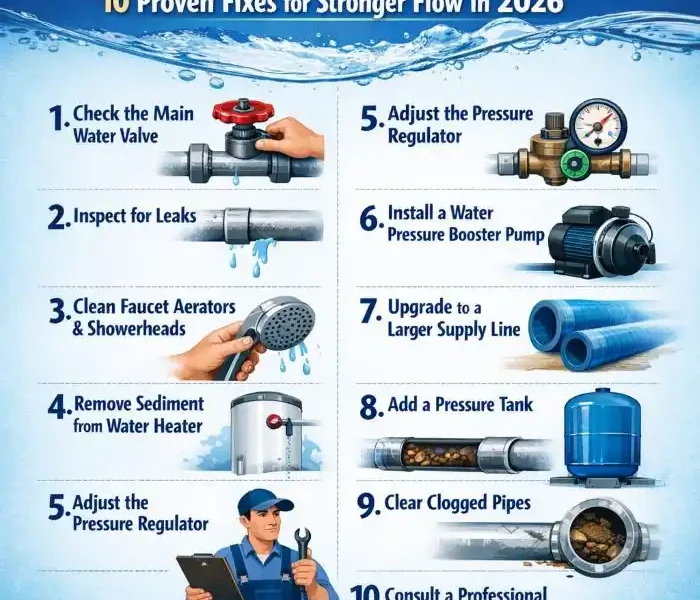
If you have ever stepped into the shower after a long day and got nothing but a weak trickle, you already know how annoying low water pressure can be. It slows down simple jobs, makes cleaning harder, turns showers into a chore, and can even make your home feel older and less efficient than it really is.
The good news is that low pressure is often fixable.
If you are searching for how to increase water pressure in house, you usually do not need to jump straight to expensive plumbing work. In many homes, the problem starts with something simple like a clogged showerhead, a dirty faucet aerator, a partly closed valve, or mineral buildup inside pipes and fixtures. In fact, many plumbers will tell you that a large share of low-pressure problems come from clogs or small leaks rather than major pipe failure.
That means you may be able to solve the issue faster than you think.
In this guide, you will learn how to increase water pressure in house step by step. We will cover the most common causes, the tools you need, the easiest fixes to try first, and the signs that tell you it is time to call a professional. If you are a homeowner in Lahore or anywhere with hard water, you will also find practical prevention tips that can help you stop the problem from coming back.
If you need expert help after trying these steps, our plumbing team can inspect the issue and restore strong, steady flow throughout your home.
Common Causes of Low Water Pressure
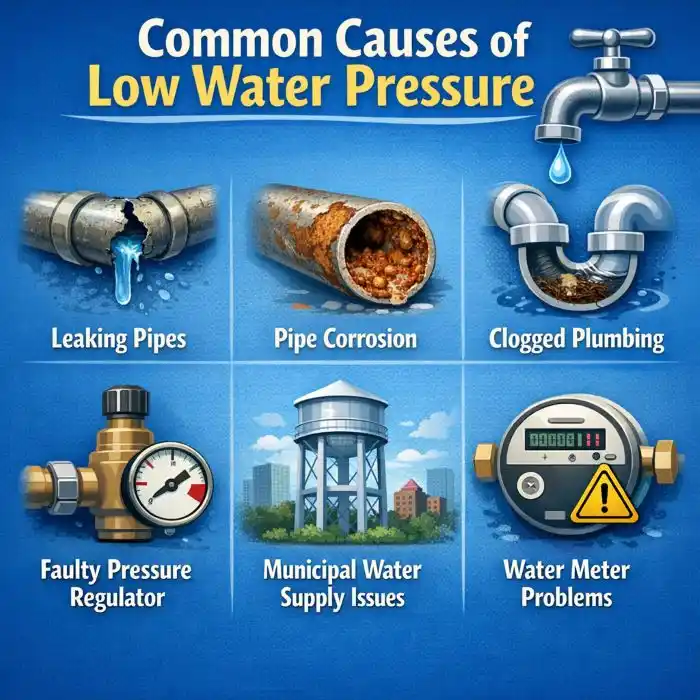
Before you try to fix anything, you need to understand why the pressure is low. That matters because the right fix depends on whether the problem affects one faucet, one bathroom, only the hot water, or the entire house.
Sometimes the answer is outside your home. Municipal supply issues, neighborhood repairs, or restrictions in the main supply line can reduce incoming pressure. If your neighbors are seeing the same issue, that is an important clue.
In many cases, though, the problem is inside the house. Mineral deposits often clog faucet aerators and showerheads. Small leaks can reduce flow without making a big mess right away. Old metal pipes may narrow over time because of corrosion. A bad pressure regulator can cause a sudden drop throughout the home. Even a water heater full of sediment can leave you with weak hot water pressure while the cold side still seems normal.
Another common reason is simple but easy to miss: a shut-off valve that is not fully open. This can happen after plumbing work, a repair visit, or even by accident. Older homes can also struggle because the pipes are too narrow for today’s water use. And when multiple people run showers, washing machines, and sinks at the same time, your available pressure gets spread thin.
The table below gives you a quick way to match symptoms with likely causes.
| Cause | Common Symptoms | Likelihood | First Thing to Check |
|---|---|---|---|
| Clogged aerator | Weak flow from one faucet only | High | Remove and clean the aerator |
| Clogged showerhead | Weak shower spray, uneven streams | High | Soak the head in vinegar |
| Leaky pipes | Wet spots, stains, higher bill, hissing sound | Medium | Check meter and visible pipes |
| Faulty pressure regulator | Sudden low pressure across house | Medium | Test PSI and inspect regulator |
| Partly closed main valve | Whole-house low pressure after repairs | Medium | Confirm valve is fully open |
| Water heater sediment | Low hot water pressure only | High | Flush the water heater |
| Corroded old pipes | Gradual decline over time | Medium | Inspect pipe material and age |
| High fixture demand | Pressure drops at busy times | High | Stagger usage or upgrade system |
| Municipal supply issue | Neighbors have same problem | Medium | Ask nearby homes or check notices |
| Small pipe size | Weak flow in older homes | Low to Medium | Consider repiping problem sections |
When you know the likely cause, learning how to increase water pressure in house becomes much easier and much cheaper.
Tools Needed Before You Start
You do not need a truck full of equipment to handle the most common fixes. A few basic tools are often enough.
Here is a simple prep list:
- Pressure gauge to test PSI at an outdoor spigot or laundry tap
- Adjustable wrench or small wrench set
- Plumber’s tape for reinstalling fittings neatly
- Vinegar for dissolving mineral buildup
- Old toothbrush or small brush for scrubbing deposits
- Bucket and towels for water spills
- Hose if you plan to flush the water heater
- Flashlight for checking leaks under sinks or in utility areas
- Work gloves for better grip and hand protection
A basic pressure gauge is usually inexpensive, and it is one of the best tools to own if you want to learn how to increase water pressure in house the right way. Without a pressure reading, you are guessing.
Before starting any repair, keep safety in mind. Turn off the water supply when needed, and if you are working on the water heater, shut off the power or gas first. Never force old fittings too hard, especially in older homes with brittle plumbing. And if you adjust a pressure regulator, do not push the system above 80 PSI. Too much pressure can damage appliances, fittings, and pipes.
If you do not own the tools, our shop can help you source or rent common plumbing items so you can get the job done safely.
Step-by-Step Fixes to Increase Water Pressure
Now let’s get into the practical part. If you want to know how to increase water pressure in house, start with the easiest checks first. Many homeowners solve the issue in under an hour.
Test Your Water Pressure First
Time: 10 minutes
Cost: Low
Difficulty: Easy
The first step is to stop guessing. Attach a pressure gauge to an outdoor hose bib, laundry faucet, or another threaded tap. Make sure no one is using water inside the home while you test. Then turn the faucet fully on and read the number.
For most homes, 40 to 60 PSI is a comfortable working range. Some homes run well closer to 65 PSI. If the number drops much lower, you likely have a supply or restriction problem. If the gauge shows strong pressure outside but weak flow inside, the trouble is probably in your fixtures, valves, or indoor plumbing.
Next, compare different fixtures around the house. Check the kitchen sink, bathroom faucets, showers, and outside taps. Ask yourself a few simple questions. Is the problem only on the hot side? Is it one room only? Is the whole house affected? Those answers point you toward the right fix.
This step matters because it helps you avoid wasting money. If your outside reading is healthy, you probably do not need a booster pump. If one faucet is weak while others are normal, you likely just need cleaning.
Inspect the Main Shut-Off Valve and Water Meter Valve
Time: 10 to 20 minutes
Cost: Free
Difficulty: Easy
One of the most overlooked answers to how to increase water pressure in house is also one of the simplest: check whether the valves are fully open.
Locate your main shut-off valve. In many homes, this is near where the water line enters the house. You may also have a second valve near the water meter. If either valve is partly closed, even by a small amount, it can reduce pressure throughout the home.
A gate valve should be turned fully counterclockwise. A ball valve should line up with the pipe when open. If the handle sits sideways, the valve is restricting flow.
This problem often happens after plumbing repairs, emergency shutoffs, or meter work. A plumber or utility worker may leave the valve partially open without meaning to. Homeowners also sometimes turn a valve halfway and forget about it.
Open the valve slowly and carefully. Then test your pressure again. If you notice an immediate improvement, you have solved the problem without spending anything.
While you are there, inspect the valve itself. If it feels stiff, leaks around the stem, or does not turn properly, the valve may be failing internally. A damaged valve can act like a blockage, and replacing it may restore strong pressure.
Clean Faucet Aerators
Time: 15 to 30 minutes
Cost: Very low
Difficulty: Easy
If low pressure affects one or two faucets but not the whole house, a clogged aerator is a very likely cause.
An aerator is the small screen at the tip of the faucet. Over time, sand, scale, rust flakes, and mineral deposits collect inside it. That buildup slows the flow and can make the water spray unevenly.
Unscrew the aerator by hand if possible. If it is stuck, use a wrench gently and protect the finish with a cloth. Once removed, take note of how the small pieces fit together so you can reassemble them correctly.
Soak the parts in vinegar for about an hour. If the buildup is heavy, let them sit longer. After soaking, use a small brush or old toothbrush to scrub away the debris. Rinse well and reinstall.
If the screen is torn or badly corroded, replace it. Aerators are inexpensive, and a new one can make a big difference right away.
This is one of the quickest solutions for homeowners trying to learn how to increase water pressure in house without calling a plumber. In many cases, the improvement is immediate and noticeable the moment you turn the faucet back on.
Descale and Clean Showerheads
Time: 30 to 60 minutes
Cost: Very low
Difficulty: Easy
Weak shower pressure is one of the main reasons people search for how to increase water pressure in house. And just like faucets, showerheads often lose power because of mineral buildup.
Remove the showerhead if you can. Soak it in vinegar for at least one hour. For heavier buildup, leave it overnight. If you cannot remove it easily, fill a plastic bag with vinegar, place it around the showerhead, and secure it with a rubber band.
After soaking, scrub the nozzles gently with a brush and rinse the inside thoroughly. If your showerhead has a flow restrictor and local plumbing rules allow changes, you can check whether it is partially blocked. In some cases, cleaning that area helps restore normal performance.
Before reinstalling, wrap the threads with plumber’s tape for a cleaner seal. Then test the shower. You may see a 20% to 50% improvement in flow if mineral scale was the real problem.
In places with hard water, including many parts of Lahore, showerheads collect buildup faster than homeowners expect. Cleaning them every few months can prevent the pressure from dropping again.
Image placeholder: Before-and-after showerhead with visible mineral buildup removed.
Flush the Water Heater to Improve Hot Water Pressure
Time: 45 to 90 minutes
Cost: Low
Difficulty: Moderate
If the cold water pressure feels fine but the hot side seems weak, the water heater may be the issue.
Sediment gathers at the bottom of the tank over time. That buildup can reduce efficiency, slow hot water delivery, and restrict flow. In older systems, scale may also collect around valves and internal passages.
To flush a standard tank water heater, turn off the power or gas first. Shut off the cold water supply to the heater. Attach a hose to the drain valve and run the other end to a safe drainage spot. Open the drain and let the tank empty. Then briefly open the cold water inlet to stir and flush out remaining sediment.
When the water runs clearer, close the drain, remove the hose, refill the tank, and restore power or gas only after the tank is full.
Do not skip the refill check. Turning power back on before the tank is full can damage the heating elements.
Annual flushing is a smart habit, especially in areas with hard water. If your goal is to figure out how to increase water pressure in house when only the hot water is weak, this is one of the best places to start.
Image placeholder: Water heater being flushed through a hose into a floor drain.
Look for Hidden Leaks and Repair Them
Time: 30 minutes to several hours
Cost: Low to medium
Difficulty: Moderate
Leaks do not just waste water. They also steal pressure.
A small leak in a supply line can reduce the force of water reaching your fixtures. The bigger the leak, the bigger the pressure loss. Some leaks are obvious, but many stay hidden behind walls, under floors, or in outdoor lines.
Start with a simple meter test. Turn off all water-using appliances and fixtures in the house. Then check the water meter. Wait 30 to 60 minutes without using any water and check again. If the reading changes, you may have a leak.
Also look for common warning signs: damp walls, soft spots, mold smell, water stains, unusually green outdoor patches, or a quiet hissing sound. Check under sinks, around toilets, behind the washing machine, and near the water heater.
Fixing a small visible leak can restore some lost pressure right away. But if the leak is hidden in a wall or underground, professional leak detection may be the smartest next step.
For many homeowners, this is the turning point in learning how to increase water pressure in house. You may think the problem is a weak supply, when really your system is losing pressure before the water even reaches the fixture.
Replace Corroded or Undersized Pipes
Time: Several hours to several days
Cost: Medium to high
Difficulty: Advanced / Pro recommended
If your home has older galvanized steel pipes, corrosion may be quietly reducing the inside diameter of the pipe. That means the opening where water flows gets smaller and smaller over time. The result is lower pressure, reduced flow, and more frustration every year.
This is especially common in older homes where pressure has declined slowly rather than suddenly. You might notice that one bathroom is worse than another, or that pressure drops more on upper floors.
In some cases, only a short section of pipe is the issue. In other homes, a larger repipe is needed. Modern materials like PEX are popular because they resist internal buildup, are flexible, and often provide better flow. Depending on your area and material choices, partial replacement may cost roughly $1 to $5 per foot for materials alone, while full installed costs can be much higher.
This is not usually the first DIY job to try unless you already have plumbing experience. But if you have ruled out clogs, valves, and regulators, replacing old lines can be the long-term answer to how to increase water pressure in house.
A repipe may sound expensive, but it can also improve reliability, reduce leak risk, and increase home value.
Adjust or Replace the Pressure Regulator
Time: 20 to 45 minutes
Cost: Low to medium
Difficulty: Moderate
Many homes have a pressure regulator, also called a pressure-reducing valve, installed near the main supply line. Its job is to keep incoming water pressure at a safe level for the house. But when it starts to fail, your pressure can suddenly drop throughout the property.
First, confirm the problem with a gauge. If the pressure is low house-wide and the supply from the street seems normal, the regulator becomes a likely suspect.
Locate the regulator, usually near the main shut-off valve. On top, you will often find an adjustment screw. Turning it clockwise usually increases pressure. Make small adjustments, then test again. Do not rush this process.
Keep the system below 80 PSI. Going higher may feel good in the shower for a while, but it can shorten the life of hoses, faucets, washing machines, and even your water heater.
If the regulator does not respond, leaks, or causes pressure to swing up and down, it may need replacement. A new regulator can solve whole-house pressure problems quickly when the old one is faulty.
Upgrade Old Fixtures for Better Flow
Time: 30 minutes to 2 hours
Cost: Low to medium
Difficulty: Easy to moderate
Sometimes the issue is not the plumbing system at all. Sometimes the fixture itself is simply poor, old, or too restrictive.
A worn faucet cartridge, a low-quality showerhead, or an aging internal valve can all make water flow feel weak even when the actual house pressure is acceptable. Replacing a struggling showerhead or faucet with a better-designed model can make a surprising difference.
If you choose new fixtures, pay attention to both flow performance and spray design. A well-made showerhead often feels stronger because it uses the available pressure more efficiently. In kitchens, a fresh faucet cartridge can restore flow that had gradually faded.
This is a smart step if you are already remodeling a bathroom or kitchen. It is also helpful if the problem is isolated to one room. Many homeowners looking into how to increase water pressure in house discover they do not need to change the whole plumbing system. They simply need a better fixture at the point of use.
If you want a bigger improvement, this is also a good time to explore showerhead upgrades that balance comfort, water use, and stronger spray.
Image placeholder: Modern showerhead upgrade installed in a bathroom.
Install a Booster Pump or Repipe Problem Zones
Time: Half day to multiple days
Cost: High
Difficulty: Pro recommended
If your incoming supply pressure is genuinely low, or your home has long runs, multiple floors, or pressure loss in specific areas, a booster pump may be the right answer.
A booster pump increases water pressure before it reaches the fixtures. This can help homes at the end of a supply line, hillside homes, large properties, or houses with consistently weak city pressure. Typical installed costs often range from $300 to $1,000 or more, depending on the system size and installation complexity.
In some homes, the better solution is not a whole-house booster. Instead, targeted repiping of problem zones can help. For example, if a second-floor bathroom is fed by narrow or failing pipe, improving that section may solve the issue without changing the whole system.
This is the advanced stage of solving how to increase water pressure in house. You should only move to this option after testing pressure, cleaning fixtures, checking valves, flushing the heater, and inspecting for leaks. Otherwise, you may spend money fixing the wrong problem.
A plumber can tell you whether your home needs a pump, a regulator adjustment, or a pipe upgrade. That diagnosis matters.
Image placeholder: Residential water pressure booster pump installed near the main supply line.
When to Call a Plumber
If you still have low pressure after trying the basic steps, it is time to bring in a professional. Call a plumber if you have persistent low PSI, visible pipe damage, signs of hidden leaks, regulator failure, or old corroded piping. You should also call if pressure changes suddenly for no clear reason, or if you are not comfortable working around the main water line or water heater.
A professional inspection can save time, prevent damage, and stop you from replacing parts that are not actually causing the problem. If you want a fast diagnosis, schedule an inspection with our Lahore plumbing team today.
Prevention Tips to Keep Water Pressure Strong
Once you solve the issue, the next goal is to stop it from coming back. The best answer to how to increase water pressure in house is often prevention.
Make fixture cleaning part of your home routine. Faucet aerators and showerheads should be checked regularly, especially if you live in a hard water area. Mineral buildup does not appear overnight, but it adds up quietly.
Flushing the water heater once a year is another smart move. It improves efficiency and helps protect hot water pressure. You should also inspect visible pipes every few months for drips, corrosion, or stains.
Here is a simple maintenance checklist you can follow:
- Check pressure once or twice a year with a gauge.
- Clean aerators and showerheads every few months.
- Flush the water heater annually.
- Inspect valves after any plumbing repair.
- Watch your water bill for signs of hidden leaks.
- Repair small drips early before they become larger losses.
- Consider a water softener in hard water areas.
If you live in Lahore, this last point matters even more. Hard water can leave scale inside fixtures, heaters, and pipes faster than expected. A water softener does not directly increase pressure in the same way a booster pump does, but it can help protect your system from the buildup that slowly reduces flow over time.
Also pay attention to seasonal changes. Demand sometimes rises during hotter months, and supply conditions can shift in some neighborhoods. If pressure drops only at certain times of day, the issue may be related to demand patterns rather than a plumbing failure inside your home.
Image placeholder: Home plumbing maintenance checklist on a clipboard.
FAQs
How to increase water pressure in house without plumber?
Start with the easiest DIY fixes. Test the pressure with a gauge, make sure the main shut-off valve is fully open, and clean faucet aerators and showerheads. If hot water pressure is low, flush the water heater. These basic steps solve many cases without professional help.
What PSI is good for a home?
For most homes, 45 to 65 PSI is a good target. Below that, water may feel weak at showers and faucets. Above 80 PSI, the pressure may be too high and can damage plumbing fixtures and appliances over time.
Why is my shower pressure low but my sink pressure is fine?
That usually points to a problem in the showerhead, shower valve, or bathroom plumbing rather than the whole house. Mineral buildup inside the showerhead is very common. Remove it, soak it in vinegar, clean the nozzles, and test again.
Why is only my hot water pressure low?
Low hot water pressure often means there is sediment in the water heater, buildup in hot-side lines, or a partially blocked valve. Start by flushing the water heater. If the issue continues, inspect the hot water shut-off valves and consider a professional check.
Does a water softener increase water pressure?
Not directly. A water softener does not boost pressure like a pump. What it can do is reduce scale buildup in fixtures, pipes, and water heaters. Over time, that helps maintain smoother flow and can prevent pressure loss caused by mineral deposits.
How much does it cost to fix low water pressure?
It depends on the cause. A DIY cleaning fix may cost almost nothing, while replacing fixtures may cost a little more. Regulator replacement may land in the middle. A major repipe or booster pump installation can cost hundreds to thousands of dollars. Many homeowners spend far less once they identify the real source of the problem early.
Can old pipes reduce water pressure?
Yes. Old galvanized or corroded pipes often narrow on the inside, which reduces flow. This causes a gradual drop in performance over time. If your home is older and pressure has been getting worse year by year, pipe condition should be high on your list.
Is low water pressure ever caused by the city supply?
Yes. Municipal repairs, peak usage times, main line restrictions, and neighborhood supply issues can all reduce pressure. If your neighbors are also experiencing weak flow, the issue may be outside your home. In that case, check for local notices or ask nearby residents before spending money on internal repairs.
Conclusion
Learning how to increase water pressure in house does not have to feel overwhelming. In many homes, the fix is simple: clean a clogged aerator, descale a showerhead, flush the water heater, open a valve fully, or repair a small leak. If those steps do not solve the problem, the next likely causes are a failing pressure regulator, old corroded pipes, or a supply issue that needs expert attention.
The key is to start small, test carefully, and move step by step.
If you need professional help with how to increase water pressure in house, our Lahore plumbers are ready to inspect your system, find the real cause, and recommend the best fix. If this guide helped you, feel free to share it with other homeowners or leave a comment with the pressure issue you are dealing with.