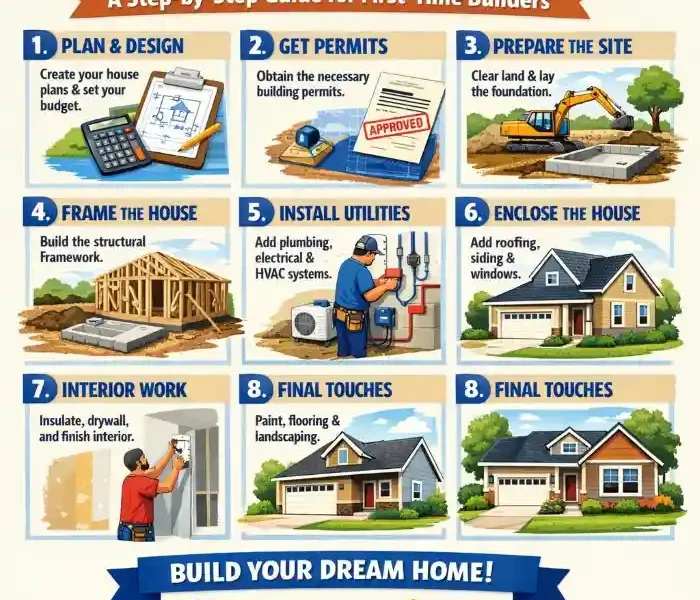
<p>Building your own house is an exciting and rewarding journey. It gives you <strong>full control over the design</strong>, offers <strong>cost savings</strong>, and allows you to create a home tailored to your needs. However, it can also be a complex and time-intensive process. This comprehensive guide will walk you through <a href="https://www.sofi.com/learn/content/how-to-build-a-house/"><strong>how to build your own house</strong></a>, step by step, from planning and permits to construction and finishing.</p>
<h2 id="introduction-why-build-your-own-home-">Why Build Your Own Home?</h2>
<p><img class="aligncenter wp-image-7020 size-full" src="https://comeawayhome.co.uk/wp-content/uploads/2026/05/ad932e61-5405-4b88-b6d3-68400f5425f3s.jpg" alt="how to build your own house" width="700" height="700" /></p>
<p>Building your own house can be one of the most fulfilling experiences of your life. Not only can it help you save money compared to buying a pre-built home, but it offers unmatched customization, ensuring your home reflects your style and needs.</p>
<p>This guide will cover all the key stages of home building, including <strong>planning, design, budgeting, and construction</strong>. It’s perfect for first-time builders, investors, or anyone looking to take control of their dream home project.</p>
<p>Before diving in, download the free <strong>checklist and sample budget spreadsheet</strong> linked at the end of this article. It will help you stay organized and track progress as you go through each phase.</p>
<h2 id="section-1-is-building-your-own-house-right-for-you-">Is Building Your Own House Right for You?</h2>
<p>Before you commit to building your <a href="https://comeawayhome.co.uk/how-much-to-build-a-house/">house</a>, it’s essential to assess whether this path aligns with your goals, resources, and skills.</p>
<h3 id="quick-decision-checklist">Quick Decision Checklist</h3>
<p>Ask yourself these questions to gauge your readiness:</p>
<ul>
<li><strong>Do you have the time?</strong> A self-build project can take 9–12 months or longer.</li>
<li><strong>What’s your budget?</strong> Do you have sufficient funds or financing options in place?</li>
<li><strong>Do you have any construction knowledge?</strong> While it’s not mandatory, basic building knowledge can be helpful.</li>
<li><strong>Are you comfortable managing risks?</strong> Delays, cost overruns, and unforeseen issues are common.</li>
</ul>
<h3 id="pros-and-cons">Pros and Cons</h3>
<p><strong>Pros:</strong></p>
<ul>
<li>Complete control over design and materials.</li>
<li>Potential cost savings compared to buying a finished home.</li>
<li>Opportunity to build an energy-efficient, future-proof home.</li>
</ul>
<p><strong>Cons:</strong></p>
<ul>
<li>Time-intensive and requires careful management.</li>
<li>Can be stressful and may involve unexpected challenges.</li>
</ul>
<h3 id="alternatives-to-consider">Alternatives to Consider</h3>
<p>If building from scratch feels overwhelming, explore these options:</p>
<ul>
<li><strong>Buying a finished home</strong>: Ideal for those short on time.</li>
<li><strong>Renovating an existing property</strong>: A good middle ground for customization without starting from zero.</li>
</ul>
<h2 id="section-2-planning-and-feasibility">Planning and Feasibility</h2>
<p>Proper planning is the foundation of any successful home-building project. This phase involves choosing the right location, understanding legal constraints, and conducting a feasibility study.</p>
<h3 id="market-research-site-selection">Market Research & Site Selection</h3>
<p>Start by researching neighborhoods that fit your budget and lifestyle. Consider factors like:</p>
<ul>
<li><strong>Zoning regulations</strong>: Ensure the site is zoned for residential construction.</li>
<li><strong>Orientation</strong>: South-facing lots maximize sunlight and energy efficiency.</li>
<li><strong>Soil type</strong>: Conduct a soil test to determine suitability for construction.</li>
</ul>
<h3 id="legal-constraints-zoning">Legal Constraints & Zoning</h3>
<p>Every location has its own building codes and zoning laws. Check:</p>
<ul>
<li>Setback requirements (distance from property lines).</li>
<li>Maximum allowable floor area ratio (FAR).</li>
<li>Restrictions on building height or design.</li>
</ul>
<h3 id="feasibility-study-site-survey">Feasibility Study & Site Survey</h3>
<p>Hire a professional surveyor to evaluate the site. A basic feasibility study should include:</p>
<ul>
<li>An estimated cost per square foot.</li>
<li>A high-level timeline for construction.</li>
<li>Potential challenges like drainage issues or utility access.</li>
</ul>
<h3 id="suggested-deliverables">Suggested Deliverables</h3>
<p>By the end of this phase, you should have:</p>
<ul>
<li>A site report detailing constraints and opportunities.</li>
<li>A preliminary budget and timeline.</li>
</ul>
<h2 id="section-3-design-drawings-and-permits">Design, Drawings, and Permits</h2>
<p>Once you’ve selected your site, it’s time to bring your vision to life with a strong design and the necessary permits.</p>
<h3 id="concept-design">Concept Design</h3>
<p>Start by outlining your needs and wants:</p>
<ul>
<li><strong>Create a wish list</strong>: Include features like open kitchens, home offices, or energy-efficient windows.</li>
<li><strong>Future-proof your design</strong>: Consider elements like accessibility, solar panels, and EV charging stations.</li>
</ul>
<h3 id="choosing-the-right-professional">Choosing the Right Professional</h3>
<p>Decide whether to hire:</p>
<ul>
<li><strong>An architect</strong>: For custom designs.</li>
<li><strong>A design-build firm</strong>: For a streamlined process.</li>
<li><strong>Production plans</strong>: For budget-friendly, pre-designed layouts.</li>
</ul>
<h3 id="essential-drawings">Essential Drawings</h3>
<p>Your design package should include:</p>
<ul>
<li>Site plan</li>
<li>Floor plans</li>
<li>Elevations</li>
<li>Structural and MEP (mechanical, electrical, plumbing) schematics</li>
</ul>
<h3 id="permits-approvals">Permits & Approvals</h3>
<p>The permitting process includes submitting plans to your local authority for review. Expect inspections at key stages like foundation and framing. Common delays occur due to incomplete documentation, so ensure all forms are accurate.</p>
<h3 id="energy-codes-sustainability">Energy Codes & Sustainability</h3>
<p>Incorporate energy-efficient features like high R-value insulation and passive solar design. Many areas now require compliance with energy codes, so plan accordingly.</p>
<h2 id="section-4-financing-and-detailed-budgeting">Financing and Detailed Budgeting</h2>
<p>Building a house is a significant financial investment. Here’s how to create a realistic budget and secure funding.</p>
<h3 id="cost-components">Cost Components</h3>
<p>Break down your budget into:</p>
<ol>
<li><strong>Land purchase</strong></li>
<li><strong>Site preparation</strong> (grading, drainage)</li>
<li><strong>Construction hard costs</strong> (materials, labor)</li>
<li><strong>Soft costs</strong> (design, permits, insurance)</li>
<li><strong>Landscaping and contingencies</strong></li>
</ol>
<h3 id="typical-cost-ranges">Typical Cost Ranges</h3>
<p>Costs vary widely based on location and design. On average:</p>
<ul>
<li>Basic construction: $100–$200 per square foot.</li>
<li>Custom builds: $250+ per square foot.</li>
</ul>
<h3 id="funding-options">Funding Options</h3>
<p>Explore financing options like:</p>
<ul>
<li><strong>Construction loans</strong>: Funds disbursed in stages as you build.</li>
<li><strong>Mortgage conversion</strong>: Converts your construction loan into a traditional mortgage after completion.</li>
</ul>
<h3 id="cost-saving-strategies">Cost-Saving Strategies</h3>
<ul>
<li>Opt for a <strong>simpler design</strong> (e.g., rectangular layouts).</li>
<li><strong>Buy materials directly</strong> where possible.</li>
<li><strong>Phase the build</strong>: Finish landscaping or non-essential areas later.</li>
</ul>
<h2 id="section-5-preparing-the-site-and-foundation">Preparing the Site and Foundation</h2>
<p>With financing secured, it’s time to prepare the site and lay the foundation.</p>
<h3 id="site-clearing-grading">Site Clearing & Grading</h3>
<ul>
<li>Remove trees and debris.</li>
<li>Ensure proper drainage to prevent water pooling.</li>
</ul>
<h3 id="utility-hookups">Utility Hookups</h3>
<p>Coordinate with utility providers to install:</p>
<ul>
<li>Water</li>
<li>Sewer or septic system</li>
<li>Electricity and gas</li>
<li>Internet/cable</li>
</ul>
<h3 id="foundation-selection">Foundation Selection</h3>
<p>Choose from:</p>
<ul>
<li><strong>Slab-on-grade</strong>: Affordable and simple.</li>
<li><strong>Crawlspace</strong>: Allows easier access to utilities.</li>
<li><strong>Basement</strong>: Adds storage or living space but increases costs.</li>
</ul>
<h3 id="foundation-installation">Foundation Installation</h3>
<p>Key steps include excavation, pouring concrete footings, and waterproofing. Inspections ensure the foundation meets local standards.</p>
<h2 id="section-6-framing-and-building-the-envelope">Framing and Building the Envelope</h2>
<p>Framing creates the skeleton of your house, while the envelope protects it from the elements.</p>
<h3 id="framing-basics">Framing Basics</h3>
<p>Most homes use timber or steel framing. The frame includes load-bearing walls, roof trusses, and floor joists.</p>
<h3 id="building-the-envelope">Building the Envelope</h3>
<p>Install:</p>
<ul>
<li>Sheathing</li>
<li>Housewrap</li>
<li>Windows and doors</li>
<li>Roof shingles or tiles</li>
</ul>
<h3 id="weatherproofing-insulation">Weatherproofing & Insulation</h3>
<ul>
<li>Add air and vapor barriers to prevent moisture buildup.</li>
<li>Select insulation with high R-values for better energy efficiency.</li>
</ul>
<h2 id="section-7-mep-mechanical-electrical-plumbing-">MEP (Mechanical, Electrical, Plumbing)</h2>
<p>This stage involves installing essential systems for your home.</p>
<h3 id="rough-in-stage">Rough-In Stage</h3>
<p>Install basic frameworks for HVAC, plumbing, and electrical systems before drywall goes up.</p>
<h3 id="hvac-selection">HVAC Selection</h3>
<p>Choose energy-efficient systems like:</p>
<ul>
<li>Heat pumps</li>
<li>Ductless mini-splits</li>
<li>Centralized air conditioning</li>
</ul>
<h3 id="plumbing-electrical">Plumbing & Electrical</h3>
<p>Plan for:</p>
<ul>
<li>Water supply lines and drainage.</li>
<li>Electrical panels, circuits, and smart home wiring.</li>
</ul>
<h2 id="section-8-interior-finishes-and-landscaping">Interior Finishes and Landscaping</h2>
<p>Finish the inside and outside of your home with these touches.</p>
<h3 id="interior-finishes">Interior Finishes</h3>
<p>Install drywall, flooring, cabinetry, and countertops. Choose durable, budget-friendly materials.</p>
<h3 id="kitchen-bathrooms">Kitchen & Bathrooms</h3>
<p>These are high-impact spaces; prioritize quality countertops and fixtures.</p>
<h3 id="landscaping">Landscaping</h3>
<p>Install driveways, sod, and fences. Add low-maintenance plants for curb appeal.</p>
<h2 id="section-9-managing-the-build">Managing the Build</h2>
<p>Efficient project management is key to staying on time and budget.</p>
<h3 id="hiring-contractors">Hiring Contractors</h3>
<p>Decide whether to hire a general contractor or manage trades directly.</p>
<h3 id="communication-documentation">Communication & Documentation</h3>
<p>Keep weekly logs, photographs, and signed change orders to track progress.</p>
<h2 id="section-10-common-problems-and-solutions">Common Problems and Solutions</h2>
<h3 id="issues-to-watch-for-">Issues to Watch For:</h3>
<ul>
<li>Budget overruns</li>
<li>Contractor disputes</li>
<li>Permit delays</li>
</ul>
<h3 id="mitigation-tips-">Mitigation Tips:</h3>
<ul>
<li>Keep a <strong>contingency fund</strong>.</li>
<li>Communicate clearly with contractors.</li>
<li>Make final decisions early.</li>
</ul>
<h2 id="section-11-checklist-and-printable-downloads">Checklist and Printable Downloads</h2>
<h3 id="short-checklist-">Short Checklist:</h3>
<ol>
<li>Plan and budget.</li>
<li>Secure financing.</li>
<li>Obtain permits.</li>
<li>Build foundation and frame.</li>
<li>Install MEP systems.</li>
<li>Complete finishes.</li>
</ol>
<p>Download the <strong>PDF checklist</strong> and sample budgeting spreadsheet to stay organized.</p>
<h2 id="section-12-frequently-asked-questions">Frequently Asked Questions</h2>
<h3 id="faq-1-how-long-does-it-take-to-build-your-own-house-">FAQ 1: How long does it take to build your own house?</h3>
<p>Typically, 9–12 months, depending on complexity.</p>
<h3 id="faq-2-how-much-does-it-cost-to-build-per-square-foot-">FAQ 2: How much does it cost to build per square foot?</h3>
<p>Costs range from $100 to $400 per square foot.</p>
<h2 id="section-13-final-call-to-action">Final Call to Action</h2>
<p>Ready to start your home-building journey? <strong>Contact us today for a free consultation</strong> or download our budget template to get started.</p>
<h2 id="example-timeline-and-budget-table">Example Timeline and Budget Table</h2>
<table>
<thead>
<tr>
<th><strong>Milestone</strong></th>
<th><strong>Timeline</strong></th>
<th><strong>Cost Estimate</strong></th>
</tr>
</thead>
<tbody>
<tr>
<td>Site Prep & Foundation</td>
<td>4–6 weeks</td>
<td>$15,000–$30,000</td>
</tr>
<tr>
<td>Framing & Envelope</td>
<td>8–10 weeks</td>
<td>$20,000–$50,000</td>
</tr>
<tr>
<td>MEP Systems</td>
<td>6–8 weeks</td>
<td>$15,000–$40,000</td>
</tr>
<tr>
<td>Finishes & Landscaping</td>
<td>8–12 weeks</td>
<td>$25,000–$60,000</td>
</tr>
</tbody>
</table>
<p><a href="https://comeawayhome.co.uk/">House</a></p>
Building your own house is an exciting and rewarding journey. It gives you full control over the design, offers cost savings, and allows you to create a home tailored to your needs. However, it can also be a complex and time-intensive process. This comprehensive guide will walk you through how to build your own house, step by step, from planning and permits to construction and finishing.
Why Build Your Own Home?
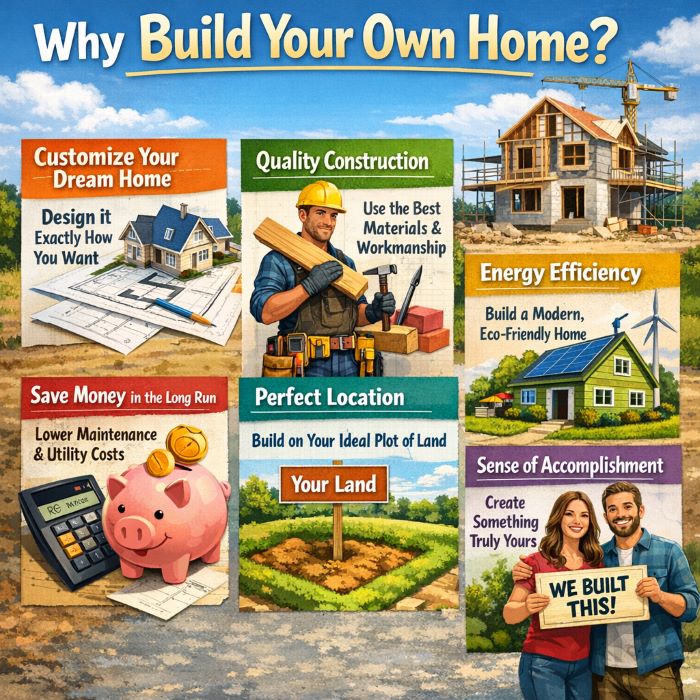
Building your own house can be one of the most fulfilling experiences of your life. Not only can it help you save money compared to buying a pre-built home, but it offers unmatched customization, ensuring your home reflects your style and needs.
This guide will cover all the key stages of home building, including planning, design, budgeting, and construction. It’s perfect for first-time builders, investors, or anyone looking to take control of their dream home project.
Before diving in, download the free checklist and sample budget spreadsheet linked at the end of this article. It will help you stay organized and track progress as you go through each phase.
Is Building Your Own House Right for You?
Before you commit to building your house, it’s essential to assess whether this path aligns with your goals, resources, and skills.
Quick Decision Checklist
Ask yourself these questions to gauge your readiness:
- Do you have the time? A self-build project can take 9–12 months or longer.
- What’s your budget? Do you have sufficient funds or financing options in place?
- Do you have any construction knowledge? While it’s not mandatory, basic building knowledge can be helpful.
- Are you comfortable managing risks? Delays, cost overruns, and unforeseen issues are common.
Pros and Cons
Pros:
- Complete control over design and materials.
- Potential cost savings compared to buying a finished home.
- Opportunity to build an energy-efficient, future-proof home.
Cons:
- Time-intensive and requires careful management.
- Can be stressful and may involve unexpected challenges.
Alternatives to Consider
If building from scratch feels overwhelming, explore these options:
- Buying a finished home: Ideal for those short on time.
- Renovating an existing property: A good middle ground for customization without starting from zero.
Planning and Feasibility
Proper planning is the foundation of any successful home-building project. This phase involves choosing the right location, understanding legal constraints, and conducting a feasibility study.
Market Research & Site Selection
Start by researching neighborhoods that fit your budget and lifestyle. Consider factors like:
- Zoning regulations: Ensure the site is zoned for residential construction.
- Orientation: South-facing lots maximize sunlight and energy efficiency.
- Soil type: Conduct a soil test to determine suitability for construction.
Legal Constraints & Zoning
Every location has its own building codes and zoning laws. Check:
- Setback requirements (distance from property lines).
- Maximum allowable floor area ratio (FAR).
- Restrictions on building height or design.
Feasibility Study & Site Survey
Hire a professional surveyor to evaluate the site. A basic feasibility study should include:
- An estimated cost per square foot.
- A high-level timeline for construction.
- Potential challenges like drainage issues or utility access.
Suggested Deliverables
By the end of this phase, you should have:
- A site report detailing constraints and opportunities.
- A preliminary budget and timeline.
Design, Drawings, and Permits
Once you’ve selected your site, it’s time to bring your vision to life with a strong design and the necessary permits.
Concept Design
Start by outlining your needs and wants:
- Create a wish list: Include features like open kitchens, home offices, or energy-efficient windows.
- Future-proof your design: Consider elements like accessibility, solar panels, and EV charging stations.
Choosing the Right Professional
Decide whether to hire:
- An architect: For custom designs.
- A design-build firm: For a streamlined process.
- Production plans: For budget-friendly, pre-designed layouts.
Essential Drawings
Your design package should include:
- Site plan
- Floor plans
- Elevations
- Structural and MEP (mechanical, electrical, plumbing) schematics
Permits & Approvals
The permitting process includes submitting plans to your local authority for review. Expect inspections at key stages like foundation and framing. Common delays occur due to incomplete documentation, so ensure all forms are accurate.
Energy Codes & Sustainability
Incorporate energy-efficient features like high R-value insulation and passive solar design. Many areas now require compliance with energy codes, so plan accordingly.
Financing and Detailed Budgeting
Building a house is a significant financial investment. Here’s how to create a realistic budget and secure funding.
Cost Components
Break down your budget into:
- Land purchase
- Site preparation (grading, drainage)
- Construction hard costs (materials, labor)
- Soft costs (design, permits, insurance)
- Landscaping and contingencies
Typical Cost Ranges
Costs vary widely based on location and design. On average:
- Basic construction: $100–$200 per square foot.
- Custom builds: $250+ per square foot.
Funding Options
Explore financing options like:
- Construction loans: Funds disbursed in stages as you build.
- Mortgage conversion: Converts your construction loan into a traditional mortgage after completion.
Cost-Saving Strategies
- Opt for a simpler design (e.g., rectangular layouts).
- Buy materials directly where possible.
- Phase the build: Finish landscaping or non-essential areas later.
Preparing the Site and Foundation
With financing secured, it’s time to prepare the site and lay the foundation.
Site Clearing & Grading
- Remove trees and debris.
- Ensure proper drainage to prevent water pooling.
Utility Hookups
Coordinate with utility providers to install:
- Water
- Sewer or septic system
- Electricity and gas
- Internet/cable
Foundation Selection
Choose from:
- Slab-on-grade: Affordable and simple.
- Crawlspace: Allows easier access to utilities.
- Basement: Adds storage or living space but increases costs.
Foundation Installation
Key steps include excavation, pouring concrete footings, and waterproofing. Inspections ensure the foundation meets local standards.
Framing and Building the Envelope
Framing creates the skeleton of your house, while the envelope protects it from the elements.
Framing Basics
Most homes use timber or steel framing. The frame includes load-bearing walls, roof trusses, and floor joists.
Building the Envelope
Install:
- Sheathing
- Housewrap
- Windows and doors
- Roof shingles or tiles
Weatherproofing & Insulation
- Add air and vapor barriers to prevent moisture buildup.
- Select insulation with high R-values for better energy efficiency.
MEP (Mechanical, Electrical, Plumbing)
This stage involves installing essential systems for your home.
Rough-In Stage
Install basic frameworks for HVAC, plumbing, and electrical systems before drywall goes up.
HVAC Selection
Choose energy-efficient systems like:
- Heat pumps
- Ductless mini-splits
- Centralized air conditioning
Plumbing & Electrical
Plan for:
- Water supply lines and drainage.
- Electrical panels, circuits, and smart home wiring.
Interior Finishes and Landscaping
Finish the inside and outside of your home with these touches.
Interior Finishes
Install drywall, flooring, cabinetry, and countertops. Choose durable, budget-friendly materials.
Kitchen & Bathrooms
These are high-impact spaces; prioritize quality countertops and fixtures.
Landscaping
Install driveways, sod, and fences. Add low-maintenance plants for curb appeal.
Managing the Build
Efficient project management is key to staying on time and budget.
Hiring Contractors
Decide whether to hire a general contractor or manage trades directly.
Communication & Documentation
Keep weekly logs, photographs, and signed change orders to track progress.
Common Problems and Solutions
Issues to Watch For:
- Budget overruns
- Contractor disputes
- Permit delays
Mitigation Tips:
- Keep a contingency fund.
- Communicate clearly with contractors.
- Make final decisions early.
Checklist and Printable Downloads
Short Checklist:
- Plan and budget.
- Secure financing.
- Obtain permits.
- Build foundation and frame.
- Install MEP systems.
- Complete finishes.
Download the PDF checklist and sample budgeting spreadsheet to stay organized.
Frequently Asked Questions
FAQ 1: How long does it take to build your own house?
Typically, 9–12 months, depending on complexity.
Costs range from $100 to $400 per square foot.
Final Call to Action
Ready to start your home-building journey? Contact us today for a free consultation or download our budget template to get started.
Example Timeline and Budget Table
| Milestone |
Timeline |
Cost Estimate |
| Site Prep & Foundation |
4–6 weeks |
$15,000–$30,000 |
| Framing & Envelope |
8–10 weeks |
$20,000–$50,000 |
| MEP Systems |
6–8 weeks |
$15,000–$40,000 |
| Finishes & Landscaping |
8–12 weeks |
$25,000–$60,000 |
House