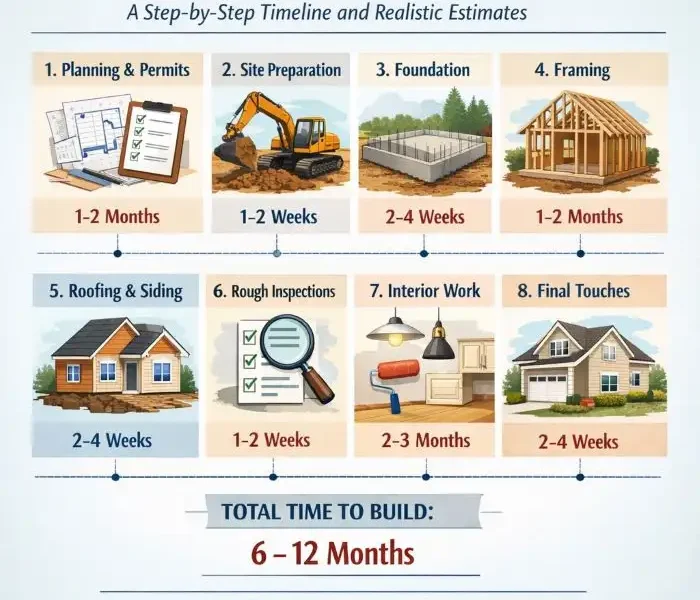
<p>If you’re wondering, <strong>“<a href="https://blog.remax.ca/how-long-does-it-take-to-build-a-house/">how long does it take to build a house</a>?”</strong>, the short answer is: it depends. Building a house is an exciting yet complex process that involves multiple stages, each with its own timeline. Whether you’re dreaming of a cozy production home, a semi-custom design, or a fully custom masterpiece, understanding the timeline can help you plan better and avoid surprises.</p>
<p>In this article, we’ll break down the <strong>realistic timelines for building a house</strong>, covering everything from pre-construction to move-in day. You’ll also learn about the factors that can speed up or delay the process, practical tips to stay on schedule, and how costs and time are often intertwined. By the end, you’ll have a clear roadmap to guide your home-building journey.</p>
<h4 id="-quick-answer-how-long-does-it-take-to-build-a-house-"><strong>How Long Does It Take to Build a House?</strong></h4>
<p>The time it takes to build a house varies depending on the type of home and other factors. Here’s a quick breakdown:</p>
<ul>
<li><strong>Production Homes</strong>: Typically 4–6 months.</li>
<li><strong>Semi-Custom Homes</strong>: Around 6–9 months.</li>
<li><strong>Fully Custom Homes</strong>: Anywhere from 9–18+ months.</li>
</ul>
<p>On average, most homes take <strong>6 to 12 months</strong> from groundbreaking to move-in. However, factors like permits, weather, and design changes can extend this timeline.</p>
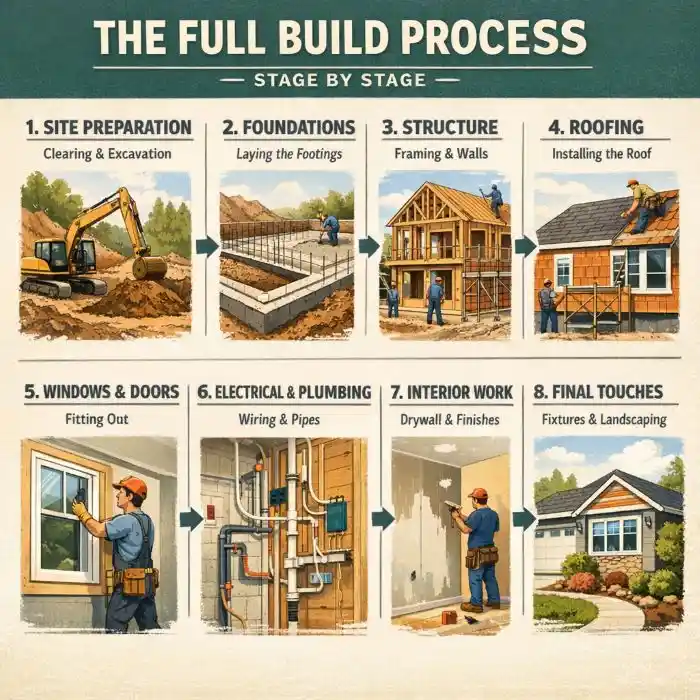
<h3 id="-the-full-build-process-stage-by-stage-"><strong>The Full Build Process — Stage by Stage</strong></h3>
<p><img class="aligncenter wp-image-7028 size-full" src="https://comeawayhome.co.uk/wp-content/uploads/2026/05/890e3bac-d7ea-48bb-81e0-770e73bcd952w-ezgif.com-jpg-to-webp-converter.webp" alt="how long does it take to build a house" width="700" height="700" /></p>
<p>Building a <a href="https://comeawayhome.co.uk/how-to-baby-proof-a-house/">house</a> involves several key stages, each contributing to the final product. Let’s explore these stages and their typical durations.</p>
<h4 id="-pre-construction-design-financing-and-permits-"><strong>Pre-Construction: Design, Financing, and Permits</strong></h4>
<p>This stage includes planning, securing financing, and obtaining permits. It can take anywhere from <strong>2 to 12+ weeks</strong>, depending on local regulations and the complexity of the design.</p>
<h4 id="-site-work-and-foundation-"><strong>Site Work and Foundation</strong></h4>
<p>Once permits are approved, the site is prepared. This involves clearing the land, excavation, and laying the foundation. Expect this stage to take <strong>2 to 8 weeks</strong>.</p>
<h4 id="-framing-and-exterior-shell-"><strong>Framing and Exterior Shell</strong></h4>
<p>The skeleton of the house is built during this phase, including walls, roof, and sheathing. This stage typically lasts <strong>2 to 6 weeks</strong>.</p>
<h4 id="-rough-ins-and-systems-"><strong>Rough-Ins and Systems</strong></h4>
<p>Plumbing, electrical wiring, and HVAC systems are installed during this phase. It usually takes <strong>2 to 6 weeks</strong>.</p>
<h4 id="-exterior-finishes-"><strong>Exterior Finishes</strong></h4>
<p>Windows, siding, and roofing are added to protect the house from the elements. This stage can take <strong>2 to 8 weeks</strong>.</p>
<h4 id="-interior-finishes-and-final-inspections-"><strong>Interior Finishes and Final Inspections</strong></h4>
<p>Drywall, paint, flooring, cabinets, and fixtures are installed. This is often the longest stage, lasting <strong>4 to 12+ weeks</strong>. Final inspections and landscaping wrap up the process, taking an additional <strong>2 to 6 weeks</strong>.</p>
<h3 id="-typical-timelines-by-home-type-"><strong>Typical Timelines by Home Type</strong></h3>
<p>The type of home you choose significantly impacts the construction timeline. Let’s dive deeper into the timelines for production, semi-custom, and fully custom homes.</p>
<h4 id="-production-homes-"><strong>Production Homes</strong></h4>
<ul>
<li><strong>Timeline</strong>: 4–6 months.</li>
<li><strong>Why Faster?</strong> These homes follow standardized designs and use bulk-ordered materials, which streamline the process.</li>
<li><strong>Best For</strong>: Buyers looking for affordability and quick delivery.</li>
</ul>
<h4 id="-semi-custom-homes-"><strong>Semi-Custom Homes</strong></h4>
<ul>
<li><strong>Timeline</strong>: 6–9 months.</li>
<li><strong>Why Moderate?</strong> While based on pre-designed plans, semi-custom homes allow for some personalization, which can add time.</li>
<li><strong>Best For</strong>: Homeowners who want a balance between customization and efficiency.</li>
</ul>
<h4 id="-fully-custom-homes-"><strong>Fully Custom Homes</strong></h4>
<ul>
<li><strong>Timeline</strong>: 9–18+ months.</li>
<li><strong>Why Longer?</strong> Custom homes involve unique designs, bespoke materials, and often more complex construction.</li>
<li><strong>Best For</strong>: Those seeking a one-of-a-kind home tailored to their vision.</li>
</ul>
<table>
<thead>
<tr>
<th><strong>Build Type</strong></th>
<th><strong>Typical Duration</strong></th>
<th><strong>Key Reasons</strong></th>
</tr>
</thead>
<tbody>
<tr>
<td>Production Homes</td>
<td>4–6 months</td>
<td>Standardized plans, bulk materials</td>
</tr>
<tr>
<td>Semi-Custom Homes</td>
<td>6–9 months</td>
<td>Moderate customization, design reviews</td>
</tr>
<tr>
<td>Fully Custom Homes</td>
<td>9–18+ months</td>
<td>Unique designs, bespoke materials</td>
</tr>
</tbody>
</table>
<h3 id="-factors-that-speed-up-or-slow-down-a-build-"><strong>Factors That Speed Up or Slow Down a Build</strong></h3>
<p>Several factors can influence how long it takes to build a house. Here are the most common ones:</p>
<ul>
<li><strong>Permitting and Inspections</strong>: Delays in obtaining permits or passing inspections can significantly extend timelines.</li>
<li><strong>Weather</strong>: Rain, snow, or extreme temperatures can halt construction.</li>
<li><strong>Site Complexity</strong>: Rocky soil or steep lots require additional preparation time.</li>
<li><strong>Supply Chain Issues</strong>: Long lead times for custom materials can cause delays.</li>
<li><strong>Labor Availability</strong>: A shortage of skilled workers can slow progress.</li>
<li><strong>Change Orders</strong>: Design changes during construction often lead to delays.</li>
</ul>
<h3 id="-how-to-shorten-your-build-time-"><strong>How to Shorten Your Build Time</strong></h3>
<p>If you’re eager to move into your new home sooner, here are some practical tips:</p>
<ul>
<li><strong>Lock Decisions Early</strong>: Finalize your choices for fixtures and finishes during the design phase.</li>
<li><strong>Choose a Production Builder</strong>: Opting for a production or semi-custom builder can save time.</li>
<li><strong>Order Long-Lead Items Early</strong>: Items like custom windows should be ordered well in advance.</li>
<li><strong>Hire Experienced Professionals</strong>: Work with a builder and subcontractors who have a proven track record.</li>
<li><strong>Parallel Tasks</strong>: Schedule landscaping or other tasks to overlap with interior finishes.</li>
</ul>
<h3 id="-costs-vs-time-when-faster-costs-more-"><strong>Costs vs. Time — When Faster Costs More</strong></h3>
<p>Speeding up construction often comes with additional costs. For example:</p>
<ul>
<li><strong>Overtime Pay</strong>: Workers may need to work longer hours.</li>
<li><strong>Expedited Shipping</strong>: Rush orders for materials can be expensive.</li>
<li><strong>Premium Pricing</strong>: Faster builds may require higher-priced contractors.</li>
</ul>
<table>
<thead>
<tr>
<th><strong>Faster Build</strong></th>
<th><strong>Cheaper Build</strong></th>
</tr>
</thead>
<tbody>
<tr>
<td>Overtime for workers</td>
<td>Standard work hours</td>
</tr>
<tr>
<td>Expedited materials</td>
<td>Regular shipping</td>
</tr>
<tr>
<td>Premium contractors</td>
<td>Budget-friendly options</td>
</tr>
</tbody>
</table>
<h3 id="-sample-schedules-"><strong>Sample Schedules</strong></h3>
<p>Here are two sample timelines to give you an idea of what to expect:</p>
<h4 id="-6-month-production-home-schedule-"><strong>6-Month Production Home Schedule</strong></h4>
<ul>
<li><strong>Month 1</strong>: Permits and site preparation.</li>
<li><strong>Month 2</strong>: Foundation and framing.</li>
<li><strong>Month 3</strong>: Rough-ins and exterior finishes.</li>
<li><strong>Month 4</strong>: Interior finishes begin.</li>
<li><strong>Month 5</strong>: Final systems and inspections.</li>
<li><strong>Month 6</strong>: Landscaping and move-in.</li>
</ul>
<h4 id="-12-month-custom-home-schedule-"><strong>12-Month Custom Home Schedule</strong></h4>
<ul>
<li><strong>Months 1–3</strong>: Design and permitting.</li>
<li><strong>Months 4–6</strong>: Site work and foundation.</li>
<li><strong>Months 7–9</strong>: Framing and rough-ins.</li>
<li><strong>Months 10–12</strong>: Interior finishes and final inspections.</li>
</ul>
<h3 id="-faqs-"><strong>FAQs</strong></h3>
<h4 id="-how-long-does-it-take-to-build-a-house-from-start-to-finish-"><strong>How long does it take to build a house from start to finish?</strong></h4>
<p>Most homes take <strong>6 to 12 months</strong>, but custom homes can take longer.</p>
<h4 id="-how-long-do-permits-take-"><strong>How long do permits take?</strong></h4>
<p>Permits can take anywhere from <strong>2 to 12+ weeks</strong>, depending on local regulations.</p>
<h4 id="-can-i-speed-up-the-build-for-an-extra-cost-"><strong>Can I speed up the build for an extra cost?</strong></h4>
<p>Yes, but it often involves higher costs for labor and materials.</p>
<h4 id="-what-causes-the-most-delays-"><strong>What causes the most delays?</strong></h4>
<p>Permitting issues, weather, and supply chain disruptions are common culprits.</p>
<h3 id="-conclusion-"><strong>Conclusion</strong></h3>
<p>Building a house is a journey that requires patience, planning, and flexibility. By understanding the timelines and factors involved, you can set realistic expectations and make informed decisions. Whether you’re building a production home or a fully custom design, the key is to stay proactive and work closely with your builder. Ready to start your dream home? Download our free build-timeline checklist to get started!</p>
<p><a href="https://comeawayhome.co.uk/">House</a></p>
If you’re wondering, “how long does it take to build a house?”, the short answer is: it depends. Building a house is an exciting yet complex process that involves multiple stages, each with its own timeline. Whether you’re dreaming of a cozy production home, a semi-custom design, or a fully custom masterpiece, understanding the timeline can help you plan better and avoid surprises.
In this article, we’ll break down the realistic timelines for building a house, covering everything from pre-construction to move-in day. You’ll also learn about the factors that can speed up or delay the process, practical tips to stay on schedule, and how costs and time are often intertwined. By the end, you’ll have a clear roadmap to guide your home-building journey.
How Long Does It Take to Build a House?
The time it takes to build a house varies depending on the type of home and other factors. Here’s a quick breakdown:
- Production Homes: Typically 4–6 months.
- Semi-Custom Homes: Around 6–9 months.
- Fully Custom Homes: Anywhere from 9–18+ months.
On average, most homes take 6 to 12 months from groundbreaking to move-in. However, factors like permits, weather, and design changes can extend this timeline.
The Full Build Process — Stage by Stage
Building a house involves several key stages, each contributing to the final product. Let’s explore these stages and their typical durations.
Pre-Construction: Design, Financing, and Permits
This stage includes planning, securing financing, and obtaining permits. It can take anywhere from 2 to 12+ weeks, depending on local regulations and the complexity of the design.
Site Work and Foundation
Once permits are approved, the site is prepared. This involves clearing the land, excavation, and laying the foundation. Expect this stage to take 2 to 8 weeks.
Framing and Exterior Shell
The skeleton of the house is built during this phase, including walls, roof, and sheathing. This stage typically lasts 2 to 6 weeks.
Rough-Ins and Systems
Plumbing, electrical wiring, and HVAC systems are installed during this phase. It usually takes 2 to 6 weeks.
Exterior Finishes
Windows, siding, and roofing are added to protect the house from the elements. This stage can take 2 to 8 weeks.
Interior Finishes and Final Inspections
Drywall, paint, flooring, cabinets, and fixtures are installed. This is often the longest stage, lasting 4 to 12+ weeks. Final inspections and landscaping wrap up the process, taking an additional 2 to 6 weeks.
Typical Timelines by Home Type
The type of home you choose significantly impacts the construction timeline. Let’s dive deeper into the timelines for production, semi-custom, and fully custom homes.
Production Homes
- Timeline: 4–6 months.
- Why Faster? These homes follow standardized designs and use bulk-ordered materials, which streamline the process.
- Best For: Buyers looking for affordability and quick delivery.
Semi-Custom Homes
- Timeline: 6–9 months.
- Why Moderate? While based on pre-designed plans, semi-custom homes allow for some personalization, which can add time.
- Best For: Homeowners who want a balance between customization and efficiency.
Fully Custom Homes
- Timeline: 9–18+ months.
- Why Longer? Custom homes involve unique designs, bespoke materials, and often more complex construction.
- Best For: Those seeking a one-of-a-kind home tailored to their vision.
| Build Type |
Typical Duration |
Key Reasons |
| Production Homes |
4–6 months |
Standardized plans, bulk materials |
| Semi-Custom Homes |
6–9 months |
Moderate customization, design reviews |
| Fully Custom Homes |
9–18+ months |
Unique designs, bespoke materials |
Factors That Speed Up or Slow Down a Build
Several factors can influence how long it takes to build a house. Here are the most common ones:
- Permitting and Inspections: Delays in obtaining permits or passing inspections can significantly extend timelines.
- Weather: Rain, snow, or extreme temperatures can halt construction.
- Site Complexity: Rocky soil or steep lots require additional preparation time.
- Supply Chain Issues: Long lead times for custom materials can cause delays.
- Labor Availability: A shortage of skilled workers can slow progress.
- Change Orders: Design changes during construction often lead to delays.
How to Shorten Your Build Time
If you’re eager to move into your new home sooner, here are some practical tips:
- Lock Decisions Early: Finalize your choices for fixtures and finishes during the design phase.
- Choose a Production Builder: Opting for a production or semi-custom builder can save time.
- Order Long-Lead Items Early: Items like custom windows should be ordered well in advance.
- Hire Experienced Professionals: Work with a builder and subcontractors who have a proven track record.
- Parallel Tasks: Schedule landscaping or other tasks to overlap with interior finishes.
Costs vs. Time — When Faster Costs More
Speeding up construction often comes with additional costs. For example:
- Overtime Pay: Workers may need to work longer hours.
- Expedited Shipping: Rush orders for materials can be expensive.
- Premium Pricing: Faster builds may require higher-priced contractors.
| Faster Build |
Cheaper Build |
| Overtime for workers |
Standard work hours |
| Expedited materials |
Regular shipping |
| Premium contractors |
Budget-friendly options |
Sample Schedules
Here are two sample timelines to give you an idea of what to expect:
6-Month Production Home Schedule
- Month 1: Permits and site preparation.
- Month 2: Foundation and framing.
- Month 3: Rough-ins and exterior finishes.
- Month 4: Interior finishes begin.
- Month 5: Final systems and inspections.
- Month 6: Landscaping and move-in.
12-Month Custom Home Schedule
- Months 1–3: Design and permitting.
- Months 4–6: Site work and foundation.
- Months 7–9: Framing and rough-ins.
- Months 10–12: Interior finishes and final inspections.
FAQs
How long does it take to build a house from start to finish?
Most homes take 6 to 12 months, but custom homes can take longer.
How long do permits take?
Permits can take anywhere from 2 to 12+ weeks, depending on local regulations.
Yes, but it often involves higher costs for labor and materials.
What causes the most delays?
Permitting issues, weather, and supply chain disruptions are common culprits.
Conclusion
Building a house is a journey that requires patience, planning, and flexibility. By understanding the timelines and factors involved, you can set realistic expectations and make informed decisions. Whether you’re building a production home or a fully custom design, the key is to stay proactive and work closely with your builder. Ready to start your dream home? Download our free build-timeline checklist to get started!
House