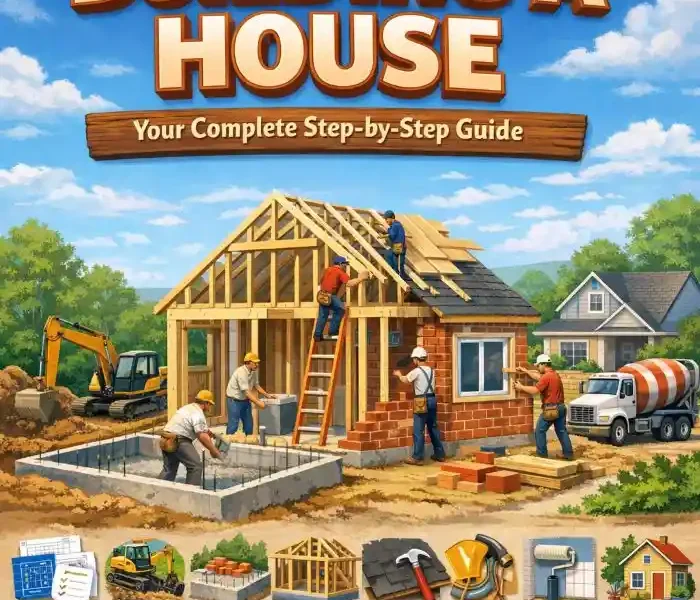
Dreaming of building a house that fits your family, your lifestyle, and your future plans can feel exciting and stressful at the same time. You may already have ideas about the number of bedrooms, the style of the front elevation, or the kind of kitchen you want. But once you start thinking about land, permits, labor, materials, and costs, the whole process can quickly feel overwhelming.
The good news is that building a house becomes much easier when you break it into clear steps. Instead of trying to understand everything at once, you can focus on one phase at a time. That approach helps you control your budget, reduce delays, and avoid expensive mistakes.
In 2026, building a house can take anywhere from 6 to 18 months, depending on location, design complexity, weather, approvals, and contractor performance. Costs also vary widely, but many homeowners are seeing price ranges from moderate to high, especially with rising material and labor rates.
As one construction professional often says, “Planning saves 20% on building a house costs.” That idea is simple but powerful. The more carefully you plan at the beginning, the fewer surprises you face later.
This guide walks you through the full journey, from planning and blueprints to construction and move-in day. Read on, and if you need help with your project, contact our team for a free consultation.
Planning Phase: Start with a Clear Roadmap
Before any digging begins, you need a strong plan. This is the stage where many successful home projects are won or lost. If you rush here, you may spend much more later.
When building a house, your first job is to define your goals. Think about how you live today and how you may live five or ten years from now. Do you need a home office? A guest room? A separate TV lounge? A larger kitchen for family gatherings? These decisions shape the size, layout, and cost of your home.
If you are planning in Lahore or elsewhere in Punjab, location matters a lot. The area you choose affects land price, soil conditions, access to utilities, approval requirements, and labor availability. Some locations are easier to develop, while others may need extra work before construction can even begin.
Define the Type of House You Want
Start by answering a few practical questions:
- How large should the house be?
- What style do you prefer? Modern, traditional, Spanish, ranch, minimalist?
- How many floors do you want?
- Do you need a lawn, terrace, or parking space?
- Will this be your forever home or an investment property?
These questions may seem simple, but they guide every later decision.
Build a Realistic Budget
A budget is more than a rough guess. It should cover land, design, permits, materials, labor, utilities, finishing, and a contingency reserve. Many people only think about bricks, cement, and labor. Then they get surprised by fees, design changes, or finishing costs.
A simple breakdown often looks like this:
- Land: Often the biggest cost, depending on city and neighborhood
- Materials: Around 40% of the total construction budget
- Labor: Around 30%
- Professional services and approvals: Architect, engineer, surveyor, permit fees
- Finishes and fixtures: Doors, tiles, paint, lights, kitchens, sanitary items
- Contingency: Add 10% to 20% for unexpected costs
Assemble the Right Team
You do not need the biggest team. You need the right team.
For most custom home projects, you should consider:
- Architect
- Structural engineer
- Contractor or builder
- Electrical and plumbing specialists
- Project manager or construction consultant, if your budget allows
Hiring experienced professionals can save you time, money, and stress. A weak team often leads to poor scheduling, bad workmanship, and repeated rework.
Cost of Building a House in 2026
Inflation continues to affect house construction costs in 2026. In many markets, prices for cement, steel, transport, and labor have gone up by around 10% or more compared to previous years. This is why early budgeting matters so much.
| Category | Estimated Cost (PKR/sq ft) | Notes |
|---|---|---|
| Foundation | 5,000-8,000 | Soil testing is key |
| Framing/Structure | 10,000-15,000 | Cost varies by concrete, steel, and design |
| Finishes | 20,000-30,000 | Luxury fixtures raise the budget fast |
A simple home may stay closer to the lower end, while a custom luxury home with imported finishes can move much higher.
If you want to keep costs under control, create a full budget before you start and review it at every stage. A budgeting tool or professional cost estimate can make a huge difference.
Design and Blueprints: Turn Ideas into a Buildable Plan
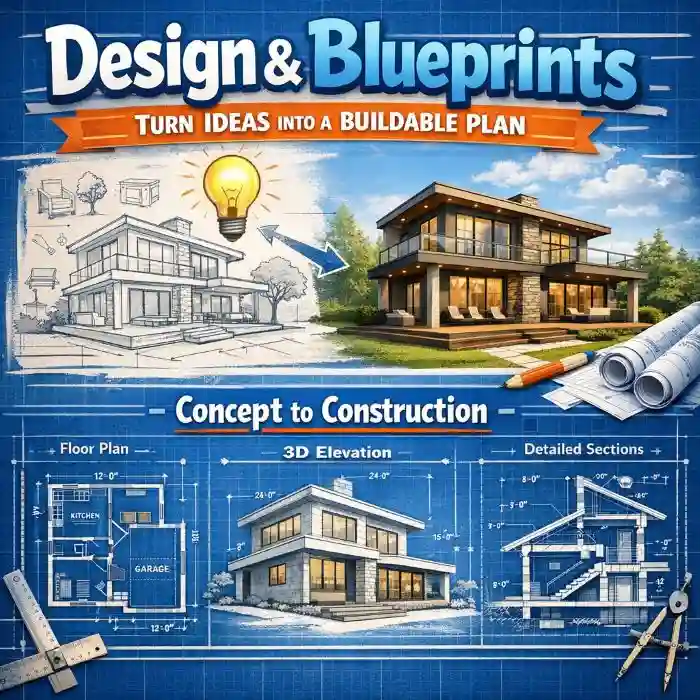
Once your planning is in place, the next step in building a house is the design phase. This is where your ideas become drawings, dimensions, and detailed plans that workers can actually follow.
A good design does more than look beautiful. It improves daily living, supports your budget, and reduces future problems. A poor design can make even an expensive house feel uncomfortable.
Choosing House Plans for Building a House
You generally have two choices: stock plans or custom plans.
Stock plans are ready-made layouts. They cost less and save time. They work well if your plot is standard and your needs are simple.
Custom plans are created just for you. They take more time and cost more, but they give you flexibility. If your plot has a unique size, your family has specific needs, or you want a special architectural style, custom design is often the better option.
Architects often use software such as AutoCAD, Revit, or 3D modeling tools to prepare detailed drawings. These help you visualize room flow, ceiling heights, exterior design, and furniture placement before construction begins.
Important Design Elements to Think About
When designing your home, focus on how the house will actually work in real life.
Think about:
- Number of bedrooms and bathrooms
- Open or separate living areas
- Kitchen position and ventilation
- Natural light
- Storage space
- Future expansion options
- Privacy between rooms
- Energy efficiency
A family home with 3 to 5 bedrooms is common, but layout matters more than just room count. A smart 5-marla or 10-marla design can feel more useful than a badly planned larger house.
Don’t Ignore Light, Air, and Flow
One of the most common mistakes in custom home building is focusing too much on appearance and not enough on comfort.
For example, a house may have a stunning exterior but poor ventilation. Or it may include large rooms with awkward circulation and wasted corridors. Some people place windows without considering sunlight direction, which can make the home too hot in summer and too dark in winter.
Always think about:
- Where the sun rises and sets
- Cross ventilation
- Easy movement between rooms
- Privacy for bedrooms
- Noise control
- Outdoor views
Good design is not just visual. It is practical.
Permits and Legal Requirements: Handle Approvals Early
Many people get excited about design and cost but forget one of the most important steps to build a house: legal approvals.
Without proper permits, your project can face delays, fines, forced changes, or even stoppage. It is much easier to handle approvals before work starts than to fix problems later.
Building Permit Process
If you are building a house in Lahore, the general process often includes approval through the relevant local authority, such as the Lahore Development Authority, depending on the area and type of development.
In many cases, the process includes:
- Submit architectural drawings
- Submit structural details
- Provide proof of ownership
- Pay required fees
- Receive review comments
- Revise documents if needed
- Get permit approval
- Allow inspections during construction
The building permit process usually takes around 4 to 8 weeks, but it can take longer if your drawings are incomplete or the property has zoning issues.
Permit and approval fees may come to around 2% of total project cost, though this varies by location.
Zoning, Setbacks, and Site Rules
You also need to understand local rules about:
- Plot coverage
- Height limits
- Front, side, and rear setbacks
- Parking requirements
- Drainage
- Utility connections
- Environmental restrictions
These rules directly affect what you can build. For example, you may want a larger footprint, but setback rules may reduce the allowable built area.
Why Local Experts Matter
A local architect, engineer, or consultant can often speed things up because they already understand regional codes, local office procedures, and common documentation issues.
That expert help can save you from repeat visits, rejected plans, and unnecessary delays. When it comes to approvals, experience saves time.
Site Preparation: Get the Land Ready for Construction
Before the structure rises, the site itself needs careful preparation. This phase may not be glamorous, but it is essential.
If the land is not properly prepared, later stages become harder, slower, and more expensive.
What Site Preparation Includes
Site prep usually involves:
- Clearing vegetation and debris
- Removing unwanted structures
- Marking boundaries
- Soil testing
- Leveling the site
- Excavation
- Temporary utility setup
- Creating access for labor and machinery
Soil testing is especially important. It helps determine how strong the ground is and what kind of foundation the house needs. Skipping this step can lead to serious structural problems.
Foundation Types for Building a House
The foundation supports everything above it. Choosing the right one depends on soil type, water table, climate, and budget.
| Foundation Type | Best For | Pros | Cons |
|---|---|---|---|
| Slab | Stable soil, simpler homes | Faster, lower cost, low maintenance | Harder to access pipes later |
| Crawl Space | Moderate climate, raised floor homes | Easier utility access, better moisture separation | Can collect humidity if not ventilated well |
| Basement | More space needs, colder regions | Extra storage or living area | Higher cost, more excavation required |
For many homes in Pakistan, slab and reinforced foundation systems are common, but site conditions should always guide the decision.
Construction Phases: From Structure to Finish
This is the stage people usually imagine when they think about building a house. It is also the longest and most detailed part of the journey.
A typical home construction timeline can range from 4 to 12 months for the main build, depending on complexity, labor quality, weather, and material supply.
One smart tip during this phase is to tie payments to milestones. As many professionals say, “Phased payments keep building a house on budget.” That means you pay based on completed work, not just promises.
Framing a House
Framing creates the skeleton of your home. In some regions, this may involve reinforced concrete structure work, while in others it may include wood or steel framing systems.
This phase gives shape to the house. Walls rise, room sizes become visible, openings for windows and doors are formed, and the overall scale of the project starts to feel real.
A lot happens during structural work:
- Columns and beams are placed
- Walls are built
- Slabs are poured
- Staircases are formed
- Roof structure is prepared, depending on design
This stage must be done with great care because structural errors are expensive to fix later. Even small mistakes in alignment, levels, or dimensions can affect every other trade that comes after.
Safety is also critical. Workers should use proper protective equipment, scaffolding must be secure, and material storage should not block access or create hazards.
If you are overseeing the project yourself, visit regularly and compare the actual work with the drawings. Do not assume everything is being done correctly. Ask for updates, check measurements, and make sure the engineer signs off on key structural milestones.
Roofing and Exterior
Once the main structure is ready, the house needs protection from weather. That is where roofing and exterior work come in.
Roofing options may include:
- Concrete roof systems
- Tiles
- Metal roofing
- Insulated roof assemblies
Each option has trade-offs. Tiles may offer a classic look and good heat performance, while metal roofs can be lightweight and quick to install. Concrete roofs are common in many urban homes and work well when properly waterproofed.
Exterior work also includes:
- Boundary walls
- Plaster
- Waterproofing
- Exterior paint or cladding
- Window and door frames
- Main entrance treatment
This is the phase where the house starts looking complete from the outside. But do not rush finishing the exterior before moisture protection is handled properly. Waterproofing failures can lead to long-term damage.
Plumbing, Electrical, and HVAC
These are the systems that make your house livable. Once walls and structure are ready, plumbers and electricians begin installing hidden lines and service points.
Plumbing includes:
- Water supply lines
- Drainage pipes
- Sewer connections
- Bathroom rough-ins
- Kitchen plumbing
- Water tank or pump setup
Electrical work includes:
- Wiring
- Switch boxes
- Distribution board
- Earthing
- Lighting points
- Power outlets
- Backup power planning
HVAC refers to heating, ventilation, and air conditioning. Even if you are not installing a full central system, you still need to plan for cooling, fresh air, and ventilation. In warmer climates, placement of AC units, ducting, and insulation can make a big difference in comfort and electricity bills.
This is also the right time to think about smart home integration. You may want smart switches, CCTV, door sensors, video doorbells, app-controlled lighting, or solar backup systems. Installing rough-ins now is much easier than adding them later.
Most importantly, these systems must meet local code and safety standards. Cheap shortcuts in plumbing and electrical work often lead to leaks, outages, or fire risks.
Interior Work
Interior work is where the house begins to feel like a home. This stage includes:
- Wall plaster or drywall finishing
- Ceiling work
- Tile installation
- Flooring
- Painting
- Cabinet work
- Doors
- Wardrobes
- Stair railings
- Sanitary fittings
- Light fixtures
This phase requires patience because many finishing items depend on each other. For example, flooring should be timed properly with painting, cabinetry, and fixture installation. If sequencing is poor, completed work can get damaged by the next team.
It is a good idea to keep finish samples in one place so you can compare your choices for tiles, paint, wood tones, hardware, and countertops. Many homeowners overspend here because small upgrades add up quickly.
A practical way to manage this stage is to sort choices into three categories:
- Must-have
- Nice-to-have
- Upgrade later
That keeps your budget under control without sacrificing the most important parts of your home.
Keep the Project on Schedule
A simple timeline or Gantt-style construction schedule can help track progress. It does not need to be complicated. Even a weekly milestone sheet can help you see whether foundation, structure, MEP work, and finishes are moving in the right order.
Good scheduling prevents one of the most common problems in building a house: crews waiting on each other and wasting time.
Materials and Sustainability: Build Smarter for 2026 and Beyond
Today, many homeowners want more than a beautiful house. They want a home that is efficient, durable, and cheaper to maintain over time. That is why sustainable house building is becoming more popular.
Sustainability does not always mean expensive. In many cases, it simply means choosing materials and systems that reduce waste, improve energy performance, and last longer.
Best Materials for Building a House
Some of the most common and effective materials include:
- Concrete: Strong and widely used for structure
- Steel: High strength and reliable for reinforcement
- Eco-bricks or insulated blocks: Better thermal performance
- Recycled steel: A greener option in some projects
- Double-glazed windows: Better insulation and noise control
- Solar panels: Help reduce long-term power costs
The best materials depend on climate, location, budget, and the type of home you are building. A smart approach balances upfront cost with lifetime value.
Top Sustainable Choices for 2026
Here are five practical sustainability options many homeowners are considering:
- Solar panel systems for lower electricity costs
- Roof insulation to reduce indoor heat gain
- Low-flow plumbing fixtures to save water
- LED lighting for lower energy use
- Recycled or locally sourced materials to reduce transport impact
These choices can make your house more efficient without making the project overly complex.
Estimated Sustainable Material Snapshot
| Sustainable Choice | Approximate Cost Impact | Main Benefit |
|---|---|---|
| Solar panels | Higher upfront cost | Long-term energy savings |
| Roof insulation | Moderate | Better comfort, lower cooling cost |
| Double-glazed windows | Moderate to high | Heat and noise reduction |
| Eco-bricks/insulated blocks | Moderate | Improved energy efficiency |
| LED lighting system | Low to moderate | Lower electricity bills |
If your business offers eco-friendly materials, this is also the perfect stage to guide clients toward smarter long-term decisions. Many people are willing to invest in green materials once they understand the savings and comfort benefits.
Budgeting and Financing: Control the Money Before It Controls You
No matter how exciting the design is, the success of building a house often comes down to one thing: financial control.
For a 2000 sq ft house, total costs in many cases may range roughly from PKR 50 to 150 lakhs or more, depending on land, structural quality, location, and finishing level. A simple build stays on the lower side, while custom designs and luxury finishes push the total much higher.
Financing Options for Building a House
Homeowners usually fund construction in one of these ways:
- Personal savings
- Family support
- Construction loans
- Bank financing
- Phased self-funding during build
Banks such as major local lenders may offer home construction finance, but rates, terms, approval standards, and disbursement schedules vary. Always compare carefully before committing.
Ask about:
- Markup or interest rate
- Down payment requirement
- Construction stage disbursements
- Loan tenure
- Insurance or hidden charges
- Penalties for delays
Protect Yourself from Overruns
Almost every home project faces some budget pressure. The trick is to prepare for it.
Keep these rules in mind:
- Set aside 10% to 20% contingency
- Finalize design before construction starts
- Avoid frequent changes during finishing
- Track material purchases
- Tie contractor payments to completed work
- Approve substitutions before they happen
A house can go over budget slowly, one “small” decision at a time. A better tile, upgraded doors, premium sanitary fittings, imported lights, and custom wardrobes may each seem manageable on their own. Together, they can push your budget far beyond plan.
Common Challenges and Solutions: What Can Go Wrong and How to Handle It
Even well-planned projects face problems. That does not mean failure. It means you need to respond early and calmly.
Some common challenges include:
- Delays due to weather
- Material shortages
- Permit issues
- Labor inconsistency
- Cost overruns
- Design changes after construction starts
Mistakes to Avoid When Building a House
One of the biggest mistakes is rushing the design. If room sizes, utility layouts, and elevation details are not finalized early, changes during construction become expensive.
Another serious mistake is skimping on the foundation. Some homeowners try to save money at the structural level, which is risky. A decorative feature can wait. A structural problem cannot.
Here are a few practical solutions:
- Delay in permits: Submit complete documents early and follow up regularly
- Budget pressure: Freeze finish selections before purchasing
- Poor contractor performance: Use milestone-based contracts and written scopes
- Material waste: Track inventory and secure site storage
- Weather slowdown: Build buffer time into the schedule
For example, if rain delays exterior plaster, use that time to finalize interior material selections instead of letting the whole project stall. Smart sequencing can reduce the damage caused by setbacks.
Final Touches and Move-In: Finish Strong
The last stage of building a house is about inspection, cleanup, testing, and handover.
Before moving in, make sure you complete:
- Final inspections
- Utility connections
- Water and power testing
- Snag list or punch list corrections
- Deep cleaning
- Landscaping
- Boundary and gate work
- Security system checks
Walk through the entire house carefully. Test doors, windows, taps, switches, drains, lights, and locks. Small issues are common at the end, and this is the right time to get them fixed.
Then take a moment to enjoy the milestone. Building a house is a major achievement. After months of decisions, stress, and planning, you finally get to step into a space that was built around your life.
FAQs About Building a House
How long does building a house take?
In most cases, building a house takes 6 to 18 months from planning to completion. Smaller homes with simple designs may finish sooner, while custom homes with permits, design revisions, or supply delays can take longer.
What is the cost to build a house in Pakistan?
Costs vary by city, design, material quality, and finishing level. A broad estimate may range from PKR 150K to 400K per square meter or more in premium projects. Always get a detailed cost estimate based on your plot and design.
Is DIY a good idea, or should I hire professionals?
DIY may work for small tasks, finish selection, or project monitoring, but full building a house projects usually need professionals. Structural work, permits, plumbing, electrical systems, and scheduling all require technical skill. Hiring the right team reduces mistakes and protects your investment.
What are the most important steps to build a house successfully?
The key steps include:
- Planning your goals and budget
- Designing proper blueprints
- Getting permits approved
- Preparing the site
- Completing structure and systems
- Managing finishes and inspections
- Moving in after final testing
How can I save money when building a house?
You can save money by finalizing the design early, avoiding frequent changes, comparing material quotes, using standard sizes where possible, and setting a clear finish budget. It also helps to keep a contingency fund so you are not forced into poor decisions under pressure.
What are some sustainable tips for building a house?
Choose better insulation, energy-efficient lighting, low-flow fixtures, double-glazed windows, and solar-ready systems. Sustainable house building is not just about the environment. It also lowers long-term running costs and improves comfort.
Should I use stock plans or a custom design?
If your needs are simple and your plot is straightforward, stock plans can save time and money. If you want a tailored layout, future flexibility, or a home that responds to a unique site, custom design is often better.
How do I improve SEO for this FAQ section on my blog?
If you are publishing this article on a business website, you can add FAQ schema markup to help search engines better understand the questions and answers. That can improve visibility in search results.
Conclusion
Building a house is one of the most rewarding projects you can take on, but it only goes smoothly when you follow the right steps. From planning and budgeting to permits, structure, materials, and final finishes, every stage matters.
If you stay organized, hire the right people, and make informed decisions early, you can avoid many of the mistakes that make home construction stressful and expensive.
Ready to start building a house? Partner with our team for seamless planning, smarter budgeting, and confident execution from day one.
Related Content Ideas
- Home remodeling tips for growing families
- How to plan a practical kitchen renovation
- Budget-friendly ways to upgrade your home exterior