<p>Selling a home can sometimes feel like an uphill battle. You put up the “For Sale” sign, stage your home perfectly, and yet the offers are slow to come in. If you’re in this situation, you might have heard of an unconventional trick to speed up the process—a centuries-old tradition of burying a St. Joseph statue. This practice has gained viral appeal among home sellers, combining faith, superstition, and a touch of hope.</p>
<p>In this comprehensive guide, we’ll explore <a href="https://www.thecatholicspirit.com/news/local-news/can-st-joseph-sell-a-house-skip-burying-statue-priests-say/"><strong>how to bury St. Joseph to sell a house</strong></a>, dive into the tradition’s fascinating history, and provide a detailed step-by-step guide. Whether you’re a believer or just curious, this guide will help you understand the ins and outs of this unique ritual.</p>
<p>Imagine trying to sell your house for months with no success. You’ve lowered the price, hosted open houses, and even consulted realtors, but nothing seems to work. Then, one day, you hear about a tradition that promises results—burying a small statue of <strong>St. Joseph</strong>, the patron saint of homes and families, in your yard. Intrigued, you decide to give it a try.</p>
<p>Fast-forward a few weeks, and you receive multiple offers on your property. Coincidence or divine intervention? Many homeowners swear by this ritual, claiming it has helped them sell their homes in as little as 2-4 weeks.</p>
<p>If you’re wondering <strong>how to bury St. Joseph to sell a house</strong>, this guide will walk you through the steps, the history, and the pros and cons of this unique tradition. Whether you’re a devout Catholic or simply looking for a psychological boost, this ritual is worth exploring.</p>
<h2 id="history-of-burying-st-joseph">History of Burying St. Joseph</h2>
<p><img class="aligncenter wp-image-6970 size-full" src="https://comeawayhome.co.uk/wp-content/uploads/2026/05/f37b2ce3-d223-46ec-8d37-c1e32176eb36c-ezgif.com-jpg-to-webp-converter.webp" alt="how to bury st joseph to sell a house" width="700" height="700" /></p>
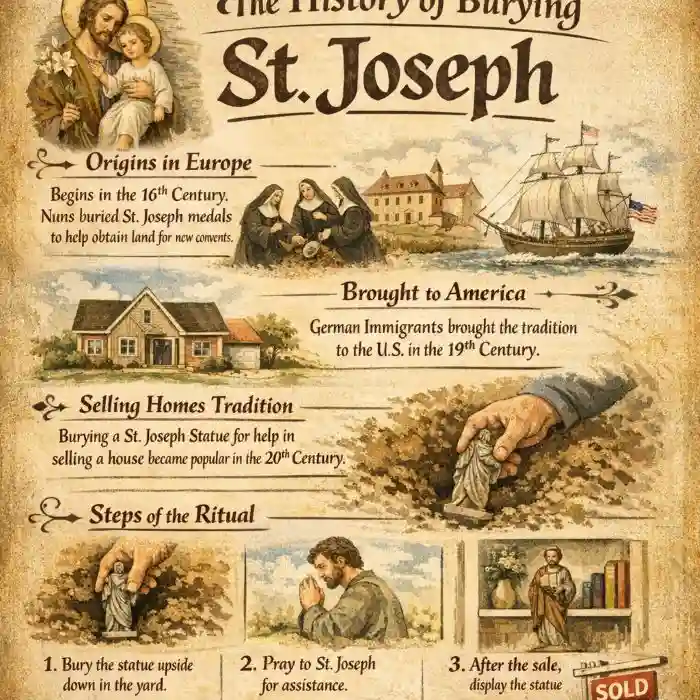
<p>The tradition of burying a St. Joseph statue dates back several centuries. While its exact origins are debated, the practice is rooted in Catholic devotion to St. Joseph, who is revered as the protector of families and homes. Let’s take a deeper look at the history behind this fascinating ritual.</p>
<h3 id="st-joseph-the-patron-saint-of-homes">St. Joseph: The Patron Saint of Homes</h3>
<p>St. Joseph, the earthly father of Jesus Christ, is a pivotal figure in Christian theology. Often depicted as a humble carpenter, he symbolizes hard work, stability, and protection. For centuries, Catholics have turned to him for guidance in matters related to family, work, and shelter.</p>
<h3 id="the-origins-of-the-tradition">The Origins of the Tradition</h3>
<p>The practice of burying a St. Joseph statue can be traced back to <strong>18th-century Europe</strong>, where nuns reportedly buried medals or statues of St. Joseph in the ground while praying for land to build convents. This act was seen as a way to entrust their real estate needs to the saint.</p>
<p>In the <strong>1990s</strong>, the tradition gained popularity in the United States, thanks to the rise of “St. Joseph home-selling kits” sold by real estate companies. These kits typically include a small plastic statue, a prayer card, and instructions for carrying out the ritual.</p>
<h3 id="timeline-of-key-developments">Timeline of Key Developments</h3>
<p>Here’s a timeline summarizing the evolution of this tradition:</p>
<table>
<thead>
<tr>
<th>Era</th>
<th>Key Development</th>
</tr>
</thead>
<tbody>
<tr>
<td>1700s</td>
<td>European nuns bury statues for land blessings</td>
</tr>
<tr>
<td>1990s</td>
<td>U.S. realtors market “home-seller kits”</td>
</tr>
<tr>
<td>2020s</td>
<td>Online virality amid housing market slowdowns</td>
</tr>
</tbody>
</table>
<h2 id="does-it-work-myths-vs-reality">Does It Work? Myths vs. Reality</h2>
<p>Many people are skeptical about the effectiveness of burying a St. Joseph statue. After all, there’s no scientific evidence to support the idea that a buried statue can sell a <a href="https://comeawayhome.co.uk/how-to-build-a-pergola-attached-to-the-house/">house</a>. However, the tradition persists for several reasons.</p>
<h3 id="the-placebo-effect">The Placebo Effect</h3>
<p>While the ritual itself may not directly influence buyers, it can provide a <strong>psychological boost</strong> to sellers. Knowing that you’ve taken an extra step, even if it’s symbolic, can help you feel more optimistic and proactive about the selling process.</p>
<h3 id="church-perspectives">Church Perspectives</h3>
<p>Some Catholic priests caution against burying the statue upside down, calling it disrespectful. Instead, they recommend placing the statue in a prominent spot in your home and offering sincere prayers.</p>
<h3 id="pros-and-cons-of-the-tradition">Pros and Cons of the Tradition</h3>
<p>Here’s a quick comparison of the benefits and drawbacks:</p>
<table>
<thead>
<tr>
<th>Pros</th>
<th>Cons</th>
</tr>
</thead>
<tbody>
<tr>
<td>Boosts seller confidence</td>
<td>Disapproval from some religious groups</td>
</tr>
<tr>
<td>Affordable (usually <$20)</td>
<td>No guaranteed results</td>
</tr>
</tbody>
</table>
<h2 id="step-by-step-how-to-bury-st-joseph-to-sell-a-house">Step-by-Step: How to Bury St. Joseph to Sell a House</h2>
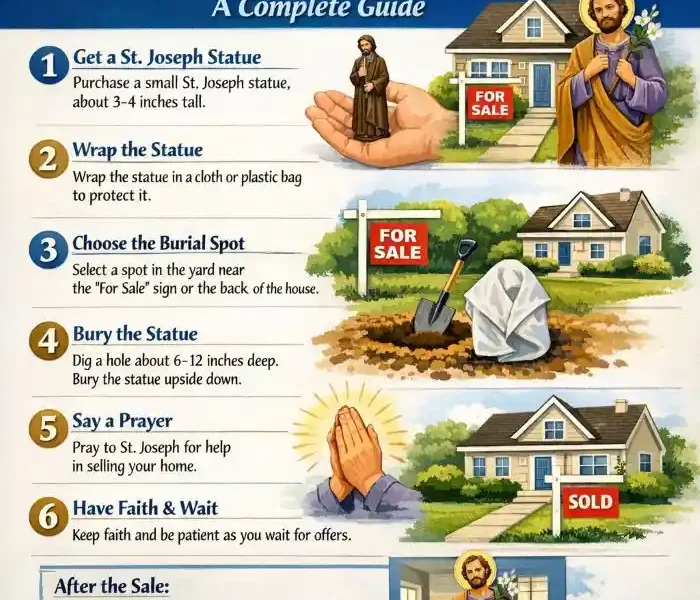
<p>If you’re ready to give this tradition a try, follow these steps to ensure you do it correctly.</p>
<h3 id="gather-supplies">Gather Supplies</h3>
<ul>
<li>A <strong>3-4 inch St. Joseph statue</strong> (available in home-seller kits).</li>
<li>Cloth or plastic wrap to protect the statue.</li>
<li>A small shovel or spade for digging.</li>
</ul>
<h3 id="choose-the-right-location">Choose the Right Location</h3>
<ul>
<li><strong>Near the “For Sale” sign</strong>: This is a common spot, as it symbolizes attracting buyers.</li>
<li><strong>Depth</strong>: Dig a hole about 12 inches deep.</li>
<li><strong>Position</strong>: Traditionally, the statue is buried <strong>upside down</strong>, with its feet pointing upward. However, some prefer to bury it facing the house or the road.</li>
</ul>
<h3 id="burial-process">Burial Process</h3>
<ol>
<li><strong>Wrap the statue</strong> in cloth or plastic to protect it from dirt.</li>
<li>Dig a hole in the chosen location.</li>
<li>Place the statue in the hole, ensuring it is positioned as per tradition.</li>
<li>Recite a prayer, such as:<br />
<em>“St. Joseph, I am turning to you for your assistance in selling my home quickly and smoothly. I entrust this process to your care.”</em></li>
<li>Cover the hole with soil and mark the spot.</li>
<li>Continue to pray daily until the house is sold.</li>
</ol>
<h3 id="post-sale-ritual">Post-Sale Ritual</h3>
<p>Once your house is sold, it’s essential to honor St. Joseph by:</p>
<ul>
<li>Digging up the statue.</li>
<li>Cleaning it thoroughly.</li>
<li>Displaying it in your new home as a sign of gratitude.</li>
</ul>
<h2 id="powerful-prayers-and-novenas">Powerful Prayers and Novenas</h2>
<p>Prayers are an integral part of this tradition. Here are a few popular options:</p>
<h3 id="st-joseph-home-sale-prayer">St. Joseph Home Sale Prayer</h3>
<p><em>“O Blessed St. Joseph, guardian of homes and families, I humbly ask for your intercession. May my home sell quickly, smoothly, and to the right buyer. Amen.”</em></p>
<h3 id="7-day-novena">7-Day Novena</h3>
<p>A novena is a series of prayers recited over nine days. Here’s a simplified version:<br />
<em>“St. Joseph, I turn to you with faith and trust. Please guide this home sale process and bring it to a successful conclusion. Amen.”</em></p>
<p>Recite these prayers daily, ideally in the morning or evening, while lighting a candle for added focus.</p>
<h2 id="alternatives-if-you-skip-burial">Alternatives If You Skip Burial</h2>
<p>If you’re uncomfortable with the idea of burying a statue, there are other ways to seek St. Joseph’s assistance.</p>
<table>
<thead>
<tr>
<th>Method</th>
<th>Ease</th>
<th>Tradition Level</th>
</tr>
</thead>
<tbody>
<tr>
<td>Burial</td>
<td>Medium</td>
<td>High</td>
</tr>
<tr>
<td>Windowsill prayer</td>
<td>Easy</td>
<td>Medium</td>
</tr>
<tr>
<td>Home altar</td>
<td>Easy</td>
<td>High</td>
</tr>
</tbody>
</table>
<p>Modern alternatives also include using digital prayer apps or combining this tradition with Feng Shui techniques for home staging.</p>
<h2 id="real-stories-and-testimonials">Real Stories and Testimonials</h2>
<p>Countless homeowners have shared anecdotes about how burying a St. Joseph statue helped them sell their homes quickly. For instance:</p>
<ul>
<li><strong>Case 1</strong>: A family in Chicago sold their house within two weeks of burying the statue.</li>
<li><strong>Case 2</strong>: A realtor from Texas reported that 30% of her clients use this tradition, claiming it gives them hope.</li>
</ul>
<p>While these stories are anecdotal, they highlight the emotional and psychological impact of the ritual.</p>
<h2 id="conclusion-and-call-to-action">Conclusion and Call to Action</h2>
<p>In conclusion, learning <strong>how to bury St. Joseph to sell a house</strong> is more than just a quirky tradition; it’s a way to foster hope during a stressful time. Whether you’re a believer or simply curious, this ritual offers a unique perspective on the home-selling journey.</p>
<p>Have you tried this tradition? Share your experiences in the comments below! And don’t forget to subscribe for more real estate tips and tricks. Good luck with your home sale!</p>
<p><a href="https://comeawayhome.co.uk/">House</a></p>
Selling a home can sometimes feel like an uphill battle. You put up the “For Sale” sign, stage your home perfectly, and yet the offers are slow to come in. If you’re in this situation, you might have heard of an unconventional trick to speed up the process—a centuries-old tradition of burying a St. Joseph statue. This practice has gained viral appeal among home sellers, combining faith, superstition, and a touch of hope.
In this comprehensive guide, we’ll explore how to bury St. Joseph to sell a house, dive into the tradition’s fascinating history, and provide a detailed step-by-step guide. Whether you’re a believer or just curious, this guide will help you understand the ins and outs of this unique ritual.
Imagine trying to sell your house for months with no success. You’ve lowered the price, hosted open houses, and even consulted realtors, but nothing seems to work. Then, one day, you hear about a tradition that promises results—burying a small statue of St. Joseph, the patron saint of homes and families, in your yard. Intrigued, you decide to give it a try.
Fast-forward a few weeks, and you receive multiple offers on your property. Coincidence or divine intervention? Many homeowners swear by this ritual, claiming it has helped them sell their homes in as little as 2-4 weeks.
If you’re wondering how to bury St. Joseph to sell a house, this guide will walk you through the steps, the history, and the pros and cons of this unique tradition. Whether you’re a devout Catholic or simply looking for a psychological boost, this ritual is worth exploring.
History of Burying St. Joseph
The tradition of burying a St. Joseph statue dates back several centuries. While its exact origins are debated, the practice is rooted in Catholic devotion to St. Joseph, who is revered as the protector of families and homes. Let’s take a deeper look at the history behind this fascinating ritual.
St. Joseph: The Patron Saint of Homes
St. Joseph, the earthly father of Jesus Christ, is a pivotal figure in Christian theology. Often depicted as a humble carpenter, he symbolizes hard work, stability, and protection. For centuries, Catholics have turned to him for guidance in matters related to family, work, and shelter.
The Origins of the Tradition
The practice of burying a St. Joseph statue can be traced back to 18th-century Europe, where nuns reportedly buried medals or statues of St. Joseph in the ground while praying for land to build convents. This act was seen as a way to entrust their real estate needs to the saint.
In the 1990s, the tradition gained popularity in the United States, thanks to the rise of “St. Joseph home-selling kits” sold by real estate companies. These kits typically include a small plastic statue, a prayer card, and instructions for carrying out the ritual.
Timeline of Key Developments
Here’s a timeline summarizing the evolution of this tradition:
| Era |
Key Development |
| 1700s |
European nuns bury statues for land blessings |
| 1990s |
U.S. realtors market “home-seller kits” |
| 2020s |
Online virality amid housing market slowdowns |
Does It Work? Myths vs. Reality
Many people are skeptical about the effectiveness of burying a St. Joseph statue. After all, there’s no scientific evidence to support the idea that a buried statue can sell a house. However, the tradition persists for several reasons.
The Placebo Effect
While the ritual itself may not directly influence buyers, it can provide a psychological boost to sellers. Knowing that you’ve taken an extra step, even if it’s symbolic, can help you feel more optimistic and proactive about the selling process.
Church Perspectives
Some Catholic priests caution against burying the statue upside down, calling it disrespectful. Instead, they recommend placing the statue in a prominent spot in your home and offering sincere prayers.
Pros and Cons of the Tradition
Here’s a quick comparison of the benefits and drawbacks:
| Pros |
Cons |
| Boosts seller confidence |
Disapproval from some religious groups |
| Affordable (usually <$20) |
No guaranteed results |
Step-by-Step: How to Bury St. Joseph to Sell a House
If you’re ready to give this tradition a try, follow these steps to ensure you do it correctly.
Gather Supplies
- A 3-4 inch St. Joseph statue (available in home-seller kits).
- Cloth or plastic wrap to protect the statue.
- A small shovel or spade for digging.
Choose the Right Location
- Near the “For Sale” sign: This is a common spot, as it symbolizes attracting buyers.
- Depth: Dig a hole about 12 inches deep.
- Position: Traditionally, the statue is buried upside down, with its feet pointing upward. However, some prefer to bury it facing the house or the road.
Burial Process
- Wrap the statue in cloth or plastic to protect it from dirt.
- Dig a hole in the chosen location.
- Place the statue in the hole, ensuring it is positioned as per tradition.
- Recite a prayer, such as:
“St. Joseph, I am turning to you for your assistance in selling my home quickly and smoothly. I entrust this process to your care.”
- Cover the hole with soil and mark the spot.
- Continue to pray daily until the house is sold.
Post-Sale Ritual
Once your house is sold, it’s essential to honor St. Joseph by:
- Digging up the statue.
- Cleaning it thoroughly.
- Displaying it in your new home as a sign of gratitude.
Powerful Prayers and Novenas
Prayers are an integral part of this tradition. Here are a few popular options:
St. Joseph Home Sale Prayer
“O Blessed St. Joseph, guardian of homes and families, I humbly ask for your intercession. May my home sell quickly, smoothly, and to the right buyer. Amen.”
7-Day Novena
A novena is a series of prayers recited over nine days. Here’s a simplified version:
“St. Joseph, I turn to you with faith and trust. Please guide this home sale process and bring it to a successful conclusion. Amen.”
Recite these prayers daily, ideally in the morning or evening, while lighting a candle for added focus.
Alternatives If You Skip Burial
If you’re uncomfortable with the idea of burying a statue, there are other ways to seek St. Joseph’s assistance.
| Method |
Ease |
Tradition Level |
| Burial |
Medium |
High |
| Windowsill prayer |
Easy |
Medium |
| Home altar |
Easy |
High |
Modern alternatives also include using digital prayer apps or combining this tradition with Feng Shui techniques for home staging.
Real Stories and Testimonials
Countless homeowners have shared anecdotes about how burying a St. Joseph statue helped them sell their homes quickly. For instance:
- Case 1: A family in Chicago sold their house within two weeks of burying the statue.
- Case 2: A realtor from Texas reported that 30% of her clients use this tradition, claiming it gives them hope.
While these stories are anecdotal, they highlight the emotional and psychological impact of the ritual.
Conclusion and Call to Action
In conclusion, learning how to bury St. Joseph to sell a house is more than just a quirky tradition; it’s a way to foster hope during a stressful time. Whether you’re a believer or simply curious, this ritual offers a unique perspective on the home-selling journey.
Have you tried this tradition? Share your experiences in the comments below! And don’t forget to subscribe for more real estate tips and tricks. Good luck with your home sale!
House