Waking up to find roaches scurrying across your kitchen floor is a nightmare scenario for anyone. If you’ve ever wondered, “Can roaches travel from neighbors house?”, you’re not alone. This is a common concern for homeowners and apartment dwellers alike, especially in urban areas like Lahore, Pakistan, where shared spaces and walls are commonplace.
The answer is yes—roaches can and do travel from one home to another. In fact, studies estimate that up to 70% of cockroach infestations in multi-family homes originate from neighboring units. The tiny pests are capable of squeezing through cracks, vents, and plumbing systems, making it easy for them to migrate from one house to the next.
In this article, we’ll dive deep into how roaches travel, the signs that your infestation might have started next door, and most importantly, how to prevent these unwelcome guests from invading your home. Whether you’re in Pakistan or anywhere else in the world, this guide has you covered.
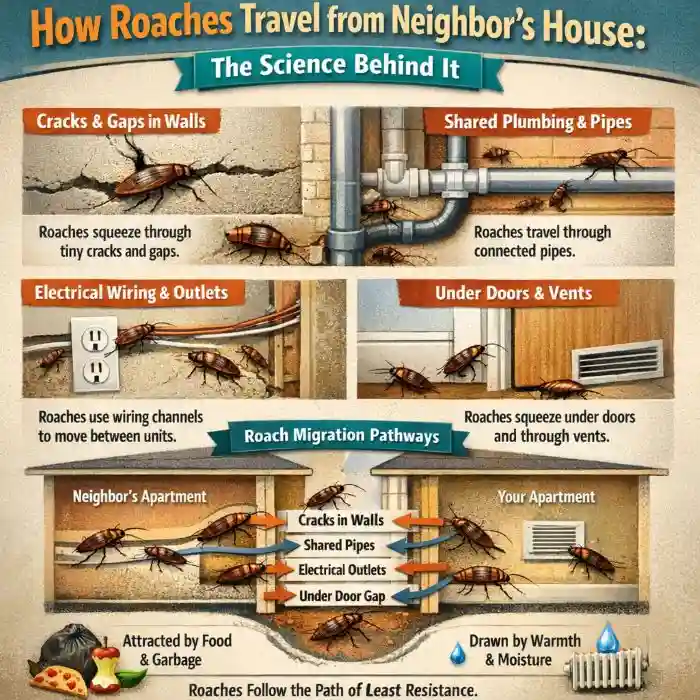
How Roaches Travel from Neighbors House: The Science Behind It
The Biology of Cockroach Movement
Cockroaches are resilient pests, and their biology makes them highly adept at exploring new environments. The most common species found in urban homes include the German cockroach (small and light brown) and the American cockroach (larger and reddish-brown). Both species are thigmotactic, which means they prefer to move through dark, tight spaces like cracks and crevices.
These pests are constantly on the lookout for food, water, and shelter, which motivates them to travel. Roaches are also nocturnal, which means they explore mostly at night, often going unnoticed until the infestation has grown.
Common Entry Routes for Roaches
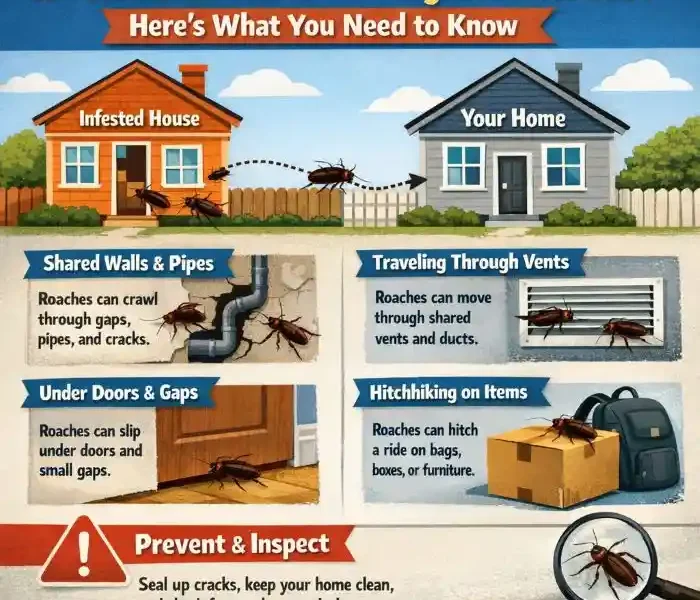
Roaches have an uncanny ability to find their way into homes. Here are the most frequent ways they travel from a neighbor’s house:
- Shared Walls and Floors
- In apartments and townhouses, roaches often crawl through cracks and gaps in shared walls.
- They can also move between floors, especially in multi-story buildings.
- Plumbing Pipes and Drains
- Plumbing systems act as highways for roaches. They can move through pipes, drains, and even sewers that connect neighboring homes.
- HVAC Vents and Air Ducts
- Air conditioning vents and heating ducts provide pathways for free movement between units.
- Gaps Under Doors and Windows
- Even the smallest gaps under doors or poorly sealed windows can act as access points for roaches.
- Outdoor Pathways
- Roaches can travel through shared outdoor spaces like garbage areas, landscaping, and even rooftops.
Triggers for Roach Migration
Why do roaches decide to leave one home and invade another? Here are the main reasons:
- Overpopulation: When a roach infestation grows too large, some of the pests will venture out to find new territory.
- Food Scarcity: If food sources in their current location run out, roaches will search elsewhere.
- Fumigation or Extermination: When a neighbor fumigates their home, roaches often flee to the nearest available shelter—your home.
Real-Life Example: In an apartment complex in Lahore, roaches were discovered traveling through roof voids after one tenant fumigated their unit. The infestation quickly spread to other units before the issue was addressed collectively.
Signs Your Roach Problem Started from Neighbors
If you’ve recently noticed an influx of roaches, it’s important to determine whether they’re coming from a neighboring property. Here are some clear signs to look for:
Early Indicators
- Sudden Sightings: If you’re seeing roaches but don’t have food or moisture sources nearby, they might be travelers from next door.
- Roach Droppings: Black specks or small pellets near shared walls or entry points could indicate a migrating infestation.
- Musty Odor: Roaches produce a distinct, unpleasant smell that becomes noticeable in large numbers.
- Nocturnal Noises: If you hear scratching or scuttling sounds in the walls or floors at night, roaches could be nesting there.
How to Confirm the Source
To confirm whether the roaches are coming from a neighbor’s house, perform a DIY inspection:
- Check Gaps and Crevices: Use a flashlight to inspect shared walls, door frames, and window sills for entry points.
- Set Sticky Traps: Place traps near suspected entry points to catch migrating roaches.
- Inspect Plumbing Areas: Look under sinks and around drains for signs of activity.
According to the EPA, up to 80% of infestations in multi-family housing are linked to neighboring units. Identifying the source early can help you take targeted action.
Real-Life Stories: Roaches Invading from Next Door
Case Study 1: Apartment Dwellers in Lahore
A family in Lahore noticed roaches appearing in their kitchen shortly after their upstairs neighbors moved out. After some investigation, they discovered that the empty apartment had become a breeding ground for pests, which then migrated through the plumbing system to their unit.
Case Study 2: Townhouse Invasion
In a townhouse community, one resident’s failure to manage their garbage led to roaches spreading to adjacent homes. The infestation was only controlled after the entire neighborhood took collective action.
Prevention: Stop Roaches from Neighbors Before They Arrive
Seal Entry Points Like a Pro
One of the most effective ways to keep roaches out is by sealing their entry points. Follow these steps:
- Caulk Cracks and Crevices: Use silicone caulk to seal gaps in shared walls, baseboards, and around windows.
- Install Weatherstripping: Add weatherstripping to doors and windows to close any gaps.
- Use Door Sweeps: Attach sweeps to the bottom of doors to block entry.
Materials Needed:
- Silicone caulk
- Weatherstripping tape
- Door sweeps (available at local Lahore hardware stores)
Neighborhood Cooperation Tactics
Sometimes, preventing roaches requires a community effort. Here’s how to involve your neighbors:
- Start a Conversation: Politely approach your neighbors and share your concerns. Use this sample script:
“Hi, I’ve noticed some roaches in my home, and I suspect they might be coming from nearby. Have you had any issues with pests recently?” - Suggest Joint Efforts: Propose building-wide pest control audits or fumigation. Landlords can be involved to coordinate these efforts.
- Know Your Rights: In Pakistan, rental laws may require landlords to address pest issues in shared spaces.
DIY Barriers and Repellents
For an extra layer of protection, try these natural and budget-friendly methods:
- Diatomaceous Earth: Sprinkle this powder near entry points to kill roaches naturally.
- Bay Leaves and Peppermint Oil: Both act as natural repellents when placed around suspect areas.
- Gel Baits: Place baits near walls to attract and poison roaches.
Professional Solutions for Roach Travel from Neighbors
Sometimes, DIY methods aren’t enough. Here’s when to call in the professionals:
When to Hire Pest Control Experts
If you’re seeing more than 10 roaches per week, it’s time to consult a pest control service.
Top Treatments for Neighbor-Linked Roaches
| Method | Pros | Cons | Cost (PKR) |
|---|---|---|---|
| Bait Stations | Targeted, low toxicity | Slow-acting | 2,000-5,000 |
| Fumigation | Kills all roaches | Disruptive | 10,000+ |
| Perimeter Sprays | Prevents re-entry | Requires reapplication | 3,000-7,000 |
Myths About Roaches Traveling from Neighbors Busted
- “Roaches Can’t Fly Between Houses”
- While they don’t fly long distances, some species glide and can travel short distances outdoors.
- “Clean Homes Are Immune”
- Even spotless homes can be invaded by traveling roaches.
- “One Roach Means No Infestation”
- Roaches are social insects. Seeing one often means there are many more hiding.
Long-Term Home Roach-Proofing Beyond Neighbors
To maintain a roach-free home, adopt these habits:
- Regular Trash Disposal: Empty bins daily and use tight-fitting lids.
- Moisture Control: Fix leaky faucets and avoid standing water.
- Periodic Home Inspections: Check for cracks and gaps quarterly.
Conclusion: Take Control Today
So, can roaches travel from neighbors house? Yes, they absolutely can. But with proper sealing, cooperation, and prevention measures, you can stop them in their tracks. Don’t let these pests take over your home—take charge today!