

That stubborn grease smell after frying bacon, fish, onions, or any oily meal can take over your home fast. You open a window, light a candle, maybe spray an air freshener, and yet the smell still hangs around. It settles into the kitchen first, but then it slowly spreads into hallways, curtains, couches, and even bedrooms.
If you have been wondering how to get rid of grease smell in house, you are not alone. This is one of the most common odor problems homeowners deal with. Grease odors are hard to remove because they do not just float in the air. Tiny oil particles stick to surfaces. They cling to cabinets, walls, floors, appliances, fabric, and vents. That is why the smell can come back again and again, even after you think it is gone.
The good news is that you do not need to live with it. You also do not need to rely only on harsh chemicals. With the right mix of quick odor fixes, deep cleaning methods, and simple prevention habits, you can remove grease odor from home and keep your space smelling fresh.
In this guide, you will learn 15 proven ways to eliminate cooking grease smell, clean the areas where odor hides, and stop the problem before it starts again. We will cover fast DIY solutions, room-by-room cleaning tips, advanced options for stubborn grease, and signs that it may be time to call in professionals.
Bookmark this guide for your next deep clean, or keep it handy when your kitchen grease stench refuses to leave.
Ultimate Guide: How to Get Rid of Grease Smell in House
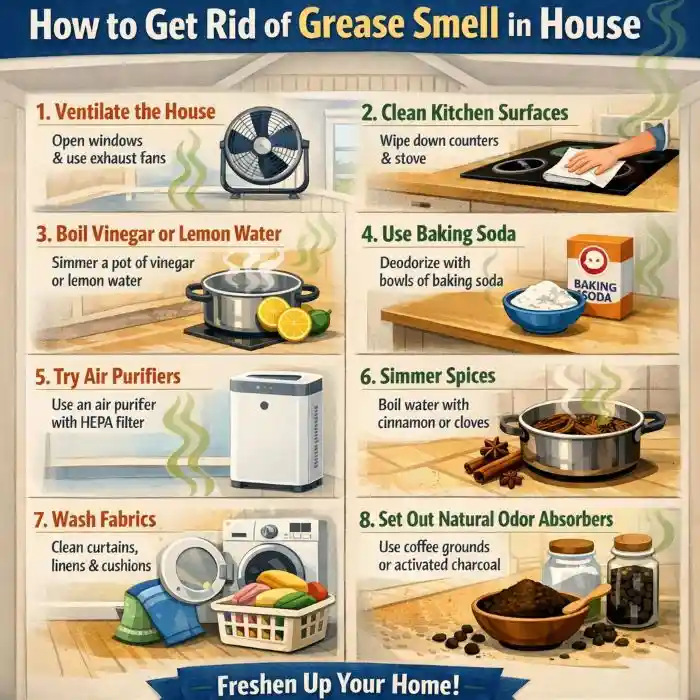
When people search for how to get rid of grease smell in house, they are usually dealing with one of three things. First, there is the classic kitchen problem: frying food, splattered oil, greasy pans, and range hood buildup. Second, there are garage or entryway smells caused by car fluids, tools, and tracked-in grime. Third, there is hidden buildup inside vents, filters, soft furniture, or walls that keeps releasing odor long after the original cooking is done.
That is what makes grease odor different from many other smells. It is not always just “in the air.” It is often stuck to surfaces in a thin film that is easy to miss and hard to remove with normal wiping alone.
This guide is designed to help you tackle the problem from every angle. You will find:
- Immediate odor fixes for fast relief
- Room-specific cleaning methods for kitchens, fabrics, bathrooms, and bedrooms
- Advanced solutions for lingering oil smell
- Simple prevention habits that keep grease from building up again
If you want a home that smells clean instead of heavy, stale, or oily, this is the step-by-step article you need. Let’s start with why the smell lingers in the first place.
Causes of Grease Smells in Your Home
Before you can fully remove grease odor from home, it helps to know where it comes from and why it sticks around.
Common Sources of Grease Odor
The kitchen is the most obvious source. Frying food sends tiny droplets of oil into the air. Those droplets land on nearby surfaces and slowly turn into a sticky layer. Bacon, fish, sausage, fried chicken, and anything cooked in heavy oil tend to create the strongest odor.
But the kitchen is not the only place grease smell starts. Grease odors can also come from:
- BBQ equipment brought inside or stored near the house
- Deep fryers that hold old oil
- Garages with automotive grease or leaked fluids
- HVAC systems pulling cooking odors into vents and spreading them
Even if the smell begins in one room, airflow can carry it through the whole home.
Why Grease Smell Lasts So Long
Grease odors linger because oil binds to porous materials. That includes drywall, wood, fabric, ceiling paint, rugs, and upholstery. Once those oily particles stick, they keep releasing smell slowly over time.
Heat makes the problem worse. Warm surfaces and poor ventilation can reactivate the odor. That is why your kitchen may smell okay in the morning but greasy again by dinnertime.
Why You Should Not Ignore It
A lingering kitchen grease stench is not just unpleasant. It can also signal that your home has poor ventilation or too much hidden buildup. For some people, stale grease smells may trigger headaches, nausea, or irritation, especially in small or stuffy spaces.
Here is a quick look at common grease sources and where they affect your home.
| Grease Source | Why It Stinks | Common Rooms Affected |
|---|---|---|
| Cooking Oil | Breaks down and sticks to surfaces when heated | Kitchen, dining room |
| Car Fluids | Petroleum fumes and oily residue create strong odor | Garage, entryway |
| Deep Fryer | Old oil and animal fats release stale smell | Kitchen, nearby rooms |
| Range Hood Filter | Traps grease and recirculates odor | Kitchen, whole house |
| BBQ Tools or Grill Trays | Burnt grease residue continues to smell indoors | Garage, patio door area |
Once you know the source, it becomes much easier to choose the right fix.
Quick Fixes: Banish Grease Odor in Minutes
If the smell is fresh and you want immediate relief, start here. These methods are affordable, easy, and work well for mild to moderate odor problems. If you are searching for how to get rid of grease smell in house fast, these are the first things to try.
White Vinegar Spray
White vinegar is one of the most useful natural cleaners for greasy smells. It helps cut through residue and can reduce stale odor on hard surfaces.
How to use it:
- Mix equal parts white vinegar and water in a spray bottle.
- Lightly mist countertops, cabinet fronts, backsplashes, stovetops, and trash can lids.
- Let it sit for 5 to 10 minutes.
- Wipe clean with a microfiber cloth.
- Open windows while the vinegar smell fades.
This works best on surfaces where grease has lightly settled but has not turned into thick buildup yet.
Baking Soda Sprinkle
Baking soda is excellent for absorbing odor. It does not remove grease film by itself, but it helps lift the smell from many surfaces.
How to use it:
- Sprinkle baking soda on rugs, fabric chairs, floor mats, or even inside trash bins.
- Let it sit for 15 minutes to overnight, depending on the strength of the smell.
- Vacuum or wipe it away.
- Repeat if needed.
This is especially useful when grease smell has spread beyond the kitchen.
Lemon Juice Wipe-Down
Lemon is great when you want to cut greasy residue and leave behind a clean, fresh scent.
How to use it:
- Mix lemon juice with warm water.
- Dip a cloth into the mixture and wring it out.
- Wipe greasy surfaces like stovetops, microwave doors, cabinet handles, and small appliances.
- For stubborn spots, add a little salt and scrub gently.
- Dry with a clean towel.
This method works well after cooking because it freshens the room while also cleaning.
Boil a Pot of Vinegar or Lemon Water
If the air itself smells greasy, simmering a pot can help.
Use plain water with either sliced lemons or a splash of vinegar. Let it simmer for 15 to 20 minutes. The steam can help shift stale odor in the kitchen and nearby rooms. Just keep the pot supervised and do not let it boil dry.
Ventilate Immediately
This sounds simple, but it matters. Open windows, turn on fans, and run your range hood as soon as you finish cooking. The earlier you move the air out, the less time oil particles have to settle.
Pro tip: For many homes, combining vinegar spray, baking soda, and ventilation can reduce grease odor by a large amount in one evening.
Kitchen-Specific Solutions
The kitchen is where grease smell usually starts, so it deserves the deepest cleaning. If you want to fully solve how to get rid of grease smell in house, this section matters most.
Stovetop and Hood Grease
Your stovetop is the front line. Every fry, sauté, or pan sear throws oil into the air. Some lands right on the cooking area, and some gets sucked into the hood.
Start with the stovetop. Mix a few drops of dish soap into hot water and wipe every greasy surface carefully. Dish soap is made to break down oil, so it works better than many general sprays. Pay extra attention to burner grates, knobs, and the edge behind the stove.
After that, try a vinegar steam treatment. Heat a pot of water with vinegar nearby while cleaning. This can loosen some airborne greasy smell and help soften residue in the area.
Now move to the range hood. This is often the most ignored source of kitchen grease stench. Hood filters trap oil over time, and once they are clogged, they stop working well and may even blow odor back into the room.
To clean them:
- Remove the filter
- Fill a sink or bucket with very hot water
- Add dish soap and baking soda
- Let the filter soak for several hours or overnight
- Scrub gently with a non-scratch brush
- Rinse and dry fully before putting it back
A clean hood filter can make a big difference almost immediately.
Cabinets and Appliances
Cabinets collect more grease than most people realize. The tops of upper cabinets are especially bad because they catch warm oily particles over time. If you only clean visible fronts, the hidden smell may stay.
Wipe cabinet fronts with warm, soapy water first. Then use a vinegar-water mix for a final pass. Dry them well so moisture does not sit on the finish.
Your appliances can also hold odor. The outside of the fridge, microwave, dishwasher, and toaster often collect a thin grease layer. Even the inside of a fridge can smell stale if food odors mix with kitchen grease in the air.
A simple trick for the fridge is to place a cotton ball with a tiny bit of vanilla extract inside a small dish for a softer smell after cleaning. It will not replace cleaning, but it can help freshen the space.
For the microwave, use the lemon steam method. Heat a bowl of water with lemon slices for a few minutes. Let the steam sit inside for another five minutes, then wipe it down. This helps loosen splatters and leaves the microwave smelling clean.
Floors and Backsplashes
Grease does not just stay at eye level. It settles on floors too, especially around the stove and trash area. If your kitchen still smells greasy after wiping the counters, the floor may be the reason.
Use a degreasing floor cleaner or a safe mop solution designed for your floor type. In some cases, people use a diluted ammonia solution for heavy kitchen grease, but you must ventilate very well, wear gloves, and never mix ammonia with bleach or other cleaners.
Backsplashes also collect hidden splatter. Tile and grout can hold odor when grease builds up in corners and seams. Clean slowly and thoroughly rather than rushing through it.
[Before-and-after photo placeholder: Greasy stovetop, hood, and backsplash deep-clean results]
When you clean the kitchen as a full system instead of one surface at a time, you are much more likely to eliminate cooking grease smell for good.
Living Areas and Fabrics
One of the most frustrating parts of a grease problem is when the smell moves beyond the kitchen. If your couch, curtains, or carpet smell oily, regular surface cleaning may not be enough. Soft materials hold odor easily, so you need methods that clean without damaging fabric.
Why Fabrics Hold Grease Smell
Fabric traps airborne particles. If you cook often, especially with frying or deep oil, those particles drift into nearby rooms and settle into soft surfaces. Over time, the smell builds up and becomes harder to ignore.
That is why you might clean the kitchen and still wonder how to get rid of grease smell in house when the real issue is now in the living room.
Fabric-Safe Methods That Work
Here are some practical ways to freshen soft surfaces safely:
- Upholstery: Lightly blot with club soda and a small amount of vinegar, then let it dry. After that, sprinkle baking soda on the fabric and vacuum later.
- Curtains and drapes: Wash them according to the care label, and add 1 cup of white vinegar to the wash cycle to help reduce odor.
- Carpets and rugs: Use baking soda first, then deep clean with hot water extraction if needed. For stronger odor, some people use borax carefully, but always test a small area first.
- Throw blankets and cushion covers: Wash them on a suitable cycle with a mild detergent and dry fully before putting them back.
Important Warning
Avoid reaching for bleach unless the item specifically allows it. Bleach does not solve every odor issue and can damage fabric or create harsh fumes. For most soft materials, gentler cleaning works better and is safer.
If the smell is strong in fabric furniture, you may need to repeat the treatment more than once. Grease odor often fades layer by layer, not all at once.
Bathroom and Bedroom Grease Odor Hacks
Bathrooms and bedrooms are not the first places people think of when they ask how to get rid of grease smell in house, but these rooms can still be affected. Cooking odors can travel through vents, hallways, and central air. Once they settle into towels, bedding, or mattresses, the smell can feel like it is everywhere.
How Grease Odor Reaches These Rooms
If your kitchen and living room are connected to the rest of the home, airflow can spread oily smell further than you expect. Warm air rises, HVAC systems move it around, and soft materials absorb it quietly over time.
That is why bedrooms near kitchens sometimes smell stale even when no food is present.
Simple Fixes for Bedrooms
Wash bedding regularly, especially if your room is near the kitchen or over the garage. Pillowcases, comforters, and blankets can hold onto odor.
Mattresses can also absorb body oils and airborne grease over time. To freshen them, sprinkle baking soda on the surface, leave it for several hours, and vacuum thoroughly. If there is a stronger odor, use a fabric-safe enzyme cleaner made for soft surfaces.
Whenever possible, let bedding and pillows dry in sunlight. Sun and fresh air help remove trapped smells naturally.
Easy Bathroom Solutions
Bathroom towels often catch odor if they hang in shared air with the kitchen. Wash them with hot water if the fabric allows, and dry them fully.
A diffuser with a light essential oil, such as tea tree or lemon, can help freshen the space, but it should support cleaning, not replace it. If the real issue is grease traveling through vents, clean the vent covers and check airflow first.
This whole-house approach matters. If you only clean the kitchen, you may miss the rooms where odor has already settled.
Advanced Fixes for Stubborn Grease
Sometimes basic cleaning is not enough. If the grease smell has been building for months, or if you recently had a heavy cooking event, you may need stronger solutions. These advanced methods help when the lingering oil smell keeps coming back.
Simmer Pot for Whole-Home Freshness
A simmer pot is one of the easiest ways to shift the smell in the air after deep cleaning. Use water with cinnamon sticks, cloves, lemon peels, or orange slices. Let it simmer gently for 20 to 30 minutes.
This will not remove grease residue on its own, but it helps replace stale air with a fresher scent after you have already cleaned the greasy surfaces.
Coffee Grounds as an Odor Absorber
Dry coffee grounds are great at absorbing odor in small spaces. Place bowls of used-but-dried or fresh grounds in the kitchen, near the trash can, by the garage door, or in a room that still smells oily.
Leave them overnight and replace as needed. This is simple, inexpensive, and surprisingly effective for mild leftover odor.
Enzyme Sprays and Ozone Generators
If home remedies are not enough, you can step up to commercial options. These are better for strong, stubborn, or repeated grease smells.
Enzyme sprays work by breaking down odor-causing residue. They are useful on fabric, soft surfaces, and spots where hidden buildup may still be releasing smell.
Ozone generators are stronger and often used for major odor problems. They can be very effective, but they must be used carefully and only according to safety directions. People and pets should not be in the treated space during use.
Here is a simple comparison:
| Method | Cost | Effectiveness | Time |
|---|---|---|---|
| Enzyme Spray | $10 | High | About 24 hours |
| Ozone Generator | $50+ | Very High | 2–4 hours |
| Coffee Grounds | Low | Moderate | Overnight |
| Simmer Pot | Low | Moderate for air freshness | 20–30 minutes |
Which One Should You Choose?
If the odor is mostly in fabric or soft surfaces, start with an enzyme spray. If the whole home smells affected and regular cleaning has failed, an ozone treatment may help, but only with proper caution.
For many homes, advanced fixes work best after a deep clean, not before. Otherwise, you are treating the smell without removing the source.
Prevention Tips to Avoid Grease Buildup
Once you learn how to get rid of grease smell in house, the next step is making sure it does not return. Prevention is easier, cheaper, and faster than deep cleaning every time.
Why Prevention Matters
Grease odor becomes difficult when layers build slowly. A little splatter today, a small spill tomorrow, a forgotten hood filter next month, and suddenly your home smells stale all the time. That is why small habits matter more than most people think.
Your Simple Grease Prevention Checklist
Use this checklist as a weekly reminder:
- Run the exhaust fan every time you cook and keep it on for at least 10 minutes after cooking ends.
- Open a window when frying or cooking with heavy oil.
- Wipe splatters right away before they harden into sticky residue.
- Clean the stovetop daily if you cook often.
- Wash or replace range hood filters monthly, depending on how often you fry food.
- Empty kitchen trash often, especially after cooking meat or oily foods.
- Mop around the stove regularly to remove settled grease.
- Wash kitchen fabrics like towels, oven mitts, and curtains more often than you think you need to.
- Check the top of cabinets and fridge surfaces during routine cleaning.
- Deep clean vents and vent covers if cooking smells travel through your home.
Small Changes That Make a Big Difference
Try using splatter screens when frying. Cook with lids when possible. Do not leave used oil sitting out. Let pans cool, then clean them the same day if you can.
These habits may seem basic, but they are the real secret to avoiding a repeating kitchen grease stench.
When to Call Professionals
Sometimes the smell stays no matter how much you scrub. If that happens, it may be time to bring in experts.
Signs DIY Methods Are Not Enough
You should consider professional help if:
- The grease smell returns within a day or two after cleaning
- The odor seems to come from vents, walls, or HVAC systems
- Garage or automotive smells are spreading into the house
- Cabinets, ceilings, or high surfaces have thick old grease buildup
- You are dealing with move-in or move-out odor problems
Professional cleaners can reach areas most homeowners miss. They also use stronger degreasers, commercial equipment, and detailed cleaning methods for stubborn odor sources.
If your home still smells oily after trying the steps above, schedule a professional deep clean and get a fresh start. A trained team can often find the hidden source faster and save you a lot of time.
FAQs
How to get rid of grease smell in house after frying fish?
Start with ventilation right away. Then clean the stovetop, backsplash, and nearby counters with dish soap and warm water. After that, use vinegar spray on hard surfaces and sprinkle baking soda on rugs or fabric nearby. A lemon simmer pot can help freshen the air after cleaning.
Does vinegar really remove grease odors?
Yes, vinegar can help reduce grease odor, especially on hard surfaces. It is useful because it helps cut residue and neutralize some stale smells. It is not magic on its own, but it works very well as part of a full cleaning routine.
What if the grease smell is coming from the garage into the house?
Try placing odor absorbers like baking soda or cat litter near the source. Clean any visible spills, and check for leaks or oily rags. Also inspect the door seal and any wall cracks between the garage and living space.
Are these methods safe for pets and kids?
Many of the natural methods in this guide, like baking soda, lemon, and vinegar, are generally safer choices than harsh chemicals when used properly. Still, keep cleaning products out of reach, ventilate the area, and avoid strong treatments like ozone around people and pets.
How long does it take for grease smell to go away?
It depends on how strong the odor is and how long it has been there. Fresh cooking smells may disappear in a few hours with proper cleaning. Older grease buildup may take 1 to 7 days and more than one cleaning round.
Conclusion
If you have been struggling with how to get rid of grease smell in house, the solution is usually not just one spray or one quick wipe. The real answer is a mix of fast odor control, deep surface cleaning, and ongoing prevention.
If you remember only three things, start here:
- Clean the actual grease residue, not just the air
- Focus on hidden trouble spots like hood filters, fabrics, and floors
- Prevent future buildup with ventilation and quick daily wipe-downs
The best part is that most of these methods are simple, low-cost, and easy to start today. A bottle of vinegar, some baking soda, dish soap, and a little consistency can go a long way.
If the smell still will not leave, do not keep fighting it alone. Our home cleaning team can help remove deep grease buildup and restore a fresher home. Contact us today for a free quote and let the pros handle the hard part.
Optional Blog Extras You Can Add
- Image 1: Greasy stovetop before cleaning
- Image 2: Vinegar spray bottle on kitchen counter
- Image 3: Range hood filter soaking in hot water
- Image 4: Before-and-after backsplash cleaning
- Image 5: Baking soda treatment on carpet
- Image 6: Coffee grounds in bowls for odor absorption
- Image 7: Clean, fresh kitchen final reveal