
Wondering how often you need to paint your house? Keeping your home’s interior and exterior freshly painted is not just about aesthetics—it’s also essential to maintaining your home’s structural integrity and value. In this guide, we’ll explore the factors that influence painting timelines, provide actionable tips to extend paint life, and help you budget for your next repainting project.
On average, exterior paint lasts between 5–10 years, depending on the type of surface and climate, while interiors may require a refresh every 3–7 years, depending on the room’s use. But there’s much more to it than just numbers—we’ll dive into the specifics you need to know!
Let’s get started and ensure your home remains a beautiful, protected, and valuable investment.
Why Paint Timing Matters
Painting your house regularly is one of the most important maintenance tasks you can do as a homeowner. But why is timing so critical? Let’s break it down:
Protects Your Home’s Structure
Paint serves as the first line of defense against moisture, UV rays, and pests. When paint fails, water can seep into wood or stucco, leading to rot, mold, or structural damage. UV exposure can cause fading and weakening of materials, while pests may exploit cracks in old paint.
Preserves Curb Appeal and Resale Value
A freshly painted home looks well-maintained, which can enhance curb appeal and significantly boost resale value. A peeling or faded exterior, on the other hand, can lower your home’s perceived value, even before a potential buyer steps inside.
Cost Savings in the Long Run
Proactive repainting is often far cheaper than repairing damage caused by neglect. For instance:
- Preventive repainting might cost $5,000–$10,000 for an entire exterior.
- Structural repairs due to water damage could easily exceed $20,000.
By sticking to a strategic painting schedule, you save money and protect your investment.
How Often to Paint the Exterior: Typical Timelines and Why They Vary
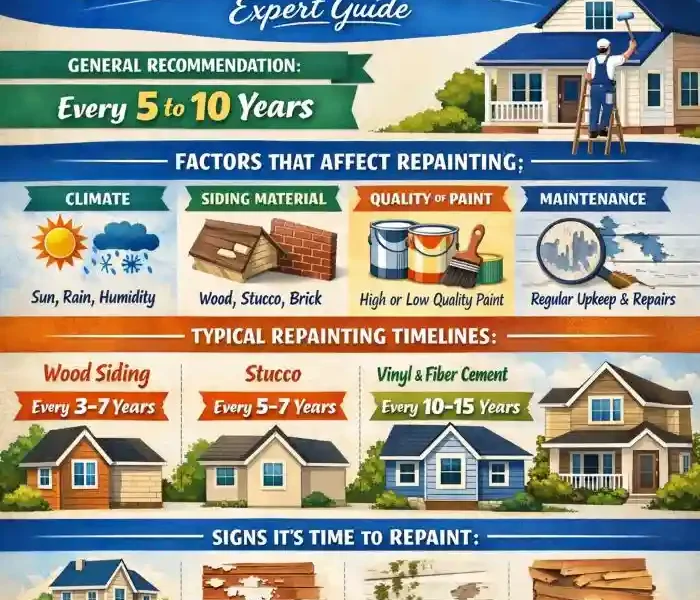
Exterior repainting schedules depend on factors like the surface material, climate, and the quality of the previous paint job. Here’s a detailed breakdown to help you understand the timelines.
Typical Lifespan by Surface Type
Here’s a handy table summarizing how often you’ll need to repaint based on your home’s exterior surface:
| Surface Material | Typical Repaint Interval (Years) | Key Factors Influencing Lifespan |
|---|---|---|
| Wood siding | 3–7 | Type of paint, UV exposure, moisture levels |
| Fiber cement | 10–15 | High durability; quality of paint |
| Stucco | 5–10 | Cracking and weather exposure |
| Brick (painted) | 15–20 | Often left unpainted; repaint every 15–20 years |
| Vinyl siding | 10+ | Usually doesn’t require paint; lasts a decade+ |
| Metal surfaces | Varies (depends on corrosion) | Quality of primer and paint |
Pro Tip: Always use high-quality paint, such as 100% acrylic for exteriors, to extend the lifespan of your paint job.
Key Factors That Change Timelines
Several factors can shorten or extend the life of your exterior paint:
- Climate and UV Exposure: Homes in sunny, coastal, or humid areas often need more frequent repainting. Salt air and intense UV rays can cause paint to fade or peel faster.
- Previous Paint Job: A poorly prepped surface or low-quality paint won’t last as long as a well-executed professional job.
- Paint Type: 100% acrylic paints last longer than oil-based ones and resist cracking or fading better.
- Orientation: South- and west-facing walls receive the most sunlight and may require more frequent repainting.
Real-World Examples and Quick Checklist
To make it easier, here are two common scenarios:
- Older wood house in a humid climate: Repaint every 3–5 years to prevent moisture damage.
- New fiber cement siding in a mild climate: You might only need to repaint every 10–15 years.
Quick Checklist:
- Inspect your exterior annually for signs of wear.
- Prioritize south- and west-facing walls.
- Keep a record of your last paint job and its details.
How Often to Paint the Interior: Rooms & Use Cases
Interior painting needs vary by room, based on factors like traffic, moisture, and personal preferences.
Typical Interior Timelines by Room
| Room Type | Repaint Interval |
|---|---|
| High-traffic areas (hallways, kitchens) | Every 2–4 years |
| Living rooms & bedrooms | Every 4–7 years |
| Ceilings | Every 7–10 years |
| Trim and doors | Every 5–7 years |
High-Traffic Areas
Kitchens, hallways, and bathrooms experience heavy use, moisture, and grease buildup. You may need to repaint them every 2–4 years to keep them looking fresh.
Living Rooms and Bedrooms
These rooms generally see less wear and tear, so you can repaint every 4–7 years unless you want a decor update.
Factors That Accelerate Interior Repainting
Several factors can shorten the lifespan of interior paint:
- Smoking indoors or frequent cooking grease exposure.
- Children or pets scuffing walls.
- Moisture in bathrooms or kitchens.
Quick Refresh vs. Full Repaint
Sometimes, you don’t need a full repaint—just a touch-up! If you notice small scuffs or marks but the paint is otherwise intact, go for a quick touch-up rather than stripping and repainting the entire wall.
Clear Signs You Need to Repaint Now
How do you know when it’s time to repaint? Here are some clear signs to watch for:
- Peeling or Flaking Paint: Indicates that moisture is penetrating the surface.
- Fading or Chalking: If your exterior feels chalky to the touch, it’s time for a new coat.
- Mold or Mildew Growth: Especially common in damp climates.
- Cracking or Bubbling: Often caused by trapped moisture or improper application.
- Persistently Dirty Walls: If dirt or grime can’t be cleaned, repainting is the next step.
Tip: Perform a quick “cotton test” by rubbing a white cloth on your walls. If it comes away with chalky residue, it’s time to repaint.
How to Extend Paint Life: Prep, Products, and Maintenance
Preventive maintenance can help you stretch the lifespan of your paint job.
Proper Surface Prep Best Practices
- Clean surfaces thoroughly to remove dirt and grease.
- Sand rough areas and fix any rotting wood or cracks.
- Use a high-quality primer to ensure good adhesion.
Choosing Durable Paints and Finishes
- 100% acrylic exterior paints for durability.
- Semi-gloss or gloss finishes for trim and doors.
- Mildew-resistant paints for bathrooms and kitchens.
Ongoing Maintenance
- Wash your home’s exterior annually.
- Trim vegetation to prevent damage to painted surfaces.
- Inspect for cracks or peeling and address them promptly.
Cost, Budgeting, and ROI of Repainting
The cost of painting can vary widely based on factors like house size, surface prep, and the quality of paint.
Typical Costs
- Exterior painting: $3,000–$10,000 depending on size and material.
- Interior painting: $2,000–$7,000 based on the number of rooms.
DIY vs. Professional
While DIY painting can save money, hiring professionals ensures quality, warranty coverage, and time savings.
Seasonal and Regional Timing Tips
The best time to paint is during mild, dry weather, making spring and early fall ideal in many regions.
- Avoid painting in extreme heat, freezing cold, or high humidity.
- Coastal homes may need repainting more frequently due to salt spray.
FAQ Section
Q: How often should I paint the outside of my house?
A: Most homes need exterior repainting every 5–10 years, but wood siding may need it every 3–5 years in harsh climates.
Q: How often do you need to paint your house interior?
A: High-traffic areas may need repainting every 2–4 years, while bedrooms and living rooms last 4–7 years.