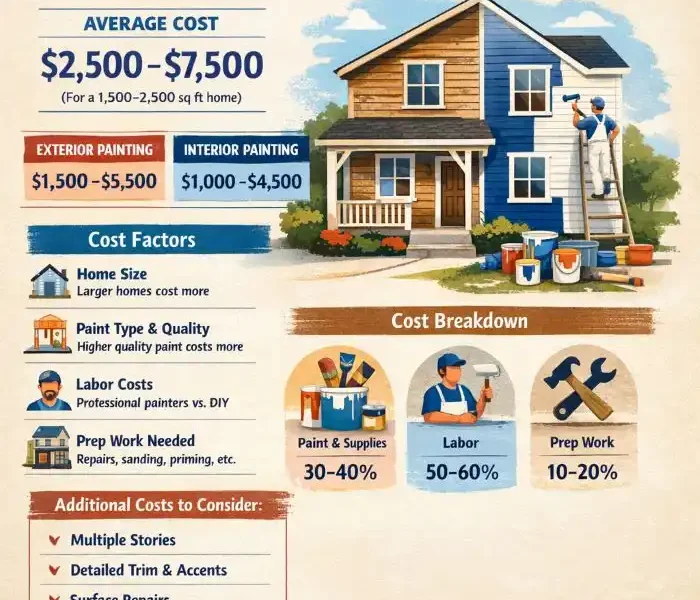
<p><strong><a href="https://www.reddit.com/r/Lahore/comments/1iz8qxn/how_much_does_it_cost_to_get_a_small_room_painted/">How much does it cost to paint a house</a>?</strong> The short answer is that it depends on the size of your home, the type of surface, the paint you choose, and how much prep work is needed. For many homes, the price can range from a few hundred dollars for a single room to several thousand dollars for a full exterior or whole-house project.</p>
<p>If you are planning to repaint your home, this guide will help you understand real-world pricing in simple language. You will see how professionals calculate their quotes, what drives the final cost up or down, and how to decide between <strong>DIY and hiring a pro</strong>. You will also find sample calculations, a comparison table, and practical tips to help you budget smarter.</p>
<p>This article is for <strong>homeowners, sellers, landlords, and real estate professionals</strong> who want a clear answer without confusing industry jargon. Whether you want to freshen up one room or repaint your entire <a href="https://comeawayhome.co.uk/where-is-the-home-alone-house/">house</a>, you will leave with a better idea of what a fair estimate looks like.</p>
<h2 id="typical-price-ranges">Typical Price Ranges</h2>
<h3 id="national-average-and-simple-ranges">National average and simple ranges</h3>
<p>When people ask <strong>how much does it cost to paint a house</strong>, they usually want a fast ballpark number. A simple answer is this:</p>
<ul>
<li><strong>Interior painting:</strong> often around <strong>$2 to $6 per square foot</strong></li>
<li><strong>Exterior painting:</strong> often around <strong>$1.50 to $4 per square foot</strong></li>
<li><strong>Whole-house projects:</strong> can run anywhere from <strong>$2,000 to $12,000+</strong>, depending on size and condition</li>
</ul>
<p>These are only general ranges, but they are useful for early budgeting. A smaller home with easy access and light prep needs may stay on the lower end. A large home with tall walls, peeling paint, trim detail, and repair work will move toward the higher end.</p>
<p>Interior work often costs more per square foot when the home has many rooms, doors, trim pieces, and different colors. Exterior work can cost more when the surface is rough, the home is tall, or the weather makes the job harder.</p>
<h3 id="price-by-project-type">Price by project type</h3>
<p>The cost changes a lot depending on what you are painting. Here is a simple breakdown:</p>
<ul>
<li><strong>Single room interior repaint:</strong> <strong>$350 to $1,200</strong>
<ul>
<li>Best for bedrooms, offices, and small living spaces</li>
<li>Usually includes walls, light prep, and one or two coats</li>
</ul>
</li>
<li><strong>Whole interior house:</strong> <strong>$2,000 to $8,000+</strong>
<ul>
<li>Depends on the number of rooms, ceilings, trim, and prep work</li>
<li>Higher ceilings, stairwells, and detailed trim raise the price</li>
</ul>
</li>
<li><strong>Full exterior repaint:</strong> <strong>$3,000 to $10,000+</strong>
<ul>
<li>Varies by siding type, home height, and surface condition</li>
<li>Repairs, scraping, and priming can add a lot to the estimate</li>
</ul>
</li>
<li><strong>Trim, doors, and accent areas:</strong> <strong>$200 to $2,000</strong>
<ul>
<li>Usually priced as part of a larger job</li>
<li>Detailed trim can increase labor time fast</li>
</ul>
</li>
<li><strong>Cabinets or specialty surfaces:</strong> <strong>$1,500 to $7,000+</strong>
<ul>
<li>These jobs need more prep and care</li>
<li>They are often priced separately from wall painting</li>
</ul>
</li>
</ul>
<p>If you are comparing quotes, always ask whether the price covers <strong>prep, primer, paint, labor, cleanup, and touch-ups</strong>. A low quote can look attractive at first, but it may leave out important parts of the job.</p>
<h3 id="quick-summary-table">Quick summary table</h3>
<table>
<thead>
<tr>
<th>Project Type</th>
<th>Typical Cost Range</th>
<th>Typical $/Sq Ft</th>
</tr>
</thead>
<tbody>
<tr>
<td>Single room interior</td>
<td>$350–$1,200</td>
<td>$2–$6</td>
</tr>
<tr>
<td>Full interior house</td>
<td>$2,000–$8,000+</td>
<td>$2–$6</td>
</tr>
<tr>
<td>Full exterior house</td>
<td>$3,000–$10,000+</td>
<td>$1.50–$4</td>
</tr>
<tr>
<td>Trim and doors</td>
<td>$200–$2,000</td>
<td>Varies</td>
</tr>
<tr>
<td>Specialty surfaces</td>
<td>$1,500–$7,000+</td>
<td>Varies</td>
</tr>
</tbody>
</table>
<p>This table is only a starting point, but it helps you understand the market before you request estimates.</p>
<h2 id="how-professionals-price-the-job">How Professionals Price the Job</h2>
<h3 id="common-pricing-models">Common pricing models</h3>
<p>Professional painters use a few common pricing methods. Understanding them helps you compare quotes more fairly.</p>
<p><strong>1. By square foot</strong></p>
<p>This is one of the most common methods. The painter measures the area to be painted and multiplies it by a rate. This works well for large, straightforward projects.</p>
<p><strong>Pros:</strong></p>
<ul>
<li>Easy to estimate</li>
<li>Good for comparing homes of similar size</li>
<li>Helps create a quick budget</li>
</ul>
<p><strong>Cons:</strong></p>
<ul>
<li>Can hide prep complexity</li>
<li>May not reflect special surfaces or detailed trim</li>
</ul>
<p><strong>2. By room</strong></p>
<p>This is common for interior jobs. A painter may charge per room based on size and complexity.</p>
<p><strong>Pros:</strong></p>
<ul>
<li>Simple for homeowners</li>
<li>Useful when only a few rooms need work</li>
<li>Easy to understand</li>
</ul>
<p><strong>Cons:</strong></p>
<ul>
<li>Room size can vary a lot</li>
<li>Closets, ceilings, and trim may not be included the same way every time</li>
</ul>
<p><strong>3. By hour</strong></p>
<p>Some painters charge hourly for smaller jobs or repair-heavy work.</p>
<p><strong>Pros:</strong></p>
<ul>
<li>Flexible</li>
<li>Useful when the scope is unclear</li>
<li>Good for touch-up or small repair work</li>
</ul>
<p><strong>Cons:</strong></p>
<ul>
<li>Harder to predict final cost</li>
<li>A slow worker can make the job more expensive</li>
</ul>
<p><strong>4. By project</strong></p>
<p>Many contractors use a flat project price. They inspect the home, look at the prep needs, and give you one total number.</p>
<p><strong>Pros:</strong></p>
<ul>
<li>Clear total cost</li>
<li>Better for full-house work</li>
<li>Easier to budget</li>
</ul>
<p><strong>Cons:</strong></p>
<ul>
<li>Hard to compare if estimates are written differently</li>
<li>You need to review the scope carefully</li>
</ul>
<p>For most homeowners, the best estimate is the one that explains exactly what is included. A low price means little if the contractor skips prep or charges extra later.</p>
<h3 id="what-s-included-in-a-professional-estimate">What’s included in a professional estimate</h3>
<p>A good <strong>painting estimate</strong> should clearly explain the work. It should not just show one final number.</p>
<p>Here are the main items you should expect:</p>
<ul>
<li><strong>Surface prep</strong>
<ul>
<li>Washing, sanding, scraping, patching, caulking, or minor repairs</li>
<li>This is often the most important part of the job</li>
</ul>
</li>
<li><strong>Primer</strong>
<ul>
<li>Needed for stains, bare spots, color changes, or rough surfaces</li>
<li>Helps paint stick better and last longer</li>
</ul>
</li>
<li><strong>Paint</strong>
<ul>
<li>The estimate should list the brand, finish, and number of coats</li>
<li>Better paint often costs more but may last longer</li>
</ul>
</li>
<li><strong>Labor</strong>
<ul>
<li>This is the time and skill needed to do the work</li>
<li>Labor is usually the biggest part of the bill</li>
</ul>
</li>
<li><strong>Cleanup</strong>
<ul>
<li>Includes removing drop cloths, tape, dust, and debris</li>
<li>A good painter leaves the space neat</li>
</ul>
</li>
<li><strong>Warranty or touch-up policy</strong>
<ul>
<li>Some companies offer limited coverage for peeling or missed spots</li>
<li>Always ask how long the warranty lasts</li>
</ul>
</li>
<li><strong>Schedule</strong>
<ul>
<li>Start date, end date, and daily work hours</li>
<li>Important if you are living in the home during the project</li>
</ul>
</li>
</ul>
<p>If an estimate is vague, ask for more detail. A professional should be able to explain the pricing in plain language.</p>
<h2 id="key-cost-drivers">Key Cost Drivers</h2>
<h3 id="surface-area-and-house-size">Surface area and house size</h3>
<p>The most obvious factor is size. A larger home needs more paint, more time, and more labor. But square footage is not the only thing that matters.</p>
<p>A one-story home is usually cheaper to paint than a two-story home of the same size because workers can reach the walls more easily. Tall homes often need ladders, extension tools, or scaffolding, which adds cost.</p>
<p>More walls, more trim, more windows, and more architectural details also raise the price. So when you ask <strong>how much does it cost to paint a house</strong>, remember that the answer depends on much more than the number on the floor plan.</p>
<h3 id="surface-condition-and-prep-work">Surface condition and prep work</h3>
<p>Prep work can change the price a lot. A house in good shape is faster and cheaper to paint. A house with peeling paint, cracks, mildew, or old caulk needs more work before the first coat goes on.</p>
<p>Common prep tasks include:</p>
<ul>
<li>Power washing the exterior</li>
<li>Scraping loose paint</li>
<li>Sanding rough areas</li>
<li>Caulking gaps and seams</li>
<li>Filling nail holes and minor cracks</li>
<li>Replacing damaged wood or trim</li>
<li>Covering stains with primer</li>
</ul>
<p>The more repair work needed, the more labor hours the project takes. That is why two homes with the same square footage can have very different painting quotes.</p>
<h3 id="paint-type-and-brand">Paint type and brand</h3>
<p>Paint quality matters more than many people realize. Budget paint may be cheaper up front, but premium paint often covers better and lasts longer.</p>
<p>Higher-quality paint can reduce the number of coats needed, which saves labor time. It may also resist fading, peeling, and stains better. That matters especially for busy family homes, sunny exteriors, or humid climates.</p>
<p>Primer also affects cost. In some projects, primer is optional. In others, it is necessary. A major color change, stained wall, or raw surface almost always needs primer.</p>
<h3 id="access-and-difficulty">Access and difficulty</h3>
<p>Some homes are easy to paint. Others are not.</p>
<p>Factors that increase difficulty include:</p>
<ul>
<li>High walls and tall ceilings</li>
<li>Steep roofs</li>
<li>Hard-to-reach trim</li>
<li>Staircases and hallways</li>
<li>Decorative molding</li>
<li>Multiple colors or accent areas</li>
<li>Tight spaces around porches or fences</li>
</ul>
<p>When access is difficult, labor time goes up. The crew may also need special equipment, which adds to the final bill.</p>
<h3 id="labor-rates-and-location">Labor rates and location</h3>
<p>Local market conditions matter too. Painters in large cities often charge more than painters in smaller towns. That is because overhead, wages, and demand are often higher.</p>
<p>Seasonal demand can also change pricing. In busy spring and summer months, painters may be booked out and less likely to discount. In slower seasons, you may find better availability and better rates.</p>
<p>If you live in an area with harsh weather, painters may also recommend stronger products. That can raise the cost, but it can also help the paint last longer.</p>
<h2 id="example-price-calculations">Example Price Calculations</h2>
<h3 id="a-simple-way-to-estimate-cost">A simple way to estimate cost</h3>
<p>The easiest way to estimate a painting project is to break it into parts:</p>
<ol>
<li>Measure the surface area</li>
<li>Estimate the amount of paint needed</li>
<li>Add primer if needed</li>
<li>Estimate labor time</li>
<li>Add supplies and cleanup</li>
<li>Compare the total to contractor quotes</li>
</ol>
<p>That simple formula helps you spot a fair price and avoid surprises.</p>
<h3 id="example-a-1-200-sq-ft-single-story-exterior-diy-vs-professional-estimate">Example A: 1,200 sq ft single-story exterior — DIY vs professional estimate</h3>
<p>Let’s say you have a <strong>1,200 square foot single-story home</strong> with average siding condition. It needs a fresh exterior repaint.</p>
<h4 id="diy-estimate">DIY estimate</h4>
<p>A DIY project usually includes:</p>
<ul>
<li>Exterior paint: <strong>8 to 12 gallons</strong></li>
<li>Primer: <strong>2 to 4 gallons</strong> if needed</li>
<li>Brushes, rollers, trays, tape, tarps, and caulk</li>
<li>Ladder rental or equipment purchase</li>
<li>Cleaning supplies</li>
</ul>
<p>A rough DIY materials budget might look like this:</p>
<ul>
<li>Paint: <strong>$300 to $700</strong></li>
<li>Primer: <strong>$80 to $200</strong></li>
<li>Tools and supplies: <strong>$100 to $300</strong></li>
<li>Rental or equipment: <strong>$50 to $250</strong></li>
</ul>
<p><strong>Estimated DIY total: $530 to $1,450</strong></p>
<p>This can be a good savings if you already own tools and have time to do the work yourself. But you must also count your time. A project like this can take several days, especially if you are working alone.</p>
<h4 id="professional-estimate">Professional estimate</h4>
<p>A contractor may charge based on surface area and prep needs. For a home like this, a reasonable pro estimate might be:</p>
<ul>
<li>Prep and washing: <strong>$300 to $800</strong></li>
<li>Materials: <strong>$400 to $900</strong></li>
<li>Labor: <strong>$1,500 to $3,500</strong></li>
<li>Cleanup and finish work: included or itemized</li>
</ul>
<p><strong>Estimated professional total: $2,200 to $5,200</strong></p>
<p>The pro price is higher, but it usually includes faster completion, better tools, better access equipment, and a cleaner finish. If your exterior has peeling paint or hard-to-reach trim, the pro route may be worth the extra cost.</p>
<h3 id="example-b-2-500-sq-ft-two-story-interior-full-house-estimate">Example B: 2,500 sq ft two-story interior full house estimate</h3>
<p>Now let’s look at a larger interior project. Suppose you want to repaint a <strong>2,500 square foot two-story home</strong> with walls, ceilings, and trim in several rooms.</p>
<p>This type of job usually includes:</p>
<ul>
<li>Living room</li>
<li>Kitchen</li>
<li>Dining room</li>
<li>Bedrooms</li>
<li>Hallways</li>
<li>Stairwell</li>
<li>Closets</li>
<li>Interior trim and doors</li>
</ul>
<h4 id="materials-estimate">Materials estimate</h4>
<p>For a home this size, the paint and primer budget may look like this:</p>
<ul>
<li>Wall paint: <strong>15 to 25 gallons</strong></li>
<li>Ceiling paint: <strong>5 to 10 gallons</strong></li>
<li>Trim paint: <strong>3 to 6 gallons</strong></li>
<li>Primer: <strong>3 to 8 gallons</strong> depending on stains and color changes</li>
</ul>
<p>Materials could total:</p>
<ul>
<li>Paint and primer: <strong>$700 to $1,800</strong></li>
<li>Supplies and masking materials: <strong>$150 to $400</strong></li>
</ul>
<h4 id="labor-estimate">Labor estimate</h4>
<p>Interior labor depends on room count, ceiling height, trim detail, and prep work. For this home:</p>
<ul>
<li>Basic labor: <strong>$3,500 to $7,500</strong></li>
<li>More detailed work: <strong>$7,500 to $12,000+</strong></li>
</ul>
<h4 id="total-estimate">Total estimate</h4>
<p><strong>DIY total:</strong> roughly <strong>$850 to $2,200</strong> in materials, plus your time<br />
<strong>Professional total:</strong> roughly <strong>$4,500 to $13,000+</strong></p>
<p>That is a wide range because interior work can become complex quickly. If the home has vaulted ceilings, heavy trim, or many color changes, costs rise fast.</p>
<h3 id="a-small-case-study">A small case study</h3>
<p>A homeowner with a 1,900 square foot house wanted to repaint the main living areas before listing the home for sale. The first quote came in very low, but it excluded trim, patching, and cleanup. A second quote was higher, but it included all prep, two coats on walls, trim touch-ups, and a warranty.</p>
<p>The homeowner chose the second quote and spent about <strong>18% more</strong>, but the home showed much better during open houses. The clean finish helped the home feel brighter and move faster on the market.</p>
<p>That is a good reminder: <strong>the cheapest quote is not always the best value</strong>.</p>
<h2 id="diy-vs-hiring-a-pro">DIY vs Hiring a Pro</h2>
<h3 id="cost-comparison-and-when-diy-makes-sense">Cost comparison and when DIY makes sense</h3>
<p>DIY painting can save money, but only if you have the time, tools, and patience to do it well.</p>
<p>DIY usually makes sense when:</p>
<ul>
<li>You are painting a small room</li>
<li>The walls are in decent shape</li>
<li>The ceiling is standard height</li>
<li>You already own basic tools</li>
<li>You want to stretch a tight budget</li>
</ul>
<p>But DIY also has hidden costs. You may need to buy ladders, sprayers, drop cloths, sanders, extension poles, and safety gear. If you make mistakes, you may also need extra paint to fix them.</p>
<p>Professional painters cost more, but they bring speed, skill, and cleaner results. They also know how to handle prep work, awkward edges, and tricky surfaces.</p>
<h3 id="when-to-hire-a-pro">When to hire a pro</h3>
<p>Hiring a professional is often the better choice when:</p>
<ul>
<li>The house has <strong>high walls or steep exterior surfaces</strong></li>
<li>The surface needs <strong>repairs, scraping, or wood replacement</strong></li>
<li>You want a <strong>smooth, high-end finish</strong></li>
<li>You need the work done <strong>quickly</strong></li>
<li>You want a <strong>warranty or touch-up support</strong></li>
<li>The project involves <strong>multiple colors or detailed trim</strong></li>
</ul>
<p>If your home is older or has water damage, a pro can often spot issues you might miss. That can prevent bigger problems later.</p>
<h3 id="how-to-hire-a-good-contractor">How to hire a good contractor</h3>
<p>Before you sign anything, ask a few simple questions:</p>
<ul>
<li>What exactly is included in the estimate?</li>
<li>How many coats will you apply?</li>
<li>What prep work do you handle?</li>
<li>Which paint brand and finish will you use?</li>
<li>Do you carry insurance?</li>
<li>Do you offer a written warranty?</li>
<li>Can you provide references from recent jobs?</li>
<li>When can the project start and finish?</li>
</ul>
<p>Also, ask for a <strong>written estimate</strong>. It should list materials, labor, prep, and cleanup. If a contractor is vague or rushes you, that is a warning sign.</p>
<p>You should also check photos of past work and look at similar projects, not just general advertising. A reliable contractor will be happy to explain their process.</p>
<h2 id="ways-to-save-without-sacrificing-quality">Ways to Save Without Sacrificing Quality</h2>
<p>You do not need to overspend to get good results. A few smart choices can lower the total bill without hurting quality.</p>
<p>Here are some useful ways to save:</p>
<ul>
<li><strong>Buy paint during sales</strong></li>
<li><strong>Choose a solid mid-tier paint</strong></li>
<li><strong>Do simple prep work yourself</strong>
<ul>
<li>For example: move furniture, remove wall decor, or clean surfaces</li>
</ul>
</li>
<li><strong>Bundle projects</strong>
<ul>
<li>Painting several rooms or the full exterior at once can improve pricing</li>
</ul>
</li>
<li><strong>Get multiple written quotes</strong>
<ul>
<li>Three estimates give you a clearer market picture</li>
</ul>
</li>
<li><strong>Schedule during slower seasons</strong>
<ul>
<li>You may get better availability and possibly better rates</li>
</ul>
</li>
</ul>
<p>Here are a few <strong>false savings</strong> to avoid:</p>
<ul>
<li>Skipping primer when it is clearly needed</li>
<li>Choosing the cheapest contractor without checking reviews or references</li>
<li>Underprepping surfaces</li>
<li>Using low-quality paint on high-traffic or sun-exposed areas</li>
</ul>
<p>Saving money is smart. Cutting corners on the wrong things usually costs more later.</p>
<h2 id="regional-and-seasonal-considerations">Regional and Seasonal Considerations</h2>
<p>Where you live affects <strong>how much does it cost to paint a house</strong>. Labor costs, climate, and local demand all play a role.</p>
<p>In hot, sunny, or humid areas, paint may need to be more durable. That can increase product cost. In colder climates, exterior painting has a shorter season, which can also affect availability and price.</p>
<p>Season also matters. Spring and summer are busy times for painters, especially for exterior work. During slower times of year, you may find better scheduling and occasional discounts.</p>
<p>If you can plan ahead, you may save money by booking before the peak season starts. Just make sure weather conditions are right for the job.</p>
<h2 id="how-to-read-and-compare-estimates">How to Read and Compare Estimates</h2>
<p>A paint estimate should be easy to understand. If it is not, ask for a revised version before you agree to anything.</p>
<h3 id="what-every-estimate-should-include">What every estimate should include</h3>
<p>Look for these items:</p>
<ul>
<li><strong>Project scope</strong>
<ul>
<li>Which rooms, walls, ceilings, or exterior areas are included</li>
</ul>
</li>
<li><strong>Surface prep</strong>
<ul>
<li>Patching, sanding, scraping, caulking, and cleaning</li>
</ul>
</li>
<li><strong>Paint details</strong>
<ul>
<li>Brand, finish, number of coats, and primer use</li>
</ul>
</li>
<li><strong>Labor</strong>
<ul>
<li>Whether the price is fixed or based on hours</li>
</ul>
</li>
<li><strong>Start and end dates</strong>
<ul>
<li>So you know the expected schedule</li>
</ul>
</li>
<li><strong>Cleanup</strong>
<ul>
<li>Dust removal, tape removal, and final walkthrough</li>
</ul>
</li>
<li><strong>Warranty</strong>
<ul>
<li>How long it lasts and what it covers</li>
</ul>
</li>
</ul>
<h3 id="a-simple-way-to-compare-quotes">A simple way to compare quotes</h3>
<p>When you have three estimates, do this:</p>
<ol>
<li><strong>Remove extreme low-ball quotes</strong>
<ul>
<li>If one quote is far below the others, ask why</li>
</ul>
</li>
<li><strong>Check paint quality</strong>
<ul>
<li>Make sure each quote uses comparable products</li>
</ul>
</li>
<li><strong>Confirm prep work</strong>
<ul>
<li>Prep is often where quotes differ most</li>
</ul>
</li>
<li><strong>Review labor detail</strong>
<ul>
<li>Ask how many workers and how long the job should take</li>
</ul>
</li>
<li><strong>Look at warranty terms</strong>
<ul>
<li>A better warranty can add real value</li>
</ul>
</li>
</ol>
<p>A quote that seems more expensive may actually be the better deal if it includes more work and better materials. Always compare the full scope, not just the final number.</p>
<h2 id="maintenance-and-long-term-cost">Maintenance and Long-Term Cost</h2>
<p>A good paint job is not just about the first day. It is also about how long it lasts.</p>
<p>Higher-quality paint often lasts longer, especially when it is used with the right primer and proper prep. Interior walls may stay in good shape for several years, while exteriors face more sun, rain, and wear.</p>
<p>The finish also matters. Satin and semi-gloss finishes usually clean better than flat finishes. That makes them a smart choice for kitchens, bathrooms, trim, and busy areas.</p>
<p>To extend the life of your paint:</p>
<ul>
<li>Clean walls and siding gently</li>
<li>Fix small cracks early</li>
<li>Keep gutters and drainage in good shape</li>
<li>Touch up scratches before they spread</li>
<li>Watch for mildew, fading, or peeling</li>
</ul>
<p>A little maintenance can delay a full repaint. That saves money over time and keeps your home looking fresh.</p>
<h2 id="frequently-asked-questions">Frequently Asked Questions</h2>
<h3 id="how-much-per-square-foot-to-paint-a-house-">How much per square foot to paint a house?</h3>
<p>A common range is <strong>$2 to $6 per square foot for interior painting</strong> and <strong>$1.50 to $4 per square foot for exterior painting</strong>. The exact price depends on prep work, paint quality, home height, and local labor rates.</p>
<h3 id="how-much-does-it-cost-to-paint-siding-vs-stucco-vs-brick-">How much does it cost to paint siding vs stucco vs brick?</h3>
<p><strong>Siding</strong> is often the most straightforward surface, so it may cost less. <strong>Stucco</strong> can cost more because of its texture and porosity. <strong>Brick</strong> may also cost more because it can absorb paint differently and may require special prep or masonry-friendly products.</p>
<h3 id="is-primer-always-required-">Is primer always required?</h3>
<p>No, primer is not always required. But it is often needed when you are painting over stains, bare surfaces, major color changes, or repaired areas. Primer helps the paint bond better and can improve the final look.</p>
<h3 id="how-long-does-painting-a-house-take-">How long does painting a house take?</h3>
<p>A small interior job may take <strong>one to two days</strong>. A full interior house can take <strong>several days to two weeks</strong>, depending on size and detail. Exterior jobs also vary based on weather, prep work, and crew size.</p>
<h3 id="will-painting-increase-my-home-value-">Will painting increase my home value?</h3>
<p>Yes, fresh paint can improve curb appeal and make a home feel cleaner and better maintained. That does not guarantee a large return by itself, but it can help your home show better and may support a stronger selling price.</p>
<h2 id="call-to-action-and-next-steps">Call to Action and Next Steps</h2>
<p>If you are still wondering <strong>how much does it cost to paint a house</strong>, the best next step is to gather <strong>three written quotes</strong>. Compare the prep work, paint quality, labor details, and warranty terms before you choose.</p>
<p>You can also use a simple <strong>cost-estimate checklist</strong> to track square footage, rooms, materials, and quote details. If you are working with a painting company, ask for a sample estimate or a quick walkthrough so you can budget with confidence.</p>
<p><strong>Suggested internal resources:</strong></p>
<ul>
<li>[How to choose exterior paint color]</li>
<li>[Prep steps before painting]</li>
<li>[Residential painting services]</li>
<li>[Cost-estimate worksheet]</li>
</ul>
<h2 id="appendix-simple-cost-estimate-worksheet">Appendix: Simple Cost Estimate Worksheet</h2>
<p>Use this quick worksheet to estimate your project:</p>
<table>
<thead>
<tr>
<th>Item</th>
<th>Your Number</th>
<th>Notes</th>
</tr>
</thead>
<tbody>
<tr>
<td>Square footage</td>
<td></td>
<td>Interior or exterior</td>
</tr>
<tr>
<td>Number of rooms</td>
<td></td>
<td>For interior projects</td>
</tr>
<tr>
<td>Number of stories</td>
<td></td>
<td>1, 2, or 3+</td>
</tr>
<tr>
<td>Paint gallons needed</td>
<td></td>
<td>Based on coverage</td>
</tr>
<tr>
<td>Primer needed</td>
<td></td>
<td>Yes or no</td>
</tr>
<tr>
<td>Prep work required</td>
<td></td>
<td>Light / medium / heavy</td>
</tr>
<tr>
<td>Labor hours</td>
<td></td>
<td>DIY or pro</td>
</tr>
<tr>
<td>Estimated total cost</td>
<td></td>
<td>Add materials + labor</td>
</tr>
</tbody>
</table>
<p><a href="https://comeawayhome.co.uk/">House</a></p>
How much does it cost to paint a house? The short answer is that it depends on the size of your home, the type of surface, the paint you choose, and how much prep work is needed. For many homes, the price can range from a few hundred dollars for a single room to several thousand dollars for a full exterior or whole-house project.
If you are planning to repaint your home, this guide will help you understand real-world pricing in simple language. You will see how professionals calculate their quotes, what drives the final cost up or down, and how to decide between DIY and hiring a pro. You will also find sample calculations, a comparison table, and practical tips to help you budget smarter.
This article is for homeowners, sellers, landlords, and real estate professionals who want a clear answer without confusing industry jargon. Whether you want to freshen up one room or repaint your entire house, you will leave with a better idea of what a fair estimate looks like.
Typical Price Ranges
National average and simple ranges
When people ask how much does it cost to paint a house, they usually want a fast ballpark number. A simple answer is this:
- Interior painting: often around $2 to $6 per square foot
- Exterior painting: often around $1.50 to $4 per square foot
- Whole-house projects: can run anywhere from $2,000 to $12,000+, depending on size and condition
These are only general ranges, but they are useful for early budgeting. A smaller home with easy access and light prep needs may stay on the lower end. A large home with tall walls, peeling paint, trim detail, and repair work will move toward the higher end.
Interior work often costs more per square foot when the home has many rooms, doors, trim pieces, and different colors. Exterior work can cost more when the surface is rough, the home is tall, or the weather makes the job harder.
Price by project type
The cost changes a lot depending on what you are painting. Here is a simple breakdown:
- Single room interior repaint: $350 to $1,200
- Best for bedrooms, offices, and small living spaces
- Usually includes walls, light prep, and one or two coats
- Whole interior house: $2,000 to $8,000+
- Depends on the number of rooms, ceilings, trim, and prep work
- Higher ceilings, stairwells, and detailed trim raise the price
- Full exterior repaint: $3,000 to $10,000+
- Varies by siding type, home height, and surface condition
- Repairs, scraping, and priming can add a lot to the estimate
- Trim, doors, and accent areas: $200 to $2,000
- Usually priced as part of a larger job
- Detailed trim can increase labor time fast
- Cabinets or specialty surfaces: $1,500 to $7,000+
- These jobs need more prep and care
- They are often priced separately from wall painting
If you are comparing quotes, always ask whether the price covers prep, primer, paint, labor, cleanup, and touch-ups. A low quote can look attractive at first, but it may leave out important parts of the job.
Quick summary table
| Project Type |
Typical Cost Range |
Typical $/Sq Ft |
| Single room interior |
$350–$1,200 |
$2–$6 |
| Full interior house |
$2,000–$8,000+ |
$2–$6 |
| Full exterior house |
$3,000–$10,000+ |
$1.50–$4 |
| Trim and doors |
$200–$2,000 |
Varies |
| Specialty surfaces |
$1,500–$7,000+ |
Varies |
This table is only a starting point, but it helps you understand the market before you request estimates.
How Professionals Price the Job
Common pricing models
Professional painters use a few common pricing methods. Understanding them helps you compare quotes more fairly.
1. By square foot
This is one of the most common methods. The painter measures the area to be painted and multiplies it by a rate. This works well for large, straightforward projects.
Pros:
- Easy to estimate
- Good for comparing homes of similar size
- Helps create a quick budget
Cons:
- Can hide prep complexity
- May not reflect special surfaces or detailed trim
2. By room
This is common for interior jobs. A painter may charge per room based on size and complexity.
Pros:
- Simple for homeowners
- Useful when only a few rooms need work
- Easy to understand
Cons:
- Room size can vary a lot
- Closets, ceilings, and trim may not be included the same way every time
3. By hour
Some painters charge hourly for smaller jobs or repair-heavy work.
Pros:
- Flexible
- Useful when the scope is unclear
- Good for touch-up or small repair work
Cons:
- Harder to predict final cost
- A slow worker can make the job more expensive
4. By project
Many contractors use a flat project price. They inspect the home, look at the prep needs, and give you one total number.
Pros:
- Clear total cost
- Better for full-house work
- Easier to budget
Cons:
- Hard to compare if estimates are written differently
- You need to review the scope carefully
For most homeowners, the best estimate is the one that explains exactly what is included. A low price means little if the contractor skips prep or charges extra later.
What’s included in a professional estimate
A good painting estimate should clearly explain the work. It should not just show one final number.
Here are the main items you should expect:
- Surface prep
- Washing, sanding, scraping, patching, caulking, or minor repairs
- This is often the most important part of the job
- Primer
- Needed for stains, bare spots, color changes, or rough surfaces
- Helps paint stick better and last longer
- Paint
- The estimate should list the brand, finish, and number of coats
- Better paint often costs more but may last longer
- Labor
- This is the time and skill needed to do the work
- Labor is usually the biggest part of the bill
- Cleanup
- Includes removing drop cloths, tape, dust, and debris
- A good painter leaves the space neat
- Warranty or touch-up policy
- Some companies offer limited coverage for peeling or missed spots
- Always ask how long the warranty lasts
- Schedule
- Start date, end date, and daily work hours
- Important if you are living in the home during the project
If an estimate is vague, ask for more detail. A professional should be able to explain the pricing in plain language.
Key Cost Drivers
Surface area and house size
The most obvious factor is size. A larger home needs more paint, more time, and more labor. But square footage is not the only thing that matters.
A one-story home is usually cheaper to paint than a two-story home of the same size because workers can reach the walls more easily. Tall homes often need ladders, extension tools, or scaffolding, which adds cost.
More walls, more trim, more windows, and more architectural details also raise the price. So when you ask how much does it cost to paint a house, remember that the answer depends on much more than the number on the floor plan.
Surface condition and prep work
Prep work can change the price a lot. A house in good shape is faster and cheaper to paint. A house with peeling paint, cracks, mildew, or old caulk needs more work before the first coat goes on.
Common prep tasks include:
- Power washing the exterior
- Scraping loose paint
- Sanding rough areas
- Caulking gaps and seams
- Filling nail holes and minor cracks
- Replacing damaged wood or trim
- Covering stains with primer
The more repair work needed, the more labor hours the project takes. That is why two homes with the same square footage can have very different painting quotes.
Paint type and brand
Paint quality matters more than many people realize. Budget paint may be cheaper up front, but premium paint often covers better and lasts longer.
Higher-quality paint can reduce the number of coats needed, which saves labor time. It may also resist fading, peeling, and stains better. That matters especially for busy family homes, sunny exteriors, or humid climates.
Primer also affects cost. In some projects, primer is optional. In others, it is necessary. A major color change, stained wall, or raw surface almost always needs primer.
Access and difficulty
Some homes are easy to paint. Others are not.
Factors that increase difficulty include:
- High walls and tall ceilings
- Steep roofs
- Hard-to-reach trim
- Staircases and hallways
- Decorative molding
- Multiple colors or accent areas
- Tight spaces around porches or fences
When access is difficult, labor time goes up. The crew may also need special equipment, which adds to the final bill.
Labor rates and location
Local market conditions matter too. Painters in large cities often charge more than painters in smaller towns. That is because overhead, wages, and demand are often higher.
Seasonal demand can also change pricing. In busy spring and summer months, painters may be booked out and less likely to discount. In slower seasons, you may find better availability and better rates.
If you live in an area with harsh weather, painters may also recommend stronger products. That can raise the cost, but it can also help the paint last longer.
Example Price Calculations
A simple way to estimate cost
The easiest way to estimate a painting project is to break it into parts:
- Measure the surface area
- Estimate the amount of paint needed
- Add primer if needed
- Estimate labor time
- Add supplies and cleanup
- Compare the total to contractor quotes
That simple formula helps you spot a fair price and avoid surprises.
Example A: 1,200 sq ft single-story exterior — DIY vs professional estimate
Let’s say you have a 1,200 square foot single-story home with average siding condition. It needs a fresh exterior repaint.
DIY estimate
A DIY project usually includes:
- Exterior paint: 8 to 12 gallons
- Primer: 2 to 4 gallons if needed
- Brushes, rollers, trays, tape, tarps, and caulk
- Ladder rental or equipment purchase
- Cleaning supplies
A rough DIY materials budget might look like this:
- Paint: $300 to $700
- Primer: $80 to $200
- Tools and supplies: $100 to $300
- Rental or equipment: $50 to $250
Estimated DIY total: $530 to $1,450
This can be a good savings if you already own tools and have time to do the work yourself. But you must also count your time. A project like this can take several days, especially if you are working alone.
Professional estimate
A contractor may charge based on surface area and prep needs. For a home like this, a reasonable pro estimate might be:
- Prep and washing: $300 to $800
- Materials: $400 to $900
- Labor: $1,500 to $3,500
- Cleanup and finish work: included or itemized
Estimated professional total: $2,200 to $5,200
The pro price is higher, but it usually includes faster completion, better tools, better access equipment, and a cleaner finish. If your exterior has peeling paint or hard-to-reach trim, the pro route may be worth the extra cost.
Example B: 2,500 sq ft two-story interior full house estimate
Now let’s look at a larger interior project. Suppose you want to repaint a 2,500 square foot two-story home with walls, ceilings, and trim in several rooms.
This type of job usually includes:
- Living room
- Kitchen
- Dining room
- Bedrooms
- Hallways
- Stairwell
- Closets
- Interior trim and doors
Materials estimate
For a home this size, the paint and primer budget may look like this:
- Wall paint: 15 to 25 gallons
- Ceiling paint: 5 to 10 gallons
- Trim paint: 3 to 6 gallons
- Primer: 3 to 8 gallons depending on stains and color changes
Materials could total:
- Paint and primer: $700 to $1,800
- Supplies and masking materials: $150 to $400
Labor estimate
Interior labor depends on room count, ceiling height, trim detail, and prep work. For this home:
- Basic labor: $3,500 to $7,500
- More detailed work: $7,500 to $12,000+
Total estimate
DIY total: roughly $850 to $2,200 in materials, plus your time
Professional total: roughly $4,500 to $13,000+
That is a wide range because interior work can become complex quickly. If the home has vaulted ceilings, heavy trim, or many color changes, costs rise fast.
A small case study
A homeowner with a 1,900 square foot house wanted to repaint the main living areas before listing the home for sale. The first quote came in very low, but it excluded trim, patching, and cleanup. A second quote was higher, but it included all prep, two coats on walls, trim touch-ups, and a warranty.
The homeowner chose the second quote and spent about 18% more, but the home showed much better during open houses. The clean finish helped the home feel brighter and move faster on the market.
That is a good reminder: the cheapest quote is not always the best value.
DIY vs Hiring a Pro
Cost comparison and when DIY makes sense
DIY painting can save money, but only if you have the time, tools, and patience to do it well.
DIY usually makes sense when:
- You are painting a small room
- The walls are in decent shape
- The ceiling is standard height
- You already own basic tools
- You want to stretch a tight budget
But DIY also has hidden costs. You may need to buy ladders, sprayers, drop cloths, sanders, extension poles, and safety gear. If you make mistakes, you may also need extra paint to fix them.
Professional painters cost more, but they bring speed, skill, and cleaner results. They also know how to handle prep work, awkward edges, and tricky surfaces.
When to hire a pro
Hiring a professional is often the better choice when:
- The house has high walls or steep exterior surfaces
- The surface needs repairs, scraping, or wood replacement
- You want a smooth, high-end finish
- You need the work done quickly
- You want a warranty or touch-up support
- The project involves multiple colors or detailed trim
If your home is older or has water damage, a pro can often spot issues you might miss. That can prevent bigger problems later.
How to hire a good contractor
Before you sign anything, ask a few simple questions:
- What exactly is included in the estimate?
- How many coats will you apply?
- What prep work do you handle?
- Which paint brand and finish will you use?
- Do you carry insurance?
- Do you offer a written warranty?
- Can you provide references from recent jobs?
- When can the project start and finish?
Also, ask for a written estimate. It should list materials, labor, prep, and cleanup. If a contractor is vague or rushes you, that is a warning sign.
You should also check photos of past work and look at similar projects, not just general advertising. A reliable contractor will be happy to explain their process.
Ways to Save Without Sacrificing Quality
You do not need to overspend to get good results. A few smart choices can lower the total bill without hurting quality.
Here are some useful ways to save:
- Buy paint during sales
- Choose a solid mid-tier paint
- Do simple prep work yourself
- For example: move furniture, remove wall decor, or clean surfaces
- Bundle projects
- Painting several rooms or the full exterior at once can improve pricing
- Get multiple written quotes
- Three estimates give you a clearer market picture
- Schedule during slower seasons
- You may get better availability and possibly better rates
Here are a few false savings to avoid:
- Skipping primer when it is clearly needed
- Choosing the cheapest contractor without checking reviews or references
- Underprepping surfaces
- Using low-quality paint on high-traffic or sun-exposed areas
Saving money is smart. Cutting corners on the wrong things usually costs more later.
Regional and Seasonal Considerations
Where you live affects how much does it cost to paint a house. Labor costs, climate, and local demand all play a role.
In hot, sunny, or humid areas, paint may need to be more durable. That can increase product cost. In colder climates, exterior painting has a shorter season, which can also affect availability and price.
Season also matters. Spring and summer are busy times for painters, especially for exterior work. During slower times of year, you may find better scheduling and occasional discounts.
If you can plan ahead, you may save money by booking before the peak season starts. Just make sure weather conditions are right for the job.
How to Read and Compare Estimates
A paint estimate should be easy to understand. If it is not, ask for a revised version before you agree to anything.
What every estimate should include
Look for these items:
- Project scope
- Which rooms, walls, ceilings, or exterior areas are included
- Surface prep
- Patching, sanding, scraping, caulking, and cleaning
- Paint details
- Brand, finish, number of coats, and primer use
- Labor
- Whether the price is fixed or based on hours
- Start and end dates
- So you know the expected schedule
- Cleanup
- Dust removal, tape removal, and final walkthrough
- Warranty
- How long it lasts and what it covers
A simple way to compare quotes
When you have three estimates, do this:
- Remove extreme low-ball quotes
- If one quote is far below the others, ask why
- Check paint quality
- Make sure each quote uses comparable products
- Confirm prep work
- Prep is often where quotes differ most
- Review labor detail
- Ask how many workers and how long the job should take
- Look at warranty terms
- A better warranty can add real value
A quote that seems more expensive may actually be the better deal if it includes more work and better materials. Always compare the full scope, not just the final number.
Maintenance and Long-Term Cost
A good paint job is not just about the first day. It is also about how long it lasts.
Higher-quality paint often lasts longer, especially when it is used with the right primer and proper prep. Interior walls may stay in good shape for several years, while exteriors face more sun, rain, and wear.
The finish also matters. Satin and semi-gloss finishes usually clean better than flat finishes. That makes them a smart choice for kitchens, bathrooms, trim, and busy areas.
To extend the life of your paint:
- Clean walls and siding gently
- Fix small cracks early
- Keep gutters and drainage in good shape
- Touch up scratches before they spread
- Watch for mildew, fading, or peeling
A little maintenance can delay a full repaint. That saves money over time and keeps your home looking fresh.
Frequently Asked Questions
A common range is $2 to $6 per square foot for interior painting and $1.50 to $4 per square foot for exterior painting. The exact price depends on prep work, paint quality, home height, and local labor rates.
How much does it cost to paint siding vs stucco vs brick?
Siding is often the most straightforward surface, so it may cost less. Stucco can cost more because of its texture and porosity. Brick may also cost more because it can absorb paint differently and may require special prep or masonry-friendly products.
Is primer always required?
No, primer is not always required. But it is often needed when you are painting over stains, bare surfaces, major color changes, or repaired areas. Primer helps the paint bond better and can improve the final look.
How long does painting a house take?
A small interior job may take one to two days. A full interior house can take several days to two weeks, depending on size and detail. Exterior jobs also vary based on weather, prep work, and crew size.
Will painting increase my home value?
Yes, fresh paint can improve curb appeal and make a home feel cleaner and better maintained. That does not guarantee a large return by itself, but it can help your home show better and may support a stronger selling price.
Call to Action and Next Steps
If you are still wondering how much does it cost to paint a house, the best next step is to gather three written quotes. Compare the prep work, paint quality, labor details, and warranty terms before you choose.
You can also use a simple cost-estimate checklist to track square footage, rooms, materials, and quote details. If you are working with a painting company, ask for a sample estimate or a quick walkthrough so you can budget with confidence.
Suggested internal resources:
- [How to choose exterior paint color]
- [Prep steps before painting]
- [Residential painting services]
- [Cost-estimate worksheet]
Appendix: Simple Cost Estimate Worksheet
Use this quick worksheet to estimate your project:
| Item |
Your Number |
Notes |
| Square footage |
|
Interior or exterior |
| Number of rooms |
|
For interior projects |
| Number of stories |
|
1, 2, or 3+ |
| Paint gallons needed |
|
Based on coverage |
| Primer needed |
|
Yes or no |
| Prep work required |
|
Light / medium / heavy |
| Labor hours |
|
DIY or pro |
| Estimated total cost |
|
Add materials + labor |
House