<p>If you are wondering <a href="https://digitalestimating.com/how-much-does-exterior-house-painting-cost/"><strong>how much to paint exterior of house</strong></a>, you are not alone. This is one of the most common questions homeowners ask when they want to improve curb appeal, protect siding from weather, and raise resale value without taking on a full exterior remodel.</p>
<p>A fresh exterior paint job does more than make your house look cleaner and newer. It helps shield wood, trim, stucco, and other surfaces from sun, moisture, wind, and general wear. It can also make a big difference if you plan to sell soon, because buyers notice first impressions fast.</p>
<p>In this guide, you will learn the <strong>average exterior house painting cost</strong>, what makes prices go up or down, how contractors calculate a quote, whether DIY is worth it, and how to save money without ending up with a bad result. If you are asking <strong>“how much to paint exterior of house”</strong> for an average two-story, 1,800–2,200 sq ft home, expect a professional quote in the mid-thousands—typically driven by per-square-foot rates, the amount of prep required, and whether you’re changing to a dramatically different color.</p>
<h2 id="quick-cost-snapshot-quick-cost-snapshot-">Quick Cost Snapshot {#quick-cost-snapshot}</h2>
<p>When homeowners ask <strong>how much to paint exterior of house</strong>, they usually want a fast number first. While every home is different, a simple cost snapshot gives you a realistic starting point before you request quotes.</p>
<p>Here is the short version:</p>
<ul>
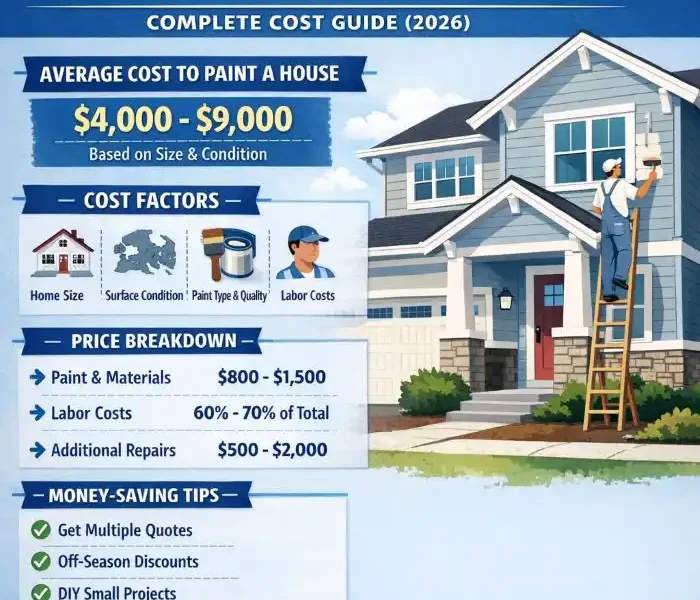
<li><strong>Typical professional cost:</strong> about <strong>$1.50 to $4.50 per square foot of paintable area</strong></li>
<li><strong>Small single-story house:</strong> often <strong>$2,500 to $5,500</strong></li>
<li><strong>Average two-story house:</strong> often <strong>$4,000 to $8,500</strong></li>
<li><strong>Large or complex homes:</strong> often <strong>$7,500 to $15,000+</strong></li>
<li><strong>Paint cost per gallon:</strong> usually <strong>$35 to $90+</strong></li>
<li><strong>Labor share of total price:</strong> often <strong>60% to 80%</strong></li>
<li><strong>Extra prep or repairs:</strong> can add <strong>hundreds or even thousands</strong> to the total</li>
</ul>
<p>These numbers are useful, but they are only a starting point. A home with peeling paint, wood rot, steep rooflines, or hard-to-reach trim can cost much more than a similar-sized home in good condition.</p>
<p>Your location matters too. Labor rates in busy metro areas are usually higher than in smaller towns. Surface material matters just as much. Stucco, brick, wood siding, and fiber cement all behave differently and need different levels of prep.</p>
<p>So if you want a true answer to <strong>how much to paint exterior of house</strong>, keep reading. The sections below break down how pricing works so you can spot a fair quote and avoid paying for things you do not need.</p>
<h2 id="how-painting-costs-are-calculated-how-painting-costs-are-calculated-">How Painting Costs Are Calculated {#how-painting-costs-are-calculated}</h2>
<p><img class="aligncenter wp-image-7040 size-full" src="https://comeawayhome.co.uk/wp-content/uploads/2026/05/1c373985-8b59-4968-96c0-9212af664191-ezgif.com-jpg-to-webp-converter.webp" alt="how much to paint exterior of house" width="700" height="700" /></p>
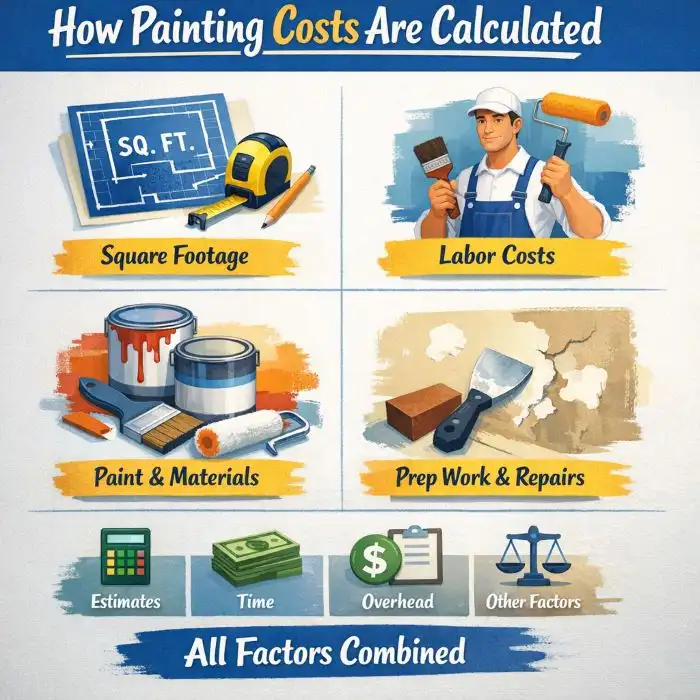
<p>If you want to understand <strong>how much to paint exterior of house</strong>, it helps to know how painters build their numbers. Most quotes are not random. Contractors usually combine surface measurements, labor time, prep requirements, materials, and job difficulty into one final project price.</p>
<h4 id="paintable-area-vs-interior-square-footage">Paintable area vs. interior square footage</h4>
<p>One of the biggest mistakes homeowners make is assuming the interior square footage of the <a href="https://comeawayhome.co.uk/how-much-does-it-cost-to-build-a-4000-sq-ft-house/">house</a> is the same as the amount of exterior surface to be painted. It is not.</p>
<p>Painters care about <strong>paintable area</strong>, not floor plan size. That includes siding, trim, fascia, soffits, eaves, doors, and sometimes shutters or detached structures. A 2,000-square-foot home does not always have 2,000 square feet of paintable exterior. In many cases, the actual paintable surface is much larger.</p>
<p>For example, a tall two-story home with lots of gables, trim, dormers, and overhangs will take more paint and more labor than a simple ranch-style home with the same living area. That is why contractors often measure the walls and details directly or use software to estimate the full exterior envelope.</p>
<h4 id="unit-pricing">Unit pricing</h4>
<p>Painters use a few common pricing methods.</p>
<p>Some charge <strong>per square foot</strong>, which is the easiest for homeowners to compare. This works well when homes are fairly standard and the condition is average.</p>
<p>Others charge <strong>per linear foot</strong> for trim, gutters, fascia, or special detail work. This helps when the main siding is simple, but the decorative elements take extra time.</p>
<p>Some painters also estimate <strong>by labor hour</strong>, especially when the project includes heavy scraping, repair work, or difficult access. And many companies wrap everything into a <strong>flat project price</strong>, which is often easiest for the customer to understand.</p>
<p>Each method has pros and cons. Per-square-foot pricing is easy to compare, but it can hide prep details. Hourly pricing is flexible, but less predictable. A flat bid feels simple, but only if it is itemized clearly.</p>
<h4 id="typical-cost-breakdown">Typical cost breakdown</h4>
<p>Most exterior painting quotes include several parts.</p>
<p><strong>Labor</strong> is usually the biggest piece. This covers washing, scraping, sanding, masking, priming, painting, and cleanup.</p>
<p><strong>Paint and materials</strong> include primer, finish coats, caulk, tape, plastic, rollers, brushes, and sprayer use.</p>
<p><strong>Prep work</strong> often includes power washing, scraping loose paint, sanding rough spots, and protecting landscaping or walkways.</p>
<p><strong>Repairs</strong> may include replacing rotted trim, sealing gaps, patching cracks, or minor carpentry.</p>
<p><strong>Equipment</strong> can add cost if the crew needs ladders, scaffolding, lifts, or special safety gear.</p>
<p><strong>Cleanup and disposal</strong> are also part of the final number, especially if old paint chips or debris need careful handling.</p>
<h4 id="small-example-calculation">Small example calculation</h4>
<p>Imagine a <strong>1,800-square-foot two-story home</strong> with moderate prep needs.</p>
<p>If the contractor estimates <strong>2,200 square feet of paintable area</strong> and charges <strong>$2.75 per square foot</strong>, the math looks like this:</p>
<p>If the home also needs extra scraping and trim repair, the contractor might add another <strong>$500 to $1,200</strong>, bringing the estimate to around <strong>$6,550 to $7,250</strong>.</p>
<p>That is why a detailed quote matters. The base rate only tells part of the story.</p>
<h2 id="average-prices-and-typical-ranges-average-prices-and-typical-ranges-">Average Prices and Typical Ranges {#average-prices-and-typical-ranges}</h2>
<p>If you are still asking <strong>how much to paint exterior of house</strong>, this is the section that gives you the clearest average ranges. Most homeowners want a number they can compare to their own property, and the best way to do that is by home type, size, and complexity.</p>
<p>The truth is simple: there is no one-size-fits-all number. A small, clean, single-story home with easy access may sit at the lower end of the range. A tall house with trim detail, damaged siding, and major color changes will cost more even if the floor area is similar.</p>
<p>Below is a realistic guide for 2026 pricing.</p>
<table>
<thead>
<tr>
<th>Home Type/Size</th>
<th>Typical Range</th>
<th>Example Total</th>
</tr>
</thead>
<tbody>
<tr>
<td>Small single-story home</td>
<td>$2,500–$5,500</td>
<td>$3,800</td>
</tr>
<tr>
<td>Average two-story home</td>
<td>$4,000–$8,500</td>
<td>$6,400</td>
</tr>
<tr>
<td>Large three-story home</td>
<td>$7,500–$15,000+</td>
<td>$10,900</td>
</tr>
<tr>
<td>Townhouse/rowhouse</td>
<td>$2,000–$6,000</td>
<td>$4,100</td>
</tr>
</tbody>
</table>
<p>These ranges assume standard residential repainting by a professional crew. If you need heavy prep, lead paint precautions, major siding repair, or premium coatings, your total may land above the higher end.</p>
<h4 id="cost-per-square-foot-explained">Cost per square foot explained</h4>
<p>The phrase <strong>paint exterior cost per square foot</strong> comes up often because it is one of the easiest ways to compare bids. Still, you need to know what each pricing tier actually includes.</p>
<p>At the <strong>low end</strong>, around <strong>$1.50 to $2.25 per square foot</strong>, you are usually looking at a straightforward repaint on a home in decent condition. Prep is light, access is easy, and the paint choice is often basic to mid-grade.</p>
<p>At the <strong>mid range</strong>, around <strong>$2.25 to $3.50 per square foot</strong>, you will usually get more thorough prep, better paint, and more detailed masking and finishing. This is where many average homes fall.</p>
<p>At the <strong>high end</strong>, around <strong>$3.50 to $4.50 or more per square foot</strong>, the quote often includes premium paint, difficult access, extensive prep, special surfaces, or a larger number of trim and accent details. Historic homes, tall houses, and properties with repair needs often land here.</p>
<p>So when someone tells you the rate per square foot, ask what is included. A lower number can look attractive at first, but it may leave out primer, repairs, or even cleanup.</p>
<h4 id="cost-by-surface-material">Cost by surface material</h4>
<p>Your siding material has a direct impact on your <strong>exterior painting estimate</strong> because every surface absorbs paint and prep time differently.</p>
<p><strong>Wood siding</strong> usually costs more because it often needs scraping, sanding, caulking, and spot repairs. It can look beautiful, but it asks for more maintenance.</p>
<p><strong>Vinyl siding</strong> can be cheaper to repaint if it is in good shape, but it requires the right product and color range. Not every paint works safely on vinyl.</p>
<p><strong>Stucco</strong> often increases material use because it is textured and porous. It usually takes more paint per square foot than smooth siding.</p>
<p><strong>Brick</strong> can be less common for painting, but once you decide to paint it, prep and product selection matter a lot. Brick needs breathable coatings and careful surface cleaning.</p>
<p><strong>Fiber cement</strong> is generally painter-friendly, but the cost still depends on condition, height, and trim detail. It often lands in the middle of the price range.</p>
<p>In short, the answer to <strong>how much to paint a house exterior</strong> depends not just on size, but on what that exterior is made of and how much work it needs before the first coat goes on.</p>
<h2 id="factors-that-increase-or-decrease-cost-factors-that-increase-or-decrease-cost-">Factors That Increase or Decrease Cost {#factors-that-increase-or-decrease-cost}</h2>
<p>If you want a more accurate answer to <strong>how much to paint exterior of house</strong>, you have to look beyond square footage. The final price changes based on a handful of practical job conditions. Some homes are quick and easy. Others need much more labor before painting can even begin.</p>
<h4 id="surface-condition-and-prep-needs">Surface condition and prep needs</h4>
<p>Prep work is one of the biggest cost drivers. If the old paint is peeling, chalking, blistering, or flaking, the crew has to scrape and sand before they can repaint.</p>
<p>If the home has mildew, stains, or dirt buildup, it may need washing and treatment first. If wood rot or cracked trim is present, repairs will add time and material cost. A house in excellent condition can save you a lot of money because the painters can move faster.</p>
<h4 id="number-of-coats-color-changes-and-primer-needs">Number of coats, color changes, and primer needs</h4>
<p>A simple repaint in a similar color usually costs less. The old surface already supports the new finish, and coverage tends to be easier.</p>
<p>A major color change can raise the price because it may need extra coats or a full primer coat first. Going from dark to light or light to dark often means more labor and more product. That means a higher total, even if the house size stays the same.</p>
<h4 id="paint-quality-and-brand">Paint quality and brand</h4>
<p>Paint quality affects both the upfront cost and long-term value. Economy paint may cost less per gallon, but it usually covers less effectively and may not last as long.</p>
<p>Premium paint costs more, but it often gives better coverage, stronger color retention, and longer durability. That can make it the better financial choice over time. If you repaint less often, you may spend less across the life of the home.</p>
<h4 id="house-height-and-complexity">House height and complexity</h4>
<p>A single-story home is easier and faster to paint than a two- or three-story home. Once height increases, setup time, ladder work, safety planning, and equipment needs all go up.</p>
<p>Complex architecture also adds cost. Gables, dormers, steep rooflines, balconies, and narrow access points can slow the crew down. A simple box-shaped house is always cheaper to paint than a house with lots of visual detail.</p>
<h4 id="trim-doors-windows-and-architectural-details">Trim, doors, windows, and architectural details</h4>
<p>The more trim and detail work your home has, the more the labor bill climbs. Trim usually requires careful brush work, edge work, and color separation.</p>
<p>Window frames, shutters, fascia boards, garage doors, columns, railings, and decorative accents all take time. Even if the siding area is modest, a detail-heavy home may still produce a large quote.</p>
<h4 id="accessibility-and-safety">Accessibility and safety</h4>
<p>Painters charge more when a house is harder to reach safely. Tight side yards, steep slopes, landscaping obstacles, power lines, and uneven ground all make setup harder.</p>
<p>If the crew needs scaffolding, lifts, or special fall protection, expect the price to increase. Safety is not a luxury on exterior work. It is part of the real cost of doing the job properly.</p>
<h4 id="seasonal-timing-and-local-labor-rates">Seasonal timing and local labor rates</h4>
<p>Exterior painting is seasonal in many regions. During peak months, contractors are busy, and prices may be firmer. In slower months, some companies offer discounts to fill the schedule.</p>
<p>Local labor rates matter too. A city with higher wages, insurance costs, and operating expenses will almost always have higher painting prices than a smaller market nearby.</p>
<h4 id="additional-services">Additional services</h4>
<p>Many homeowners ask for extra work while the crew is already on site. This can be a smart move, but it affects the total.</p>
<p>Power washing, carpentry repair, caulking, gutter touch-ups, detached garage painting, fence painting, and deck staining are common add-ons. Bundling work sometimes saves money overall, but it still raises the project total.</p>
<h4 id="quick-tip">Quick tip</h4>
<p>Always ask for <strong>itemized quotes</strong>. When you can see prep, primer, paint, labor, and repair costs separately, it becomes much easier to compare bids and spot inflated markups.</p>
<h2 id="diy-vs-professional-painter-cost-comparison-diy-vs-professional-painter-cost-comparison-">DIY vs Professional Painter: Cost Comparison {#diy-vs-professional-painter-cost-comparison}</h2>
<p>When homeowners ask <strong>how much to paint exterior of house</strong>, they often wonder if doing it themselves will cut the cost in half. Sometimes it does. Sometimes it only saves money on paper.</p>
<p>DIY can work well for a smaller home in good shape. But exterior painting takes more than a ladder and a few brushes. You need surface prep tools, safety equipment, enough paint for full coverage, and time to do the work carefully.</p>
<p>Here is a side-by-side view:</p>
<table>
<thead>
<tr>
<th>DIY vs Professional: Cost & Tradeoffs</th>
<th>DIY</th>
<th>Professional</th>
</tr>
</thead>
<tbody>
<tr>
<td><strong>Total cost</strong></td>
<td>Lower upfront, often $800–$2,500 in materials and equipment</td>
<td>Higher upfront, often $2,500–$15,000+ depending on size</td>
</tr>
<tr>
<td><strong>Time required</strong></td>
<td>Several weekends or more</td>
<td>Usually a few days to 2 weeks</td>
</tr>
<tr>
<td><strong>Equipment needed</strong></td>
<td>You buy or rent ladders, sprayers, drop cloths, washers, safety gear</td>
<td>Crew usually brings everything</td>
</tr>
<tr>
<td><strong>Quality & warranty</strong></td>
<td>Depends on your skill; no labor warranty</td>
<td>More consistent finish; often includes warranty</td>
</tr>
<tr>
<td><strong>Safety</strong></td>
<td>Risk increases on tall or complex homes</td>
<td>Trained crew handles height and access</td>
</tr>
</tbody>
</table>
<p>DIY usually makes sense if your home is <strong>small, single-story, and in decent condition</strong>. It also works if you are doing a minor color refresh rather than covering severe damage or switching to a dramatically different shade.</p>
<p>Hiring professionals makes more sense when the house is <strong>multi-story, detail-heavy, or in rough condition</strong>. The same goes for homes that need a lot of scraping, caulking, priming, or repair work.</p>
<p>For example, a homeowner might spend <strong>$1,400</strong> on paint, primer, tape, caulk, brushes, roller covers, and ladder rental for a small one-story project. A professional quote for the same job might come in at <strong>$4,200</strong>. That looks like a big difference, but the pro crew may finish in three days, include better prep, provide insurance, and offer a workmanship warranty.</p>
<p>So yes, DIY can save money. But you should compare <strong>actual total effort, risk, and finish quality</strong>, not just the initial check you write.</p>
<h2 id="how-to-get-an-accurate-quote-how-to-get-an-accurate-quote-">How to Get an Accurate Quote {#how-to-get-an-accurate-quote}</h2>
<p>If you truly want to know <strong>how much to paint exterior of house</strong>, the smartest next step is getting accurate bids. The quality of the quote often depends on how much information you give the painter before they price the job.</p>
<p>Start by gathering the basics. Measure the house if you can, or at least note the home size and number of stories. Even better, try to estimate the <strong>paintable area calculation</strong> by looking at siding, trim, and exterior features rather than relying only on interior square footage.</p>
<p>Next, take clear photos of problem areas. Show peeling paint, cracks, mildew, damaged trim, or any spots that may need repair. This helps painters give better early estimates and keeps surprises to a minimum.</p>
<p>Then decide on your color direction. If you are keeping a similar color, mention that. If you want a major color shift, mention that too. Also note the finish you prefer, such as flat, satin, or semi-gloss for trim. Finish choices can affect both material cost and appearance.</p>
<p>If repairs are needed, write them down. This includes rotten wood, damaged fascia, failed caulk joints, or loose boards. A painter cannot build a useful quote if repair work stays vague.</p>
<p>You should usually get <strong>at least three written bids</strong>. Ask each company for an itemized estimate that covers prep, primer, paint brand, number of coats, labor, timeline, cleanup, and warranty. Also ask if they are insured and whether the same crew who estimates the job will actually do the work.</p>
<p>Watch for red flags. Very low bids can mean skipped prep, cheaper paint, or no real insurance. No contract is a bad sign. So is a demand for full payment upfront. A fair deposit is common, but full payment before work begins should make you pause.</p>
<h2 id="ways-to-save-money-without-sacrificing-quality-ways-to-save-money-without-sacrificing-quality-">Ways to Save Money Without Sacrificing Quality {#ways-to-save-money-without-sacrificing-quality}</h2>
<p>If you are asking <strong>how much to paint exterior of house</strong>, you are probably also asking how to keep the cost under control. The good news is that you can often lower the price without cutting corners where it matters most.</p>
<p>One of the best ways to save is to <strong>schedule during the off-season</strong>. In many markets, painters are busiest in peak spring and summer weeks. If weather allows, late season scheduling can sometimes lead to better pricing or more flexible crews.</p>
<p>Another smart move is to <strong>handle simple prep tasks yourself</strong>. You might remove outdoor décor, move patio furniture, trim back shrubs, or take down shutters before the crew arrives. These are small jobs, but they can reduce labor time.</p>
<p>You can also save by choosing <strong>high-quality paint with longer life</strong>. This sounds backward at first because premium paint costs more. But if it lasts several years longer and keeps the exterior looking better, the long-term value can be stronger than a bargain product that fails early.</p>
<p>Bundling projects can help too. If you already need trim repair, caulking, or minor siding fixes, doing them as part of the same visit may reduce repeat setup costs later. One mobilization is often cheaper than two separate jobs.</p>
<p>Finally, get multiple quotes and negotiate smartly. Instead of pushing only for a lower number, ask whether there is flexibility on schedule, payment timing, or scope. You may be able to save money by painting only the siding now and delaying a detached structure or fence until later.</p>
<p>A simple example: a standard paint might save you <strong>$300 to $500 upfront</strong>, but a premium coating that lasts several years longer could easily be the better value. Lower cost today is not always lower cost over time.</p>
<h2 id="timeline-how-long-exterior-painting-takes-timeline-how-long-exterior-painting-takes-">Timeline: How Long Exterior Painting Takes {#timeline-how-long-exterior-painting-takes}</h2>
<p>When you ask <strong>how much to paint exterior of house</strong>, it also helps to ask how long the project will take. Time affects labor cost, scheduling, and how disruptive the work feels.</p>
<p>A <strong>small single-story home</strong> may take around <strong>2 to 4 days</strong> if the surface is in good shape and the weather cooperates.</p>
<p>An <strong>average two-story home</strong> often takes <strong>4 to 7 days</strong>, especially if the crew needs extra prep, trim detail work, or multiple coats.</p>
<p>A <strong>large three-story or complex home</strong> may take <strong>1 to 2 weeks or more</strong>, particularly if scaffolding, repair work, or specialty coatings are involved.</p>
<p>Prep often adds more time than painting itself. Power washing may need a drying period before primer or paint can begin. Scraping, sanding, and repairs can also slow things down. Weather is another major factor. Rain, high wind, strong humidity, or extreme heat can delay work or change the order of tasks.</p>
<p>A practical tip: build in a buffer. Even a well-run project can shift by a day or two because of weather or drying conditions. That is normal and usually a sign the crew is trying to get the result right.</p>
<h2 id="faq-faq-">FAQ</h2>
<p>Here are quick answers to the questions homeowners ask most often.</p>
<h4 id="how-much-to-paint-exterior-of-house-per-square-foot-">How much to paint exterior of house per square foot?</h4>
<p>Most professional jobs fall around <strong>$1.50 to $4.50 per square foot of paintable area</strong>, depending on prep, height, material, and paint quality.</p>
<h4 id="will-painters-price-per-story-or-square-foot-">Will painters price per story or square foot?</h4>
<p>Some painters price by <strong>square foot</strong>, while others adjust based on <strong>number of stories</strong>, access, and complexity. Many final quotes use a flat project total that combines all of those factors.</p>
<h4 id="do-i-need-primer-before-repainting-">Do I need primer before repainting?</h4>
<p>Not always. If the old paint is sound and the new color is similar, spot priming may be enough. But bare wood, stained areas, repaired sections, or big color changes often need primer for proper coverage and durability.</p>
<h4 id="how-often-should-a-house-exterior-be-painted-">How often should a house exterior be painted?</h4>
<p>That depends on climate, material, and paint quality. Many homes need repainting every <strong>5 to 10 years</strong>, though some premium systems may last longer under the right conditions.</p>
<h4 id="is-it-worth-repainting-before-selling-">Is it worth repainting before selling?</h4>
<p>In many cases, yes. A fresh exterior can improve curb appeal, make the home look maintained, and support a stronger first impression for buyers.</p>
<h4 id="what-is-included-in-an-exterior-painting-estimate-">What is included in an exterior painting estimate?</h4>
<p>A solid estimate should include prep work, primer if needed, paint brand and quantity, number of coats, labor, equipment, cleanup, and warranty information.</p>
<h4 id="does-painting-trim-separately-cost-more-">Does painting trim separately cost more?</h4>
<p>Yes. Trim, shutters, doors, and window details often require slower hand work, so they usually increase labor cost even when the siding area is not large.</p>
<h4 id="can-i-paint-over-old-exterior-paint-">Can I paint over old exterior paint?</h4>
<p>Sometimes you can, but only if the old surface is stable and clean. Loose or failing paint must be removed first, or the new finish may fail early.</p>
<h2 id="sample-itemized-estimate-template-sample-itemized-estimate-template-">Sample Itemized Estimate Template {#sample-itemized-estimate-template}</h2>
<p>A sample template makes it easier to compare bids and understand where the money goes. You can copy the format below and adapt it for your home.</p>
<p>This template helps you compare contractors on the same terms. One company may look cheaper until you realize it excluded primer, trim repair, or cleanup. Another may cost more but include premium paint and a longer warranty.</p>
<p>You should also customize the template for your region. Local labor rates, weather conditions, and surface types can all shift the numbers.</p>
<h2 id="local-considerations-and-next-steps-local-considerations-and-next-steps-">Local Considerations and Next Steps {#local-considerations-and-next-steps}</h2>
<p>Exterior painting costs are always local. A fair price in one city may be too high or too low in another. Weather patterns, labor rates, seasonal demand, and common siding materials all shape the market.</p>
<p>That is why broad national averages are helpful, but local quotes matter more. The smartest next step is to gather your own measurements, note the surface condition, and request at least three detailed estimates from reputable painters in your area.</p>
<p>Here is the simplest action plan:</p>
<p>First, estimate your <strong>paintable area</strong> as accurately as possible.</p>
<p>Second, decide whether you are keeping the same color or making a major change.</p>
<p>Third, use the itemized estimate template above when comparing bids.</p>
<p>Fourth, schedule the work during the best weather window in your region, not just the first week a contractor is available.</p>
<p>If you do those four things, you will be in a much better position to judge the real answer to <strong>how much to paint exterior of house</strong> for your specific property.</p>
<h2 id="final-thoughts">Final Thoughts</h2>
<p>By now, you should have a much clearer idea of <strong>how much to paint exterior of house</strong>, what affects the price, and how to avoid overpaying. Use this guide to compare quotes, plan your budget, and make smarter decisions before the first gallon of paint gets opened.</p>
<p>If you want a rough estimate, you can use your home size, number of stories, and surface condition as a starting point and compare that with local quotes. You can also create a printable checklist from the estimate template above and use it when speaking with contractors. If you run a home improvement site, this is also a good place to point readers to related posts such as <strong>best exterior paint brands</strong> or <strong>how to prep a house for painting</strong>.</p>
<p><a href="https://comeawayhome.co.uk/">House</a></p>
If you are wondering how much to paint exterior of house, you are not alone. This is one of the most common questions homeowners ask when they want to improve curb appeal, protect siding from weather, and raise resale value without taking on a full exterior remodel.
A fresh exterior paint job does more than make your house look cleaner and newer. It helps shield wood, trim, stucco, and other surfaces from sun, moisture, wind, and general wear. It can also make a big difference if you plan to sell soon, because buyers notice first impressions fast.
In this guide, you will learn the average exterior house painting cost, what makes prices go up or down, how contractors calculate a quote, whether DIY is worth it, and how to save money without ending up with a bad result. If you are asking “how much to paint exterior of house” for an average two-story, 1,800–2,200 sq ft home, expect a professional quote in the mid-thousands—typically driven by per-square-foot rates, the amount of prep required, and whether you’re changing to a dramatically different color.
Quick Cost Snapshot {#quick-cost-snapshot}
When homeowners ask how much to paint exterior of house, they usually want a fast number first. While every home is different, a simple cost snapshot gives you a realistic starting point before you request quotes.
Here is the short version:
- Typical professional cost: about $1.50 to $4.50 per square foot of paintable area
- Small single-story house: often $2,500 to $5,500
- Average two-story house: often $4,000 to $8,500
- Large or complex homes: often $7,500 to $15,000+
- Paint cost per gallon: usually $35 to $90+
- Labor share of total price: often 60% to 80%
- Extra prep or repairs: can add hundreds or even thousands to the total
These numbers are useful, but they are only a starting point. A home with peeling paint, wood rot, steep rooflines, or hard-to-reach trim can cost much more than a similar-sized home in good condition.
Your location matters too. Labor rates in busy metro areas are usually higher than in smaller towns. Surface material matters just as much. Stucco, brick, wood siding, and fiber cement all behave differently and need different levels of prep.
So if you want a true answer to how much to paint exterior of house, keep reading. The sections below break down how pricing works so you can spot a fair quote and avoid paying for things you do not need.
How Painting Costs Are Calculated {#how-painting-costs-are-calculated}
If you want to understand how much to paint exterior of house, it helps to know how painters build their numbers. Most quotes are not random. Contractors usually combine surface measurements, labor time, prep requirements, materials, and job difficulty into one final project price.
One of the biggest mistakes homeowners make is assuming the interior square footage of the house is the same as the amount of exterior surface to be painted. It is not.
Painters care about paintable area, not floor plan size. That includes siding, trim, fascia, soffits, eaves, doors, and sometimes shutters or detached structures. A 2,000-square-foot home does not always have 2,000 square feet of paintable exterior. In many cases, the actual paintable surface is much larger.
For example, a tall two-story home with lots of gables, trim, dormers, and overhangs will take more paint and more labor than a simple ranch-style home with the same living area. That is why contractors often measure the walls and details directly or use software to estimate the full exterior envelope.
Unit pricing
Painters use a few common pricing methods.
Some charge per square foot, which is the easiest for homeowners to compare. This works well when homes are fairly standard and the condition is average.
Others charge per linear foot for trim, gutters, fascia, or special detail work. This helps when the main siding is simple, but the decorative elements take extra time.
Some painters also estimate by labor hour, especially when the project includes heavy scraping, repair work, or difficult access. And many companies wrap everything into a flat project price, which is often easiest for the customer to understand.
Each method has pros and cons. Per-square-foot pricing is easy to compare, but it can hide prep details. Hourly pricing is flexible, but less predictable. A flat bid feels simple, but only if it is itemized clearly.
Typical cost breakdown
Most exterior painting quotes include several parts.
Labor is usually the biggest piece. This covers washing, scraping, sanding, masking, priming, painting, and cleanup.
Paint and materials include primer, finish coats, caulk, tape, plastic, rollers, brushes, and sprayer use.
Prep work often includes power washing, scraping loose paint, sanding rough spots, and protecting landscaping or walkways.
Repairs may include replacing rotted trim, sealing gaps, patching cracks, or minor carpentry.
Equipment can add cost if the crew needs ladders, scaffolding, lifts, or special safety gear.
Cleanup and disposal are also part of the final number, especially if old paint chips or debris need careful handling.
Small example calculation
Imagine a 1,800-square-foot two-story home with moderate prep needs.
If the contractor estimates 2,200 square feet of paintable area and charges $2.75 per square foot, the math looks like this:
If the home also needs extra scraping and trim repair, the contractor might add another $500 to $1,200, bringing the estimate to around $6,550 to $7,250.
That is why a detailed quote matters. The base rate only tells part of the story.
Average Prices and Typical Ranges {#average-prices-and-typical-ranges}
If you are still asking how much to paint exterior of house, this is the section that gives you the clearest average ranges. Most homeowners want a number they can compare to their own property, and the best way to do that is by home type, size, and complexity.
The truth is simple: there is no one-size-fits-all number. A small, clean, single-story home with easy access may sit at the lower end of the range. A tall house with trim detail, damaged siding, and major color changes will cost more even if the floor area is similar.
Below is a realistic guide for 2026 pricing.
| Home Type/Size |
Typical Range |
Example Total |
| Small single-story home |
$2,500–$5,500 |
$3,800 |
| Average two-story home |
$4,000–$8,500 |
$6,400 |
| Large three-story home |
$7,500–$15,000+ |
$10,900 |
| Townhouse/rowhouse |
$2,000–$6,000 |
$4,100 |
These ranges assume standard residential repainting by a professional crew. If you need heavy prep, lead paint precautions, major siding repair, or premium coatings, your total may land above the higher end.
The phrase paint exterior cost per square foot comes up often because it is one of the easiest ways to compare bids. Still, you need to know what each pricing tier actually includes.
At the low end, around $1.50 to $2.25 per square foot, you are usually looking at a straightforward repaint on a home in decent condition. Prep is light, access is easy, and the paint choice is often basic to mid-grade.
At the mid range, around $2.25 to $3.50 per square foot, you will usually get more thorough prep, better paint, and more detailed masking and finishing. This is where many average homes fall.
At the high end, around $3.50 to $4.50 or more per square foot, the quote often includes premium paint, difficult access, extensive prep, special surfaces, or a larger number of trim and accent details. Historic homes, tall houses, and properties with repair needs often land here.
So when someone tells you the rate per square foot, ask what is included. A lower number can look attractive at first, but it may leave out primer, repairs, or even cleanup.
Cost by surface material
Your siding material has a direct impact on your exterior painting estimate because every surface absorbs paint and prep time differently.
Wood siding usually costs more because it often needs scraping, sanding, caulking, and spot repairs. It can look beautiful, but it asks for more maintenance.
Vinyl siding can be cheaper to repaint if it is in good shape, but it requires the right product and color range. Not every paint works safely on vinyl.
Stucco often increases material use because it is textured and porous. It usually takes more paint per square foot than smooth siding.
Brick can be less common for painting, but once you decide to paint it, prep and product selection matter a lot. Brick needs breathable coatings and careful surface cleaning.
Fiber cement is generally painter-friendly, but the cost still depends on condition, height, and trim detail. It often lands in the middle of the price range.
In short, the answer to how much to paint a house exterior depends not just on size, but on what that exterior is made of and how much work it needs before the first coat goes on.
Factors That Increase or Decrease Cost {#factors-that-increase-or-decrease-cost}
If you want a more accurate answer to how much to paint exterior of house, you have to look beyond square footage. The final price changes based on a handful of practical job conditions. Some homes are quick and easy. Others need much more labor before painting can even begin.
Surface condition and prep needs
Prep work is one of the biggest cost drivers. If the old paint is peeling, chalking, blistering, or flaking, the crew has to scrape and sand before they can repaint.
If the home has mildew, stains, or dirt buildup, it may need washing and treatment first. If wood rot or cracked trim is present, repairs will add time and material cost. A house in excellent condition can save you a lot of money because the painters can move faster.
Number of coats, color changes, and primer needs
A simple repaint in a similar color usually costs less. The old surface already supports the new finish, and coverage tends to be easier.
A major color change can raise the price because it may need extra coats or a full primer coat first. Going from dark to light or light to dark often means more labor and more product. That means a higher total, even if the house size stays the same.
Paint quality and brand
Paint quality affects both the upfront cost and long-term value. Economy paint may cost less per gallon, but it usually covers less effectively and may not last as long.
Premium paint costs more, but it often gives better coverage, stronger color retention, and longer durability. That can make it the better financial choice over time. If you repaint less often, you may spend less across the life of the home.
House height and complexity
A single-story home is easier and faster to paint than a two- or three-story home. Once height increases, setup time, ladder work, safety planning, and equipment needs all go up.
Complex architecture also adds cost. Gables, dormers, steep rooflines, balconies, and narrow access points can slow the crew down. A simple box-shaped house is always cheaper to paint than a house with lots of visual detail.
Trim, doors, windows, and architectural details
The more trim and detail work your home has, the more the labor bill climbs. Trim usually requires careful brush work, edge work, and color separation.
Window frames, shutters, fascia boards, garage doors, columns, railings, and decorative accents all take time. Even if the siding area is modest, a detail-heavy home may still produce a large quote.
Accessibility and safety
Painters charge more when a house is harder to reach safely. Tight side yards, steep slopes, landscaping obstacles, power lines, and uneven ground all make setup harder.
If the crew needs scaffolding, lifts, or special fall protection, expect the price to increase. Safety is not a luxury on exterior work. It is part of the real cost of doing the job properly.
Seasonal timing and local labor rates
Exterior painting is seasonal in many regions. During peak months, contractors are busy, and prices may be firmer. In slower months, some companies offer discounts to fill the schedule.
Local labor rates matter too. A city with higher wages, insurance costs, and operating expenses will almost always have higher painting prices than a smaller market nearby.
Additional services
Many homeowners ask for extra work while the crew is already on site. This can be a smart move, but it affects the total.
Power washing, carpentry repair, caulking, gutter touch-ups, detached garage painting, fence painting, and deck staining are common add-ons. Bundling work sometimes saves money overall, but it still raises the project total.
Quick tip
Always ask for itemized quotes. When you can see prep, primer, paint, labor, and repair costs separately, it becomes much easier to compare bids and spot inflated markups.
DIY vs Professional Painter: Cost Comparison {#diy-vs-professional-painter-cost-comparison}
When homeowners ask how much to paint exterior of house, they often wonder if doing it themselves will cut the cost in half. Sometimes it does. Sometimes it only saves money on paper.
DIY can work well for a smaller home in good shape. But exterior painting takes more than a ladder and a few brushes. You need surface prep tools, safety equipment, enough paint for full coverage, and time to do the work carefully.
Here is a side-by-side view:
| DIY vs Professional: Cost & Tradeoffs |
DIY |
Professional |
| Total cost |
Lower upfront, often $800–$2,500 in materials and equipment |
Higher upfront, often $2,500–$15,000+ depending on size |
| Time required |
Several weekends or more |
Usually a few days to 2 weeks |
| Equipment needed |
You buy or rent ladders, sprayers, drop cloths, washers, safety gear |
Crew usually brings everything |
| Quality & warranty |
Depends on your skill; no labor warranty |
More consistent finish; often includes warranty |
| Safety |
Risk increases on tall or complex homes |
Trained crew handles height and access |
DIY usually makes sense if your home is small, single-story, and in decent condition. It also works if you are doing a minor color refresh rather than covering severe damage or switching to a dramatically different shade.
Hiring professionals makes more sense when the house is multi-story, detail-heavy, or in rough condition. The same goes for homes that need a lot of scraping, caulking, priming, or repair work.
For example, a homeowner might spend $1,400 on paint, primer, tape, caulk, brushes, roller covers, and ladder rental for a small one-story project. A professional quote for the same job might come in at $4,200. That looks like a big difference, but the pro crew may finish in three days, include better prep, provide insurance, and offer a workmanship warranty.
So yes, DIY can save money. But you should compare actual total effort, risk, and finish quality, not just the initial check you write.
How to Get an Accurate Quote {#how-to-get-an-accurate-quote}
If you truly want to know how much to paint exterior of house, the smartest next step is getting accurate bids. The quality of the quote often depends on how much information you give the painter before they price the job.
Start by gathering the basics. Measure the house if you can, or at least note the home size and number of stories. Even better, try to estimate the paintable area calculation by looking at siding, trim, and exterior features rather than relying only on interior square footage.
Next, take clear photos of problem areas. Show peeling paint, cracks, mildew, damaged trim, or any spots that may need repair. This helps painters give better early estimates and keeps surprises to a minimum.
Then decide on your color direction. If you are keeping a similar color, mention that. If you want a major color shift, mention that too. Also note the finish you prefer, such as flat, satin, or semi-gloss for trim. Finish choices can affect both material cost and appearance.
If repairs are needed, write them down. This includes rotten wood, damaged fascia, failed caulk joints, or loose boards. A painter cannot build a useful quote if repair work stays vague.
You should usually get at least three written bids. Ask each company for an itemized estimate that covers prep, primer, paint brand, number of coats, labor, timeline, cleanup, and warranty. Also ask if they are insured and whether the same crew who estimates the job will actually do the work.
Watch for red flags. Very low bids can mean skipped prep, cheaper paint, or no real insurance. No contract is a bad sign. So is a demand for full payment upfront. A fair deposit is common, but full payment before work begins should make you pause.
Ways to Save Money Without Sacrificing Quality {#ways-to-save-money-without-sacrificing-quality}
If you are asking how much to paint exterior of house, you are probably also asking how to keep the cost under control. The good news is that you can often lower the price without cutting corners where it matters most.
One of the best ways to save is to schedule during the off-season. In many markets, painters are busiest in peak spring and summer weeks. If weather allows, late season scheduling can sometimes lead to better pricing or more flexible crews.
Another smart move is to handle simple prep tasks yourself. You might remove outdoor décor, move patio furniture, trim back shrubs, or take down shutters before the crew arrives. These are small jobs, but they can reduce labor time.
You can also save by choosing high-quality paint with longer life. This sounds backward at first because premium paint costs more. But if it lasts several years longer and keeps the exterior looking better, the long-term value can be stronger than a bargain product that fails early.
Bundling projects can help too. If you already need trim repair, caulking, or minor siding fixes, doing them as part of the same visit may reduce repeat setup costs later. One mobilization is often cheaper than two separate jobs.
Finally, get multiple quotes and negotiate smartly. Instead of pushing only for a lower number, ask whether there is flexibility on schedule, payment timing, or scope. You may be able to save money by painting only the siding now and delaying a detached structure or fence until later.
A simple example: a standard paint might save you $300 to $500 upfront, but a premium coating that lasts several years longer could easily be the better value. Lower cost today is not always lower cost over time.
Timeline: How Long Exterior Painting Takes {#timeline-how-long-exterior-painting-takes}
When you ask how much to paint exterior of house, it also helps to ask how long the project will take. Time affects labor cost, scheduling, and how disruptive the work feels.
A small single-story home may take around 2 to 4 days if the surface is in good shape and the weather cooperates.
An average two-story home often takes 4 to 7 days, especially if the crew needs extra prep, trim detail work, or multiple coats.
A large three-story or complex home may take 1 to 2 weeks or more, particularly if scaffolding, repair work, or specialty coatings are involved.
Prep often adds more time than painting itself. Power washing may need a drying period before primer or paint can begin. Scraping, sanding, and repairs can also slow things down. Weather is another major factor. Rain, high wind, strong humidity, or extreme heat can delay work or change the order of tasks.
A practical tip: build in a buffer. Even a well-run project can shift by a day or two because of weather or drying conditions. That is normal and usually a sign the crew is trying to get the result right.
FAQ
Here are quick answers to the questions homeowners ask most often.
Most professional jobs fall around $1.50 to $4.50 per square foot of paintable area, depending on prep, height, material, and paint quality.
Some painters price by square foot, while others adjust based on number of stories, access, and complexity. Many final quotes use a flat project total that combines all of those factors.
Do I need primer before repainting?
Not always. If the old paint is sound and the new color is similar, spot priming may be enough. But bare wood, stained areas, repaired sections, or big color changes often need primer for proper coverage and durability.
How often should a house exterior be painted?
That depends on climate, material, and paint quality. Many homes need repainting every 5 to 10 years, though some premium systems may last longer under the right conditions.
Is it worth repainting before selling?
In many cases, yes. A fresh exterior can improve curb appeal, make the home look maintained, and support a stronger first impression for buyers.
What is included in an exterior painting estimate?
A solid estimate should include prep work, primer if needed, paint brand and quantity, number of coats, labor, equipment, cleanup, and warranty information.
Does painting trim separately cost more?
Yes. Trim, shutters, doors, and window details often require slower hand work, so they usually increase labor cost even when the siding area is not large.
Can I paint over old exterior paint?
Sometimes you can, but only if the old surface is stable and clean. Loose or failing paint must be removed first, or the new finish may fail early.
Sample Itemized Estimate Template {#sample-itemized-estimate-template}
A sample template makes it easier to compare bids and understand where the money goes. You can copy the format below and adapt it for your home.
This template helps you compare contractors on the same terms. One company may look cheaper until you realize it excluded primer, trim repair, or cleanup. Another may cost more but include premium paint and a longer warranty.
You should also customize the template for your region. Local labor rates, weather conditions, and surface types can all shift the numbers.
Local Considerations and Next Steps {#local-considerations-and-next-steps}
Exterior painting costs are always local. A fair price in one city may be too high or too low in another. Weather patterns, labor rates, seasonal demand, and common siding materials all shape the market.
That is why broad national averages are helpful, but local quotes matter more. The smartest next step is to gather your own measurements, note the surface condition, and request at least three detailed estimates from reputable painters in your area.
Here is the simplest action plan:
First, estimate your paintable area as accurately as possible.
Second, decide whether you are keeping the same color or making a major change.
Third, use the itemized estimate template above when comparing bids.
Fourth, schedule the work during the best weather window in your region, not just the first week a contractor is available.
If you do those four things, you will be in a much better position to judge the real answer to how much to paint exterior of house for your specific property.
Final Thoughts
By now, you should have a much clearer idea of how much to paint exterior of house, what affects the price, and how to avoid overpaying. Use this guide to compare quotes, plan your budget, and make smarter decisions before the first gallon of paint gets opened.
If you want a rough estimate, you can use your home size, number of stories, and surface condition as a starting point and compare that with local quotes. You can also create a printable checklist from the estimate template above and use it when speaking with contractors. If you run a home improvement site, this is also a good place to point readers to related posts such as best exterior paint brands or how to prep a house for painting.
House