If you want to learn how to divert water away from house foundations, you are already thinking like a smart homeowner. Water may look harmless when it sits in your yard for a few hours, but when it keeps collecting near your home, it can turn into a very expensive problem.
Picture this. A heavy rain starts in the evening. By morning, you step outside and notice water pooling near the base of your walls. The soil is soft. The basement smells damp. Maybe you even see muddy water sitting by the front steps. This happens in many places with strong seasonal rain, including cities like Lahore, where sudden storms can overwhelm poor drainage fast.
The trouble is not just the puddle you can see. The bigger risk is what happens below the surface. Water pushes against your foundation. It seeps into cracks. It weakens soil. It feeds mold. It rots wood. Over time, it can lead to wall damage, basement leaks, ruined flooring, and structural repairs that can easily cost $5,000 to $10,000 or more. In many insurance reports, water damage and freezing remain one of the most common reasons homeowners file claims.
That is why understanding how to divert water away from house walls, footings, and basements is so important. Good drainage protects your structure, helps prevent mold, lowers repair costs, and can even improve property value because buyers notice drainage problems quickly.
In this guide, you will learn the full picture. We will cover how to assess the problem, which DIY fixes work best, when to use professional systems, and how to maintain everything long term. Whether you need better gutter downspouts, smarter foundation drainage, a full French drain installation, or simple grading yard slope improvements, you will find a practical path here.
If the issue already looks serious, do not wait too long. After reading, you may want to call a trusted local drainage or basement waterproofing professional for a site inspection and a custom plan.
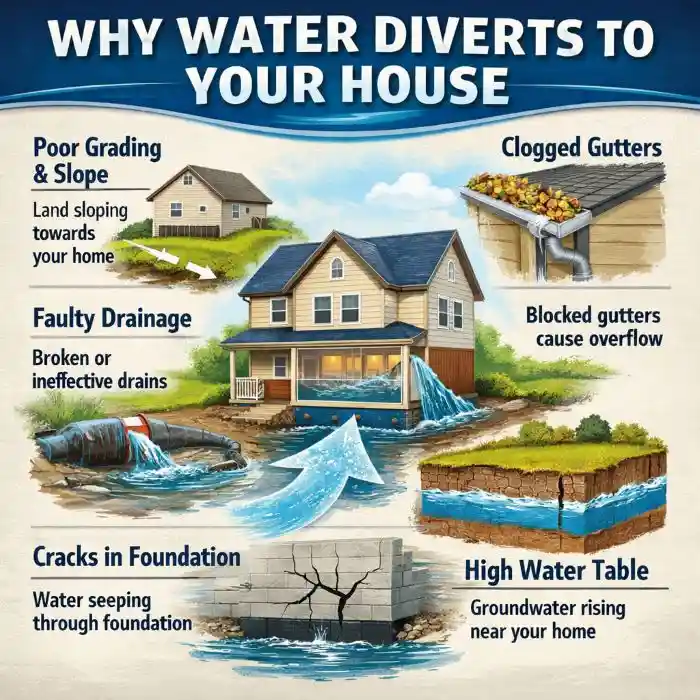
Why Water Diverts to Your House
Common Causes of Poor Drainage
Before you fix the problem, you need to know why water is moving toward your home in the first place. In many cases, the cause is surprisingly simple.
One of the most common issues is poor roof runoff. When your roof sheds rainwater, that water has to go somewhere. If your gutter downspouts end too close to the house, they dump large amounts of water right beside the foundation. During a major storm, that adds up fast.
Another common cause is flat or backward yard grading. Your yard should slope away from the home, not toward it. If the soil near the foundation is level or dips inward, it acts like a bowl and traps rainwater.
Clogged gutters also make things worse. Water spills over the sides instead of flowing where it should. That overflow often lands directly against your home. High groundwater can create a similar problem, especially after days of rain. In that case, the soil beneath and around your home stays saturated, and pressure builds against basement walls.
Some homes simply have no proper runoff controls at all. No downspout extensions. No swales. No drain line. No catch basin. When that happens, water follows the path of least resistance, and that path often ends near your foundation.
What Happens When Water Stays Near the Foundation
If water keeps collecting around your house, it can cause more than a wet yard. It can wash away soil and expose the foundation. It can create hydrostatic pressure, which means water pushes against basement walls until moisture starts seeping through.
You may also see:
- Pooling water near walls, patios, or basement steps
- Soil erosion and mulch washing away
- Foundation cracks or widening existing cracks
- Wood rot, peeling paint, and musty odors
- Mold growth inside crawl spaces or basements
- Wet basement floors and damaged storage items
Quick Assessment Checklist
The fastest way to understand how to divert water away from house areas is to inspect your property right after a rainfall. Walk slowly and pay attention to where water stands, flows, and disappears.
Use this simple checklist:
- Walk around the entire house after a moderate or heavy rain
- Mark any spots where water pools for more than 24 hours
- Check whether downspouts end less than 5 to 10 feet from the foundation
- Look for overflowing or clogged gutters
- Measure slope near the house; aim for about 6 inches of drop over 10 feet
- Inspect basement walls for damp spots, stains, or mold smell
- Test your soil by squeezing it in your hand; clay holds water, while sand drains faster
This quick review tells you whether you need a simple surface fix or a deeper drainage solution.
Essential Tools and Materials
When homeowners ask how to divert water away from house areas on a budget, the answer often begins with the right tools. You do not need a truck full of specialty gear for every project, but you do need the basics.
For many drainage jobs, you will want a shovel, rake, wheelbarrow, tamper, tape measure, string line, level, gloves, waterproof boots, and eye protection. If you are installing pipes or drain fittings, you may also need a hacksaw, PVC connectors, landscape fabric, gravel, topsoil, and sod or mulch for finishing.
For underground drainage, 4-inch perforated PVC pipe is common in residential work. Gravel helps water move freely around the pipe, and landscape fabric keeps soil from clogging the system. For roof runoff, splash blocks and extension pipes are often enough to solve a big part of the problem.
Budget matters too. A small DIY drainage fix may cost under $100 to $500, depending on the materials. A professional drainage project can start around $2,000 and go much higher if excavation, waterproofing, or sump work is involved.
Here is a quick reference table:
| Item | Purpose | Cost Estimate |
|---|---|---|
| French Drain Pipe | Subsurface drainage | $50-$100 |
| Gutter Splash Blocks | Redirect roof water | $10-$20 each |
| Gravel (1 ton) | Backfill for trenches | $40-$60 |
Safety is easy to ignore, but do not skip it. Wet ground is slippery, trenches can collapse, and digging near utilities is risky. Always wear protective gear and confirm underground utility locations before you dig.
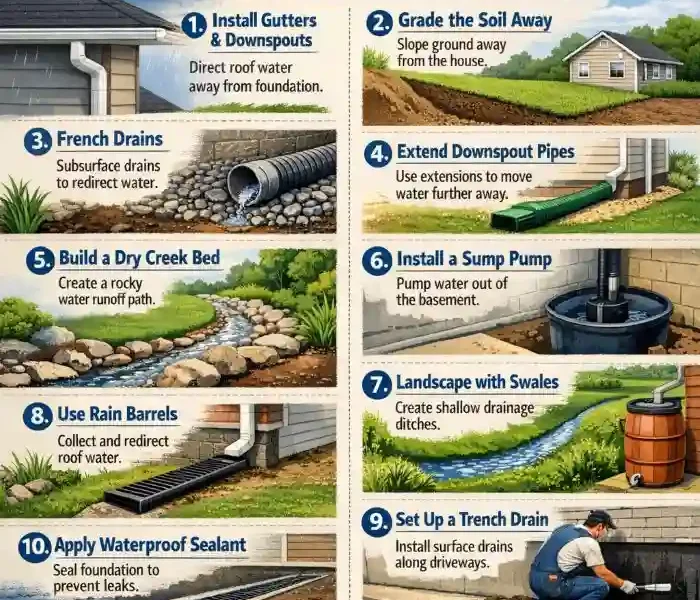
Install Gutter Downspout Extensions
Why This Method Works So Well
If you are starting with the most practical answer to how to divert water away from house walls, begin here. Downspout extensions are one of the fastest and most affordable fixes available.
Your roof collects a huge amount of water. In many homes, roof runoff is responsible for the majority of drainage trouble. If your downspouts end right next to the house, you are basically pouring stormwater into the same area you are trying to protect.
By extending the outlet point 5 to 10 feet away, you move that water far enough from the foundation to reduce saturation and pressure.
How to Install Them
Start by measuring the distance from the base of the downspout to a safe discharge point away from the home. This point should be lower than the foundation and should not send water into a walkway, neighbor’s yard, or low spot that floods.
Attach a flexible extension for a quick fix, or use rigid PVC if you want a cleaner, more durable setup. Flexible extensions are easier for beginners. Rigid pipe looks better long term and is less likely to get crushed.
If you want a neater look, bury the pipe underground. Dig a shallow trench and maintain a slope of about 1% to 2% away from the house. That means the pipe should drop a little as it moves outward so gravity can do the work. Cover the pipe with soil and sod if desired.
This project usually takes about 2 hours for one or two downspouts. It is one of the easiest ways to improve rainwater diversion without heavy excavation.
Common Mistakes to Avoid
Do not let the extension discharge into another problem area. Some homeowners move water away from the foundation but dump it beside the driveway or patio, where it simply flows back again.
Also, do not leave the pipe too short. A one- or two-foot extension is rarely enough. If the ground near the house stays wet, the fix is incomplete.
If your yard is small, consider routing downspouts into a dry well, catch basin, or drain line instead of using visible extensions.
Regrade Your Yard for Proper Slope
Why Grading Is a Core Drainage Fix
When people search for how to divert water away from house naturally, yard grading is often the best answer. Water follows slope. If your yard is shaped correctly, rainfall moves away from the home without pumps, electricity, or complicated systems.
That is why grading yard slope is one of the most important long-term drainage strategies. It works with gravity, and gravity never needs maintenance.
How Proper Slope Should Look
The goal is simple. The soil around your home should slope away from the foundation. A common target is about 6 inches of fall over the first 10 feet, or around 1/4 inch per foot. Some sites may need more, especially where rainfall is heavy or soil drains poorly.
Start by identifying low spots near the house. These are the places where water gathers or where the soil has settled over time. In many homes, old backfill around the foundation slowly sinks and creates a shallow basin.
Remove sod if necessary. Then bring in clean fill or topsoil and build the grade outward. Compact the soil in layers so it does not settle too quickly after the next rain. Once the slope looks right, replace sod, seed the area, or cover it with mulch and plantings.
A string line and level help a lot here. Stretch the string from the foundation out toward the yard and measure the drop. This gives you a simple way to check if the new grade is working.
A Real-World Example
Imagine a backyard that looks mostly flat. The homeowner sees standing water after every storm, and the basement wall feels damp. Once the yard is regraded, the water no longer sits against the house. Instead, it moves gently toward a shallow swale at the edge of the lawn. The basement dries out, and the yard becomes easier to maintain.
That is the power of shaping the land correctly.
The Mistake Many Homeowners Make
It is possible to overdo grading. If you create a slope that is too steep, water may rush downhill and wash soil away. That can lead to bare patches, erosion, and even damage to nearby planting beds.
To control this, use edging, mulch, dense grass, or simple erosion control landscaping such as rock borders and deep-root plants. In some yards, a modest swale is better than a steep grade because it slows and guides the water instead of sending it downhill too aggressively.
If your lot is tight, flat, or boxed in by hard surfaces, grading alone may not solve the problem. In that case, pair it with a French drain or catch basin.
Build a French Drain System
What a French Drain Actually Does
A French drain is one of the most effective answers to how to divert water away from house foundations when surface fixes are not enough. It is especially useful when water moves through the soil rather than just across the top of the yard.
A French drain is basically a gravel-filled trench with a perforated pipe inside. Water enters the trench, flows into the pipe, and gets carried away to a better discharge point. This makes it a strong solution for foundation drainage, wet lawns, hillside runoff, and groundwater buildup.
Where It Works Best
French drains shine in places where the soil stays wet after rain, where water seeps toward a basement, or where regrading cannot fully solve the problem. They are also helpful along the uphill side of a home, where rainwater naturally wants to move toward the structure.
If you have clay-heavy soil, a French drain can make a major difference because clay holds water longer and drains very slowly.
Step-by-Step Installation
Start by planning the route. The trench needs a clear destination, such as daylight at a lower point in the yard, a dry well, or another approved drainage outlet. Without a place for the water to go, the system will not work.
Dig a trench about 18 to 24 inches deep and wide enough for the pipe and gravel. Maintain a steady slope of about 1% to 2% away from the home. That slight angle is critical. Too flat, and water will stall. Too steep, and installation becomes harder than necessary.
Line the trench with landscape fabric. This step matters because it helps keep silt and soil from clogging the gravel and perforations over time.
Next, place a layer of washed gravel at the bottom. Lay a 4-inch perforated pipe on top of that gravel. Make sure the pipe follows the slope consistently. Add more gravel around and above the pipe until the trench is nearly full, then wrap the landscape fabric over the top like a filter blanket.
You can finish the surface in different ways. For a buried look, add a thin layer of soil and sod on top. For easier maintenance, leave decorative rock at the top so water can enter quickly and the drain remains visible.
DIY French drain installation often costs around $10 to $20 per foot, depending on gravel prices, pipe type, and how difficult the digging is.
Buried Drain vs. Surface Swale
Some homeowners need a buried system. Others do better with a simple swale. A swale is a shallow, grassed channel that guides water across the surface. It is cheaper and easier to install, but it is visible and needs space.
A buried French drain is better when you need hidden drainage, when water moves underground, or when the yard layout makes a surface channel awkward.
In some properties, the strongest approach combines both. The yard grade guides water into a swale, and a buried drain carries excess water the rest of the way.
How to Keep It Working
French drains are effective, but they are not magic. They need some maintenance. Leaves, roots, and sediment can reduce flow over time.
Inspect the outlet after heavy storms. If water is not flowing well, flush the line if possible. Clean exposed grates and remove debris. An annual check can save you from a full clog later.
If your drainage issue is severe, a professional can inspect with a small camera to confirm whether the pipe is blocked, crushed, or installed at the wrong slope.
Add Dry Wells or Catch Basins
When You Need a Collection Point
Sometimes the issue is not broad yard saturation. Sometimes all the water rushes to one area. That is where dry wells and catch basins become useful.
If you are studying how to divert water away from house runoff from downspouts, patios, or hard surfaces, these systems can collect concentrated water and move it underground.
A catch basin is a box with a grate at the surface. It collects water and sends it through a drain pipe. A dry well is an underground chamber or gravel-filled pit that temporarily holds water and lets it soak slowly into the surrounding soil.
Basic Installation Idea
For a simple dry well, dig a hole around 3 by 3 feet, though size depends on how much water you need to manage. Add gravel or an approved dry well chamber system, then connect it to a downspout or drain line. Cover it according to the product design and finish the surface neatly.
Catch basins are often placed in low spots, near driveways, or at the bottom of slope transitions. They work well when you need to intercept water before it spreads toward the foundation.
These systems are especially helpful in heavier soils, though in dense clay the soak-away effect may be slower. That means sizing and overflow planning matter even more.
Maintenance Matters
Dry wells and catch basins need inspection after storms. Check for standing water that lasts too long, clogged grates, or sediment buildup. If a basin fills with leaves, it cannot do its job.
Used correctly, these systems are a clean and efficient part of a larger rainwater diversion plan.
Install Surface Channels and Swales
A Simple, Low-Cost Way to Guide Water
Not every drainage fix has to involve pipes. One of the easiest ways to improve how to divert water away from house conditions is to create a visible route for runoff.
A swale is a shallow, sloped ditch that directs water where you want it to go. Most are around 6 to 12 inches deep and wide enough to carry water slowly. Because the sides are gentle, they look more natural than a hard trench.
Surface channels can be lined with grass, rock, or decorative stone. They work best when the yard has enough space for water to travel without causing damage.
Why Homeowners Like This Option
Swales are affordable, effective, and easy to blend into landscaping. They reduce standing water, lower erosion risk, and help spread runoff over a larger area so it can soak into the ground more evenly.
You can also turn the drainage path into a design feature. Add river rock, border plants, or a small rain garden. Native plants such as ferns, sedges, and moisture-tolerant grasses help absorb water and hold soil in place.
This makes swales a smart choice for erosion control landscaping. They do the practical work of drainage while improving the look of the yard.
A Helpful Tip
The key is gentle movement, not speed. If water races through the swale too fast, it may cut into the soil. If necessary, add small stone checks, mulch, or denser planting to slow the flow.
Advanced Solutions: Sump Pumps and Foundation Drains
When Basic DIY Is Not Enough
Sometimes homeowners try every surface fix and still deal with damp basement walls, seepage, or standing water below grade. At that point, you may need advanced foundation drainage systems.
If you have persistent basement moisture, rising groundwater, or repeated flooding, this is where sump pump maintenance, sump installation, and footing drains enter the picture.
Interior Sump Pump Systems
An interior sump system collects water in a pit, usually at the lowest point of the basement or crawl space. When the water rises, the pump turns on and pushes it outside through a discharge line.
This does not stop all water from reaching the foundation, but it does remove water before it floods the interior. For homes with recurring basement water issues, a sump pump can be a lifesaver.
Still, the pump must stay in good condition. Test it regularly. Clean the pit. Make sure the float switch moves freely. Check the discharge line for blockages. In storm-prone areas, a battery backup is a smart upgrade because power outages often happen when you need the pump most.
Exterior Foundation Drains
Exterior systems are more involved. These drains, often called footing drains or weep tiles, are installed at foundation level around the house. Their job is to intercept groundwater before it presses against basement walls.
This type of work usually requires excavation around the foundation, waterproofing membrane application, drainage board, gravel, and pipe installation. It is highly effective, but it is also labor intensive and usually best handled by professionals.
Signs You Should Call a Pro
If you notice basement seepage after every rain, white mineral stains on concrete, bowing walls, moldy smells that keep returning, or water entering through floor joints, it is time to get expert help.
Professional installation costs often range from $1,000 to $5,000 or more, depending on whether you need an interior sump, exterior drain system, or full basement waterproofing package.
When the problem reaches this level, fast action matters. Waiting can turn a drainage issue into a structural one.
Landscaping for Water Diversion
Use Your Yard as Part of the Solution
Landscaping can do more than make your home look nice. It can actively improve how to divert water away from house areas in a natural and attractive way.
A small berm, which is a raised ridge of soil, can guide runoff away from vulnerable parts of the home. Rock borders can stabilize slopes and protect against washout. Permeable pavers allow water to soak through rather than bounce off like standard concrete.
Deep-root plants also help. Trees, shrubs, grasses, and groundcovers improve soil structure and absorb moisture. The trick is placement. Keep large trees and thirsty root systems a safe distance from the foundation to avoid root pressure and moisture imbalance near walls.
What to Avoid
Try not to trap water with solid surfaces placed too close to the house. Large areas of impervious concrete can increase runoff and send water straight toward the foundation if they are pitched the wrong way.
The best landscaping supports drainage instead of fighting it. Think of the yard as a system where soil, slope, plants, and drainage features all work together.
Common Mistakes and Fixes
Problems That Keep Drainage Systems From Working
Many homeowners learn how to divert water away from house areas, make one improvement, and then assume the issue is solved forever. But drainage needs upkeep. A great system can fail if basic maintenance gets ignored.
Here are some of the most common mistakes and how to fix them:
- Ignoring gutter cleaning: Clean gutters and downspouts at least twice a year so overflow does not dump water near the foundation
- Using extensions that are too short: Extend discharge at least 5 to 10 feet where possible
- Creating shallow trenches: Drain lines need enough depth and consistent slope to carry water properly
- Skipping compaction after grading: Loose soil settles and recreates low spots near the house
- Forgetting yearly inspections: Check after major storms so small drainage issues do not turn into major repairs
- Using too much solid pavement near walls: Switch to permeable options when possible to improve infiltration and reduce runoff
The Simple Rule to Remember
Drainage is not one product. It is a system. Gutters, grading, pipes, landscaping, and maintenance all matter. When one part fails, the whole plan gets weaker.
Cost Comparison Table
If you are weighing DIY against professional help, this quick table gives you a realistic starting point:
| Method | DIY Cost | Pro Cost | Effectiveness |
|---|---|---|---|
| Downspout Ext. | $50 | $200 | High |
| Yard Grading | $200 | $2K | Medium-High |
| French Drain | $500 | $3K | Very High |
| Sump Pump | N/A | $1.5K | High |
Actual cost depends on yard size, soil type, drainage distance, labor rates, and whether you need excavation or waterproofing.
FAQs
How Far Should Water Be Diverted From House?
As a general rule, water should be moved at least 10 feet away from the foundation whenever possible. In smaller yards, even 5 to 10 feet is a major improvement, especially if the discharge area slopes away and drains well.
Should You DIY or Hire a Pro for a French Drain?
A short and simple French drain installation can be a good DIY project if the run is under 50 feet, the slope is easy to create, and the discharge point is clear. For long systems, steep sites, tight spaces, clay-heavy soil, or drainage near a basement wall, hiring a pro is safer and usually smarter.
What Are the Best Plants for Water Diversion?
Good choices include switchgrass, daylilies, sedges, ferns, and other deep-root or moisture-tolerant plants. These help absorb runoff and stabilize soil. They are especially useful in swales, rain gardens, and other erosion control landscaping zones.
Does Insurance Cover Water Damage Caused by Poor Drainage?
Often, no. Many policies cover sudden accidental water damage but not long-term maintenance issues or preventable drainage problems. That is one reason learning how to divert water away from house areas early can save you so much money.
Can Gutters Alone Solve the Problem?
Sometimes, but not always. Clean gutters and proper gutter downspouts are the first fix, and in many homes they solve a large part of the issue. But if the yard slopes inward, the soil stays saturated, or groundwater is high, you may also need grading, a catch basin, or a French drain.
How Do You Know If You Need Basement Waterproofing?
If you see repeated seepage, wall staining, mold odors, peeling paint, or water after every storm, basic drainage improvements may not be enough. That is when full basement waterproofing and advanced drainage planning should be considered.
How Often Should Drainage Systems Be Checked?
At minimum, inspect your system in spring and fall, and also after major storms. This is especially important for sump pump maintenance, gutter cleaning, and checking whether drain outlets are blocked.
Conclusion
Learning how to divert water away from house foundations is one of the best things you can do for your home. The smartest approach is usually to start simple. Clean the gutters. Extend the downspouts. Fix the grade. Watch how water moves after rain.
If those steps are not enough, move up to stronger solutions like a French drain installation, dry well, swale, or advanced foundation drainage system. For homes with serious seepage, sump pumps and basement waterproofing may be the right next step.
The good news is that early action is almost always cheaper than waiting. A few hundred dollars spent on drainage today can prevent $5,000 or more in future repairs.
If you are still unsure how to divert water away from house areas on your property, schedule a free inspection with [Your Business] or a trusted local drainage specialist. And if you want more practical home care tips, subscribe for future guides on waterproofing, drainage, and smarter yard improvements.