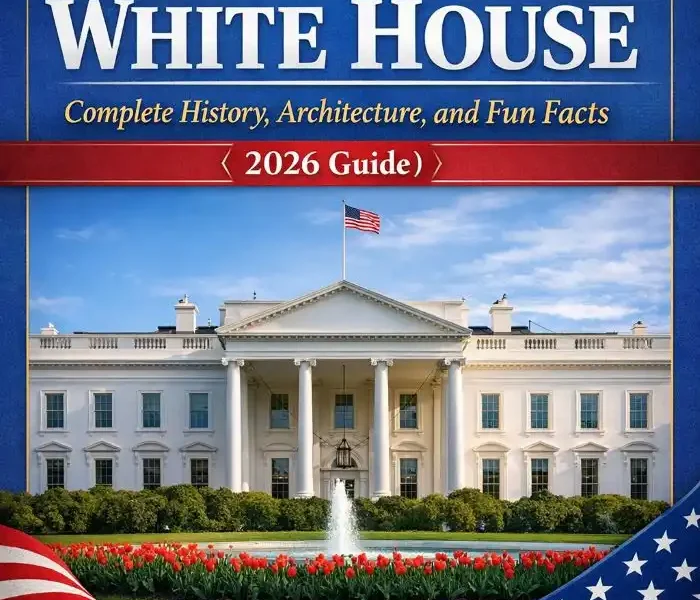
<p>Few buildings in the world are as instantly recognizable as <a href="https://www.whitehouse.gov/"><strong>the white house</strong></a>. It is more than a large home in Washington, D.C. It is the center of executive power in the United States, the place where major decisions are made, and one of the strongest visual symbols of American government. From news broadcasts and state visits to holiday traditions and historic speeches, <strong>the white house</strong> sits at the heart of public life in the country.</p>
<p>At the same time, it is still a residence. Presidents do not simply work there. They live there with their families. That balance between public duty and private life is one reason people remain fascinated by it. It is a mansion, an office complex, a museum of history, and a living political stage all at once.</p>
<p>In 2026, interest in <strong>the white house</strong> remains especially high under President Donald Trump, who returned to office after being inaugurated in 2025. As always, the building reflects both continuity and change. Its walls hold stories from more than two centuries of presidents, staff, renovations, celebrations, emergencies, and national turning points.</p>
<p>This guide will walk you through <strong>White House history</strong>, its famous architecture, its most important rooms, the rhythms of daily life inside, and a collection of fun facts that make the property even more interesting. You will also find practical visitor information, 2026 context, and answers to common questions.</p>
<p>If you enjoy learning how iconic homes are designed, used, and remembered, this deep dive into <strong>the white house</strong> will give you plenty to explore. And if luxury spaces and landmark properties interest you, be sure to subscribe for more real estate insights, design inspiration, and lifestyle features.</p>
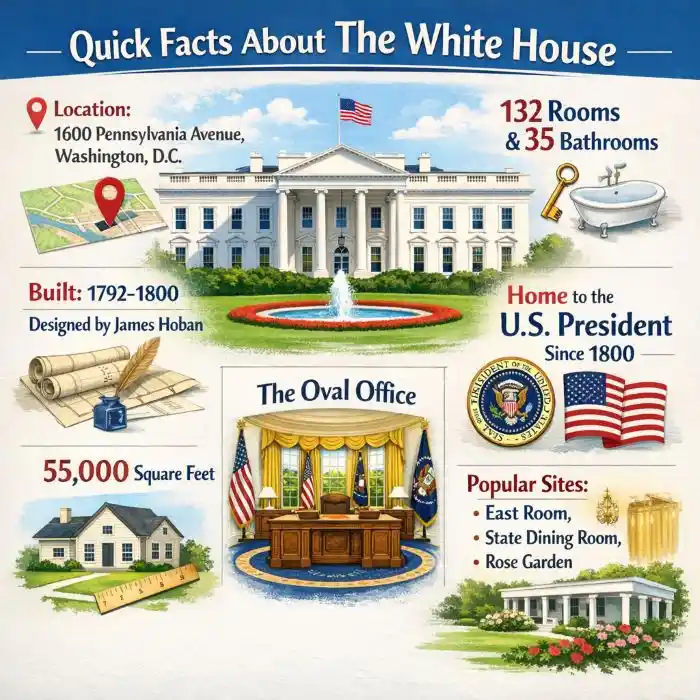
<h2 id="quick-facts-about-the-white-house">Quick Facts About The White House</h2>
<p><img class="aligncenter wp-image-6933 size-full" src="https://comeawayhome.co.uk/wp-content/uploads/2026/05/b004cd6a-3723-4720-bd0f-41ba406f0794q-ezgif.com-jpg-to-webp-converter.webp" alt="the white house" width="700" height="700" /></p>
<table>
<thead>
<tr>
<th>Feature</th>
<th>Details</th>
</tr>
</thead>
<tbody>
<tr>
<td>Official Address</td>
<td><strong>1600 Pennsylvania Avenue NW, Washington, D.C.</strong></td>
</tr>
<tr>
<td>First Occupied</td>
<td><strong>1800</strong></td>
</tr>
<tr>
<td>Architect</td>
<td><strong>James Hoban</strong></td>
</tr>
<tr>
<td>Style</td>
<td><strong>Neoclassical</strong></td>
</tr>
<tr>
<td>Total Rooms</td>
<td><strong>132</strong></td>
</tr>
<tr>
<td>Bathrooms</td>
<td><strong>35</strong></td>
</tr>
<tr>
<td>Fireplaces</td>
<td><strong>28</strong></td>
</tr>
<tr>
<td>Grounds</td>
<td><strong>18 acres</strong></td>
</tr>
<tr>
<td>Main Functions</td>
<td><strong>Presidential residence, executive workplace, ceremonial venue</strong></td>
</tr>
<tr>
<td>Most Famous Office</td>
<td><strong>The Oval Office</strong></td>
</tr>
</tbody>
</table>
<h2 id="early-history-of-the-white-house">Early History of The White House</h2>
<h3 id="origins-and-construction">Origins and Construction</h3>
<p>The story of <strong>the white house</strong> begins in the early years of the United States, when the young nation needed a capital and a formal residence for its president. In 1792, a design competition was held for what was then planned as the presidential mansion. The winning design came from <strong>James Hoban</strong>, an Irish-born architect whose vision blended elegance, order, and restraint.</p>
<p>Hoban’s design drew from <strong>neoclassical architecture</strong>, a style that looked back to the ideals of ancient Greece and Rome. That choice mattered. The United States wanted its main government buildings to suggest stability, democracy, and seriousness rather than royal excess. The result was a structure that looked grand, but not overly decorative.</p>
<p>Construction began in 1792. Workers used <strong>Aquia Creek sandstone</strong>, a durable material quarried from the Potomac region. The building rose slowly, shaped by limited transportation, difficult labor conditions, and the practical challenges of building a national symbol in a still-developing capital.</p>
<p>Although <strong>George Washington</strong> approved the design and helped guide the broader planning of the federal city, he never lived in <strong>the white house</strong>. The first president to occupy it was <strong>John Adams</strong>, who moved in with First Lady Abigail Adams in 1800, even though parts of the building were still unfinished.</p>
<p>That first move-in is one of the most important moments in <strong>White House history</strong>. It turned a construction project into a living institution. From that point on, the building became part of the nation’s political and personal story. Every president after Adams would leave a mark on it in some way, whether by adding wings, changing interior design, or adapting rooms to fit a new era.</p>
<p>Here is a simple timeline of its early beginnings:</p>
<ul>
<li><strong>1792:</strong> James Hoban wins the design competition.</li>
<li><strong>1800:</strong> John Adams becomes the first president to live in the residence.</li>
<li><strong>Original cost:</strong> <strong>$232,373</strong>, often compared to roughly <strong>$5 million</strong> in modern value.</li>
</ul>
<p>Even in its earliest form, <strong>the white house</strong> was designed to do more than <a href="https://comeawayhome.co.uk/how-long-does-it-take-to-sell-a-house/">house</a> a president. It was meant to represent the country itself. That is why its image still carries so much weight today. It was built as a statement of national identity from the start.</p>
<h3 id="burning-and-rebuilds">Burning and Rebuilds</h3>
<p>No history of <strong>the white house</strong> is complete without the dramatic events of 1814. During the <strong>War of 1812</strong>, British forces entered Washington and set fire to several public buildings, including the presidential residence. The damage was severe. The interior was largely destroyed, and the nation’s most important home was left blackened and broken.</p>
<p>Yet this moment also showed the resilience tied to <strong>the white house</strong>. Rather than abandon it, leaders chose to rebuild. <strong>James Hoban</strong> returned to oversee restoration work. The rebuilding preserved the general shape and spirit of the original design, which helped keep continuity with the nation’s founding years.</p>
<p>Over time, several presidents influenced the interiors and use of the home. <strong>Thomas Jefferson</strong>, although he served before the burning, had already shaped the building’s style and daily life through practical changes and additions, including the use of colonnades and a more refined arrangement of interior spaces. His influence remained part of the identity of the house even as later restorations unfolded.</p>
<p>For much of the 19th century, the building was commonly called the <strong>Executive Mansion</strong> or the <strong>President’s House</strong>. It was not until <strong>Theodore Roosevelt</strong> formally adopted the name <strong>“The White House”</strong> in 1902 that the title became standard official usage. That change mattered because it gave the building a clear and memorable public identity, one that has lasted ever since.</p>
<p>The fire of 1814 could have become a symbol of weakness. Instead, it became a symbol of endurance. In a way, that pattern still defines <strong>the white house</strong> today. It has faced war, reconstruction, political change, and physical strain, but it continues to stand.</p>
<h3 id="key-expansions-and-major-changes">Key Expansions and Major Changes</h3>
<p>As the country grew, <strong>the white house</strong> had to grow with it. The original building worked for an early presidency, but over time it became too small for the expanding needs of the executive branch. Presidents needed more office space, more staff support, and better separation between official events and family life.</p>
<p>One of the most important changes came in <strong>1902</strong>, when <strong>Theodore Roosevelt</strong> launched a major renovation. He wanted to modernize the residence and solve practical issues created by a crowded household and increasing political activity. This renovation led to the construction of the <strong>West Wing</strong>, which gave the president and his staff a separate working area outside the main residence.</p>
<p>That change transformed how <strong>the white house</strong> functioned. It helped separate private family quarters from official operations. It also set the stage for the later development of the <strong>Oval Office</strong>, which would become the most famous office in the world.</p>
<p>The <strong>East Wing</strong> came later and further balanced the structure by adding more space for visitors, ceremonial functions, and staff activity. Over time, these additions created the broader White House complex that most people know today, not just the central mansion.</p>
<p>Another major turning point arrived under <strong>President Harry Truman</strong>. By the late 1940s, the building had serious structural problems. Floors sagged. Walls cracked. The old framework inside had become dangerously weak after generations of piecemeal updates. The house looked stable from the outside, but inside it was in poor condition.</p>
<p>Between <strong>1948 and 1952</strong>, the <strong>Truman reconstruction</strong> took place. This was not a simple renovation. Workers basically emptied the inside of the mansion while preserving the historic exterior walls. A new steel frame was installed, and much of the interior was rebuilt to make the building safe and functional for modern use.</p>
<p>This reconstruction is one of the most significant episodes in <strong>White House history</strong>. It protected the visual heritage of the building while quietly creating a far stronger internal structure. In many ways, it saved <strong>the white house</strong> for future generations.</p>
<p>If you compare the home before and after this period, the outside appears familiar, but the inside is far more modern in terms of engineering. That mix of old and new is part of what makes the property so compelling. It looks historic because it is historic. But it also works because it has constantly adapted.</p>
<p>You can think of these expansions in three broad phases:</p>
<ul>
<li><strong>Founding phase:</strong> A symbolic national home.</li>
<li><strong>Working phase:</strong> New wings and office space for a growing presidency.</li>
<li><strong>Preservation phase:</strong> Deep reconstruction to protect the building long term.</li>
</ul>
<p>That pattern offers an interesting lesson for anyone who loves architecture or real estate. Great properties survive not only because they are beautiful, but because they are updated carefully when time demands it. In that sense, <strong>the white house</strong> can even inspire modern <strong>luxury home designs</strong>: preserve the character, improve the structure, and make the space work for real life.</p>
<h2 id="architectural-highlights-of-the-white-house">Architectural Highlights of The White House</h2>
<h3 id="exterior-features">Exterior Features</h3>
<p>At first glance, <strong>the white house</strong> looks stately and balanced. That is exactly the effect its designers intended. The mansion contains <strong>120-plus functional spaces within the broader complex</strong>, with the well-known count of <strong>132 rooms</strong> often used to describe the full property. It sits on <strong>18 acres</strong> of land, creating a rare mix of formal architecture and open green space in the middle of a capital city.</p>
<p>The exterior is famous for its white-painted stone surface, clean lines, and strong symmetry. Its core material, <strong>Aquia Creek sandstone</strong>, gives the building both texture and durability. The paint became an important visual part of its identity, helping create the bright and recognizable appearance associated with <strong>the white house</strong> around the world.</p>
<p>The two most distinctive exterior features are the <strong>North Portico</strong> and the <strong>South Portico</strong>. The <strong>North Portico</strong>, associated with later development after Jefferson-era planning and completed in the early 19th century, presents the formal public face of the mansion. It is the side many people picture when they imagine the main entrance. The <strong>South Portico</strong> opens toward the lawn and creates a softer, more residential impression.</p>
<p>These porticoes do more than decorate the building. They shape how visitors experience it. The north side feels ceremonial. The south side feels grand yet more open. Together, they help <strong>the white house</strong> act as both a working government building and a home.</p>
<h3 id="iconic-rooms-tour">Iconic Rooms Tour</h3>
<p>If the exterior creates the symbol, the interior creates the experience. Some of the most famous <strong>White House rooms</strong> are known around the world, even by people who have never visited Washington.</p>
<p>The first room most people think of is the <strong>Oval Office</strong>. Located in the West Wing, it serves as the president’s main workspace. Its oval shape gives it a unique visual rhythm, and its furnishings are often adjusted by each administration to reflect personal taste and presidential identity. The room includes one of the most famous desks in the world, the <strong>Resolute Desk</strong>, which has its own remarkable history. It was made from timber of the British ship <strong>HMS Resolute</strong> and later gifted by Queen Victoria. That desk has become a powerful symbol of presidential continuity.</p>
<p>The <strong>East Room</strong> is the largest room in <strong>the white house</strong>. It is used for ceremonies, press events, receptions, concerts, memorial gatherings, and sometimes weddings. The room is elegant but versatile. Major national moments have unfolded there, which gives it a deep emotional weight beyond its size and beauty.</p>
<p>The <strong>State Dining Room</strong> is another important interior space. It can seat around <strong>140 guests</strong> and is often used for official dinners with foreign leaders and other dignitaries. The room reflects formal American entertaining at its highest level. The décor, table arrangements, and lighting all communicate seriousness and hospitality at the same time.</p>
<p>Then there is the famous <strong>Lincoln Bedroom</strong>. Despite its name, Abraham Lincoln did not sleep there in the way many people imagine. The room is better understood as a historic chamber tied to Lincoln-era memory and later ceremonial use. Still, the room has picked up a strong cultural reputation over the years, including stories of haunting and ghostly sightings. Whether you believe those tales or not, the mystery has only added to the room’s public appeal.</p>
<p>Other rooms inside <strong>the white house</strong> also carry deep meaning, including the Blue Room, Green Room, Red Room, and diplomatic reception spaces. Each has its own design language, furniture history, and ceremonial role. Together, they show how the house functions as both an active residence and a carefully curated national setting.</p>
<p>If you love interiors, this is where <strong>the white house</strong> becomes especially fascinating. Every room tells a story about status, politics, taste, and time. It is one of the few places where furniture placement can carry diplomatic meaning.</p>
<h3 id="grounds-and-gardens">Grounds and Gardens</h3>
<p>The outdoor spaces of <strong>the white house</strong> are just as important as the rooms inside. The grounds include lawns, trees, pathways, and carefully planned gardens that soften the formal architecture and create a more livable landscape.</p>
<p>The most famous is the <strong>Rose Garden</strong>, closely associated with modern presidential events and shaped significantly during the <strong>Kennedy years</strong>. It has become a familiar backdrop for press announcements, ceremonial statements, and official gatherings. Nearby is the <strong>Jacqueline Kennedy Garden</strong>, which helped strengthen the role of landscape design in the identity of <strong>the white house</strong>.</p>
<p>The grounds feature a wide range of plantings, including <strong>132 varieties</strong> often noted in discussions of the estate’s horticultural planning. In recent years, sustainability has remained part of the conversation, including maintenance strategies, seasonal planting choices, and operational improvements that support the large property’s long-term care during the Trump administration.</p>
<h2 id="daily-life-and-operations-inside-the-white-house">Daily Life and Operations Inside The White House</h2>
<h3 id="presidential-residence">Presidential Residence</h3>
<p>It is easy to think of <strong>the white house</strong> only as a political stage, but for the first family, it is also home. The private residence is centered mainly on the <strong>Second Floor</strong>, where presidential family life unfolds away from public tours and formal ceremonies.</p>
<p>Among the best-known private and semi-private areas are the <strong>Yellow Oval Room</strong> and the <strong>Treaty Room</strong>. The Yellow Oval Room has long been used for receptions and private meetings, and it carries a warm elegance that contrasts with the more public grandeur downstairs. The Treaty Room has served different functions over time, including as a presidential study and workspace.</p>
<p>In the Trump era of 2026, public interest in these residential spaces remains strong. People want to know how a president balances private routine with national responsibility. Although many personal details remain rightly private, the broad image is clear: family meals, staff coordination, security planning, and official work all overlap within the same highly controlled environment.</p>
<p>That blend makes <strong>the white house</strong> unlike any other residence in America. It has the expectations of a museum, the functionality of an executive office, and the emotional needs of a family home. Very few buildings in the world carry that much pressure every single day.</p>
<p>For readers interested in lifestyle and real estate, this is where the property becomes especially relatable. Behind the formality, every presidential family still needs comfort, privacy, and space that feels personal. Even the world’s most famous home must work on a human level.</p>
<h3 id="staff-and-security">Staff and Security</h3>
<p>Running <strong>the white house</strong> takes a massive team. More than <strong>500 staff members</strong> support its daily operation across administration, hospitality, maintenance, culinary service, communications, residence management, and event planning.</p>
<p>That includes chefs, housekeepers, ushers, florists, groundskeepers, curators, technicians, and military support personnel. Every public event you see is backed by careful planning done mostly out of sight. The smooth image of <strong>the white house</strong> depends on intense behind-the-scenes coordination.</p>
<p>Security is even more complex. The <strong>U.S. Secret Service</strong> plays a central role in protecting the president, the first family, and the property itself. Layers of visible and invisible defenses surround the complex. These include physical barriers, controlled access, surveillance systems, airspace protections, and rapid-response protocols.</p>
<p>Following recent security modernization efforts, public discussions in 2026 often refer to <strong>post-2025 upgrades</strong>, which are understood to include stronger integrated monitoring, perimeter defense improvements, and updated threat response systems. Much of the exact detail is not public for obvious reasons, but the message is clear: <strong>the white house</strong> remains one of the most secure sites in the country.</p>
<h3 id="events-and-traditions">Events and Traditions</h3>
<p>Even with all its political weight, <strong>the white house</strong> is also a place of tradition. Over the years, it has hosted state dinners, holiday celebrations, award ceremonies, bill signings, cultural events, and family-centered public traditions.</p>
<p>One of the best-loved examples is the <strong>White House Easter Egg Roll</strong>, which brings a lighter and more playful side to the grounds. It reminds the public that the building belongs not just to government, but to national memory and civic life.</p>
<p>State dinners remain among the most formal events held there. These dinners are carefully staged to welcome foreign leaders and display American hospitality. Every detail matters, from seating arrangements and menus to floral design and music.</p>
<p>Looking at 2026, the schedule continues to reflect this dual identity. The White House serves as the backdrop for official announcements, executive meetings, and policy messaging, while also maintaining ceremonial traditions that connect the presidency to the public.</p>
<h2 id="fun-facts-and-secrets-about-the-white-house">Fun Facts and Secrets About The White House</h2>
<p>Some of the most engaging details about <strong>the white house</strong> are the ones that surprise people. Beyond the politics and architecture, the building is full of unusual facts, hidden stories, and design details that make it feel more vivid and personal.</p>
<p>Here are some of the most memorable ones:</p>
<ul>
<li><strong>The White House has 132 rooms, 35 bathrooms, and 28 fireplaces.</strong> That alone puts it in a category few homes could ever match.</li>
<li><strong>It has served every U.S. president since John Adams.</strong> George Washington oversaw planning, but he never actually lived there.</li>
<li><strong>The Oval Office is not in the main residence.</strong> It sits in the West Wing, which was added later as presidential operations expanded.</li>
<li><strong>The Resolute Desk is one of the most famous pieces of furniture in the world.</strong> Its story links the United States and Britain through diplomacy and craftsmanship.</li>
<li><strong>The East Room has hosted weddings, funerals, concerts, and major announcements.</strong> It is one of the most emotionally layered spaces in the entire building.</li>
<li><strong>The White House was not always officially called the White House.</strong> Theodore Roosevelt helped make the name standard in 1902.</li>
<li><strong>A swimming pool was installed for Franklin D. Roosevelt.</strong> A later indoor pool area was adapted, and modern fitness space became part of the residence over time.</li>
<li><strong>The first official White House website arrived in 1994.</strong> That move brought the presidency more fully into the digital age.</li>
<li><strong>The grounds are a design lesson in prestige and function.</strong> Formal beauty must also support press events, security movement, and seasonal use.</li>
<li><strong>Ghost stories are part of White House folklore.</strong> The Lincoln Bedroom and other areas have inspired stories for generations.</li>
<li><strong>Every administration changes the feel of the house in some way.</strong> Even when the structure remains the same, décor, routines, and symbolism shift.</li>
<li><strong>Trump-era messaging has often emphasized a “Golden Age” theme.</strong> That has shaped both rhetoric and the symbolic presentation of presidential leadership from the residence.</li>
</ul>
<p>For readers in real estate, luxury branding, or home design, these facts offer more than trivia. They show how a property can become powerful through a combination of <strong>story, style, symbolism, and function</strong>. That is why <strong>the white house</strong> inspires everything from museum exhibits to <strong>luxury home designs</strong> and high-end lifestyle media. It is not just large. It is meaningful.</p>
<h2 id="the-white-house-in-2026">The White House in 2026</h2>
<h3 id="trump-administration-updates">Trump Administration Updates</h3>
<p>In 2026, <strong>the white house</strong> continues to serve as the central platform of the Trump administration’s second non-consecutive term. Since President Donald Trump’s inauguration in 2025, the building has once again become the place from which key executive priorities are announced, negotiated, and symbolically framed.</p>
<p>Much of the public conversation around <strong>President Trump White House</strong> coverage has focused on themes such as <strong>border security</strong>, <strong>energy dominance</strong>, economic messaging, and executive leadership style. These topics are often presented from the White House itself because the setting strengthens the sense of authority. The image of a president speaking from the Oval Office, the Rose Garden, or a formal state room sends a very specific message: policy is not only being discussed, it is being issued from the center of executive power.</p>
<p>As of <strong>May 2026</strong>, interest in the administration’s use of the residence remains strong. Media attention continues to focus on staffing rhythm, diplomatic meetings, executive announcements, and how symbolic spaces inside <strong>the white house</strong> are used to shape public perception. That is not unusual. Every administration uses the building differently, and every visual choice communicates something.</p>
<p>In this way, <strong>the white house</strong> remains both a workplace and a message. Architecture, setting, and timing all influence how presidential leadership is seen by the public.</p>
<h3 id="visitor-info-and-white-house-tours">Visitor Info and White House Tours</h3>
<p>If you are wondering whether you can visit <strong>the white house</strong>, the answer is <strong>yes</strong>, although the process is structured and must be planned in advance. <strong>White House tours</strong> are generally free, but they are not arranged casually like standard museum tickets.</p>
<p>Visitors typically need to submit a request through their <strong>member of Congress</strong>, and international visitors usually work through their embassy. Availability depends on scheduling, security conditions, and official events, so not every request can be approved.</p>
<p>Tour routes usually include public rooms in the East Wing and residence-level ceremonial areas, depending on current access rules. Visitors should expect screening requirements, identification checks, and strict restrictions on what they can bring.</p>
<p>If touring <strong>the white house</strong> is on your list, the best advice is simple:</p>
<ul>
<li><strong>Plan early</strong></li>
<li><strong>Check current requirements</strong></li>
<li><strong>Be flexible with dates</strong></li>
<li><strong>Prepare for security screening</strong></li>
</ul>
<p>For many visitors, even a short tour is memorable because the house feels both familiar and surprising in person. You have seen it in photos for years, but walking through its historic spaces creates a completely different connection.</p>
<h3 id="cultural-impact">Cultural Impact</h3>
<p>Beyond politics, <strong>the white house</strong> remains one of the most recognized buildings in global culture. It appears in films, books, television, photography, and political commentary across the world. Few places carry such a strong mix of power, prestige, memory, and symbolism in a single image.</p>
<h2 id="faqs-about-the-white-house">FAQs About The White House</h2>
<h3 id="what-is-the-address-of-the-white-house-">What is the address of The White House?</h3>
<p>The official address of <strong>the white house</strong> is <strong>1600 Pennsylvania Avenue NW, Washington, D.C.</strong></p>
<h3 id="how-many-rooms-are-in-the-white-house-">How many rooms are in The White House?</h3>
<p><strong>The white house</strong> is widely described as having <strong>132 rooms</strong>, along with <strong>35 bathrooms</strong> and <strong>28 fireplaces</strong>.</p>
<h3 id="can-you-tour-the-white-house-">Can you tour The White House?</h3>
<p>Yes. <strong>White House tours</strong> are available to the public through advance requests, usually made through a congressional office. Tours are free, but approval depends on schedule and security.</p>
<h3 id="who-lives-in-the-white-house-now-">Who lives in The White House now?</h3>
<p>In 2026, according to the outline for this article, <strong>President Trump and his family</strong> live in <strong>the white house</strong>.</p>
<h2 id="conclusion">Conclusion</h2>
<p>For more than two centuries, <strong>the white house</strong> has stood as the home of the presidency and a lasting symbol of American leadership. Its story includes bold design, wartime destruction, careful rebuilding, famous rooms, changing administrations, and traditions that continue to connect the public to the office of the president.</p>
<p>What makes <strong>the white house</strong> so powerful is not only its history. It is the way history, architecture, daily life, and national identity all come together in one place.</p>
<p>If this look inside iconic properties inspired you, and you are dreaming about your own standout home, <strong>contact us for custom real estate consultations</strong>. Whether you love timeless architecture, luxury interiors, or landmark-style design, we can help you turn vision into reality.</p>
<p><a href="https://comeawayhome.co.uk/">House</a></p>
Few buildings in the world are as instantly recognizable as the white house. It is more than a large home in Washington, D.C. It is the center of executive power in the United States, the place where major decisions are made, and one of the strongest visual symbols of American government. From news broadcasts and state visits to holiday traditions and historic speeches, the white house sits at the heart of public life in the country.
At the same time, it is still a residence. Presidents do not simply work there. They live there with their families. That balance between public duty and private life is one reason people remain fascinated by it. It is a mansion, an office complex, a museum of history, and a living political stage all at once.
In 2026, interest in the white house remains especially high under President Donald Trump, who returned to office after being inaugurated in 2025. As always, the building reflects both continuity and change. Its walls hold stories from more than two centuries of presidents, staff, renovations, celebrations, emergencies, and national turning points.
This guide will walk you through White House history, its famous architecture, its most important rooms, the rhythms of daily life inside, and a collection of fun facts that make the property even more interesting. You will also find practical visitor information, 2026 context, and answers to common questions.
If you enjoy learning how iconic homes are designed, used, and remembered, this deep dive into the white house will give you plenty to explore. And if luxury spaces and landmark properties interest you, be sure to subscribe for more real estate insights, design inspiration, and lifestyle features.
Quick Facts About The White House
| Feature |
Details |
| Official Address |
1600 Pennsylvania Avenue NW, Washington, D.C. |
| First Occupied |
1800 |
| Architect |
James Hoban |
| Style |
Neoclassical |
| Total Rooms |
132 |
| Bathrooms |
35 |
| Fireplaces |
28 |
| Grounds |
18 acres |
| Main Functions |
Presidential residence, executive workplace, ceremonial venue |
| Most Famous Office |
The Oval Office |
Early History of The White House
Origins and Construction
The story of the white house begins in the early years of the United States, when the young nation needed a capital and a formal residence for its president. In 1792, a design competition was held for what was then planned as the presidential mansion. The winning design came from James Hoban, an Irish-born architect whose vision blended elegance, order, and restraint.
Hoban’s design drew from neoclassical architecture, a style that looked back to the ideals of ancient Greece and Rome. That choice mattered. The United States wanted its main government buildings to suggest stability, democracy, and seriousness rather than royal excess. The result was a structure that looked grand, but not overly decorative.
Construction began in 1792. Workers used Aquia Creek sandstone, a durable material quarried from the Potomac region. The building rose slowly, shaped by limited transportation, difficult labor conditions, and the practical challenges of building a national symbol in a still-developing capital.
Although George Washington approved the design and helped guide the broader planning of the federal city, he never lived in the white house. The first president to occupy it was John Adams, who moved in with First Lady Abigail Adams in 1800, even though parts of the building were still unfinished.
That first move-in is one of the most important moments in White House history. It turned a construction project into a living institution. From that point on, the building became part of the nation’s political and personal story. Every president after Adams would leave a mark on it in some way, whether by adding wings, changing interior design, or adapting rooms to fit a new era.
Here is a simple timeline of its early beginnings:
- 1792: James Hoban wins the design competition.
- 1800: John Adams becomes the first president to live in the residence.
- Original cost: $232,373, often compared to roughly $5 million in modern value.
Even in its earliest form, the white house was designed to do more than house a president. It was meant to represent the country itself. That is why its image still carries so much weight today. It was built as a statement of national identity from the start.
Burning and Rebuilds
No history of the white house is complete without the dramatic events of 1814. During the War of 1812, British forces entered Washington and set fire to several public buildings, including the presidential residence. The damage was severe. The interior was largely destroyed, and the nation’s most important home was left blackened and broken.
Yet this moment also showed the resilience tied to the white house. Rather than abandon it, leaders chose to rebuild. James Hoban returned to oversee restoration work. The rebuilding preserved the general shape and spirit of the original design, which helped keep continuity with the nation’s founding years.
Over time, several presidents influenced the interiors and use of the home. Thomas Jefferson, although he served before the burning, had already shaped the building’s style and daily life through practical changes and additions, including the use of colonnades and a more refined arrangement of interior spaces. His influence remained part of the identity of the house even as later restorations unfolded.
For much of the 19th century, the building was commonly called the Executive Mansion or the President’s House. It was not until Theodore Roosevelt formally adopted the name “The White House” in 1902 that the title became standard official usage. That change mattered because it gave the building a clear and memorable public identity, one that has lasted ever since.
The fire of 1814 could have become a symbol of weakness. Instead, it became a symbol of endurance. In a way, that pattern still defines the white house today. It has faced war, reconstruction, political change, and physical strain, but it continues to stand.
Key Expansions and Major Changes
As the country grew, the white house had to grow with it. The original building worked for an early presidency, but over time it became too small for the expanding needs of the executive branch. Presidents needed more office space, more staff support, and better separation between official events and family life.
One of the most important changes came in 1902, when Theodore Roosevelt launched a major renovation. He wanted to modernize the residence and solve practical issues created by a crowded household and increasing political activity. This renovation led to the construction of the West Wing, which gave the president and his staff a separate working area outside the main residence.
That change transformed how the white house functioned. It helped separate private family quarters from official operations. It also set the stage for the later development of the Oval Office, which would become the most famous office in the world.
The East Wing came later and further balanced the structure by adding more space for visitors, ceremonial functions, and staff activity. Over time, these additions created the broader White House complex that most people know today, not just the central mansion.
Another major turning point arrived under President Harry Truman. By the late 1940s, the building had serious structural problems. Floors sagged. Walls cracked. The old framework inside had become dangerously weak after generations of piecemeal updates. The house looked stable from the outside, but inside it was in poor condition.
Between 1948 and 1952, the Truman reconstruction took place. This was not a simple renovation. Workers basically emptied the inside of the mansion while preserving the historic exterior walls. A new steel frame was installed, and much of the interior was rebuilt to make the building safe and functional for modern use.
This reconstruction is one of the most significant episodes in White House history. It protected the visual heritage of the building while quietly creating a far stronger internal structure. In many ways, it saved the white house for future generations.
If you compare the home before and after this period, the outside appears familiar, but the inside is far more modern in terms of engineering. That mix of old and new is part of what makes the property so compelling. It looks historic because it is historic. But it also works because it has constantly adapted.
You can think of these expansions in three broad phases:
- Founding phase: A symbolic national home.
- Working phase: New wings and office space for a growing presidency.
- Preservation phase: Deep reconstruction to protect the building long term.
That pattern offers an interesting lesson for anyone who loves architecture or real estate. Great properties survive not only because they are beautiful, but because they are updated carefully when time demands it. In that sense, the white house can even inspire modern luxury home designs: preserve the character, improve the structure, and make the space work for real life.
Architectural Highlights of The White House
Exterior Features
At first glance, the white house looks stately and balanced. That is exactly the effect its designers intended. The mansion contains 120-plus functional spaces within the broader complex, with the well-known count of 132 rooms often used to describe the full property. It sits on 18 acres of land, creating a rare mix of formal architecture and open green space in the middle of a capital city.
The exterior is famous for its white-painted stone surface, clean lines, and strong symmetry. Its core material, Aquia Creek sandstone, gives the building both texture and durability. The paint became an important visual part of its identity, helping create the bright and recognizable appearance associated with the white house around the world.
The two most distinctive exterior features are the North Portico and the South Portico. The North Portico, associated with later development after Jefferson-era planning and completed in the early 19th century, presents the formal public face of the mansion. It is the side many people picture when they imagine the main entrance. The South Portico opens toward the lawn and creates a softer, more residential impression.
These porticoes do more than decorate the building. They shape how visitors experience it. The north side feels ceremonial. The south side feels grand yet more open. Together, they help the white house act as both a working government building and a home.
Iconic Rooms Tour
If the exterior creates the symbol, the interior creates the experience. Some of the most famous White House rooms are known around the world, even by people who have never visited Washington.
The first room most people think of is the Oval Office. Located in the West Wing, it serves as the president’s main workspace. Its oval shape gives it a unique visual rhythm, and its furnishings are often adjusted by each administration to reflect personal taste and presidential identity. The room includes one of the most famous desks in the world, the Resolute Desk, which has its own remarkable history. It was made from timber of the British ship HMS Resolute and later gifted by Queen Victoria. That desk has become a powerful symbol of presidential continuity.
The East Room is the largest room in the white house. It is used for ceremonies, press events, receptions, concerts, memorial gatherings, and sometimes weddings. The room is elegant but versatile. Major national moments have unfolded there, which gives it a deep emotional weight beyond its size and beauty.
The State Dining Room is another important interior space. It can seat around 140 guests and is often used for official dinners with foreign leaders and other dignitaries. The room reflects formal American entertaining at its highest level. The décor, table arrangements, and lighting all communicate seriousness and hospitality at the same time.
Then there is the famous Lincoln Bedroom. Despite its name, Abraham Lincoln did not sleep there in the way many people imagine. The room is better understood as a historic chamber tied to Lincoln-era memory and later ceremonial use. Still, the room has picked up a strong cultural reputation over the years, including stories of haunting and ghostly sightings. Whether you believe those tales or not, the mystery has only added to the room’s public appeal.
Other rooms inside the white house also carry deep meaning, including the Blue Room, Green Room, Red Room, and diplomatic reception spaces. Each has its own design language, furniture history, and ceremonial role. Together, they show how the house functions as both an active residence and a carefully curated national setting.
If you love interiors, this is where the white house becomes especially fascinating. Every room tells a story about status, politics, taste, and time. It is one of the few places where furniture placement can carry diplomatic meaning.
Grounds and Gardens
The outdoor spaces of the white house are just as important as the rooms inside. The grounds include lawns, trees, pathways, and carefully planned gardens that soften the formal architecture and create a more livable landscape.
The most famous is the Rose Garden, closely associated with modern presidential events and shaped significantly during the Kennedy years. It has become a familiar backdrop for press announcements, ceremonial statements, and official gatherings. Nearby is the Jacqueline Kennedy Garden, which helped strengthen the role of landscape design in the identity of the white house.
The grounds feature a wide range of plantings, including 132 varieties often noted in discussions of the estate’s horticultural planning. In recent years, sustainability has remained part of the conversation, including maintenance strategies, seasonal planting choices, and operational improvements that support the large property’s long-term care during the Trump administration.
Daily Life and Operations Inside The White House
Presidential Residence
It is easy to think of the white house only as a political stage, but for the first family, it is also home. The private residence is centered mainly on the Second Floor, where presidential family life unfolds away from public tours and formal ceremonies.
Among the best-known private and semi-private areas are the Yellow Oval Room and the Treaty Room. The Yellow Oval Room has long been used for receptions and private meetings, and it carries a warm elegance that contrasts with the more public grandeur downstairs. The Treaty Room has served different functions over time, including as a presidential study and workspace.
In the Trump era of 2026, public interest in these residential spaces remains strong. People want to know how a president balances private routine with national responsibility. Although many personal details remain rightly private, the broad image is clear: family meals, staff coordination, security planning, and official work all overlap within the same highly controlled environment.
That blend makes the white house unlike any other residence in America. It has the expectations of a museum, the functionality of an executive office, and the emotional needs of a family home. Very few buildings in the world carry that much pressure every single day.
For readers interested in lifestyle and real estate, this is where the property becomes especially relatable. Behind the formality, every presidential family still needs comfort, privacy, and space that feels personal. Even the world’s most famous home must work on a human level.
Staff and Security
Running the white house takes a massive team. More than 500 staff members support its daily operation across administration, hospitality, maintenance, culinary service, communications, residence management, and event planning.
That includes chefs, housekeepers, ushers, florists, groundskeepers, curators, technicians, and military support personnel. Every public event you see is backed by careful planning done mostly out of sight. The smooth image of the white house depends on intense behind-the-scenes coordination.
Security is even more complex. The U.S. Secret Service plays a central role in protecting the president, the first family, and the property itself. Layers of visible and invisible defenses surround the complex. These include physical barriers, controlled access, surveillance systems, airspace protections, and rapid-response protocols.
Following recent security modernization efforts, public discussions in 2026 often refer to post-2025 upgrades, which are understood to include stronger integrated monitoring, perimeter defense improvements, and updated threat response systems. Much of the exact detail is not public for obvious reasons, but the message is clear: the white house remains one of the most secure sites in the country.
Events and Traditions
Even with all its political weight, the white house is also a place of tradition. Over the years, it has hosted state dinners, holiday celebrations, award ceremonies, bill signings, cultural events, and family-centered public traditions.
One of the best-loved examples is the White House Easter Egg Roll, which brings a lighter and more playful side to the grounds. It reminds the public that the building belongs not just to government, but to national memory and civic life.
State dinners remain among the most formal events held there. These dinners are carefully staged to welcome foreign leaders and display American hospitality. Every detail matters, from seating arrangements and menus to floral design and music.
Looking at 2026, the schedule continues to reflect this dual identity. The White House serves as the backdrop for official announcements, executive meetings, and policy messaging, while also maintaining ceremonial traditions that connect the presidency to the public.
Fun Facts and Secrets About The White House
Some of the most engaging details about the white house are the ones that surprise people. Beyond the politics and architecture, the building is full of unusual facts, hidden stories, and design details that make it feel more vivid and personal.
Here are some of the most memorable ones:
- The White House has 132 rooms, 35 bathrooms, and 28 fireplaces. That alone puts it in a category few homes could ever match.
- It has served every U.S. president since John Adams. George Washington oversaw planning, but he never actually lived there.
- The Oval Office is not in the main residence. It sits in the West Wing, which was added later as presidential operations expanded.
- The Resolute Desk is one of the most famous pieces of furniture in the world. Its story links the United States and Britain through diplomacy and craftsmanship.
- The East Room has hosted weddings, funerals, concerts, and major announcements. It is one of the most emotionally layered spaces in the entire building.
- The White House was not always officially called the White House. Theodore Roosevelt helped make the name standard in 1902.
- A swimming pool was installed for Franklin D. Roosevelt. A later indoor pool area was adapted, and modern fitness space became part of the residence over time.
- The first official White House website arrived in 1994. That move brought the presidency more fully into the digital age.
- The grounds are a design lesson in prestige and function. Formal beauty must also support press events, security movement, and seasonal use.
- Ghost stories are part of White House folklore. The Lincoln Bedroom and other areas have inspired stories for generations.
- Every administration changes the feel of the house in some way. Even when the structure remains the same, décor, routines, and symbolism shift.
- Trump-era messaging has often emphasized a “Golden Age” theme. That has shaped both rhetoric and the symbolic presentation of presidential leadership from the residence.
For readers in real estate, luxury branding, or home design, these facts offer more than trivia. They show how a property can become powerful through a combination of story, style, symbolism, and function. That is why the white house inspires everything from museum exhibits to luxury home designs and high-end lifestyle media. It is not just large. It is meaningful.
The White House in 2026
Trump Administration Updates
In 2026, the white house continues to serve as the central platform of the Trump administration’s second non-consecutive term. Since President Donald Trump’s inauguration in 2025, the building has once again become the place from which key executive priorities are announced, negotiated, and symbolically framed.
Much of the public conversation around President Trump White House coverage has focused on themes such as border security, energy dominance, economic messaging, and executive leadership style. These topics are often presented from the White House itself because the setting strengthens the sense of authority. The image of a president speaking from the Oval Office, the Rose Garden, or a formal state room sends a very specific message: policy is not only being discussed, it is being issued from the center of executive power.
As of May 2026, interest in the administration’s use of the residence remains strong. Media attention continues to focus on staffing rhythm, diplomatic meetings, executive announcements, and how symbolic spaces inside the white house are used to shape public perception. That is not unusual. Every administration uses the building differently, and every visual choice communicates something.
In this way, the white house remains both a workplace and a message. Architecture, setting, and timing all influence how presidential leadership is seen by the public.
Visitor Info and White House Tours
If you are wondering whether you can visit the white house, the answer is yes, although the process is structured and must be planned in advance. White House tours are generally free, but they are not arranged casually like standard museum tickets.
Visitors typically need to submit a request through their member of Congress, and international visitors usually work through their embassy. Availability depends on scheduling, security conditions, and official events, so not every request can be approved.
Tour routes usually include public rooms in the East Wing and residence-level ceremonial areas, depending on current access rules. Visitors should expect screening requirements, identification checks, and strict restrictions on what they can bring.
If touring the white house is on your list, the best advice is simple:
- Plan early
- Check current requirements
- Be flexible with dates
- Prepare for security screening
For many visitors, even a short tour is memorable because the house feels both familiar and surprising in person. You have seen it in photos for years, but walking through its historic spaces creates a completely different connection.
Cultural Impact
Beyond politics, the white house remains one of the most recognized buildings in global culture. It appears in films, books, television, photography, and political commentary across the world. Few places carry such a strong mix of power, prestige, memory, and symbolism in a single image.
FAQs About The White House
What is the address of The White House?
The official address of the white house is 1600 Pennsylvania Avenue NW, Washington, D.C.
How many rooms are in The White House?
The white house is widely described as having 132 rooms, along with 35 bathrooms and 28 fireplaces.
Can you tour The White House?
Yes. White House tours are available to the public through advance requests, usually made through a congressional office. Tours are free, but approval depends on schedule and security.
Who lives in The White House now?
In 2026, according to the outline for this article, President Trump and his family live in the white house.
Conclusion
For more than two centuries, the white house has stood as the home of the presidency and a lasting symbol of American leadership. Its story includes bold design, wartime destruction, careful rebuilding, famous rooms, changing administrations, and traditions that continue to connect the public to the office of the president.
What makes the white house so powerful is not only its history. It is the way history, architecture, daily life, and national identity all come together in one place.
If this look inside iconic properties inspired you, and you are dreaming about your own standout home, contact us for custom real estate consultations. Whether you love timeless architecture, luxury interiors, or landmark-style design, we can help you turn vision into reality.
House