<p>If you are planning to build your dream home in Lahore, one question usually comes up before anything else: <strong>how much land do you need to build a house?</strong></p>
<p>It sounds like a simple question, but the answer is not always simple. One person may tell you that a <strong>5 marla plot</strong> is enough. Another may say you need at least <strong>10 marla</strong> for a comfortable family home. Then you hear about setbacks, covered area, parking space, lawn needs, utility lines, and approval rules. Suddenly, buying land feels more confusing than building the house itself.</p>
<p>That is exactly where many families get stuck.</p>
<p>You might already have a house design in mind. Maybe you want a modern double-story home. Maybe you want a spacious bungalow with a small lawn. Or maybe you want a compact home that is easy to maintain and fits your budget. In every case, the real issue is not just the house size. It is the relationship between your house plan, the rules of your housing scheme, and the way you want to live every day.</p>
<p>So, <strong>how much land do you need to build a house</strong> in practical terms?</p>
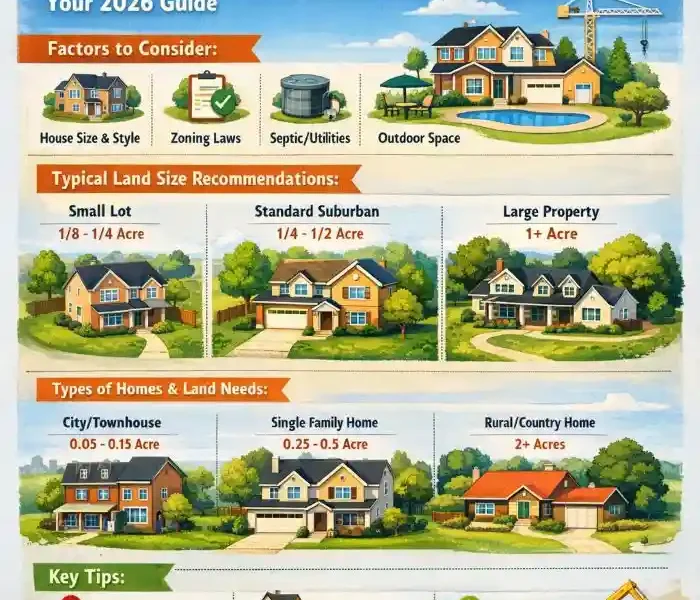
<p>The truth is that there is <strong>no one-size-fits-all answer</strong>. The <strong>minimum land size for house</strong> construction depends on several things, including local building rules, the number of floors, your preferred layout, parking needs, family size, and whether you want open space around the home. In Pakistan, and especially when discussing <strong>plot size for house construction Pakistan</strong>, planned societies and city development bodies often set their own rules. That means the answer can vary from one area to another.</p>
<p>In this guide, I will break everything down in plain language. You will learn how to estimate land size, understand <strong>land requirements Lahore</strong>, compare common plot categories, balance land cost with construction cost, and avoid the mistakes that lead to delays and overspending.</p>
<p>If you are still unsure <a href="https://news.remax.com/how-much-land-do-you-need-to-build-a-house"><strong>how much land do you need to build a house</strong></a>, read on. This article will give you a clear checklist you can actually use before buying a plot.</p>
<h2 id="-why-plot-size-matters-more-than-most-buyers-think-"><strong>Why Plot Size Matters More Than Most Buyers Think</strong></h2>
<p><img class="aligncenter wp-image-6921 size-full" src="https://comeawayhome.co.uk/wp-content/uploads/2026/05/f7f32e5f-bb09-4445-8652-32d0443efbaec-ezgif.com-jpg-to-webp-converter.webp" alt="how much land do you need to build a house" width="700" height="700" /></p>
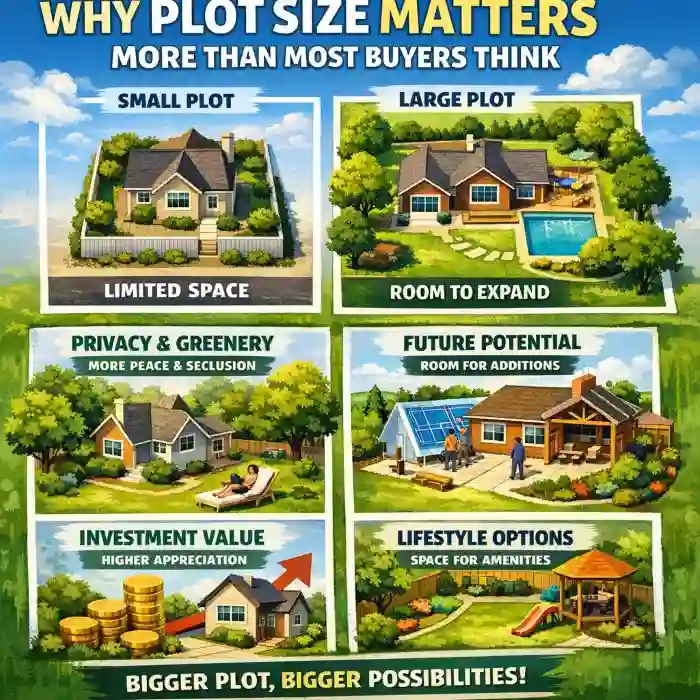
<p>Many people focus only on price when buying land. That is understandable. Land is expensive, and in cities like Lahore, plot prices can rise quickly. But price is only one part of the decision.</p>
<p>The bigger issue is whether the plot can support the home you want to build.</p>
<h3 id="-a-plot-is-more-than-empty-space-"><strong>A Plot Is More Than Empty Space</strong></h3>
<p>When you look at a plot, it may seem like the full area is available for your <a href="https://comeawayhome.co.uk/what-saint-helps-sell-a-house/">house</a>. In reality, that is rarely the case.</p>
<p>A portion of the plot is usually taken up by:</p>
<ul>
<li><strong>Front, side, and rear setbacks</strong></li>
<li><strong>Parking or a garage</strong></li>
<li><strong>Stairs and circulation space</strong></li>
<li><strong>Open-to-sky areas</strong></li>
<li><strong>Service areas like a water tank, pump, or utility access</strong></li>
<li><strong>Possible lawn, terrace, or courtyard needs</strong></li>
</ul>
<p>So if you buy a plot without checking the usable area, you may discover later that your planned house does not fit the land the way you imagined.</p>
<h3 id="-the-wrong-plot-size-creates-long-term-problems-"><strong>The Wrong Plot Size Creates Long-Term Problems</strong></h3>
<p>Choosing the wrong plot can affect more than the building plan. It can change your day-to-day life.</p>
<p>If the plot is too small, you may deal with:</p>
<ul>
<li>cramped rooms</li>
<li>poor natural light</li>
<li>limited ventilation</li>
<li>no storage space</li>
<li>no proper parking</li>
<li>reduced privacy</li>
</ul>
<p>If the plot is too large for your budget, you may face a different kind of pressure. A bigger plot often means a higher purchase price, more construction cost, more finishing cost, and more maintenance over time.</p>
<p>That is why asking <strong>how much land do you need to build a house</strong> is really about finding the right balance between <strong>design, budget, and lifestyle</strong>.</p>
<h3 id="-lifestyle-should-guide-the-decision-"><strong>Lifestyle Should Guide the Decision</strong></h3>
<p>Think about how you and your family actually want to live.</p>
<p>Do you want children to have outdoor space?</p>
<p>Do you prefer a lawn for sitting in the evening?</p>
<p>Do you need one car porch or two?</p>
<p>Will parents or guests need a ground-floor bedroom?</p>
<p>Do you plan to add another floor later?</p>
<p>These questions matter because the <strong>minimum land size for house</strong> construction is not always the same as the <strong>ideal land size</strong> for comfortable living.</p>
<p>A plot may be legally enough, but still feel too tight for your daily routine.</p>
<p>That is why smart buyers do not just ask, <strong>how much land do you need to build a house</strong>. They ask a better question: <strong>How much land do I need for the house I actually want to live in?</strong></p>
<h2 id="-the-main-factors-that-decide-how-much-land-you-need-"><strong>The Main Factors That Decide How Much Land You Need</strong></h2>
<p>Now let’s get into the real planning side of the topic. If you are trying to calculate <strong>how much land do you need to build a house</strong>, you need to look at a few core factors together, not separately.</p>
<h3 id="-house-footprint-comes-first-"><strong>House Footprint Comes First</strong></h3>
<p>The first thing you need to know is your <strong>house footprint</strong>.</p>
<p>Your footprint is the amount of land your house covers on the ground floor. If your ground floor takes up 1,500 square feet, then your footprint is 1,500 square feet. This is different from total covered area. A double-story house may have 3,000 square feet of covered area, but only 1,500 square feet of footprint.</p>
<p>This matters because land is consumed by the footprint, not by upper floors.</p>
<p>That is why a double-story home often works better on a smaller plot than a single-story bungalow. A bungalow needs more land because everything must fit on one level.</p>
<h3 id="-single-story-vs-double-story-design-"><strong>Single-Story vs Double-Story Design</strong></h3>
<p>This is one of the biggest factors in <strong>plot size for house construction Pakistan</strong>.</p>
<p>A <strong>single-story house</strong> usually needs a larger plot because all bedrooms, bathrooms, lounge areas, kitchen, and circulation must fit on the ground floor.</p>
<p>A <strong>double-story house</strong> uses vertical space. That means you can build more rooms without needing the same large footprint.</p>
<p>For example, if you want four bedrooms, a drawing room, lounge, kitchen, and parking, a bungalow may need a much larger plot than a two-story house with the same room count.</p>
<p>So if you are working with a limited budget, going vertical often makes more sense.</p>
<h3 id="-open-space-requirements-"><strong>Open Space Requirements</strong></h3>
<p>Some families do not mind a compact home with very little open area. Others want breathing room around the building.</p>
<p>You may want:</p>
<ul>
<li>a front lawn</li>
<li>a side passage</li>
<li>a backyard sitting area</li>
<li>servant quarters</li>
<li>a store room</li>
<li>a wider porch</li>
<li>outdoor washing space</li>
</ul>
<p>Each extra feature increases land demand.</p>
<p>That is why the answer to <strong>how much land do you need to build a house</strong> changes when your wish list changes.</p>
<h3 id="-local-bylaws-and-society-rules-"><strong>Local Bylaws and Society Rules</strong></h3>
<p>This is where many buyers make a mistake.</p>
<p>They assume that if a plot is technically large enough, they can build whatever they want. But approval rules matter just as much as physical size.</p>
<p>Different cities, development authorities, and private schemes may regulate:</p>
<ul>
<li>building coverage</li>
<li>height limits</li>
<li>front setbacks</li>
<li>side and rear open space</li>
<li>basement permissions</li>
<li>parking requirements</li>
<li>floor-area allowances</li>
</ul>
<p>In practical terms, this means a house that works well on one 5 marla plot may not be approved in another scheme with stricter standards.</p>
<p>That is especially important when discussing <strong>land requirements Lahore</strong>, because not every area follows the exact same approval pattern.</p>
<h3 id="-utility-access-also-affects-land-choice-"><strong>Utility Access Also Affects Land Choice</strong></h3>
<p>If a plot is in a fully developed society, utility planning is easier. Water, sewerage, electricity, and road access are usually already built into the area.</p>
<p>But if you are building in a more independent or edge-location setting, you may need to think about:</p>
<ul>
<li>septic systems</li>
<li>water boring or storage</li>
<li>service lanes</li>
<li>drainage planning</li>
</ul>
<p>These needs can push you toward a larger plot.</p>
<h3 id="-family-size-and-future-plans-"><strong>Family Size and Future Plans</strong></h3>
<p>A young couple and a joint family do not need the same kind of plot.</p>
<p>If you know your family will grow, or you plan to add another floor later, choose a plot that supports expansion. If your parents may move in with you, a ground-floor bedroom becomes important. If you work from home, you may need a study or office.</p>
<p>So the real answer to <strong>how much land do you need to build a house</strong> is always linked to both the present and the future.</p>
<h2 id="-minimum-plot-sizes-around-the-world-and-what-they-teach-us-"><strong>Minimum Plot Sizes Around the World and What They Teach Us</strong></h2>
<p>When people search for <strong>how much land do you need to build a house</strong>, they often hope there is a universal number. But plot size expectations vary widely from one country to another.</p>
<p>That is because cities grow differently. Land costs differ. Planning systems differ. Family living patterns differ too.</p>
<p>Still, comparing regions can help you understand what is considered compact, moderate, or spacious.</p>
<h3 id="-general-comparison-of-typical-plot-expectations-"><strong>General Comparison of Typical Plot Expectations</strong></h3>
<table>
<thead>
<tr>
<th><strong>Region / Context</strong></th>
<th><strong>Typical Plot Size Range</strong></th>
<th><strong>What It Usually Means</strong></th>
</tr>
</thead>
<tbody>
<tr>
<td><strong>Compact urban housing</strong></td>
<td>800 to 1,250 sq ft</td>
<td>Tight footprint, limited open space, mostly efficient layouts</td>
</tr>
<tr>
<td><strong>Pakistan 3 to 5 marla range</strong></td>
<td>About 816 to 1,361 sq ft</td>
<td>Popular for compact city homes, usually double-story designs</td>
</tr>
<tr>
<td><strong>Pakistan 7 to 10 marla range</strong></td>
<td>About 1,905 to 2,722 sq ft</td>
<td>Better for family homes with parking and some open space</td>
</tr>
<tr>
<td><strong>Larger urban residential plots</strong></td>
<td>3,000 to 5,000 sq ft</td>
<td>Comfortable family homes, easier planning flexibility</td>
</tr>
<tr>
<td><strong>Suburban detached homes</strong></td>
<td>5,000 sq ft and above</td>
<td>More open areas, larger setbacks, bigger lawns</td>
</tr>
<tr>
<td><strong>Luxury custom homes</strong></td>
<td>10,000 sq ft and above</td>
<td>Space for landscape features, multiple parking bays, staff areas</td>
</tr>
</tbody>
</table>
<p>This table shows something important: <strong>the minimum land size for house</strong> construction depends heavily on the type of neighborhood and the kind of home you want to build.</p>
<h3 id="-urban-areas-favour-efficiency-"><strong>Urban Areas Favour Efficiency</strong></h3>
<p>In dense cities, smaller plots are normal. The goal is to use land efficiently.</p>
<p>That is why in Lahore and other growing cities, many families prefer a double-story design on 3, 5, or 10 marla plots. These plot sizes let you stay inside city limits without paying the premium of a very large parcel.</p>
<p>So when discussing <strong>plot size for house construction Pakistan</strong>, local living habits matter just as much as engineering considerations.</p>
<h3 id="-bigger-plots-offer-flexibility-not-always-necessity-"><strong>Bigger Plots Offer Flexibility, Not Always Necessity</strong></h3>
<p>A large plot gives you freedom. You can build wider rooms, add courtyards, create outdoor sitting areas, and enjoy more privacy.</p>
<p>But bigger is not always better.</p>
<p>A large plot may also mean:</p>
<ul>
<li>higher purchase cost</li>
<li>higher construction cost</li>
<li>more finishing materials</li>
<li>larger utility bills</li>
<li>higher maintenance demand</li>
</ul>
<p>For many middle-income families, a moderate plot is the smarter choice. It provides enough space without creating a long-term financial burden.</p>
<h3 id="-what-lahore-buyers-can-learn-from-global-comparisons-"><strong>What Lahore Buyers Can Learn from Global Comparisons</strong></h3>
<p>The biggest takeaway is this: there is no single answer to <strong>how much land do you need to build a house</strong>. The right answer sits somewhere between legal minimums and practical living needs.</p>
<p>In Lahore, the smarter approach is not to copy what works in another country or even another city. Instead, you should compare your design goals with your budget and local rules.</p>
<p>That is the most realistic way to judge <strong>land requirements Lahore</strong> and avoid buying land that looks good on paper but does not suit your actual plan.</p>
<h2 id="-pakistan-specific-rules-what-buyers-in-lahore-need-to-understand-"><strong>Pakistan-Specific Rules: What Buyers in Lahore Need to Understand</strong></h2>
<p>If you are planning to build in Punjab, you cannot ignore local regulations. This is one of the most important parts of understanding <strong>how much land do you need to build a house</strong>.</p>
<p>A plot may seem large enough, but approval rules can reduce the area you are actually allowed to build on.</p>
<h3 id="-why-local-approval-matters-so-much-"><strong>Why Local Approval Matters So Much</strong></h3>
<p>In Pakistan, the usable building area often depends on:</p>
<ul>
<li>the development authority in charge</li>
<li>whether the housing society is approved</li>
<li>the category of the plot</li>
<li>the width of the road</li>
<li>the number of floors planned</li>
<li>setback requirements</li>
<li>building coverage limits</li>
</ul>
<p>That means the <strong>minimum land size for house</strong> is not just a number. It is also a legal and planning question.</p>
<h3 id="-lahore-buyers-must-check-society-rules-first-"><strong>Lahore Buyers Must Check Society Rules First</strong></h3>
<p>When people talk about <strong>land requirements Lahore</strong>, they sometimes speak as if the whole city follows one rulebook. That is not really how it works.</p>
<p>Different areas may have different compliance processes. A private scheme may have one set of conditions. A more regulated planned society may apply another. Premium areas may also enforce stricter architectural controls.</p>
<p>So before you buy, ask for the current building bylaws for that specific society.</p>
<p>You should always check:</p>
<ul>
<li>permitted covered area</li>
<li>required setbacks</li>
<li>floor permissions</li>
<li>parking standards</li>
<li>basement allowance</li>
<li>height restrictions</li>
<li>drainage and utility approval process</li>
</ul>
<h3 id="-approved-societies-offer-more-predictability-"><strong>Approved Societies Offer More Predictability</strong></h3>
<p>Buying in an approved society usually makes the process smoother. You have a better chance of getting clear documentation, defined building rules, and a known approval path.</p>
<p>That does not mean every approved society is easy. But it does reduce uncertainty.</p>
<p>This is especially important if you are new to construction and do not want surprise rule changes after purchase.</p>
<h3 id="-the-plot-ratio-mindset-"><strong>The Plot Ratio Mindset</strong></h3>
<p>One practical way to think about <strong>plot size for house construction Pakistan</strong> is to focus on ratio rather than only total area.</p>
<p>For example, if local rules allow you to cover only part of the plot on the ground floor, then your usable footprint may be much smaller than the total land area.</p>
<p>That is why many builders informally start with a simple idea: the plot should usually be larger than the actual ground-floor building footprint by a healthy margin. This gives room for setbacks, light, ventilation, and services.</p>
<h3 id="-common-plot-categories-in-lahore-"><strong>Common Plot Categories in Lahore</strong></h3>
<p>Here is a simple overview of common residential plot categories and what they often mean in practice.</p>
<table>
<thead>
<tr>
<th><strong>Plot Category</strong></th>
<th><strong>Approx. Area</strong></th>
<th><strong>Typical Use</strong></th>
<th><strong>Best For</strong></th>
</tr>
</thead>
<tbody>
<tr>
<td><strong>3 Marla</strong></td>
<td>About 816 sq ft</td>
<td>Compact urban home</td>
<td>Small families, rental units</td>
</tr>
<tr>
<td><strong>5 Marla</strong></td>
<td>About 1,361 sq ft</td>
<td>Standard city house</td>
<td>Small to medium families</td>
</tr>
<tr>
<td><strong>7 Marla</strong></td>
<td>About 1,905 sq ft</td>
<td>More flexible layout</td>
<td>Families wanting better room sizes</td>
</tr>
<tr>
<td><strong>10 Marla</strong></td>
<td>About 2,722 sq ft</td>
<td>Comfortable family residence</td>
<td>Mid-size to larger households</td>
</tr>
<tr>
<td><strong>1 Kanal</strong></td>
<td>About 5,445 sq ft</td>
<td>Spacious custom home</td>
<td>Luxury living, lawns, multiple parking bays</td>
</tr>
</tbody>
</table>
<p>This is why many people asking <strong>how much land do you need to build a house</strong> in Lahore usually end up comparing 5 marla, 10 marla, and 1 kanal options.</p>
<h3 id="-a-simple-rule-of-thumb-"><strong>A Simple Rule of Thumb</strong></h3>
<p>If you are unsure where to start, use this practical planning logic:</p>
<ul>
<li><strong>Compact double-story home:</strong> start around 5 marla</li>
<li><strong>Comfortable family home with better spacing:</strong> consider 7 to 10 marla</li>
<li><strong>Spacious custom home with outdoor features:</strong> consider 1 kanal or more</li>
</ul>
<p>This is not a legal formula. It is a planning shortcut that helps you narrow your search before talking to an architect or approval consultant.</p>
<h3 id="-the-best-move-before-buying-"><strong>The Best Move Before Buying</strong></h3>
<p>Before you pay token money on any plot, do three things:</p>
<ol>
<li><strong>Ask for the latest building rules for that society.</strong></li>
<li><strong>Show your rough house requirements to an architect.</strong></li>
<li><strong>Confirm whether your dream plan fits the allowed covered area.</strong></li>
</ol>
<p>These three steps can save you months of frustration later.</p>
<h2 id="-how-to-calculate-your-ideal-plot-size-step-by-step-"><strong>How to Calculate Your Ideal Plot Size Step by Step</strong></h2>
<p>Now let’s answer the question in the most practical way possible.</p>
<p>If you want to know <strong>how much land do you need to build a house</strong>, here is a simple planning process you can actually use.</p>
<h3 id="-step-1-define-the-house-you-want-"><strong>Define the House You Want</strong></h3>
<p>Start with the basics.</p>
<p>Ask yourself:</p>
<ul>
<li>How many bedrooms do you need?</li>
<li>Do you want one floor or two?</li>
<li>Do you need a separate drawing room?</li>
<li>Will you need one car porch or two?</li>
<li>Do you want open space or a lawn?</li>
<li>Will parents need a ground-floor room?</li>
<li>Do you want a home office?</li>
</ul>
<p>Without these answers, land calculations stay vague.</p>
<h3 id="-step-2-estimate-the-ground-floor-footprint-"><strong>Estimate the Ground-Floor Footprint</strong></h3>
<p>Now think in terms of footprint, not total covered area.</p>
<p>Let’s say you want a four-bedroom home and your rough design suggests a <strong>1,400 sq ft ground-floor footprint</strong>. If you plan a second floor, your total covered area may become much larger, but the land requirement still starts with the ground floor.</p>
<p>This is the core of understanding <strong>minimum land size for house</strong> planning.</p>
<h3 id="-step-3-add-space-for-setbacks-and-movement-"><strong>Add Space for Setbacks and Movement</strong></h3>
<p>You cannot assume the whole plot is buildable. Add room for setbacks, access paths, ventilation space, and parking.</p>
<p>A practical planning method is to allow a healthy margin beyond the footprint rather than choosing land that fits the house too tightly.</p>
<h3 id="-step-4-match-the-design-to-a-plot-category-"><strong>Match the Design to a Plot Category</strong></h3>
<p>Here is a simple formula-style guide:</p>
<table>
<thead>
<tr>
<th><strong>House Footprint Need</strong></th>
<th><strong>Suggested Plot Range</strong></th>
<th><strong>Planning Logic</strong></th>
</tr>
</thead>
<tbody>
<tr>
<td><strong>700 to 900 sq ft</strong></td>
<td>3 to 5 marla</td>
<td>Compact layout, vertical design recommended</td>
</tr>
<tr>
<td><strong>1,000 to 1,400 sq ft</strong></td>
<td>5 to 7 marla</td>
<td>Standard family home with efficient planning</td>
</tr>
<tr>
<td><strong>1,400 to 1,900 sq ft</strong></td>
<td>7 to 10 marla</td>
<td>Better flow, parking, and open space</td>
</tr>
<tr>
<td><strong>2,000 sq ft and above</strong></td>
<td>10 marla to 1 kanal</td>
<td>Spacious design with more flexibility</td>
</tr>
</tbody>
</table>
<p>This is not a legal approval table. It is a buyer-friendly planning tool.</p>
<h3 id="-step-5-think-beyond-today-"><strong>Think Beyond Today</strong></h3>
<p>A lot of people calculate only for current needs. That is a mistake.</p>
<p>If you may add another floor later, bring elderly parents home, or create a rental portion, plan for that now. The right answer to <strong>how much land do you need to build a house</strong> is often a little larger than your immediate need.</p>
<h3 id="-a-simple-example-"><strong>A Simple Example</strong></h3>
<p>Let’s say you want:</p>
<ul>
<li>4 bedrooms</li>
<li>double-story layout</li>
<li>1 car porch</li>
<li>TV lounge</li>
<li>kitchen</li>
<li>small outdoor sitting area</li>
</ul>
<p>A 5 marla plot may work if the design is compact and efficient. But if you want wider rooms, more storage, better circulation, and stronger resale appeal, 7 or 10 marla may be a better fit.</p>
<p>That is why the <strong>plot size for house construction Pakistan</strong> often comes down to comfort level, not only technical possibility.</p>
<h3 id="-your-plot-planning-checklist-"><strong>Your Plot Planning Checklist</strong></h3>
<p>Before making a final decision, make sure your chosen plot answers <strong>yes</strong> to these questions:</p>
<ul>
<li><strong>Can the house footprint fit comfortably within the buildable area?</strong></li>
<li><strong>Can I meet setback and approval rules?</strong></li>
<li><strong>Do I have enough parking space?</strong></li>
<li><strong>Will the home still feel open and livable?</strong></li>
<li><strong>Can I expand later if needed?</strong></li>
<li><strong>Does the plot fit both my budget and my lifestyle?</strong></li>
</ul>
<p>If the answer is yes to all six, you are close to the right plot.</p>
<h2 id="-land-cost-vs-construction-cost-how-to-balance-the-budget-"><strong>Land Cost vs Construction Cost: How to Balance the Budget</strong></h2>
<p>A perfect plot means nothing if the numbers no longer work.</p>
<p>When buyers ask <strong>how much land do you need to build a house</strong>, they usually mean two things at once:</p>
<ol>
<li>How much land is physically required?</li>
<li>How much land can I realistically afford?</li>
</ol>
<p>Both matter.</p>
<h3 id="-why-land-can-eat-your-budget-fast-"><strong>Why Land Can Eat Your Budget Fast</strong></h3>
<p>In Lahore, location changes everything.</p>
<p>A plot in a premium society can cost far more than a similar-sized plot in an emerging area. That means buyers often face a trade-off:</p>
<ul>
<li>buy a <strong>smaller plot in a better location</strong>, or</li>
<li>buy a <strong>larger plot farther out</strong></li>
</ul>
<p>There is no universal right answer. It depends on whether you value location, commute, school access, future resale, or spacious living more.</p>
<h3 id="-a-simple-budget-split-approach-"><strong>A Simple Budget Split Approach</strong></h3>
<p>As a general planning idea, many buyers try to balance land and construction rather than overspending on one side.</p>
<p>If you spend too much on the plot, you may struggle to finish the home well. If you spend too little on land in a weak location, you may reduce future value or convenience.</p>
<p>A balanced buyer thinks about the full project:</p>
<ul>
<li><strong>land purchase</strong></li>
<li><strong>approval fees</strong></li>
<li><strong>design and drawings</strong></li>
<li><strong>grey structure</strong></li>
<li><strong>finishing</strong></li>
<li><strong>boundary wall and gate</strong></li>
<li><strong>utility setup</strong></li>
<li><strong>contingency money</strong></li>
</ul>
<h3 id="-small-plot-vs-large-plot-which-is-smarter-"><strong>Small Plot vs Large Plot: Which Is Smarter?</strong></h3>
<p>Here is a practical comparison.</p>
<table>
<thead>
<tr>
<th><strong>Option</strong></th>
<th><strong>Advantages</strong></th>
<th><strong>Challenges</strong></th>
</tr>
</thead>
<tbody>
<tr>
<td><strong>Small Plot</strong></td>
<td>Lower entry cost, lower construction cost, easier maintenance, faster completion</td>
<td>Limited open space, tighter layout, less flexibility</td>
</tr>
<tr>
<td><strong>Large Plot</strong></td>
<td>Better comfort, stronger design freedom, more parking, better resale appeal in some markets</td>
<td>Higher purchase cost, more construction expense, greater maintenance burden</td>
</tr>
</tbody>
</table>
<h3 id="-construction-cost-rises-with-design-complexity-"><strong>Construction Cost Rises with Design Complexity</strong></h3>
<p>People sometimes think a bigger plot automatically means only a bigger land bill. But it affects the build cost too.</p>
<p>A larger plot often encourages:</p>
<ul>
<li>wider frontage</li>
<li>larger bedrooms</li>
<li>more bathrooms</li>
<li>larger lounges</li>
<li>more windows</li>
<li>bigger boundary walls</li>
<li>more flooring and finishing work</li>
</ul>
<p>So before you move from 5 marla to 10 marla, remember that the construction budget may rise significantly too.</p>
<h3 id="-buy-for-the-house-you-can-actually-finish-"><strong>Buy for the House You Can Actually Finish</strong></h3>
<p>This is one of the most important pieces of advice in this entire article.</p>
<p>Do not buy land based only on status or excitement.</p>
<p>Buy land that lets you complete a home properly.</p>
<p>An unfinished large house is usually a worse outcome than a well-finished moderate house on a sensible plot. When asking <strong>how much land do you need to build a house</strong>, always connect the answer to your <strong>full project budget</strong>, not just land affordability.</p>
<h3 id="-a-better-way-to-decide-"><strong>A Better Way to Decide</strong></h3>
<p>If your budget is tight, choose a plot that lets you:</p>
<ul>
<li>build a complete ground floor comfortably</li>
<li>keep room for future expansion</li>
<li>maintain decent ventilation and parking</li>
<li>finish the house well</li>
</ul>
<p>That is usually a smarter financial decision than stretching for a large plot and struggling through construction.</p>
<h2 id="-design-tips-for-small-plots-in-lahore-"><strong>Design Tips for Small Plots in Lahore</strong></h2>
<p>Not everyone wants or needs a large plot. In fact, with good planning, small plots can become beautiful, practical homes.</p>
<p>If you are working with a limited <strong>minimum land size for house</strong> situation, design becomes your biggest advantage.</p>
<h3 id="-build-up-not-out-"><strong>Build Up, Not Out</strong></h3>
<p>The simplest solution for small plots is vertical design.</p>
<p>A double-story or even split-level planning approach can give you much more living space without needing a large footprint. This is one of the reasons compact urban homes in Pakistan often perform well on smaller plots.</p>
<h3 id="-use-open-planning-wisely-"><strong>Use Open Planning Wisely</strong></h3>
<p>Walls divide space, but they also make small homes feel tighter.</p>
<p>In compact houses, combining the lounge, dining, and circulation area in a smart way can make the interior feel much more open. This does not mean removing all privacy. It means reducing wasted space.</p>
<h3 id="-prioritize-natural-light-"><strong>Prioritize Natural Light</strong></h3>
<p>Small plots can feel cramped if the house is dark.</p>
<p>Use:</p>
<ul>
<li>larger windows where possible</li>
<li>skylight ideas</li>
<li>light-colored finishes</li>
<li>internal courtyards if the design allows</li>
<li>glass panels in selected areas</li>
</ul>
<p>Natural light makes even modest homes feel larger.</p>
<h3 id="-keep-the-layout-efficient-"><strong>Keep the Layout Efficient</strong></h3>
<p>In small homes, wasted corners and oversized hallways become expensive mistakes.</p>
<p>Choose layouts that reduce dead space. Let each area serve a clear purpose.</p>
<h3 id="-use-built-in-storage-"><strong>Use Built-In Storage</strong></h3>
<p>Storage is often ignored during early planning. Then later, every room feels crowded.</p>
<p>Built-in wardrobes, under-stair storage, overhead cabinets, and multipurpose furniture can solve that problem without increasing plot size.</p>
<h3 id="-think-carefully-about-parking-"><strong>Think Carefully About Parking</strong></h3>
<p>A home may look great on paper, but if the parking area is awkward, daily life becomes frustrating very quickly.</p>
<p>Make sure your porch size works for the actual vehicle you use. Do not just squeeze a car symbol into the drawing.</p>
<h3 id="-small-plot-does-not-mean-low-quality-"><strong>Small Plot Does Not Mean Low Quality</strong></h3>
<p>This is important.</p>
<p>A smaller plot does not mean a smaller dream. A well-designed home on a modest plot can feel elegant, comfortable, and highly functional.</p>
<p>So if you are worried about <strong>land requirements Lahore</strong> because your budget does not allow a larger plot, do not assume you must compromise on good living. Smart design can close that gap.</p>
<h2 id="-common-mistakes-buyers-make-when-choosing-plot-size-"><strong>Common Mistakes Buyers Make When Choosing Plot Size</strong></h2>
<p>A lot of expensive problems start before construction begins.</p>
<p>If you want a clear answer to <strong>how much land do you need to build a house</strong>, you also need to know what not to do.</p>
<h3 id="-mistake-1-buying-before-checking-bylaws-"><strong>Buying Before Checking Bylaws</strong></h3>
<p>This is probably the biggest mistake.</p>
<p>Some buyers choose land based only on location and price. Later, they find out the society rules do not allow the design they wanted. That can force a full redesign.</p>
<h3 id="-mistake-2-confusing-plot-area-with-buildable-area-"><strong>Confusing Plot Area with Buildable Area</strong></h3>
<p>Just because the plot is a certain size does not mean the entire area can be covered.</p>
<p>Always separate total plot size from approved building space.</p>
<h3 id="-mistake-3-ignoring-future-needs-"><strong>Ignoring Future Needs</strong></h3>
<p>A newly married couple may feel a compact home is enough. But five years later, children, parents, and work-from-home needs can change everything.</p>
<p>Plan ahead.</p>
<h3 id="-mistake-4-underestimating-parking-and-services-"><strong>Underestimating Parking and Services</strong></h3>
<p>Water tanks, stairs, storage, utility shafts, washing areas, and parking all take space. If you ignore them early, the design starts feeling forced.</p>
<h3 id="-mistake-5-choosing-too-large-a-plot-for-the-budget-"><strong>Choosing Too Large a Plot for the Budget</strong></h3>
<p>A plot you cannot properly build on becomes a financial burden.</p>
<p>Choose a plot that supports a completed home, not just an exciting purchase.</p>
<h2 id="-frequently-asked-questions-"><strong>Frequently Asked Questions</strong></h2>
<h3 id="-how-much-land-do-you-need-to-build-a-house-in-lahore-"><strong>How much land do you need to build a house in Lahore?</strong></h3>
<p>It depends on your design, budget, and the rules of the specific housing society. In practical terms, many families start with <strong>5 marla</strong> for a compact double-story home, while <strong>7 to 10 marla</strong> offers more comfort and flexibility.</p>
<h3 id="-what-is-the-minimum-land-size-for-house-construction-"><strong>What is the minimum land size for house construction?</strong></h3>
<p>There is no single universal answer. The <strong>minimum land size for house</strong> depends on local approval rules, setbacks, and the kind of home you want to build. Legally possible and comfortably livable are not always the same thing.</p>
<h3 id="-what-is-a-good-plot-size-for-house-construction-pakistan-"><strong>What is a good plot size for house construction Pakistan?</strong></h3>
<p>For many urban families, <strong>5 marla to 10 marla</strong> is the most practical range. It balances affordability with usable living space. Larger homes, bungalows, or luxury residences usually need more land.</p>
<h3 id="-are-land-requirements-lahore-the-same-in-every-society-"><strong>Are land requirements Lahore the same in every society?</strong></h3>
<p>No. <strong>Land requirements Lahore</strong> can differ from one scheme to another. Always check society-specific bylaws before buying.</p>
<h3 id="-do-i-need-a-large-plot-for-a-four-bedroom-house-"><strong>Do I need a large plot for a four-bedroom house?</strong></h3>
<p>Not always. A four-bedroom home can fit on a moderate plot if you build vertically and use space efficiently. But if you want a bungalow, bigger rooms, or more open area, you will likely need more land.</p>
<h3 id="-is-a-basement-a-good-idea-on-a-small-plot-"><strong>Is a basement a good idea on a small plot?</strong></h3>
<p>It can be, especially if local regulations allow it and your budget supports it. A basement can add storage, parking, or extra functional space, but it also increases construction cost and technical complexity.</p>
<h2 id="-conclusion-start-with-your-lifestyle-then-match-the-plot-"><strong>Conclusion: Start with Your Lifestyle, Then Match the Plot</strong></h2>
<p>So, <strong>how much land do you need to build a house</strong>?</p>
<p>The most honest answer is this: <strong>enough land to fit your house, your daily life, and your local approval rules at the same time</strong>.</p>
<p>For some buyers, that may be a compact 5 marla plot with a smart double-story design. For others, it may be 7 or 10 marla for a more comfortable family layout. And for buyers who want generous open space, luxury features, or bungalow-style living, the number will go much higher.</p>
<p>The key point is simple. Do not buy land based on guesswork.</p>
<p>Instead, start with your required footprint, think about your future family needs, review the society bylaws carefully, and balance land cost with construction cost. That is the smartest way to decide the right <strong>plot size for house construction Pakistan</strong> and meet real <strong>land requirements Lahore</strong> without regret.</p>
<p>If you are still unsure <strong>how much land do you need to build a house</strong>, the best next step is to review your room requirements and shortlist plot options with a builder, architect, or local property consultant.</p>
<p><a href="https://comeawayhome.co.uk/">House</a></p>
If you are planning to build your dream home in Lahore, one question usually comes up before anything else: how much land do you need to build a house?
It sounds like a simple question, but the answer is not always simple. One person may tell you that a 5 marla plot is enough. Another may say you need at least 10 marla for a comfortable family home. Then you hear about setbacks, covered area, parking space, lawn needs, utility lines, and approval rules. Suddenly, buying land feels more confusing than building the house itself.
That is exactly where many families get stuck.
You might already have a house design in mind. Maybe you want a modern double-story home. Maybe you want a spacious bungalow with a small lawn. Or maybe you want a compact home that is easy to maintain and fits your budget. In every case, the real issue is not just the house size. It is the relationship between your house plan, the rules of your housing scheme, and the way you want to live every day.
So, how much land do you need to build a house in practical terms?
The truth is that there is no one-size-fits-all answer. The minimum land size for house construction depends on several things, including local building rules, the number of floors, your preferred layout, parking needs, family size, and whether you want open space around the home. In Pakistan, and especially when discussing plot size for house construction Pakistan, planned societies and city development bodies often set their own rules. That means the answer can vary from one area to another.
In this guide, I will break everything down in plain language. You will learn how to estimate land size, understand land requirements Lahore, compare common plot categories, balance land cost with construction cost, and avoid the mistakes that lead to delays and overspending.
If you are still unsure how much land do you need to build a house, read on. This article will give you a clear checklist you can actually use before buying a plot.
Why Plot Size Matters More Than Most Buyers Think
Many people focus only on price when buying land. That is understandable. Land is expensive, and in cities like Lahore, plot prices can rise quickly. But price is only one part of the decision.
The bigger issue is whether the plot can support the home you want to build.
A Plot Is More Than Empty Space
When you look at a plot, it may seem like the full area is available for your house. In reality, that is rarely the case.
A portion of the plot is usually taken up by:
- Front, side, and rear setbacks
- Parking or a garage
- Stairs and circulation space
- Open-to-sky areas
- Service areas like a water tank, pump, or utility access
- Possible lawn, terrace, or courtyard needs
So if you buy a plot without checking the usable area, you may discover later that your planned house does not fit the land the way you imagined.
The Wrong Plot Size Creates Long-Term Problems
Choosing the wrong plot can affect more than the building plan. It can change your day-to-day life.
If the plot is too small, you may deal with:
- cramped rooms
- poor natural light
- limited ventilation
- no storage space
- no proper parking
- reduced privacy
If the plot is too large for your budget, you may face a different kind of pressure. A bigger plot often means a higher purchase price, more construction cost, more finishing cost, and more maintenance over time.
That is why asking how much land do you need to build a house is really about finding the right balance between design, budget, and lifestyle.
Lifestyle Should Guide the Decision
Think about how you and your family actually want to live.
Do you want children to have outdoor space?
Do you prefer a lawn for sitting in the evening?
Do you need one car porch or two?
Will parents or guests need a ground-floor bedroom?
Do you plan to add another floor later?
These questions matter because the minimum land size for house construction is not always the same as the ideal land size for comfortable living.
A plot may be legally enough, but still feel too tight for your daily routine.
That is why smart buyers do not just ask, how much land do you need to build a house. They ask a better question: How much land do I need for the house I actually want to live in?
The Main Factors That Decide How Much Land You Need
Now let’s get into the real planning side of the topic. If you are trying to calculate how much land do you need to build a house, you need to look at a few core factors together, not separately.
The first thing you need to know is your house footprint.
Your footprint is the amount of land your house covers on the ground floor. If your ground floor takes up 1,500 square feet, then your footprint is 1,500 square feet. This is different from total covered area. A double-story house may have 3,000 square feet of covered area, but only 1,500 square feet of footprint.
This matters because land is consumed by the footprint, not by upper floors.
That is why a double-story home often works better on a smaller plot than a single-story bungalow. A bungalow needs more land because everything must fit on one level.
Single-Story vs Double-Story Design
This is one of the biggest factors in plot size for house construction Pakistan.
A single-story house usually needs a larger plot because all bedrooms, bathrooms, lounge areas, kitchen, and circulation must fit on the ground floor.
A double-story house uses vertical space. That means you can build more rooms without needing the same large footprint.
For example, if you want four bedrooms, a drawing room, lounge, kitchen, and parking, a bungalow may need a much larger plot than a two-story house with the same room count.
So if you are working with a limited budget, going vertical often makes more sense.
Open Space Requirements
Some families do not mind a compact home with very little open area. Others want breathing room around the building.
You may want:
- a front lawn
- a side passage
- a backyard sitting area
- servant quarters
- a store room
- a wider porch
- outdoor washing space
Each extra feature increases land demand.
That is why the answer to how much land do you need to build a house changes when your wish list changes.
Local Bylaws and Society Rules
This is where many buyers make a mistake.
They assume that if a plot is technically large enough, they can build whatever they want. But approval rules matter just as much as physical size.
Different cities, development authorities, and private schemes may regulate:
- building coverage
- height limits
- front setbacks
- side and rear open space
- basement permissions
- parking requirements
- floor-area allowances
In practical terms, this means a house that works well on one 5 marla plot may not be approved in another scheme with stricter standards.
That is especially important when discussing land requirements Lahore, because not every area follows the exact same approval pattern.
Utility Access Also Affects Land Choice
If a plot is in a fully developed society, utility planning is easier. Water, sewerage, electricity, and road access are usually already built into the area.
But if you are building in a more independent or edge-location setting, you may need to think about:
- septic systems
- water boring or storage
- service lanes
- drainage planning
These needs can push you toward a larger plot.
Family Size and Future Plans
A young couple and a joint family do not need the same kind of plot.
If you know your family will grow, or you plan to add another floor later, choose a plot that supports expansion. If your parents may move in with you, a ground-floor bedroom becomes important. If you work from home, you may need a study or office.
So the real answer to how much land do you need to build a house is always linked to both the present and the future.
Minimum Plot Sizes Around the World and What They Teach Us
When people search for how much land do you need to build a house, they often hope there is a universal number. But plot size expectations vary widely from one country to another.
That is because cities grow differently. Land costs differ. Planning systems differ. Family living patterns differ too.
Still, comparing regions can help you understand what is considered compact, moderate, or spacious.
General Comparison of Typical Plot Expectations
| Region / Context |
Typical Plot Size Range |
What It Usually Means |
| Compact urban housing |
800 to 1,250 sq ft |
Tight footprint, limited open space, mostly efficient layouts |
| Pakistan 3 to 5 marla range |
About 816 to 1,361 sq ft |
Popular for compact city homes, usually double-story designs |
| Pakistan 7 to 10 marla range |
About 1,905 to 2,722 sq ft |
Better for family homes with parking and some open space |
| Larger urban residential plots |
3,000 to 5,000 sq ft |
Comfortable family homes, easier planning flexibility |
| Suburban detached homes |
5,000 sq ft and above |
More open areas, larger setbacks, bigger lawns |
| Luxury custom homes |
10,000 sq ft and above |
Space for landscape features, multiple parking bays, staff areas |
This table shows something important: the minimum land size for house construction depends heavily on the type of neighborhood and the kind of home you want to build.
Urban Areas Favour Efficiency
In dense cities, smaller plots are normal. The goal is to use land efficiently.
That is why in Lahore and other growing cities, many families prefer a double-story design on 3, 5, or 10 marla plots. These plot sizes let you stay inside city limits without paying the premium of a very large parcel.
So when discussing plot size for house construction Pakistan, local living habits matter just as much as engineering considerations.
Bigger Plots Offer Flexibility, Not Always Necessity
A large plot gives you freedom. You can build wider rooms, add courtyards, create outdoor sitting areas, and enjoy more privacy.
But bigger is not always better.
A large plot may also mean:
- higher purchase cost
- higher construction cost
- more finishing materials
- larger utility bills
- higher maintenance demand
For many middle-income families, a moderate plot is the smarter choice. It provides enough space without creating a long-term financial burden.
What Lahore Buyers Can Learn from Global Comparisons
The biggest takeaway is this: there is no single answer to how much land do you need to build a house. The right answer sits somewhere between legal minimums and practical living needs.
In Lahore, the smarter approach is not to copy what works in another country or even another city. Instead, you should compare your design goals with your budget and local rules.
That is the most realistic way to judge land requirements Lahore and avoid buying land that looks good on paper but does not suit your actual plan.
Pakistan-Specific Rules: What Buyers in Lahore Need to Understand
If you are planning to build in Punjab, you cannot ignore local regulations. This is one of the most important parts of understanding how much land do you need to build a house.
A plot may seem large enough, but approval rules can reduce the area you are actually allowed to build on.
Why Local Approval Matters So Much
In Pakistan, the usable building area often depends on:
- the development authority in charge
- whether the housing society is approved
- the category of the plot
- the width of the road
- the number of floors planned
- setback requirements
- building coverage limits
That means the minimum land size for house is not just a number. It is also a legal and planning question.
Lahore Buyers Must Check Society Rules First
When people talk about land requirements Lahore, they sometimes speak as if the whole city follows one rulebook. That is not really how it works.
Different areas may have different compliance processes. A private scheme may have one set of conditions. A more regulated planned society may apply another. Premium areas may also enforce stricter architectural controls.
So before you buy, ask for the current building bylaws for that specific society.
You should always check:
- permitted covered area
- required setbacks
- floor permissions
- parking standards
- basement allowance
- height restrictions
- drainage and utility approval process
Approved Societies Offer More Predictability
Buying in an approved society usually makes the process smoother. You have a better chance of getting clear documentation, defined building rules, and a known approval path.
That does not mean every approved society is easy. But it does reduce uncertainty.
This is especially important if you are new to construction and do not want surprise rule changes after purchase.
The Plot Ratio Mindset
One practical way to think about plot size for house construction Pakistan is to focus on ratio rather than only total area.
For example, if local rules allow you to cover only part of the plot on the ground floor, then your usable footprint may be much smaller than the total land area.
That is why many builders informally start with a simple idea: the plot should usually be larger than the actual ground-floor building footprint by a healthy margin. This gives room for setbacks, light, ventilation, and services.
Common Plot Categories in Lahore
Here is a simple overview of common residential plot categories and what they often mean in practice.
| Plot Category |
Approx. Area |
Typical Use |
Best For |
| 3 Marla |
About 816 sq ft |
Compact urban home |
Small families, rental units |
| 5 Marla |
About 1,361 sq ft |
Standard city house |
Small to medium families |
| 7 Marla |
About 1,905 sq ft |
More flexible layout |
Families wanting better room sizes |
| 10 Marla |
About 2,722 sq ft |
Comfortable family residence |
Mid-size to larger households |
| 1 Kanal |
About 5,445 sq ft |
Spacious custom home |
Luxury living, lawns, multiple parking bays |
This is why many people asking how much land do you need to build a house in Lahore usually end up comparing 5 marla, 10 marla, and 1 kanal options.
A Simple Rule of Thumb
If you are unsure where to start, use this practical planning logic:
- Compact double-story home: start around 5 marla
- Comfortable family home with better spacing: consider 7 to 10 marla
- Spacious custom home with outdoor features: consider 1 kanal or more
This is not a legal formula. It is a planning shortcut that helps you narrow your search before talking to an architect or approval consultant.
The Best Move Before Buying
Before you pay token money on any plot, do three things:
- Ask for the latest building rules for that society.
- Show your rough house requirements to an architect.
- Confirm whether your dream plan fits the allowed covered area.
These three steps can save you months of frustration later.
How to Calculate Your Ideal Plot Size Step by Step
Now let’s answer the question in the most practical way possible.
If you want to know how much land do you need to build a house, here is a simple planning process you can actually use.
Define the House You Want
Start with the basics.
Ask yourself:
- How many bedrooms do you need?
- Do you want one floor or two?
- Do you need a separate drawing room?
- Will you need one car porch or two?
- Do you want open space or a lawn?
- Will parents need a ground-floor room?
- Do you want a home office?
Without these answers, land calculations stay vague.
Now think in terms of footprint, not total covered area.
Let’s say you want a four-bedroom home and your rough design suggests a 1,400 sq ft ground-floor footprint. If you plan a second floor, your total covered area may become much larger, but the land requirement still starts with the ground floor.
This is the core of understanding minimum land size for house planning.
Add Space for Setbacks and Movement
You cannot assume the whole plot is buildable. Add room for setbacks, access paths, ventilation space, and parking.
A practical planning method is to allow a healthy margin beyond the footprint rather than choosing land that fits the house too tightly.
Match the Design to a Plot Category
Here is a simple formula-style guide:
| House Footprint Need |
Suggested Plot Range |
Planning Logic |
| 700 to 900 sq ft |
3 to 5 marla |
Compact layout, vertical design recommended |
| 1,000 to 1,400 sq ft |
5 to 7 marla |
Standard family home with efficient planning |
| 1,400 to 1,900 sq ft |
7 to 10 marla |
Better flow, parking, and open space |
| 2,000 sq ft and above |
10 marla to 1 kanal |
Spacious design with more flexibility |
This is not a legal approval table. It is a buyer-friendly planning tool.
Think Beyond Today
A lot of people calculate only for current needs. That is a mistake.
If you may add another floor later, bring elderly parents home, or create a rental portion, plan for that now. The right answer to how much land do you need to build a house is often a little larger than your immediate need.
A Simple Example
Let’s say you want:
- 4 bedrooms
- double-story layout
- 1 car porch
- TV lounge
- kitchen
- small outdoor sitting area
A 5 marla plot may work if the design is compact and efficient. But if you want wider rooms, more storage, better circulation, and stronger resale appeal, 7 or 10 marla may be a better fit.
That is why the plot size for house construction Pakistan often comes down to comfort level, not only technical possibility.
Your Plot Planning Checklist
Before making a final decision, make sure your chosen plot answers yes to these questions:
- Can the house footprint fit comfortably within the buildable area?
- Can I meet setback and approval rules?
- Do I have enough parking space?
- Will the home still feel open and livable?
- Can I expand later if needed?
- Does the plot fit both my budget and my lifestyle?
If the answer is yes to all six, you are close to the right plot.
Land Cost vs Construction Cost: How to Balance the Budget
A perfect plot means nothing if the numbers no longer work.
When buyers ask how much land do you need to build a house, they usually mean two things at once:
- How much land is physically required?
- How much land can I realistically afford?
Both matter.
Why Land Can Eat Your Budget Fast
In Lahore, location changes everything.
A plot in a premium society can cost far more than a similar-sized plot in an emerging area. That means buyers often face a trade-off:
- buy a smaller plot in a better location, or
- buy a larger plot farther out
There is no universal right answer. It depends on whether you value location, commute, school access, future resale, or spacious living more.
A Simple Budget Split Approach
As a general planning idea, many buyers try to balance land and construction rather than overspending on one side.
If you spend too much on the plot, you may struggle to finish the home well. If you spend too little on land in a weak location, you may reduce future value or convenience.
A balanced buyer thinks about the full project:
- land purchase
- approval fees
- design and drawings
- grey structure
- finishing
- boundary wall and gate
- utility setup
- contingency money
Small Plot vs Large Plot: Which Is Smarter?
Here is a practical comparison.
| Option |
Advantages |
Challenges |
| Small Plot |
Lower entry cost, lower construction cost, easier maintenance, faster completion |
Limited open space, tighter layout, less flexibility |
| Large Plot |
Better comfort, stronger design freedom, more parking, better resale appeal in some markets |
Higher purchase cost, more construction expense, greater maintenance burden |
Construction Cost Rises with Design Complexity
People sometimes think a bigger plot automatically means only a bigger land bill. But it affects the build cost too.
A larger plot often encourages:
- wider frontage
- larger bedrooms
- more bathrooms
- larger lounges
- more windows
- bigger boundary walls
- more flooring and finishing work
So before you move from 5 marla to 10 marla, remember that the construction budget may rise significantly too.
Buy for the House You Can Actually Finish
This is one of the most important pieces of advice in this entire article.
Do not buy land based only on status or excitement.
Buy land that lets you complete a home properly.
An unfinished large house is usually a worse outcome than a well-finished moderate house on a sensible plot. When asking how much land do you need to build a house, always connect the answer to your full project budget, not just land affordability.
A Better Way to Decide
If your budget is tight, choose a plot that lets you:
- build a complete ground floor comfortably
- keep room for future expansion
- maintain decent ventilation and parking
- finish the house well
That is usually a smarter financial decision than stretching for a large plot and struggling through construction.
Design Tips for Small Plots in Lahore
Not everyone wants or needs a large plot. In fact, with good planning, small plots can become beautiful, practical homes.
If you are working with a limited minimum land size for house situation, design becomes your biggest advantage.
Build Up, Not Out
The simplest solution for small plots is vertical design.
A double-story or even split-level planning approach can give you much more living space without needing a large footprint. This is one of the reasons compact urban homes in Pakistan often perform well on smaller plots.
Use Open Planning Wisely
Walls divide space, but they also make small homes feel tighter.
In compact houses, combining the lounge, dining, and circulation area in a smart way can make the interior feel much more open. This does not mean removing all privacy. It means reducing wasted space.
Prioritize Natural Light
Small plots can feel cramped if the house is dark.
Use:
- larger windows where possible
- skylight ideas
- light-colored finishes
- internal courtyards if the design allows
- glass panels in selected areas
Natural light makes even modest homes feel larger.
Keep the Layout Efficient
In small homes, wasted corners and oversized hallways become expensive mistakes.
Choose layouts that reduce dead space. Let each area serve a clear purpose.
Use Built-In Storage
Storage is often ignored during early planning. Then later, every room feels crowded.
Built-in wardrobes, under-stair storage, overhead cabinets, and multipurpose furniture can solve that problem without increasing plot size.
Think Carefully About Parking
A home may look great on paper, but if the parking area is awkward, daily life becomes frustrating very quickly.
Make sure your porch size works for the actual vehicle you use. Do not just squeeze a car symbol into the drawing.
Small Plot Does Not Mean Low Quality
This is important.
A smaller plot does not mean a smaller dream. A well-designed home on a modest plot can feel elegant, comfortable, and highly functional.
So if you are worried about land requirements Lahore because your budget does not allow a larger plot, do not assume you must compromise on good living. Smart design can close that gap.
Common Mistakes Buyers Make When Choosing Plot Size
A lot of expensive problems start before construction begins.
If you want a clear answer to how much land do you need to build a house, you also need to know what not to do.
Buying Before Checking Bylaws
This is probably the biggest mistake.
Some buyers choose land based only on location and price. Later, they find out the society rules do not allow the design they wanted. That can force a full redesign.
Confusing Plot Area with Buildable Area
Just because the plot is a certain size does not mean the entire area can be covered.
Always separate total plot size from approved building space.
Ignoring Future Needs
A newly married couple may feel a compact home is enough. But five years later, children, parents, and work-from-home needs can change everything.
Plan ahead.
Underestimating Parking and Services
Water tanks, stairs, storage, utility shafts, washing areas, and parking all take space. If you ignore them early, the design starts feeling forced.
Choosing Too Large a Plot for the Budget
A plot you cannot properly build on becomes a financial burden.
Choose a plot that supports a completed home, not just an exciting purchase.
Frequently Asked Questions
How much land do you need to build a house in Lahore?
It depends on your design, budget, and the rules of the specific housing society. In practical terms, many families start with 5 marla for a compact double-story home, while 7 to 10 marla offers more comfort and flexibility.
What is the minimum land size for house construction?
There is no single universal answer. The minimum land size for house depends on local approval rules, setbacks, and the kind of home you want to build. Legally possible and comfortably livable are not always the same thing.
What is a good plot size for house construction Pakistan?
For many urban families, 5 marla to 10 marla is the most practical range. It balances affordability with usable living space. Larger homes, bungalows, or luxury residences usually need more land.
Are land requirements Lahore the same in every society?
No. Land requirements Lahore can differ from one scheme to another. Always check society-specific bylaws before buying.
Do I need a large plot for a four-bedroom house?
Not always. A four-bedroom home can fit on a moderate plot if you build vertically and use space efficiently. But if you want a bungalow, bigger rooms, or more open area, you will likely need more land.
Is a basement a good idea on a small plot?
It can be, especially if local regulations allow it and your budget supports it. A basement can add storage, parking, or extra functional space, but it also increases construction cost and technical complexity.
Conclusion: Start with Your Lifestyle, Then Match the Plot
So, how much land do you need to build a house?
The most honest answer is this: enough land to fit your house, your daily life, and your local approval rules at the same time.
For some buyers, that may be a compact 5 marla plot with a smart double-story design. For others, it may be 7 or 10 marla for a more comfortable family layout. And for buyers who want generous open space, luxury features, or bungalow-style living, the number will go much higher.
The key point is simple. Do not buy land based on guesswork.
Instead, start with your required footprint, think about your future family needs, review the society bylaws carefully, and balance land cost with construction cost. That is the smartest way to decide the right plot size for house construction Pakistan and meet real land requirements Lahore without regret.
If you are still unsure how much land do you need to build a house, the best next step is to review your room requirements and shortlist plot options with a builder, architect, or local property consultant.
House