Imagine coming home after a long day, only to find your living room floor soaked, your walls stained, and a musty smell lingering in the air. A burst pipe or an unnoticed leak has wreaked havoc, leaving you with a hefty repair bill and a long list of tasks to restore your home. Water damage in houses is not just inconvenient—it’s costly, stressful, and can lead to serious health risks if not addressed promptly.
Did you know that water damage incidents cost U.S. homeowners an average of $12,000 per incident? Even worse, mold can start growing within 24-48 hours of water exposure, compounding the problem. This guide will walk you through everything you need to know about water damage in houses, from identifying causes and early signs to repairing and preventing future issues. Let’s dive in!
Common Causes of Water Damage in House
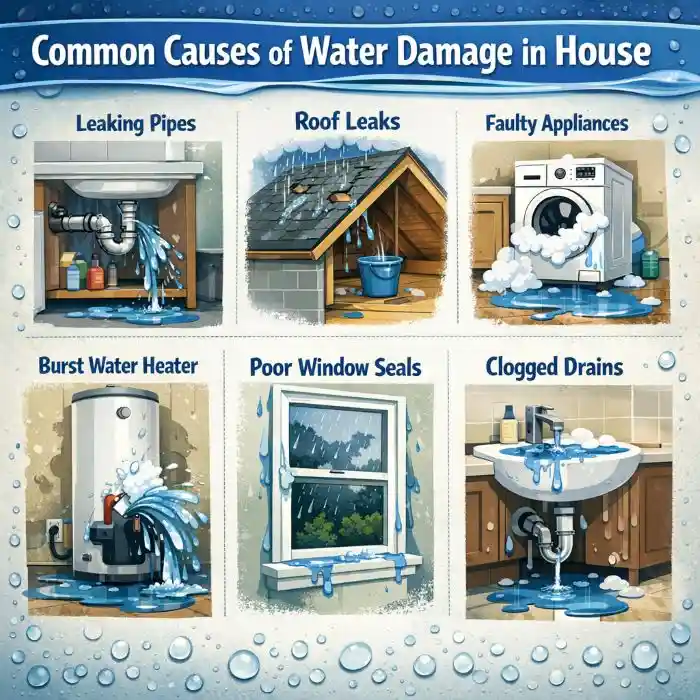
Water damage doesn’t happen out of nowhere. It’s often the result of preventable issues or natural disasters. Understanding the common causes can help you take proactive steps to protect your home.
1. Burst Pipes
Burst pipes are one of the most frequent culprits of water damage, especially during winter. When temperatures drop, water inside pipes can freeze and expand, causing the pipes to crack or burst. Even older pipes can fail due to wear and tear over time.
2. Roof Leaks
A poorly maintained roof is a ticking time bomb. Heavy rains, storms, or even clogged gutters can lead to water seeping through cracks or missing shingles. Over time, this can cause significant damage to your attic and ceilings.
3. Appliance Failures
Household appliances like washing machines, dishwashers, and water heaters can malfunction, leading to leaks. A broken hose or a faulty seal can release gallons of water in minutes, flooding your home.
4. Foundation Cracks and Poor Drainage
Cracks in your home’s foundation or poor drainage systems can allow water to seep into your basement. This is especially common in areas with heavy rainfall or poor soil grading around the house.
5. Plumbing Issues
Clogged drains, leaking faucets, or sewage backups are other common causes of water damage. These issues often go unnoticed until they escalate into a bigger problem.
Hidden Culprits Like Humidity and Condensation
Sometimes, water damage isn’t caused by a dramatic event but by gradual issues like high humidity or condensation. Poor ventilation in areas like bathrooms and kitchens can lead to moisture buildup, which eventually damages walls, ceilings, and floors.
Expert Tip: “80% of water damage in houses stems from preventable plumbing issues. Regular maintenance can save you thousands in repair costs.”
Early Signs of Water Damage in House You Can’t Ignore
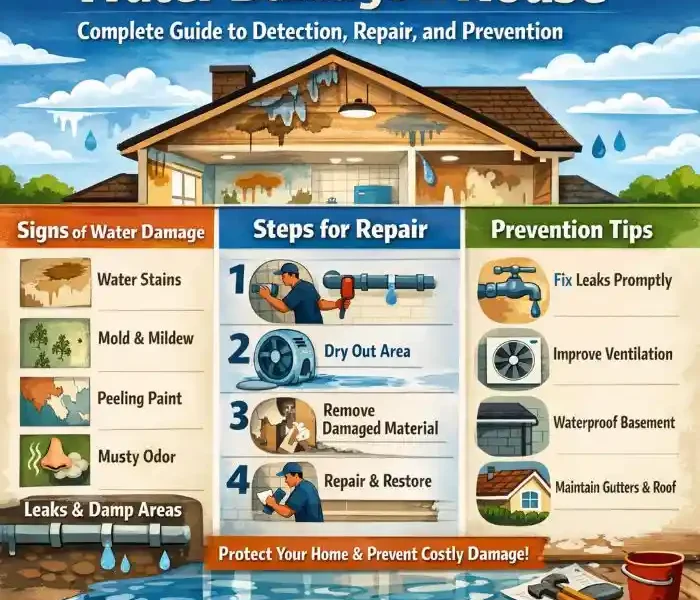
Spotting water damage early can save you from costly repairs and health risks. Here are some telltale signs to watch for:
- Warped or Buckling Floors/Ceilings: Water can cause wood and other materials to swell, leading to uneven surfaces.
- Musty Odors and Visible Mold Spots: A persistent damp smell or mold growth is a clear indicator of water damage.
- Stains on Walls, Peeling Paint, or Soft Drywall: Discoloration or bubbling paint often signals water seeping through walls.
- Increased Humidity or Unexplained Allergies: Excess moisture can make your home feel humid and trigger respiratory issues.
- Sounds of Dripping or Higher Utility Bills: Unexplained water sounds or a spike in your water bill could indicate a hidden leak.
How to Inspect Your Home for Water Damage
Conducting a thorough inspection can help you catch water damage early. Here’s a step-by-step guide:
- Check the Attic: Look for water stains, mold, or damp insulation.
- Inspect the Basement: Pay attention to cracks in the foundation or pooling water.
- Examine Bathrooms and Kitchens: Check under sinks, around toilets, and near appliances for leaks.
- Use a Moisture Meter: This handy tool can detect hidden moisture in walls and floors.
Health Risks from Water Damage in House
Water damage isn’t just an eyesore—it can pose serious health risks to you and your family.
1. Mold Growth
Mold thrives in damp environments and can start growing within 24-48 hours of water exposure. It releases spores that can cause respiratory issues, especially for children, the elderly, and those with asthma or allergies.
2. Bacterial Contamination
If the water damage involves “black water” (sewage), it can introduce harmful bacteria and pathogens into your home. This type of contamination requires immediate professional intervention.
3. Structural Weakening
Prolonged water exposure can weaken your home’s structural integrity, leading to potential collapses or safety hazards.
Table: Water Damage Categories & Risks
| Category | Source | Health Risks |
|---|---|---|
| Clean | Pipes/appliances | Low (if dried quickly) |
| Gray | Sinks/showers | Bacteria, allergens |
| Black | Sewage/toilets | Severe pathogens |
Step-by-Step Water Damage in House Repair Process
Repairing water damage can be overwhelming, but breaking it down into steps makes it manageable.
1. Shut Off Water and Power
Immediately turn off the water supply and electricity to prevent further damage and ensure safety.
2. Water Extraction
Use pumps or wet vacuums to remove standing water. For severe flooding, professional water extraction services are recommended.
3. Drying
Set up fans and dehumidifiers to dry the affected area. This process can take 3-5 days, depending on the extent of the damage.
4. Cleaning and Antimicrobial Treatments
Clean all surfaces with disinfectants to prevent mold and bacteria growth.
5. Demolition and Rebuilding
Remove and replace damaged materials like drywall, flooring, or insulation. This step may require professional contractors.
DIY Fixes vs. Professional Restoration
While minor leaks can be handled with DIY methods, extensive damage or contamination requires professional help. On average, water damage repairs cost between $1,000 and $5,000.
Average Costs of Water Damage in House Repairs
The cost of repairs varies depending on the severity and location of the damage:
- Minor Repairs (e.g., drywall patch): $500-$2,000
- Moderate Repairs (e.g., full room): $3,000-$7,000
- Severe Repairs (e.g., whole house): $10,000+
Factors like your location, the type of water involved, and insurance coverage can also impact costs.
Prevention Tips to Avoid Water Damage in House
Prevention is always better than cure. Here are some actionable tips to protect your home:
- Regular Maintenance: Inspect pipes, roofs, and appliances biannually.
- Install Preventative Measures: Use sump pumps, water alarms, and leak detectors.
- Improve Drainage: Ensure gutters are clean and the ground slopes away from your home.
- Insulate Pipes: Prevent freezing during winter by insulating exposed pipes.
Insurance Essentials
Most standard homeowners’ insurance policies cover sudden water damage but not gradual issues. Consider adding flood insurance if you live in a high-risk area.
When to Call Pros for Water Damage in House
If the damage is extensive, involves black water, or has led to visible mold growth, it’s time to call in the professionals. Certified restoration teams ensure compliance with safety standards and provide peace of mind.
FAQs: Water Damage in House
What causes most water damage in houses?
Leaks and floods account for 60% of cases.
How long before mold grows after water damage?
Mold can start growing within 24-48 hours.
Does homeowners insurance cover water damage?
Yes, for sudden and accidental events.
Can I fix water damage myself?
Minor issues, yes. For severe damage, hire professionals.
How to dry out water damage fast?
Use fans and dehumidifiers for efficient drying.
Final Thoughts
Water damage in houses is a serious issue, but with the right knowledge and proactive measures, you can protect your home and your family. Don’t wait for a disaster to strike—schedule regular inspections, invest in preventative tools, and act quickly at the first sign of trouble. If you’re dealing with water damage, contact our experts today for a free consultation!