<p><strong>Dreaming of building a stone house that stands for centuries?</strong> Stone homes have captivated homeowners for generations with their timeless beauty, unmatched durability, and eco-friendly benefits. In 2026, the trend of <strong>building a stone house</strong> is making a major comeback, appealing to those seeking a sustainable, energy-efficient, and luxurious dream home.</p>
<p>Stone houses are more than just structures; they’re an investment in longevity and elegance. Their naturally insulating properties reduce energy bills while the materials’ resilience ensures minimal maintenance. Plus, with a wide range of stone options available, you can tailor the design to match your aesthetic preferences—be it rustic, modern, or somewhere in between.</p>
<p>In this guide, we’ll walk you through <a href="https://georgestones.com/how-to-build-a-stone-house/"><strong>everything you need to know about building a stone house</strong></a>. From understanding the benefits and selecting materials to exploring designs, calculating costs, and deciding between DIY and professional construction—this article covers it all. By the end, you’ll be equipped with the knowledge to turn your vision into reality.</p>
<p><strong>Did you know?</strong> A well-constructed stone house can last over 100 years with proper care, creating a legacy for generations! Let’s dive in.</p>
<h2 id="benefits-of-building-a-stone-house">Benefits of Building a Stone House</h2>
<p><img class="aligncenter wp-image-6891 size-full" src="https://comeawayhome.co.uk/wp-content/uploads/2026/05/013915ef.jpg" alt="" width="700" height="700" /></p>
<h3 id="-1-superior-durability-"><strong>1. Superior Durability</strong></h3>
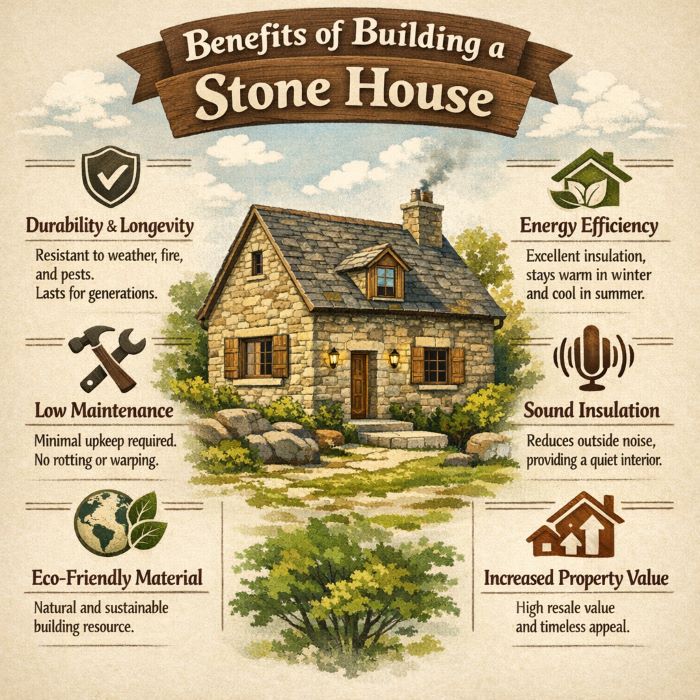
<p>Stone is one of the most robust building materials available. Unlike wood or brick, it’s resistant to weather extremes, fire, and pests. Whether you live in a region prone to hurricanes or termites, a stone <a href="https://comeawayhome.co.uk/what-is-a-guesthouse/">house</a> provides peace of mind knowing your home is built to endure.</p>
<h3 id="-2-energy-efficiency-"><strong>2. Energy Efficiency</strong></h3>
<p>Stone possesses excellent thermal mass, meaning it naturally regulates indoor temperatures. During hot summers, stone walls keep the interiors cool, while in winter, they retain warmth. This can save you <strong>20-30% on energy bills</strong> annually compared to homes made of less insulating materials.</p>
<h3 id="-3-timeless-aesthetic-appeal-"><strong>3. Timeless Aesthetic Appeal</strong></h3>
<p>Stone offers unparalleled versatility in design. Whether you’re after the rustic charm of a countryside cottage or the sleek sophistication of a modern minimalist home, stone adapts beautifully. Its natural textures and colors add character, making your home stand out.</p>
<h3 id="-4-increased-property-value-"><strong>4. Increased Property Value</strong></h3>
<p>Investing in a stone house pays off. Homes constructed with natural materials like stone tend to have a higher resale value, with some estimates showing an <strong>ROI up to 15% higher</strong> than traditional homes. Buyers are willing to pay a premium for the durability and luxury associated with stone construction.</p>
<blockquote><p><strong>Expert Insight:</strong> “Stone provides unmatched longevity and aesthetic value, making it a top choice for homeowners seeking lasting quality,” says a leading masonry professional.</p></blockquote>
<h2 id="types-of-stone-for-house-construction">Types of Stone for House Construction</h2>
<p>When <strong>building a stone house</strong>, the type of stone you choose significantly affects the cost, appearance, and durability of your home. Let’s explore the most popular options:</p>
<table>
<thead>
<tr>
<th><strong>Stone Type</strong></th>
<th><strong>Best For</strong></th>
<th><strong>Cost per Sq Ft</strong></th>
<th><strong>Pros</strong></th>
<th><strong>Cons</strong></th>
</tr>
</thead>
<tbody>
<tr>
<td>Limestone</td>
<td>Exteriors, accents</td>
<td>$10-20</td>
<td>Soft texture, easy to cut</td>
<td>Porous, requires sealing</td>
</tr>
<tr>
<td>Granite</td>
<td>Load-bearing walls</td>
<td>$15-30</td>
<td>Extremely hard, polished look</td>
<td>Heavy, expensive to transport</td>
</tr>
<tr>
<td>Sandstone</td>
<td>Facades, interiors</td>
<td>$8-18</td>
<td>Warm tones, lightweight</td>
<td>Softer, erodes faster</td>
</tr>
<tr>
<td>Fieldstone</td>
<td>Rustic builds</td>
<td>$5-15</td>
<td>Natural, affordable</td>
<td>Irregular shapes, harder to work with</td>
</tr>
</tbody>
</table>
<h3 id="-choosing-local-stone-"><strong>Choosing Local Stone</strong></h3>
<p>Sourcing stone locally not only reduces transportation costs but also ensures your home blends seamlessly with the natural surroundings. Check with local suppliers or quarries to find the best deals.</p>
<h2 id="step-by-step-guide-to-building-a-stone-house">Step-by-Step Guide to Building a Stone House</h2>
<p>Building a stone house is a meticulous but rewarding process. Here’s a detailed guide to help you understand the core steps:</p>
<h3 id="-1-planning-permits-"><strong>1. Planning & Permits</strong></h3>
<p>Before starting, assess your site and budget. On average, construction costs range from <strong>$200-$400 per square foot</strong>. Consult an architect experienced in stone masonry and secure necessary permits. This is also the stage to finalize your design and material choices.</p>
<h3 id="-2-foundation-preparation-"><strong>2. Foundation Preparation</strong></h3>
<p>Every sturdy home begins with a strong foundation. Excavate the site and pour a reinforced concrete base to support the weight of the stone walls. Proper drainage is crucial to prevent water damage over time.</p>
<h3 id="-3-stone-selection-tools-"><strong>3. Stone Selection & Tools</strong></h3>
<p>Decide between mortar-based or dry-stack construction. Dry-stack offers a rustic, mortar-free look but requires precise placement. Essential tools include trowels, levels, and chisels for cutting and shaping stones.</p>
<h3 id="-4-wall-construction-"><strong>4. Wall Construction</strong></h3>
<p>Lay stones in horizontal layers, also known as courses. For added stability, incorporate rebar or metal ties between layers. Mortar ensures a secure bond between stones, while pointing (refining the mortar joints) adds a polished finish.</p>
<h3 id="-5-roofing-openings-"><strong>5. Roofing & Openings</strong></h3>
<p>Wooden trusses are commonly used for stone house roofs. Pay close attention to lintels (horizontal supports) above doors and windows to ensure structural integrity.</p>
<h3 id="-6-finishing-touches-"><strong>6. Finishing Touches</strong></h3>
<p>Seal the stone to protect it from moisture and add insulation to improve energy efficiency. Consider integrating modern features like solar panels or underfloor heating for a sustainable touch.</p>
<blockquote><p><strong>Pro Tip:</strong> Build in stages and allow time for the mortar to cure properly. Rushing can compromise the structure’s stability.</p></blockquote>
<h2 id="stone-house-designs-and-styles">Stone House Designs and Styles</h2>
<p>Stone houses aren’t one-size-fits-all. Here are some popular styles to inspire your dream home:</p>
<h3 id="-1-traditional-cottage-"><strong>1. Traditional Cottage</strong></h3>
<p>Picture a quaint stone cottage nestled in the countryside. Fieldstone is often used for its natural, uneven texture, paired with steep roofs and wooden doors.</p>
<h3 id="-2-modern-minimalist-"><strong>2. Modern Minimalist</strong></h3>
<p>For a sleek, contemporary look, opt for smooth granite slabs. Pair them with large glass windows and minimalist landscaping to emphasize simplicity.</p>
<h3 id="-3-hybrid-designs-"><strong>3. Hybrid Designs</strong></h3>
<p>Combine materials like stone and timber for a unique aesthetic. A stone base provides durability, while an upper timber level adds warmth and contrast.</p>
<h2 id="cost-breakdown-for-building-a-stone-house">Cost Breakdown for Building a Stone House</h2>
<p>Here’s a realistic cost breakdown for constructing a <strong>2,000 sq ft stone house</strong> in 2026:</p>
<table>
<thead>
<tr>
<th><strong>Category</strong></th>
<th><strong>Estimated Cost</strong></th>
<th><strong>% of Total</strong></th>
</tr>
</thead>
<tbody>
<tr>
<td>Materials (stone, mortar)</td>
<td>$80,000-$150,000</td>
<td>40%</td>
</tr>
<tr>
<td>Labor</td>
<td>$100,000-$200,000</td>
<td>50%</td>
</tr>
<tr>
<td>Foundation/Roof</td>
<td>$30,000-$50,000</td>
<td>10%</td>
</tr>
<tr>
<td>Permits/Design</td>
<td>$10,000-$20,000</td>
<td>5%</td>
</tr>
</tbody>
</table>
<p><strong>Total Cost:</strong> $220,000-$420,000.</p>
<blockquote><p><strong>Savings Tip:</strong> Use reclaimed stone or DIY stone veneers to cut costs without sacrificing quality.</p></blockquote>
<h2 id="diy-vs-professional-building-a-stone-house">DIY vs. Professional: Building a Stone House</h2>
<h3 id="-diy-advantages-"><strong>DIY Advantages</strong></h3>
<ul>
<li>Significant cost savings (30-50%).</li>
<li>Creative freedom to personalize the design.</li>
</ul>
<h3 id="-professional-advantages-"><strong>Professional Advantages</strong></h3>
<ul>
<li>Ensures structural safety and compliance with local regulations.</li>
<li>Faster completion times.</li>
</ul>
<p><strong>Important:</strong> Full stone houses require professional masons due to the complexity and weight of the materials. DIY is best suited for decorative veneers.</p>
<h2 id="maintenance-and-sustainability">Maintenance and Sustainability</h2>
<p>Stone houses require minimal upkeep. Annual sealing and periodic inspections for cracks are usually sufficient. Plus, stone is a sustainable choice—it’s recyclable, has low embodied energy, and aligns with <strong>green building trends</strong>.</p>
<h2 id="common-mistakes-to-avoid">Common Mistakes to Avoid</h2>
<ol>
<li>Ignoring proper drainage, which can lead to cracks.</li>
<li>Skipping reinforcement in load-bearing walls.</li>
<li>Overlooking insulation, resulting in energy inefficiency.</li>
</ol>
<h2 id="faqs">FAQs</h2>
<h3 id="-how-much-does-building-a-stone-house-cost-"><strong>How much does building a stone house cost?</strong></h3>
<p>On average, $200-$400 per square foot, depending on location and materials.</p>
<h3 id="-can-i-build-a-stone-house-myself-"><strong>Can I build a stone house myself?</strong></h3>
<p>You can DIY decorative features, but full construction requires expertise.</p>
<h3 id="-is-building-a-stone-house-worth-it-"><strong>Is building a stone house worth it?</strong></h3>
<p>Yes, for its durability, energy efficiency, and long-term value.</p>
<h3 id="-what-s-the-best-stone-for-a-stone-house-"><strong>What’s the best stone for a stone house?</strong></h3>
<p>Local granite for durability or fieldstone for an affordable rustic look.</p>
<h2 id="conclusion">Conclusion</h2>
<p>Building a stone house is a rewarding journey toward creating a sustainable, timeless, and energy-efficient home. With proper planning, the right materials, and expert guidance, you can enjoy a structure that stands the test of time. <strong>Ready to begin? Download our free stone house planner or contact local experts today!</strong></p>
<p><a href="https://comeawayhome.co.uk/">House</a></p>
Dreaming of building a stone house that stands for centuries? Stone homes have captivated homeowners for generations with their timeless beauty, unmatched durability, and eco-friendly benefits. In 2026, the trend of building a stone house is making a major comeback, appealing to those seeking a sustainable, energy-efficient, and luxurious dream home.
Stone houses are more than just structures; they’re an investment in longevity and elegance. Their naturally insulating properties reduce energy bills while the materials’ resilience ensures minimal maintenance. Plus, with a wide range of stone options available, you can tailor the design to match your aesthetic preferences—be it rustic, modern, or somewhere in between.
In this guide, we’ll walk you through everything you need to know about building a stone house. From understanding the benefits and selecting materials to exploring designs, calculating costs, and deciding between DIY and professional construction—this article covers it all. By the end, you’ll be equipped with the knowledge to turn your vision into reality.
Did you know? A well-constructed stone house can last over 100 years with proper care, creating a legacy for generations! Let’s dive in.
Benefits of Building a Stone House
1. Superior Durability
Stone is one of the most robust building materials available. Unlike wood or brick, it’s resistant to weather extremes, fire, and pests. Whether you live in a region prone to hurricanes or termites, a stone house provides peace of mind knowing your home is built to endure.
2. Energy Efficiency
Stone possesses excellent thermal mass, meaning it naturally regulates indoor temperatures. During hot summers, stone walls keep the interiors cool, while in winter, they retain warmth. This can save you 20-30% on energy bills annually compared to homes made of less insulating materials.
3. Timeless Aesthetic Appeal
Stone offers unparalleled versatility in design. Whether you’re after the rustic charm of a countryside cottage or the sleek sophistication of a modern minimalist home, stone adapts beautifully. Its natural textures and colors add character, making your home stand out.
4. Increased Property Value
Investing in a stone house pays off. Homes constructed with natural materials like stone tend to have a higher resale value, with some estimates showing an ROI up to 15% higher than traditional homes. Buyers are willing to pay a premium for the durability and luxury associated with stone construction.
Expert Insight: “Stone provides unmatched longevity and aesthetic value, making it a top choice for homeowners seeking lasting quality,” says a leading masonry professional.
Types of Stone for House Construction
When building a stone house, the type of stone you choose significantly affects the cost, appearance, and durability of your home. Let’s explore the most popular options:
| Stone Type |
Best For |
Cost per Sq Ft |
Pros |
Cons |
| Limestone |
Exteriors, accents |
$10-20 |
Soft texture, easy to cut |
Porous, requires sealing |
| Granite |
Load-bearing walls |
$15-30 |
Extremely hard, polished look |
Heavy, expensive to transport |
| Sandstone |
Facades, interiors |
$8-18 |
Warm tones, lightweight |
Softer, erodes faster |
| Fieldstone |
Rustic builds |
$5-15 |
Natural, affordable |
Irregular shapes, harder to work with |
Choosing Local Stone
Sourcing stone locally not only reduces transportation costs but also ensures your home blends seamlessly with the natural surroundings. Check with local suppliers or quarries to find the best deals.
Step-by-Step Guide to Building a Stone House
Building a stone house is a meticulous but rewarding process. Here’s a detailed guide to help you understand the core steps:
1. Planning & Permits
Before starting, assess your site and budget. On average, construction costs range from $200-$400 per square foot. Consult an architect experienced in stone masonry and secure necessary permits. This is also the stage to finalize your design and material choices.
2. Foundation Preparation
Every sturdy home begins with a strong foundation. Excavate the site and pour a reinforced concrete base to support the weight of the stone walls. Proper drainage is crucial to prevent water damage over time.
Decide between mortar-based or dry-stack construction. Dry-stack offers a rustic, mortar-free look but requires precise placement. Essential tools include trowels, levels, and chisels for cutting and shaping stones.
4. Wall Construction
Lay stones in horizontal layers, also known as courses. For added stability, incorporate rebar or metal ties between layers. Mortar ensures a secure bond between stones, while pointing (refining the mortar joints) adds a polished finish.
5. Roofing & Openings
Wooden trusses are commonly used for stone house roofs. Pay close attention to lintels (horizontal supports) above doors and windows to ensure structural integrity.
6. Finishing Touches
Seal the stone to protect it from moisture and add insulation to improve energy efficiency. Consider integrating modern features like solar panels or underfloor heating for a sustainable touch.
Pro Tip: Build in stages and allow time for the mortar to cure properly. Rushing can compromise the structure’s stability.
Stone House Designs and Styles
Stone houses aren’t one-size-fits-all. Here are some popular styles to inspire your dream home:
1. Traditional Cottage
Picture a quaint stone cottage nestled in the countryside. Fieldstone is often used for its natural, uneven texture, paired with steep roofs and wooden doors.
2. Modern Minimalist
For a sleek, contemporary look, opt for smooth granite slabs. Pair them with large glass windows and minimalist landscaping to emphasize simplicity.
3. Hybrid Designs
Combine materials like stone and timber for a unique aesthetic. A stone base provides durability, while an upper timber level adds warmth and contrast.
Cost Breakdown for Building a Stone House
Here’s a realistic cost breakdown for constructing a 2,000 sq ft stone house in 2026:
| Category |
Estimated Cost |
% of Total |
| Materials (stone, mortar) |
$80,000-$150,000 |
40% |
| Labor |
$100,000-$200,000 |
50% |
| Foundation/Roof |
$30,000-$50,000 |
10% |
| Permits/Design |
$10,000-$20,000 |
5% |
Total Cost: $220,000-$420,000.
Savings Tip: Use reclaimed stone or DIY stone veneers to cut costs without sacrificing quality.
DIY vs. Professional: Building a Stone House
DIY Advantages
- Significant cost savings (30-50%).
- Creative freedom to personalize the design.
Professional Advantages
- Ensures structural safety and compliance with local regulations.
- Faster completion times.
Important: Full stone houses require professional masons due to the complexity and weight of the materials. DIY is best suited for decorative veneers.
Maintenance and Sustainability
Stone houses require minimal upkeep. Annual sealing and periodic inspections for cracks are usually sufficient. Plus, stone is a sustainable choice—it’s recyclable, has low embodied energy, and aligns with green building trends.
Common Mistakes to Avoid
- Ignoring proper drainage, which can lead to cracks.
- Skipping reinforcement in load-bearing walls.
- Overlooking insulation, resulting in energy inefficiency.
FAQs
How much does building a stone house cost?
On average, $200-$400 per square foot, depending on location and materials.
Can I build a stone house myself?
You can DIY decorative features, but full construction requires expertise.
Is building a stone house worth it?
Yes, for its durability, energy efficiency, and long-term value.
What’s the best stone for a stone house?
Local granite for durability or fieldstone for an affordable rustic look.
Conclusion
Building a stone house is a rewarding journey toward creating a sustainable, timeless, and energy-efficient home. With proper planning, the right materials, and expert guidance, you can enjoy a structure that stands the test of time. Ready to begin? Download our free stone house planner or contact local experts today!
House