
Are you tired of those annoying tiny black gnats swarming around your kitchen or houseplants? They seem to appear out of nowhere, buzzing around fruit bowls, windows, and even your favorite houseplants. If you’re wondering how to get rid of gnats in house, you’ve come to the right place.
Gnats may be small, but they can quickly become a big nuisance, especially when you’re dealing with fungus gnats in houseplant soil or fruit gnats in your kitchen. The good news? You don’t have to live with them forever. In this comprehensive guide, we’ll explore 15 proven methods to eliminate gnats permanently. From quick DIY traps to long-term prevention tips, you’ll find everything you need to reclaim your home from these pesky intruders.
Let’s dive into the details and discover how to make your home gnat-free for good.
What Are Gnats?
Before we tackle the solutions, it’s essential to understand what gnats are, why they invade our homes, and what makes them thrive.
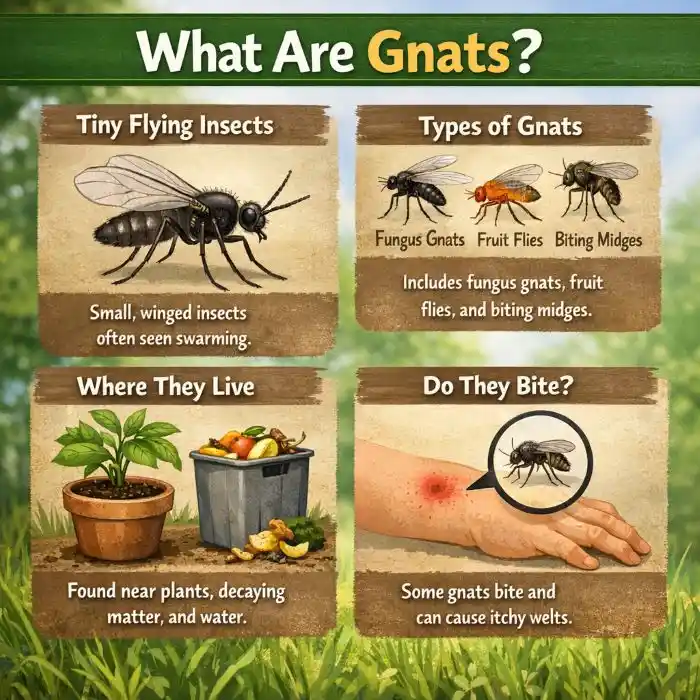
Types of Gnats You Might Encounter
Gnats are small flying insects, typically only 1/8-inch in size. While there are several types of gnats, the most common ones found indoors include:
- Fungus Gnats: These pests are often found around houseplants. Their larvae live in moist soil and can damage plant roots.
- Fruit Gnats (Fruit Flies): Attracted to overripe fruits and decaying organic matter, these gnats are commonly spotted in kitchens.
- Drain Gnats: These gnats breed in the organic buildup inside drains and pipes, leading to swarms in bathrooms and kitchens.
Gnat Lifecycle
Understanding their lifecycle can help you break it at key stages. Here’s a quick breakdown:
- Eggs are laid in moist soil or decaying matter.
- Eggs hatch into larvae, which feed on organic material.
- Larvae mature into pupae, and then into adult gnats.
- The entire lifecycle lasts about 2-4 weeks, making them reproduce quickly.
Why Gnats Invade Homes
Gnats are attracted to:
- Moist environments like overwatered plants or damp basements.
- Decaying organic matter such as rotting fruit or compost.
- Warm humidity, which provides the perfect conditions for breeding.
By identifying the type of gnat and the conditions they thrive in, you’ll be better prepared to tackle the problem.
Signs of a Gnat Infestation
How do you know if you have a gnat infestation? Here are some telltale signs to look out for:
- Swarms of small black flies: You’ll often notice them near houseplants, fruit bowls, windows, or kitchen drains.
- Larvae in houseplant soil: If you see tiny white worms wriggling in the soil of your plants, they’re likely gnat larvae.
- Wilting houseplants: Fungus gnats feed on plant roots, which can cause your plants to weaken or wilt.
- Musty odors: Drain gnats thrive in clogged sinks, leading to unpleasant smells.
If you notice any of these signs, it’s time to take action and learn how to get rid of gnats in house.
Top Causes of Gnats in the House
Gnats don’t just appear out of the blue—they’re drawn to specific conditions. Here’s a table summarizing the common causes and how to prevent them:
| Cause | Description | Prevention Tip |
|---|---|---|
| Overwatered Houseplants | Fungus gnats lay eggs in moist soil. | Water plants only when the soil is dry. |
| Rotting Fruits or Garbage | Fruit gnats are drawn to decaying organic matter. | Store fruit in the fridge; empty bins daily. |
| Clogged Drains | Organic buildup in sinks attracts drain gnats. | Clean drains with boiling water weekly. |
| Compost-Rich Soil | Fertile soil can attract fungus gnats. | Use sterile potting soil for plants. |
| Humid Basements | Gnats thrive in humid, stagnant conditions. | Use a dehumidifier to reduce moisture. |
By addressing these causes, you can stop the problem before it starts.
How to Get Rid of Gnats in House: Adult Traps
The first step to removing gnats is targeting the adults. Luckily, there are several effective traps you can make or buy to capture and kill adult gnats.
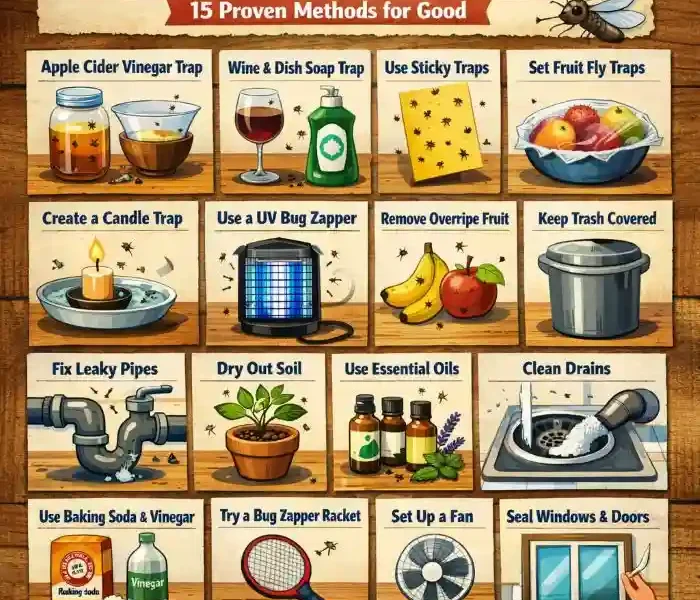
DIY Apple Cider Vinegar Trap
This is one of the most popular and effective ways to catch gnats.
- What You Need: A jar, apple cider vinegar, dish soap, and plastic wrap.
- How to Set It Up: Fill a jar with vinegar and a few drops of dish soap. Cover the jar with plastic wrap and poke holes in it. Gnats are attracted to the vinegar, but the dish soap breaks the surface tension, trapping them.
Yellow Sticky Traps
- DIY or Buy: Create your own sticky traps by cutting yellow cards and coating them with petroleum jelly, or purchase pre-made ones.
- Placement: Place these traps near plants, windows, or anywhere you spot gnats. The yellow color attracts them, and they stick to the surface.
Wine or Fruit Traps
- Repurpose Leftovers: Use overripe fruit or leftover wine in a bottle as bait. Gnats are drawn to the sweetness and get trapped inside.
Pro Tips for Success
- Refresh traps every 1-2 weeks to maintain effectiveness.
- Combine multiple traps for higher success rates.
Killing Gnat Larvae in Soil
Adult gnats are only part of the problem—the real issue often lies in the larvae. Here are some proven methods to kill gnat larvae in houseplant soil:
Let Soil Dry Out
Fungus gnats thrive in moist soil. Allow the top 2-3 inches of your plant soil to dry out before watering again. This will kill larvae and discourage adults from laying eggs.
Hydrogen Peroxide Solution
Mix 1 part hydrogen peroxide with 4 parts water and pour it into the soil. The solution kills larvae on contact without harming plants.
Sand or Gravel Topper
Cover the top layer of soil with 1/4 inch of sand or gravel. This creates a barrier that prevents adult gnats from laying eggs.
Beneficial Nematodes
These microscopic worms feed on gnat larvae in the soil. They’re safe for plants and can be purchased online or at garden centers.
Potato Trap
Place slices of raw potato on the soil surface. Larvae are attracted to the potato and can be removed when you replace the slices daily.
Here’s a quick comparison of these methods:
| Method | Cost | Effectiveness | Time to Results |
|---|---|---|---|
| Soil Dry-Out | Free | High | 3-7 days |
| Hydrogen Peroxide | $2 | Medium-High | 1 week |
| Sand Layer | $5 | High | Ongoing |
Drain and Kitchen Fixes
Gnats are often found in kitchens and drains. Here’s how to eliminate them in these areas:
Clean Drains
- Pour boiling water down the drain to kill any larvae.
- Use a mixture of baking soda and vinegar to break down organic buildup.
Keep the Kitchen Spotless
- Store fruits in the fridge.
- Empty garbage bins daily and keep them clean.
- Wash recyclables like bottles and cans before storing them.
By targeting these breeding grounds, you’ll significantly reduce gnat populations.
Prevention: Keep Gnats Out for Good
The best way to deal with gnats is to prevent them entirely. Here are some habits to adopt:
- Avoid overwatering houseplants.
- Use sterile potting soil.
- Bottom-water plants to keep the topsoil dry.
- Clean drains regularly.
- Store fruits and vegetables in the refrigerator.
- Empty trash cans daily.
- Use a dehumidifier in humid areas.
- Ensure proper ventilation in your home.
- Seal cracks and windows to keep gnats out.
- Be vigilant during humid seasons.
When to Call a Professional
If you’ve tried everything and gnats are still swarming, it may be time to call a pest control professional. This is especially true if:
- The infestation is severe and persistent.
- Your plants or home structure are being damaged.
FAQ
How long does it take to get rid of gnats?
With consistent effort, you can eliminate gnats in 1-2 weeks.
Are gnats harmful?
While they’re mostly a nuisance, fungus gnat larvae can harm plant roots.
Do natural remedies work?
Yes, natural methods like vinegar traps and soil drying are effective and safe for homes with pets or kids.
Conclusion
Gnats don’t have to take over your home. By understanding their habits and lifecycle, implementing traps, and taking preventive measures, you’ll master how to get rid of gnats in house. Start today with these proven methods and enjoy a gnat-free home. Have questions or success stories? Share them in the comments below!