
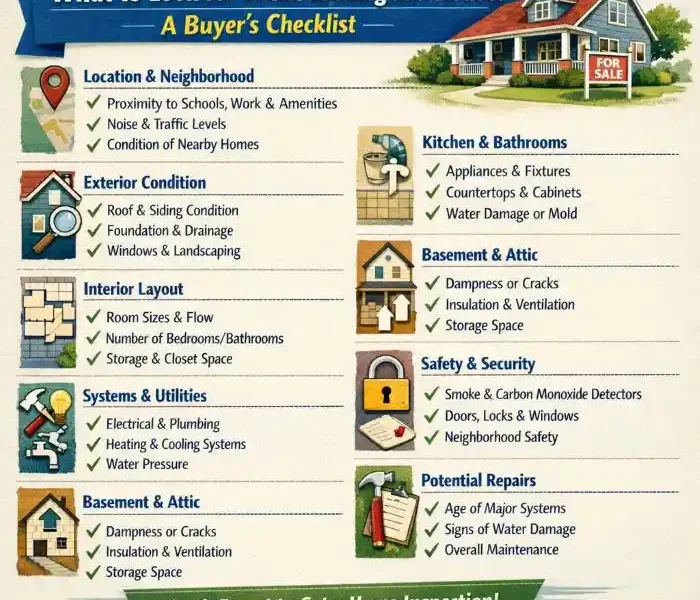
Buying a home can feel exciting, emotional, and a little overwhelming all at once. You walk into a house, picture your life there, and suddenly it is easy to overlook the small warning signs. That is exactly why knowing what to look for when looking at a house matters so much. A beautiful kitchen or a freshly painted wall can distract you from bigger issues like poor drainage, hidden water damage, or a layout that will frustrate you every single day.
This guide is here to help you slow down, look more carefully, and make a smarter decision. Whether you are a first-time buyer, moving up to a bigger home, investing in property, or simply touring homes for the first time, this article will give you a clear and practical house viewing checklist.
We will walk through everything step by step: the neighborhood, the outside of the home, the layout, the kitchen, bathrooms, hidden areas, safety features, legal details, and the red flags that can save you from costly mistakes. By the end, you will know how to walk into a house with confidence and ask the right questions.
Before You Even Step Inside
Before you focus on countertops, flooring, or paint colors, take a step back and prepare yourself. A good house viewing starts before you arrive. If you show up without a plan, it becomes very easy to get caught up in the mood of the home and miss the details that matter most.
Define your budget and priorities
Start with the basics. Know your maximum budget, your down payment, and whether you already have mortgage pre-approval. This gives you a clear boundary and helps you avoid wasting time on homes that do not fit your finances.
Then think about your priorities. Ask yourself what matters most to you right now. Is it a short commute? A good school district? More bedrooms? A larger yard? A home that will be easy to resell later? When you know your top priorities, it becomes much easier to judge a property fairly.
It also helps to separate must-haves from nice-to-haves. A big kitchen island may be nice, but if the home has poor water pressure or a roof that needs immediate replacement, that is a much bigger issue. Your priorities should guide your attention from the very beginning.
Research the neighborhood
A house can be renovated, but the neighborhood is much harder to change. That is why location is one of the most important parts of your decision.
Look into safety, schools, traffic, parking, nearby shops, hospitals, parks, and public transportation. Visit the area at different times of day if you can. A neighborhood that feels quiet in the morning may be noisy at night. A street that looks calm on a weekday may be very busy on weekends.
Also pay attention to the general condition of nearby homes. If many houses are poorly maintained, that can affect your long-term experience and even future property value. On the other hand, a well-kept neighborhood often suggests pride of ownership and a more stable environment.
Understand the local market
You should also take time to understand the real estate market where you are buying. Are prices rising quickly? Are homes selling in a few days, or are they sitting on the market for months? This matters because it affects how fast you need to act and how much room you may have to negotiate.
A competitive market may mean you need to move quickly, but that should never make you careless. Even in a hot market, you still need to inspect carefully and think clearly. A rushed purchase can turn into an expensive mistake.
Prepare your house-viewing checklist
Before the viewing, bring a simple checklist with you. You can use a printed page, a note on your phone, or a digital form. Bring a flashlight, a tape measure, and your phone camera. These simple tools help you check details more thoroughly.
A few helpful things to bring:
- Flashlight
- Tape measure
- Notebook or phone notes
- Camera or phone for photos
- List of questions
- A copy of your checklist
What to Look for When Looking at a House: Location & Lot
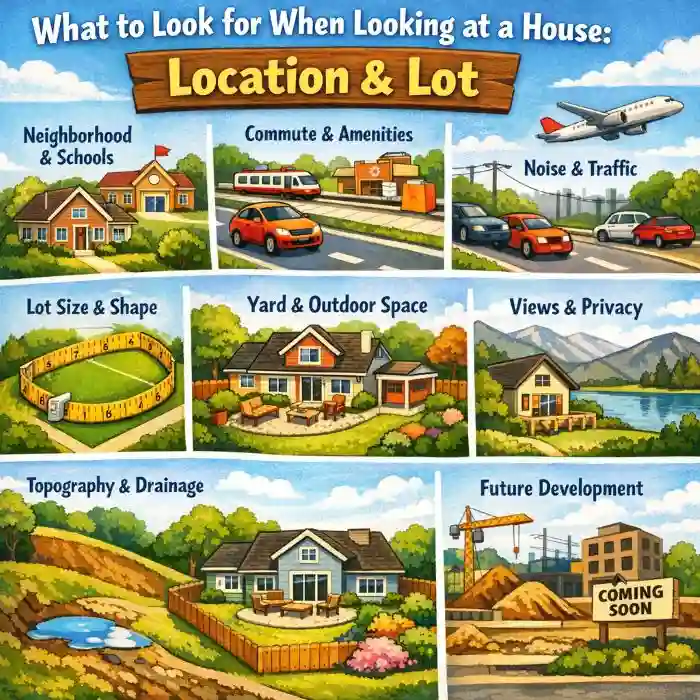
When people ask what to look for when looking at a house, they often think only about the inside. But the land the house sits on is just as important. The lot, the neighborhood, and the surroundings can strongly affect your comfort, your costs, and your future resale value.
Neighborhood safety and vibe
Do not just look at the house from the driveway. Walk around the block. Look at the homes nearby. Are yards maintained? Are the sidewalks clean? Is there a lot of noise from traffic, barking dogs, or nearby businesses?
Try to visit at more than one time of day if possible. A street can feel very different in the morning, afternoon, and evening. At night, you will notice lighting, traffic, and general activity more clearly. This helps you get a real sense of what life there would feel like.
Safety is not only about crime statistics. It is also about whether the area feels comfortable to live in. Trust your instincts, but back them up with facts and observation.
Access and commute
Even if the house looks perfect, a difficult commute can wear you down fast. Test the drive to work, school, or the places you visit most often. If you rely on public transportation, check how close the nearest stops are and how reliable the routes seem.
Also think about daily convenience. Can you easily reach grocery stores, gas stations, clinics, and other basic services? A home may seem peaceful because it is tucked away, but if every errand becomes a long drive, it may not fit your lifestyle.
Outdoor space and lot condition
A lot can tell you a lot about a property. Look at the slope of the yard. Does water drain away from the house, or does it collect near the foundation? Water pooling is a warning sign you should not ignore.
Check whether the yard is flat, sloped, fenced, private, or exposed. If you have children, pets, or gardening plans, the outdoor layout matters a great deal. You should also watch for signs of flooding, muddy areas, cracked paths, or areas where the ground seems to sink.
The yard should be usable, but it should also be manageable. A large lot can be lovely, but it also means more maintenance.
Future development risks
A quiet street today may not stay that way forever. Ask whether there are any planned developments nearby. New roads, apartment buildings, industrial sites, schools, or shopping centers can all change the feel of an area.
Sometimes future development is positive. Sometimes it creates more traffic, more noise, or more congestion. If you are buying for long-term comfort, you need to know what may happen around you over time.
Exterior Inspection – What to Look For
The outside of a house is often where hidden problems first show up. A careful exterior inspection can save you from major repair bills later. Do not rush this part. Walk slowly around the entire home and really look.
Roof condition and age
The roof is one of the most expensive parts of a house to repair or replace. That is why it deserves close attention.
Look for missing shingles, curled edges, cracked tiles, sagging areas, or dark patches. These can all suggest aging or damage. If you can see the roof clearly from the ground, pay attention to how even it looks. A roof that appears uneven may have deeper issues.
Ask how old the roof is and whether it has ever been replaced. If the seller says it was recently done, ask about the warranty and who completed the work. A newer roof can be a huge benefit, while an older one may mean a large expense in the near future.
Walls, siding, and foundation
Walk around the house and examine the walls carefully. Look for cracks, bulges, gaps, water stains, or areas where the siding seems loose. On brick homes, check whether the brickwork is even and whether there are visible signs of movement or settling.
The foundation deserves special attention. Small hairline cracks are not always a problem, but wider cracks, horizontal cracks, or cracks paired with sloping floors can signal structural concerns. If anything looks off, it is worth asking more questions.
You are looking for signs that the home is standing strong and dry. Water damage, movement, and poor repairs often show up outside before they become obvious inside.
Windows and doors
Windows and doors tell you a lot about the condition of a home. Open and close them if possible. Do they move smoothly? Do they lock properly? Are there drafts or gaps around the frames?
Also check for condensation between panes of glass. That can mean the seal has failed. Broken seals can reduce energy efficiency and may point to aging windows. If several windows are difficult to use, that may suggest settling or poor installation.
Doors should line up properly and close without sticking. If they do not, the house may have movement issues or frame problems.
Driveway, pathways, and garage
Look at the driveway and paths leading to the house. Cracks, uneven surfaces, and standing water can all create problems later. They may also reveal drainage issues.
If there is a garage, test whether your car fits comfortably. Check the height, width, storage space, and whether the garage door opens and closes smoothly. If you have a larger vehicle, do not assume it will fit just because the garage exists.
Also pay attention to the condition of the garage floor and walls. Moisture, stains, or shifting concrete can be warning signs.
Landscaping and drainage
Landscaping is more than decoration. It can affect drainage and maintenance. Trees that are too close to the house may damage foundations or roofs over time. Shrubs packed tightly against the walls can trap moisture.
Check where the gutters drain. Water should flow away from the home, not toward it. If the yard seems too flat or slopes toward the building, that can create trouble during heavy rain.
Living Space & Layout – First Impression Check
Once you step inside, it is easy to fall in love with style. But style is not the same as function. A beautiful home that does not work for your daily life can become frustrating very quickly. This is why you need to think about layout, flow, and comfort.
Entryway and flow
The entryway gives you your first real sense of the home. Is it welcoming? Is there enough room to come in with bags, shoes, coats, or children in tow? Or does it feel cramped right away?
Then look at the flow of the house. Can you move from one room to another easily? Does the layout feel natural? Or do you have to walk through awkward spaces to get where you need to go?
A good layout should support your daily life, not fight against it. You should be able to imagine how you would live there on a normal day.
Living room and main gathering areas
The living room is often where people spend a lot of time, so it should feel comfortable and practical. Look at the natural light. Is it bright during the day, or does it feel dark and closed in?
Check how many outlets are available and where they are placed. Think about where your TV, lamps, speakers, and chargers might go. Also notice whether the room feels noisy. Street sound, neighbor noise, or poor window insulation can affect your comfort more than you expect.
Views matter too. Look out the windows and think about what you see every day. A peaceful view can add a lot to your daily experience, while a blank wall or busy road may not feel as pleasant.
Bedrooms and privacy
Bedrooms should feel restful, private, and large enough for your needs. Measure them if necessary, especially if you have larger furniture. A room can look big in photos and still feel tight once a bed, dresser, and nightstands are inside.
Think about bedroom placement too. Are the main bedrooms separated enough from noisy areas like the living room or kitchen? If you have children, guests, or roommates, privacy becomes even more important.
A good bedroom should give you quiet and comfort, not just a place to sleep.
Storage and closets
Storage is one of the most overlooked parts of a house viewing. People often think they can “make it work,” but not having enough storage quickly becomes a problem.
Check every closet. Open the doors. Look at the depth and height. Ask whether there is attic storage, basement storage, a pantry, a linen closet, or built-in shelving. If you have seasonal items, sports gear, tools, or family belongings, you need to know where everything will go.
Storage affects how organized and livable a house feels every day.
Flooring and finishes
Look down as well as around. Floors should be level, solid, and free of obvious damage. Watch for stains, soft spots, squeaks, or uneven areas. These may point to old water damage, weak subfloors, or wear and tear.
Finishes matter, but they should not distract you from structure. Outdated carpet or old tile can be changed later. Problems underneath the floor are much more serious.
Kitchen – The Heart of the Home
The kitchen is one of the most important rooms in the house. It is where people cook, gather, talk, and often spend more time than they expect. A pretty kitchen is nice, but you need one that works well too.
Layout and workflow
A good kitchen should feel easy to use. Think about how you move while cooking. Can you go from fridge to counter to stove without awkward steps? Is there enough space to prep food, set things down, and move around safely?
This is often called the work triangle, and it matters because it helps the kitchen function well. If the stove, sink, and fridge are placed badly, even a large kitchen can feel annoying to use.
Also check whether there is enough room for more than one person. If you like to cook with family or entertain guests, cramped space will become a problem.
Cabinets and countertops
Open the cabinets and drawers. Do they feel sturdy? Are the hinges loose? Are the shelves deep enough for your dishes, pots, and pantry items? It is easy to focus on the look of the cabinets and forget to check whether they actually work.
Inspect the countertops too. Look for cracks, chips, stains, swelling, or signs of water damage around the sink. Countertops can be replaced, but if they are already worn out, that is another future cost to think about.
Appliances
Find out whether appliances are included in the sale. Do not assume they are. Ask the age and condition of the stove, refrigerator, dishwasher, washer, and dryer if they are part of the deal.
Older appliances may still work, but they may also cost more to run and may need replacing sooner. If energy efficiency matters to you, this is a good time to ask questions. An older oven or fridge can affect your monthly bills more than many buyers realize.
Plumbing and ventilation
Turn on the faucets and check the water pressure. Test both hot and cold water. Slow pressure or uneven temperature can point to plumbing issues.
Look under the sink for leaks, stains, or damp smells. Check whether the sink cabinet is swollen or damaged. Also inspect ventilation above the stove. A good range hood helps remove smoke, heat, and moisture. Without proper ventilation, the kitchen can become uncomfortable and may develop odors or moisture problems.
Lighting and outlets
A kitchen should be bright and practical. Make sure there is enough light for food preparation. Overhead lighting, task lighting, and natural light all matter.
Also look for outlets in convenient places. Small appliances need easy access. Check for GFCI outlets near sinks and water sources. That is an important safety feature in any kitchen.
Bathrooms – Hidden Costs & Red Flags
Bathrooms may look clean at first glance, but they can hide expensive problems. Moisture, plumbing issues, and poor ventilation often show up here before anywhere else.
Functionality and condition
Start by testing everything. Flush toilets, run faucets, and turn on showers. Look for leaks, slow drains, weak water pressure, and strange noises.
Open vanities and inspect under sinks. Water damage here is common, and it can lead to bigger issues if ignored. The bathroom should feel dry, solid, and well maintained.
Ventilation and mold/mildew
Bathrooms need good ventilation. If they do not have windows or exhaust fans, moisture can build up quickly. That leads to mold, mildew, peeling paint, and musty odors.
Smell matters here. If a bathroom smells damp or stale, pay attention. Sometimes the smell is a clue that there is hidden moisture behind the walls or under the floor.
Vent pipes and plumbing issues
Listen carefully when toilets flush and sinks drain. Gurgling, bubbling, or slow drainage can suggest venting or plumbing problems.
Look at the grout, tiles, and floor around tubs and showers. Cracked grout and loose tiles can allow water to seep in over time. If the floor feels soft or warped, that can signal damage underneath.
Age and upgrade potential
Older bathrooms may still be fine, but they might need updates sooner than you expect. Ask yourself how much work you would need to do to make the space functional and comfortable.
If you plan to remodel, estimate the cost before you buy. A dated bathroom can be a good negotiating point, but only if you understand what it will cost to improve it.
What to Look for When Looking at a House – Structural & Safety Features
This is where careful observation really pays off. Structural and safety issues are not always obvious, but they matter more than cosmetic details. If you are serious about what to look for when looking at a house, this section should get your full attention.
Walls, ceilings, and floors
Walk through each room slowly and look at how the walls and ceilings meet. Do you see cracks? Is the ceiling sagging? Are there signs of stains or patches?
Also notice the floors. If they feel sloped or uneven, that may point to settling or structural movement. Doors and windows that stick or do not close correctly can also be a sign that the house has shifted.
Not every crack is a disaster, but patterns matter. Multiple issues together deserve closer inspection.
Stairs and railings
If the home has stairs, test them carefully. Do they feel solid? Do they squeak or wobble? Are the railings secure?
Safety on stairs is not optional. Stairs that feel unstable or poorly built may need immediate repair. You want to make sure they are easy and safe to use for everyone in the household.
Windows and natural light
Natural light affects how a home feels, but privacy matters too. Visit rooms at different times of day if you can. Morning light, afternoon light, and evening shadows can all change the feel of a space.
Check whether nearby buildings, fences, or trees block too much light. A room that seems bright in the afternoon may feel dark in the morning. It is worth checking this before you make a decision.
Heating, ventilation, and cooling
Ask about the age and maintenance history of the furnace, air conditioner, and ventilation system. These systems are expensive to replace and important for comfort.
Look at vents and registers. Are they clean? Does the airflow feel even? Are some rooms too hot or too cold? Uneven temperatures may point to ductwork or insulation problems.
A home that cannot heat and cool properly will cost more to live in, even if the purchase price looks attractive.
Electrical system
Check the number of outlets in each room and note whether they seem modern and safe. Flickering lights, old panels, or a lack of grounded outlets may be signs that electrical work is needed.
If you see an old or crowded electrical panel, ask questions. Electrical issues are not something to dismiss. They affect safety, insurance, and repair costs.
Safety features
Every home should have basic safety features. Look for smoke detectors, carbon monoxide detectors, and working locks on doors and windows. Fire extinguishers are also worth asking about.
Security features matter too. Cameras, alarms, and sturdy entry locks can add peace of mind. Even if you plan to upgrade later, it helps to know what is already there.
Basement, Attic, and Hidden Areas
Some of the biggest clues about a house appear in the places buyers least want to inspect. Basements, attics, utility rooms, and hidden corners often reveal the truth about moisture, insulation, repairs, and maintenance.
Basement inspection
Basements should be checked carefully. Look for dampness, mold, stains, peeling paint, or a musty smell. Water intrusion in a basement can create major long-term problems.
Examine the walls, floor, and visible support beams. Cracks or bowing walls need attention. If the basement has finished walls, look for signs of past patching or repairs that may hide earlier leaks.
If the basement is intended for living space, ceiling height and comfort matter too. A basement that feels cold, damp, or low may not be as useful as it first appears.
Attic and insulation
If you can access the attic, inspect it. Look for moisture, rodent droppings, damaged wood, or missing insulation. These issues may not seem dramatic, but they can affect energy bills and long-term comfort.
Good insulation helps the home stay warm in winter and cool in summer. Poor insulation means your heating and cooling system has to work harder. That can raise your bills and make the home less comfortable.
Utility rooms and mechanicals
Pay attention to the water heater, electrical panel, and other mechanical systems. Ask how old they are and whether they have had regular maintenance.
If pipes are visible, look for rust, corrosion, or leaks. Mechanical spaces may not be pretty, but they are important. They tell you how well the home has been cared for behind the scenes.
Evidence of past repairs or patches
Be careful when you see fresh paint, new drywall patches, or mismatched textures. These can be signs of a real repair, or they can be signs that something was covered up.
A repair is not automatically bad. In fact, it can be a good thing if the work was done properly. But if there are repeated patches in the same area, ask what happened there. The goal is to understand the history of the home, not just the final appearance.
Outdoor and Backyard Inspection
The outdoor areas of a house shape how you live just as much as the rooms inside. They also reveal a lot about maintenance and safety.
Yard usability and maintenance
Think about how you want to use the yard. Do you want space for children, pets, gardening, or entertaining? If so, the yard needs to be practical, not just attractive.
Look for flat areas, shade, privacy, and room to move around. Also check whether the yard seems easy to maintain. A beautiful yard can still become a burden if it is too large or overgrown for your lifestyle.
Fencing, patios, and decks
Inspect fences, patios, and decks carefully. Look for rotting wood, loose boards, rusted fasteners, or shaky railings. These features can be expensive to repair and important for safety.
If there is a deck attached to the home, make sure it looks secure and properly connected. Poorly built decks can become a serious hazard.
Pool, shed, or extra structures
If the house has a pool, ask about maintenance, insurance, safety, and operating costs. A pool can be enjoyable, but it also requires regular care and adds responsibility.
Sheds, workshops, and other outbuildings should also be checked for stability, leaks, and signs of wear. These spaces can be useful, but they should be safe and structurally sound.
What to Look for When Looking at a House – Legal & Financial Factors
A home can look perfect and still create financial trouble if the paperwork is not right. This is another reason why what to look for when looking at a house should go beyond the visual inspection.
Title and liens
Make sure the seller has a clear title and that there are no hidden liens or ownership issues. Problems in this area can delay or complicate your purchase.
If anything feels unclear, ask your real estate professional or legal advisor to explain it before you move forward. You want the transaction to be clean and simple.
Property taxes and HOA rules
Property taxes affect your monthly housing cost, so ask about the current tax amount and whether it may rise soon. A home may look affordable until taxes are added in.
If the property is part of a homeowners association, ask about fees, rules, and restrictions. Some HOAs are helpful and well-run. Others can limit what you do with your own property. You should know the rules before you buy.
Disclosures and known issues
Seller disclosure forms can reveal important details about the home’s history. Read them carefully. Look for past water damage, foundation repairs, pest issues, environmental concerns, or major system replacements.
Do not rush this step. Disclosures may be the only formal record of problems the seller is required to share.
Red Flags to Watch For
Some warning signs are more serious than others, but all deserve attention. If you notice several red flags at once, slow down and ask more questions. Sometimes the most attractive home is the one that hides the most trouble.
Common red flags
- Fresh paint in isolated spots that may be hiding stains
- Strong odors like mold, sewage, smoke, or pets
- Excessive clutter that makes areas hard to inspect
- DIY repairs that look rushed or unsafe
- Differences between the listing description and the actual home
- Seller reluctance to answer questions or allow a full viewing
Fresh paint is not bad by itself, but if it appears only in one small area, it may be covering damage. Strong smells can also tell you a lot. Mold, smoke, and sewage are not things you want to ignore.
A home should be open to inspection. If the seller seems unusually defensive or avoids direct questions, that is worth noting. A transparent seller makes the process easier and safer.
How to Ask the Right Questions
The right questions can reveal far more than a quick walkthrough. When you ask clearly and politely, you encourage honest answers and learn more about the property.
Questions worth asking
- Who built the house and when?
- When was the roof last replaced?
- Have there been any major repairs or insurance claims?
- How old are the major systems, like the furnace and water heater?
- What are the average monthly utility bills?
- Why are the owners selling?
These questions help you understand the home’s history, its operating costs, and its likely future needs. If a seller hesitates to answer, that does not always mean something is wrong, but it does mean you should pay closer attention.
Do not be shy about asking. This is a major purchase, and you have every right to gather as much information as possible.
After the Viewing – Next Steps
Your work is not done when you leave the house. In many ways, this is when the real decision-making begins. A careful follow-up process can help you separate emotion from reality.
Debrief with your partner or team
If you toured the home with a spouse, family member, or agent, talk about it right away. Compare notes while the details are still fresh. One person may notice a smell, while another notices a crack in the wall or a bad room layout.
This discussion helps you think clearly. Try to judge the home against your checklist, not just your feelings in the moment.
Schedule a professional inspection
Even if the house looks wonderful, you should still hire a licensed home inspector. A professional inspection can uncover issues that are easy to miss during a normal viewing.
Think of your walkthrough as the first filter and the inspection as the deeper check. You need both.
Consider a second visit
If you are serious about the property, go back a second time if possible. Try a different time of day or day of the week. The lighting, traffic, noise, and neighborhood activity may change a lot.
A second visit often confirms your impressions or reveals something you missed the first time.
Cross-check with your budget and priorities
Finally, step back and ask whether the home truly matches your goals. Does it fit your budget? Does it support your daily life? Will it still work for you in a few years?
A house should not only look good on the day you view it. It should also support your future.
Quick House Viewing Checklist
Here is a simple list you can use while touring homes:
- Check the neighborhood for safety, noise, and convenience.
- Inspect the exterior for roof, foundation, windows, and drainage issues.
- Walk through every room and test the layout, flow, and light.
- Open cabinets, closets, doors, and windows to check how well they work.
- Look for water damage, odors, cracks, or patches that may hide problems.
- Ask questions about age, repairs, taxes, and utilities.
- Take notes and photos so you can compare homes later.
Use this list as a starting point, then add your own priorities.
Comparison Table: What to Check in Each Area
| Area | What to Look For | Why It Matters |
|---|---|---|
| Neighborhood | Noise, safety, upkeep, amenities | Affects daily comfort and resale value |
| Roof | Missing shingles, sagging, age | Roof repairs can be expensive |
| Foundation | Cracks, settling, uneven floors | Can signal major structural issues |
| Windows/Doors | Drafts, sticking, broken seals | Impacts comfort and energy bills |
| Kitchen | Layout, storage, plumbing, appliances | Important for everyday function |
| Bathrooms | Leaks, mold, ventilation, drainage | Moisture problems can become costly |
| Basement/Attic | Dampness, insulation, pests | Hidden areas reveal maintenance issues |
| Electrical/HVAC | Outlets, panel, furnace, AC age | Safety and replacement cost matter |
| Yard/Outdoor Space | Drainage, fencing, deck condition | Impacts maintenance and usability |
FAQ
What is the most important thing to look for when looking at a house?
The most important thing is the overall condition and fit for your life. A house should work for your budget, your daily routine, and your long-term plans. Hidden problems like water damage, foundation issues, or poor drainage matter just as much as style.
Should I still hire an inspector if the house looks perfect?
Yes, absolutely. A house can look perfect on the surface and still have major issues behind the walls, under the floor, or in the attic. A professional inspection is one of the smartest parts of the buying process.
How do I know if a neighborhood is safe?
Visit the area at different times, look at how well homes are maintained, and pay attention to lighting, traffic, and general activity. You can also ask local residents and check local information. Safety is about both facts and how the area feels to you.
What are the worst red flags when viewing a house?
Some of the biggest red flags are fresh paint over stains, strong mold or sewage smells, signs of water damage, foundation cracks, and sellers who avoid questions. If several warning signs show up together, take them seriously.
How many times should I see a house before making an offer?
If possible, see the house at least twice. A second visit helps you notice things you missed the first time and gives you a better sense of the neighborhood, lighting, and noise.
What should I bring to a house viewing?
Bring a flashlight, tape measure, notebook or phone, camera, and your checklist. These small tools help you inspect the home more carefully and compare properties more easily.
Conclusion
Knowing what to look for when looking at a house gives you more confidence, better judgment, and a much lower chance of being surprised later. A home can be beautiful and still have serious flaws. It can also look simple on the outside and turn out to be a great long-term purchase because the structure, layout, and location are strong.
The key is to slow down and inspect carefully. Look at the neighborhood, check the exterior, study the layout, test the kitchen and bathrooms, and pay close attention to the hidden spaces and the paperwork. Ask questions. Take notes. Trust your checklist.
When you approach a home with calm attention instead of emotion alone, you make a far better decision. And that is exactly what smart home buying is all about.