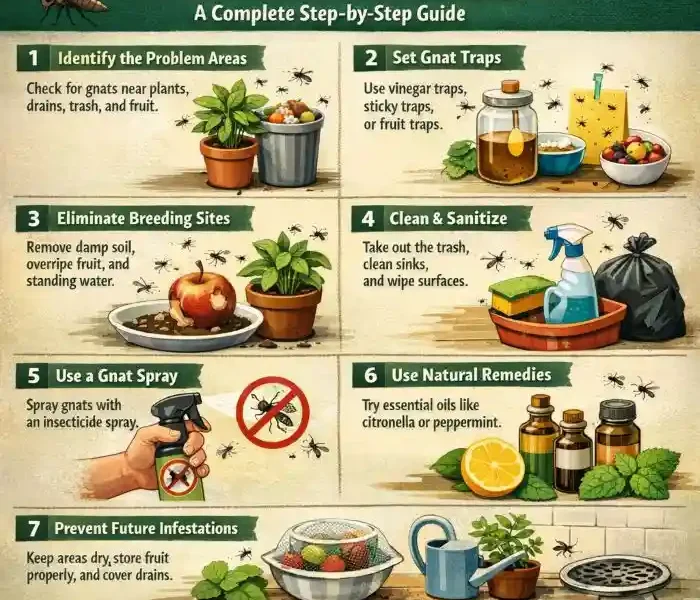
Gnats may be tiny, but they can quickly take over your peace of mind. One minute your kitchen feels normal, and the next you are swatting at small flying insects around the sink, fruit bowl, or houseplants. If that sounds familiar, you are in the right place.
The good news is that gnats are manageable. You do not need to panic, and you do not need to turn your home into a chemical zone. What you do need is a clear plan. The real trick is not just killing the gnats you can see. It is finding the source, removing the breeding spot, and stopping them from coming back.
In this guide, you will learn how to get rid of gnats in your house step by step. We will look at why they show up, where they breed, how to get rid of gnats fast, and how to protect your home long term. We will also cover houseplants, drains, fruit, trash, natural remedies, and when it may be time to call a pest control professional.
If you are dealing with gnats right now, stay with me. You can absolutely take back your space.
Why Gnats Invade Homes
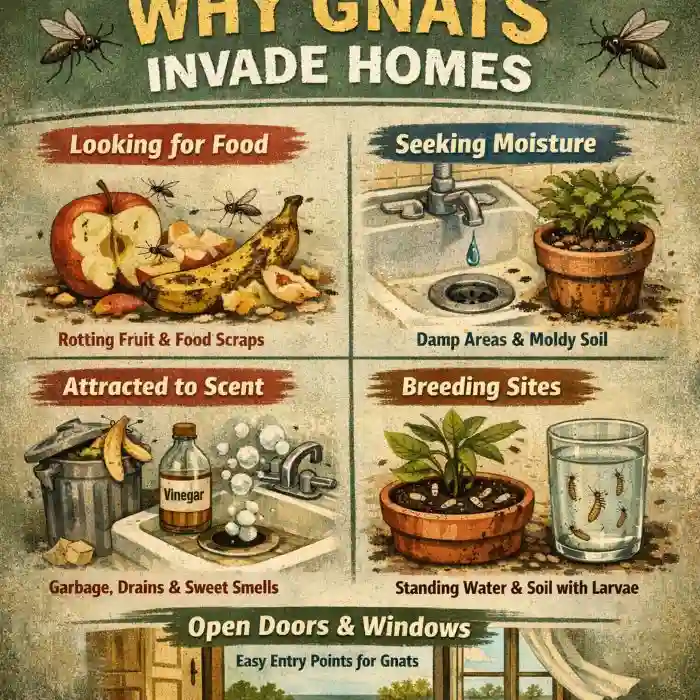
Gnats do not show up for no reason. They are usually drawn indoors by the same things that attract many pests: moisture, food, and decaying organic matter. Once they find a good place to live and breed, they can multiply fast.
You might notice them hovering near your kitchen, floating around your plants, or gathering around drains. They often seem to appear overnight, but in reality, they have usually been building up quietly for days or even weeks.
What makes your house attractive to gnats?
Gnats love places that are warm, damp, and full of organic material. That is why they often appear in:
- Overripe fruit on the counter
- Trash cans with food residue
- Moist houseplant soil
- Kitchen sinks and drains
- Compost bins
- Damp mop buckets or rags
- Leaky areas around plumbing
These little insects are not just annoying. They are a sign that something in your home is giving them a reason to stay. If you only spray the adults, the problem usually comes right back.
Why source control matters more than spraying
This is the part many people miss. The flying gnats you see are only the visible part of the problem. The real issue is often the eggs and larvae hidden in soil, drains, fruit waste, or sludge inside pipes.
So when you ask, “Why do I have gnats in my house?” the answer is usually simple: something in your home is wet, decaying, or unsealed.
The fastest way to solve the problem is to stop feeding the infestation at its source.
What Causes Gnats in the House?
Not all gnats are the same. Some come from plants. Some come from drains. Some are attracted to food waste. Knowing the difference helps you choose the right fix.
Common breeding sources
The most common indoor breeding spots include:
- Houseplant soil
- Fruit bowls and produce storage
- Trash cans and compost
- Kitchen sinks and drains
- Garbage disposals
- Bathroom or laundry room moisture
- Standing water around the home
If you are seeing gnats in more than one room, do not assume they all came from one place. You may have several small sources working together.
Fruit flies, fungus gnats, and drain gnats: what is the difference?
People often use the word “gnats” for several tiny flying insects. That is understandable, but it helps to know what you are dealing with.
Fruit flies
These are usually found near fruit, vegetables, trash, and sugary spills. They are especially drawn to ripe or rotting produce.
Fungus gnats
These are the ones most often linked to houseplants. Their larvae live in damp potting soil and feed on fungi and organic matter in the soil.
Drain gnats
These insects breed in the gunk that builds up inside drains, sinks, and garbage disposals. They love slimy residue and moisture.
Why the problem keeps returning
If gnats keep coming back, it usually means one of two things:
- You removed the adults but not the breeding site.
- The breeding site is still active because the area stays moist or dirty.
That is why long-term success depends on both quick removal and preventive cleanup.
How to Identify the Source of the Infestation
Before you treat the problem, take a few minutes to investigate. This is one of the most important steps, because it tells you where to focus your effort.
Start in the kitchen
The kitchen is the most common hotspot. Check these areas first:
- Fruit bowls
- Trash cans
- Recycling bins
- Compost containers
- Under the sink
- Around the dishwasher
- Sinks and drains
- Countertops near food prep areas
Look for spilled juice, wet food scraps, old produce, or sticky residue. Even a small amount of forgotten food can keep gnats happy.
Check your houseplants
If gnats hover around your plants, the soil is likely too wet. Lift the pot and look at the top layer of dirt. If it stays damp for a long time, that is a clue.
Also look for:
- Tiny flies rising when you disturb the soil
- Mold on the soil surface
- Water sitting in saucers under the pot
- Plants that are being watered too often
Inspect drains and sinks
If gnats seem to gather near sinks, the drain may be part of the problem. Open the drain cover and look for buildup. A drain that smells sour or looks slimy can be a breeding ground.
Look for hidden moisture
Do not stop at the obvious spots. Gnats can also breed where moisture lingers unnoticed, such as:
- Leaky pipes
- Damp sponges
- Wet towels
- Pet water bowls left too long
- Standing water in buckets or trays
- Bathroom corners with poor ventilation
A simple rule to remember
If you find a place that is wet, dirty, and organic, you may have found the source.
How to Get Rid of Gnats in Your House Fast
If you want to get rid of gnats fast, you need two things working at the same time:
- Trap or kill the flying adults
- Remove the breeding source
That combination gives you the best chance of seeing quick improvement.
Use apple cider vinegar traps
One of the most popular DIY methods is the apple cider vinegar trap. It is simple, cheap, and effective for many homes.
How to make one:
- Pour a small amount of apple cider vinegar into a bowl or jar
- Add a drop or two of dish soap
- Leave it near the gnat activity
- Optionally, cover the container with plastic wrap and poke a few small holes
The vinegar attracts the gnats, and the dish soap helps trap them by breaking the surface tension.
Place sticky traps near problem spots
Sticky traps are another easy option. These are especially useful near:
- Houseplants
- Windows
- Sink areas
- Trash bins
They do not solve the root problem, but they can reduce the number of visible gnats quickly.
Try light-based traps
Light traps can work well in rooms where gnats gather around windows or bright spaces. They are especially helpful if you want a low-maintenance option that runs quietly in the background.
Vacuum up visible gnats
If you see a lot of gnats in one area, a vacuum can help you reduce the numbers fast. This is not a permanent fix, but it gives you immediate relief while you handle the source.
Clean the area thoroughly
Traps help, but cleanup does the real work. After trapping adults, clean the area around the infestation. Wipe counters, empty trash, wash fruit bowls, and remove anything decaying or wet.
A quick action plan for same-day relief
If you want the fastest possible improvement, do these steps today:
- Remove any overripe fruit.
- Empty indoor trash and rinse the bin.
- Check plant soil and let it dry if needed.
- Clean the kitchen sink and drain.
- Set out a vinegar trap.
- Place sticky traps in hotspots.
This simple routine can make a noticeable difference within a short time.
How to Get Rid of Gnats in Houseplants
Houseplants are one of the most common reasons people deal with gnats indoors. If you love plants, this section matters a lot.
Why plants attract gnats
Fungus gnats love damp potting soil. The larvae feed in the top layer of moist soil, where they can grow without much disturbance. If you water too often, you create the perfect environment for them.
Let the soil dry out
The first step is often the easiest and most effective: stop overwatering.
Let the top 1–2 inches of soil dry out before you water again. For many plants, this alone can make a big difference. Gnats need moisture to thrive, and dry soil makes life harder for them.
Remove standing water from saucers
If your pots sit in saucers, empty them regularly. Water trapped at the bottom keeps the soil moist for longer than you may realize.
Use sticky traps near the plant
Place yellow sticky traps near infected plants. These catch adult gnats before they can lay more eggs. They work best when combined with dry soil.
Repot if the infestation is severe
If the problem is heavy, repotting may be the cleanest solution. Remove the plant, discard the old soil, clean the pot, and replant with fresh sterile potting mix.
This can feel like a lot of work, but it may be the best way to reset a bad infestation.
Use biological control for larvae
For a more targeted approach, some people use biological treatments such as Bti or beneficial nematodes. These help reduce larvae in the soil without relying only on sprays.
Be patient with plants
It is tempting to water on autopilot, but that can keep the cycle going. Pay attention to the soil, not just the calendar. Different plants need different watering schedules, so let the plant guide you.
Best habits for plant owners
- Water only when needed
- Use well-draining soil
- Empty saucers
- Remove dead leaves from the soil surface
- Keep new plants separate until you check for pests
Gnats in houseplants are frustrating, but they are usually fixable once you change the moisture pattern.
How to Get Rid of Gnats in Drains
Drain gnats are one of the sneakiest pest problems in a house. You may not see much at first, but the drain itself can quietly support their life cycle.
Why drains become breeding sites
Drains often hold a mix of moisture and organic residue. That residue builds up along the inside walls of pipes, especially if the sink is used for food prep, dishwashing, or disposal of scraps.
This slimy buildup becomes food and shelter for tiny insects.
Scrub the drain, not just the sink
Pouring cleaner down the drain may help a little, but scrubbing is usually more effective. Use a brush to clean around the drain opening, stopper, and visible pipe edges.
Try a baking soda, vinegar, and hot water routine
A common DIY routine is:
- Pour baking soda into the drain
- Add vinegar
- Let it sit briefly
- Follow with hot water
This may help loosen buildup and clean the area. It is not magic, but it can be part of a regular maintenance routine.
Clean the garbage disposal
If your sink has a garbage disposal, do not forget it. Food particles can cling inside and create a breeding zone. Run the disposal regularly and clean the surrounding surfaces.
Keep drains from becoming attractive again
Regular cleaning is the key. A clean drain is far less likely to support gnats than one with buildup. The more often you remove residue, the less inviting the space becomes.
How to Get Rid of Gnats Around Fruit, Trash, and Food Waste
If gnats are gathering around your kitchen, food waste is often part of the story. This is one of the easiest areas to fix, and it can bring fast results.
Throw away overripe fruit right away
Soft bananas, bruised peaches, rotting apples, and forgotten berries can attract gnats quickly. If fruit is starting to go bad, remove it before it becomes a problem.
Refrigerate produce when needed
If you are not going to eat fruit soon, put it in the fridge. That helps slow decay and keeps it from becoming a gnat magnet.
Keep food covered
Open bowls of fruit look nice, but they are not always practical if you are already dealing with gnats. A covered container or refrigerator storage can help a lot.
Empty trash often
Trash cans are one of the most common indoor breeding spots. Empty them regularly, especially if they contain food scraps, fruit peels, or anything wet.
Rinse recyclables
Sticky cans, bottles, and food containers can attract gnats too. Rinse them before placing them in the bin if possible.
Clean spills quickly
Even a tiny spill can matter. Wipe juice, crumbs, syrup, and sauce right away. The cleaner your kitchen stays, the less appealing it is to gnats.
Don’t forget hidden food waste
Sometimes the problem is not obvious. Check:
- Under appliances
- Behind trash cans
- In compost bins
- Around recycling bins
- Inside the microwave tray
- Beneath the sink
When you clean these hidden spots, you remove the kind of residue gnats love most.
Natural Remedies vs. Chemical Solutions
Many people want to know whether natural methods are enough or whether they need stronger products. The truth is that it depends on the size of the problem.
Natural remedies
Natural methods are often a smart first step. They are usually safer and easier to use around kids, pets, and everyday household spaces.
Common natural approaches include:
- Vinegar traps
- Sticky traps
- Drying out plant soil
- Removing food waste
- Cleaning drains
- Using essential oils in limited ways
These methods work well for light to moderate infestations.
Chemical solutions
Sometimes a stronger infestation needs a stronger response. Commercial sprays or professional-grade treatments may help when the problem is larger or more persistent.
That said, sprays alone rarely solve the issue. If the breeding site remains, the gnats will likely return.
What is the best approach?
For most homes, the best plan is a balanced one:
- Start with cleaning and source removal
- Use traps to reduce adults
- Escalate only if needed
Safety matters
If you have children, pets, or people with sensitivities in the house, be careful with any treatment you use. Always think about where the product will go and what surfaces it may touch.
A simple, clean, consistent routine is often enough before you need to reach for anything stronger.
How to Prevent Gnats From Coming Back
Once you get rid of gnats, the next step is keeping them out. This is where many people slip up. They solve the visible problem, then forget the habits that created it.
Control moisture
Moisture is one of the biggest causes of recurring gnat problems. If you want long-term control, keep your home as dry as possible in the places gnats like most.
That means:
- Fixing leaks
- Emptying standing water
- Drying sinks and counters
- Not overwatering plants
- Letting damp rags and sponges dry out
Keep your kitchen clean
A clean kitchen is far less attractive to gnats. Focus on:
- Wiping counters
- Sweeping crumbs
- Emptying trash
- Cleaning drains
- Storing food properly
This does not have to be perfect. It just needs to be consistent.
Store food the right way
Food should not sit out longer than needed. Use sealed containers, closed bags, or refrigerator storage when possible. Gnats are much less likely to settle in a space with no easy food access.
Clean drains regularly
Drain care should be part of your routine, not just an emergency fix. A regular cleaning schedule can keep residue from building up again.
Watch your plants
If you love houseplants, keep an eye on watering habits. Overwatering is one of the most common reasons gnats return indoors.
A good rule is this: water less often, but more carefully. Let the soil tell you when it is time.
Use routine checks
Every few days, take a quick look at the places gnats usually gather:
- Fruit bowl
- Trash can
- Sink
- Drains
- Plant pots
- Compost bin
A small five-minute check can prevent a much bigger headache later.
Prevention checklist
Here is a simple list you can follow each week:
- Empty trash and recycling
- Remove old fruit and vegetables
- Wipe kitchen surfaces
- Check houseplant moisture
- Clean sink drains
- Dry wet sponges and towels
- Remove standing water
These small habits are often the difference between a one-time problem and a repeating one.
When to Call a Pest Control Professional
Most gnat problems can be handled at home, especially if you act early. But sometimes the infestation keeps coming back no matter what you do.
Signs you may need help
Consider calling a professional if:
- Gnats keep returning after repeated cleaning
- You cannot find the source
- The problem seems to involve hidden moisture
- Multiple rooms are affected
- You suspect a deeper plumbing or structural issue
Why professional help can matter
A pest control professional can inspect hard-to-see areas and help identify the exact breeding site. In some cases, the real issue may be behind walls, under floors, or in a drain system that needs more than a simple DIY fix.
When DIY is no longer enough
If you have done the basics well and the gnats still do not leave, do not keep guessing forever. At that point, expert help can save time and stress.
Comparison Table: Where Gnats Come From and How to Treat Them
| Source | What You Might Notice | Best Fix | Prevention Tip |
|---|---|---|---|
| Houseplants | Tiny flies around pots, damp soil, gnats rising when soil is disturbed | Let soil dry, use sticky traps, repot if needed | Water only when necessary |
| Fruit bowl | Gnats near ripe fruit, vegetables, or compost | Throw out overripe produce, refrigerate fruit | Keep fruit covered and check it often |
| Trash can | Gnats near garbage, food scraps, or recycling | Empty and wash the bin, clean spills | Take trash out regularly |
| Drains | Gnats around sinks, bad smell, slimy buildup | Scrub drain and clean routinely | Keep drains clean and free of residue |
| Standing water | Gnats near sinks, buckets, rags, or trays | Dry area and remove the water source | Avoid letting water sit around |
Frequently Asked Questions
Why are gnats suddenly appearing in my house?
Gnats often appear suddenly because a small breeding source has been building up quietly. That source could be wet soil, fruit waste, drain buildup, or trash.
What kills gnats instantly?
A trap, vacuum, or commercial spray may kill visible adults quickly, but the real solution is removing the breeding source so more gnats do not hatch.
How do I get rid of gnats without vinegar?
You can use sticky traps, light traps, drying out plant soil, cleaning drains, and removing food waste. Vinegar is helpful, but it is not the only option.
Why do gnats keep coming back?
They usually come back because the source is still there. If soil stays wet, fruit keeps ripening, or drain buildup remains, the cycle continues.
Do gnats live in drains or plants?
Yes, they can. Fungus gnats often live in damp plant soil, while drain-related gnats can breed in residue inside sinks and pipes.
Conclusion
If you want to know how to get rid of gnats in your house, the answer is not just one trick. It is a process. You find the source, remove the breeding area, trap the adults, and keep your home clean and dry enough that they do not come back.
The most important places to check are your houseplants, drains, fruit bowls, trash cans, and any damp areas. Once you handle those, the problem usually starts to fade.
So if gnats are bothering you right now, take the first step today. Check your plants. Empty your trash. Inspect your drains. Throw away old fruit. A few simple actions can make a big difference.
You do not have to live with gnats. With a steady plan and a little consistency, you can get your home back to normal.