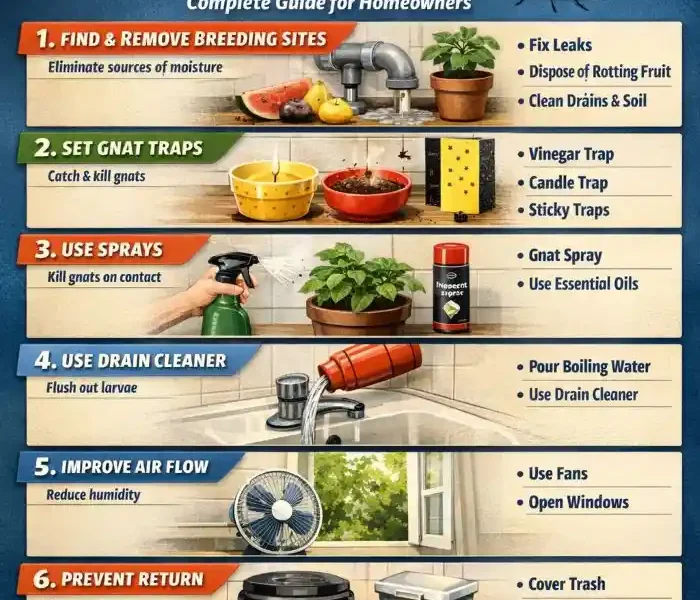
<p>Gnats may be tiny, but they can turn into a real headache very quickly. If you are searching for <a href="https://tendingmygarden.com/gnats-an-easy-way-to-get-rid-of-gnats-in-the-house/"><strong>how to get rid of gnats in house</strong></a>, the good news is that you usually do not need complicated tools or expensive treatments to solve the problem. In most homes, the answer comes down to three simple steps: <strong>find the source, remove the source, and keep the area dry and clean</strong>.</p>
<p>These little flying insects often show up around <strong>houseplants, kitchen sinks, fruit bowls, trash cans, drains, and damp bathrooms</strong>. At first, you may only see one or two. That does not seem like much. But gnats reproduce fast, and a small problem can turn into a daily annoyance if you ignore it.</p>
<p>The reason they are so common indoors is simple. Your home gives them exactly what they want: <strong>moisture, food residue, and protected places to lay eggs</strong>. Wet potting soil, overripe fruit, dirty drains, and even a forgotten sponge can become a breeding spot.</p>
<p>In this guide, you will learn exactly <strong>how to eliminate gnats indoors</strong> using practical methods that work in real homes. We will also cover how to identify the type of gnat, how to treat fungus gnats in plants, how to clean problem areas in the kitchen and bathroom, and how to prevent gnats from coming back.</p>
<p>If you act early and stay consistent for a few days, you can usually <strong>get rid of gnats in house</strong> without much trouble.</p>
<h2 id="why-gnats-become-a-household-problem">Why Gnats Become a Household Problem</h2>
<p><img class="aligncenter wp-image-7080 size-full" src="https://comeawayhome.co.uk/wp-content/uploads/2026/05/c510ea78-2c43-4cc8-852b-21d0c6ef97e7-ezgif.com-jpg-to-webp-converter.webp" alt="how to get rid of gnats in house" width="700" height="700" /></p>
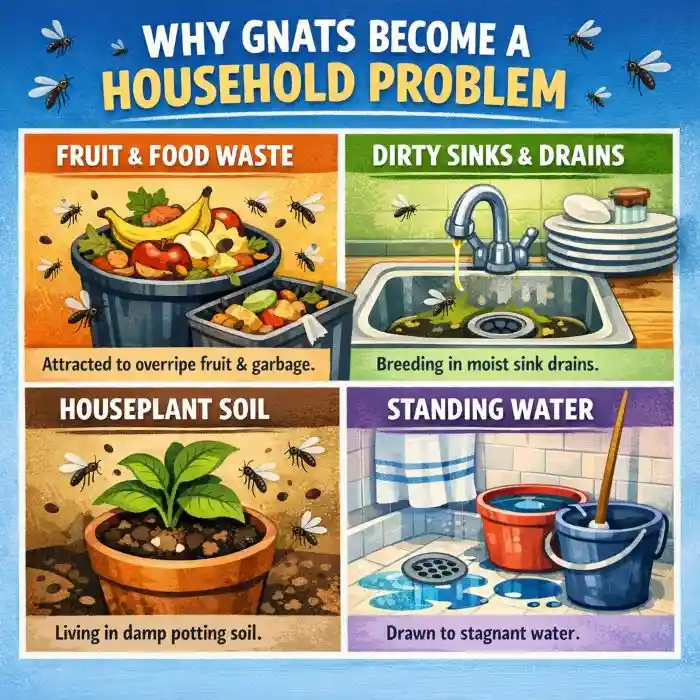
<p>Gnats become a household problem because your home gives them both <strong>comfort and opportunity</strong>. They are drawn to moisture, organic matter, and places that do not get cleaned as often as they should. Once they find a good spot to breed, they can multiply faster than most people expect.</p>
<p>A kitchen is a perfect example. A banana left on the counter, sticky juice near the trash can, and food bits in the sink drain can all attract tiny flying insects. In the bathroom, wet surfaces, slow drains, and hidden dampness can create the same issue. Houseplants add another common source, especially when the soil stays wet for too long.</p>
<p>One reason gnats feel so frustrating is that they seem to appear out of nowhere. In reality, they usually start in one small hidden area. You may notice them flying around a window or lamp, but that is not always where they are breeding. The real source is often nearby and easy to miss.</p>
<p>That is why a successful solution is not just about killing the adult gnats you can see. It is about stopping the next generation before it hatches. Once you understand where they come from, the problem becomes much easier to control.</p>
<h2 id="what-are-gnats-">What Are Gnats?</h2>
<p>The word <strong>gnats</strong> is often used as a catch-all name for tiny flying insects. In everyday language, people use it for several different pests that look similar at first glance. The most common indoor types are <strong>fungus gnats</strong>, and people also confuse them with <strong>fruit flies</strong> and other tiny flies around drains or trash.</p>
<p>Fungus gnats are usually <strong>small, dark, and mosquito-like</strong>. They are often seen near houseplants, especially when the soil is damp. Fruit flies are usually <strong>tan or light brown</strong>, a little rounder, and more likely to gather near ripening fruit, juice, garbage, or recycling bins.</p>
<p>Correct identification matters because the best treatment depends on the source. If the problem is plant soil, you need to treat the soil. If the insects are coming from food waste or drains, plant traps alone will not fix it.</p>
<h3 id="fruit-flies-vs-gnats-quick-comparison">Fruit Flies vs Gnats: Quick Comparison</h3>
<table>
<thead>
<tr>
<th>Insect Type</th>
<th>What It Looks Like</th>
<th>Where You Usually Find It</th>
<th>What Attracts It</th>
<th>Best First Step</th>
</tr>
</thead>
<tbody>
<tr>
<td><strong>Fungus gnats</strong></td>
<td>Tiny, dark, thin-bodied, mosquito-like</td>
<td>Around houseplants, window sills, damp soil</td>
<td>Wet potting soil and decaying organic matter</td>
<td>Let soil dry and use sticky traps</td>
</tr>
<tr>
<td><strong>Fruit flies</strong></td>
<td>Small, tan to brown, rounder body, red eyes may be visible</td>
<td>Near fruit bowls, trash cans, recycling, spills</td>
<td>Overripe fruit, sugary residue, food scraps</td>
<td>Remove food sources and clean surfaces</td>
</tr>
<tr>
<td><strong>Drain-related small flies</strong></td>
<td>Tiny, dark or fuzzy-looking depending on type</td>
<td>Sinks, drains, bathrooms, utility areas</td>
<td>Organic buildup and moisture in drains</td>
<td>Scrub and clean the drain thoroughly</td>
</tr>
</tbody>
</table>
<p>If you are not sure what you have, look at <strong>where they gather the most</strong>. That usually tells you more than the insect itself. Gnats near plants usually point to fungus gnats. Tiny flies swarming around bananas or a sticky trash bin usually point to fruit flies or another food-related source.</p>
<h2 id="common-causes-of-gnats-in-the-house">Common Causes of Gnats in the House</h2>
<p>Gnats do not appear randomly. They show up because something in the home is giving them food, moisture, or a place to breed. If you want real <strong>gnat control</strong>, you have to know what is feeding the problem.</p>
<h3 id="overwatered-houseplants">Overwatered Houseplants</h3>
<p>This is one of the most common causes of <strong>gnats in house</strong>, especially if you keep several indoor plants. Fungus gnats love damp soil. The adults fly around the plant, but the real issue is below the surface, where they lay eggs in moist potting mix.</p>
<p>When the top layer of soil stays wet for days, it becomes a perfect environment for larvae. Potting soil that contains decaying organic matter gives them even more to feed on. If you water often or your pots drain poorly, the population can build quickly.</p>
<h3 id="dirty-drains-and-sinks">Dirty Drains and Sinks</h3>
<p>Kitchen and bathroom drains can also become breeding spots. Small bits of food, soap residue, grease, and other organic buildup stick to the inside of pipes. That material gives gnats and other tiny flies something to feed on.</p>
<p>This is why you may notice them hovering near the sink, especially in the evening. A drain can look fine from the top while still holding a thick layer of buildup inside. If you only spray the insects you see and skip the drain cleaning, they often come right back.</p>
<h3 id="rotten-fruit-and-food-scraps">Rotten Fruit and Food Scraps</h3>
<p>Fruit bowls, compost containers, recycling bins, and open trash cans are classic hot spots. A piece of overripe fruit may not look like a major problem, but it can attract a surprising number of small flies very fast.</p>
<p>The same goes for leftovers, spills, sugary drinks, and sticky containers. Even a small amount of residue at the bottom of a can or bottle can attract insects. If you have ever wondered why gnats seem to gather around one corner of the kitchen, the answer is often hidden food waste.</p>
<h3 id="standing-water-and-excess-moisture">Standing Water and Excess Moisture</h3>
<p>Gnats thrive in moisture. That means leaks under the sink, wet mops left in a closet, damp sponges, pet water bowls, and condensation around windows can all help support the problem.</p>
<p>Bathrooms are especially vulnerable because they stay humid. Poor ventilation, wet towels, slow drains, and hidden damp spots behind the toilet or sink can create the kind of environment these insects like.</p>
<p>In short, gnats are not just looking for food. They are looking for a place where food and moisture come together. Once they find it, they settle in fast.</p>
<h2 id="how-to-identify-the-source-of-the-infestation">How to Identify the Source of the Infestation</h2>
<p>The fastest way to solve a gnat problem is to <strong>find the source before you focus on traps or sprays</strong>. If you skip this step, you may kill a few adults but leave the breeding area untouched. That means more gnats will keep showing up.</p>
<p>Start by paying attention to where you see the most activity. Are the gnats hovering near your plants? Do they gather near the kitchen sink? Are they hanging around fruit, trash, or a bathroom drain? Their favorite location usually points you toward the real issue.</p>
<p>Look carefully at problem zones, not just open surfaces. Check inside the trash can, under the sink, around recycling bins, and along window sills. Indoor insects often fly toward light, so you may notice them near a window even though they are breeding somewhere else nearby.</p>
<h3 id="home-inspection-checklist">Home Inspection Checklist</h3>
<ul>
<li><strong>Check houseplants</strong> for wet soil, fallen leaves, and plant trays holding water.</li>
<li><strong>Look at fruit bowls, compost, and trash bins</strong> for overripe produce or food residue.</li>
<li><strong>Inspect sinks and drains</strong> in the kitchen, bathroom, and laundry room.</li>
<li><strong>Search for moisture problems</strong> such as leaks, wet sponges, damp towels, and standing water.</li>
<li><strong>Look around windows and baseboards</strong> to see where the adults gather most often.</li>
<li><strong>Check hidden corners</strong> like behind appliances, under cabinets, and near pet feeding areas.</li>
</ul>
<p>If you find more than one problem area, do not be surprised. Many infestations have <strong>two sources at the same time</strong>, such as damp plant soil and a dirty kitchen drain. That is why a whole-<a href="https://comeawayhome.co.uk/why-do-i-suddenly-have-centipedes-in-my-house/">house</a> check works better than treating just one spot.</p>
<h2 id="how-to-get-rid-of-gnats-in-house-fast">How to Get Rid of Gnats in House Fast</h2>
<p>If you want to <strong>get rid of gnats in house fast</strong>, move in a clear order. First remove breeding sources. Then trap the adults. After that, dry out and clean the areas that allowed the infestation to begin. When you do all three together, results come much faster.</p>
<h3 id="remove-breeding-sources-first">Remove Breeding Sources First</h3>
<p>This is the most important step. Throw away overripe fruit, old vegetables, neglected leftovers, and anything sticky or fermenting. Empty the trash, clean the inside of the can, and rinse recycling containers before putting them back.</p>
<p>Wipe down counters, stove areas, and shelves where crumbs or sugary residue may be hiding. Replace dirty sponges and wash dish cloths. If you keep a compost bin indoors, empty it often and clean it well.</p>
<p>For plants, remove dead leaves, fallen plant matter, and anything decaying on the soil surface. If the top of the soil looks dark, soggy, or smells musty, that is a strong sign fungus gnats may be breeding there.</p>
<h3 id="use-sticky-traps">Use Sticky Traps</h3>
<p>Sticky traps work well because they catch the flying adults. Yellow sticky traps are especially popular near houseplants because fungus gnats are attracted to them.</p>
<p>Place the traps close to the base of the plant or hang them just above the pot. You may be surprised at how many insects they catch within a day or two. Still, remember this: <strong>traps only reduce the adults</strong>. They do not remove eggs or larvae in the soil.</p>
<p>That is why sticky traps work best when combined with drying the soil and cleaning plant debris. Think of them as part of the solution, not the whole solution.</p>
<h3 id="make-an-apple-cider-vinegar-trap">Make an Apple Cider Vinegar Trap</h3>
<p>A simple vinegar trap is one of the easiest ways to catch flying gnats and fruit flies indoors. Pour a small amount of <strong>apple cider vinegar</strong> into a bowl or cup and add a drop or two of dish soap. The vinegar attracts the insects, and the soap breaks the surface tension so they sink instead of landing safely.</p>
<p>Place the trap near problem areas like the fruit bowl, trash can, sink, or compost container. If you want to make it stronger, cover the container loosely with plastic wrap and poke a few tiny holes in the top. That helps guide them inside.</p>
<p>This method works best when the surrounding area is already cleaned. If the whole kitchen still smells like food waste, the gnats may choose that instead of your trap.</p>
<h3 id="use-drain-cleaning-methods">Use Drain Cleaning Methods</h3>
<p>If the gnats seem to gather around a kitchen or bathroom sink, focus on the drain. Start by removing any visible grime around the opening. Then scrub inside the drain with a long brush to loosen organic buildup.</p>
<p>After scrubbing, flush with very hot water if your plumbing allows it. You can also use a safe drain-cleaning product made for indoor use, following the label closely. The goal is not just to freshen the drain. The goal is to remove the slimy material where insects may be breeding.</p>
<p>Repeat this for several days if needed. One quick rinse is often not enough if buildup has been there for a while.</p>
<h3 id="let-soil-dry-out">Let Soil Dry Out</h3>
<p>For fungus gnats, drying out the soil is one of the most effective solutions. The larvae need moisture to survive. When the top layer dries, the environment becomes less friendly for eggs and larvae.</p>
<p>Let the top inch or two of soil dry before watering again, depending on the plant’s needs. Make sure the pot drains well and that water is not sitting in the saucer underneath. If you always keep the soil wet, the infestation often continues.</p>
<p>This does not mean you should neglect your plant. It simply means you should water with more care and avoid creating a constantly damp surface.</p>
<h3 id="vacuum-or-swat-adult-gnats">Vacuum or Swat Adult Gnats</h3>
<p>This step is simple, but it helps. Use a handheld vacuum to remove clusters of adult gnats around windows, light fixtures, or plants. This gives you a quick reduction in the number of breeding adults.</p>
<p>It is not a complete fix, but it does make the space feel better right away. When paired with traps and cleaning, it can speed up the overall process.</p>
<h3 id="be-consistent-for-several-days">Be Consistent for Several Days</h3>
<p>One of the biggest reasons people struggle with gnats is that they try one trick once and expect instant results. But eggs can continue to hatch for several days. You need a short, steady routine.</p>
<p>Clean the source, refresh the traps, monitor plant soil, and keep moisture under control every day for at least a week. That consistent effort usually makes the difference between temporary relief and a real solution.</p>
<h2 id="natural-ways-to-kill-gnats">Natural Ways to Kill Gnats</h2>
<p>If you prefer simple home methods, there are several ways to <strong>kill gnats naturally</strong> and reduce the infestation without jumping straight to stronger chemicals. These methods work best for light to moderate problems and are especially useful when combined with good cleaning.</p>
<h3 id="vinegar-traps">Vinegar Traps</h3>
<p>Vinegar traps are popular for a reason. Gnats and fruit flies are drawn to the smell of fermentation. Apple cider vinegar often works better than plain white vinegar because the smell is stronger and sweeter.</p>
<p>Use a shallow bowl or cup, add vinegar, and mix in a little dish soap. Place it where you have noticed activity. Replace the trap when it fills up or loses its smell.</p>
<p>To improve results, keep the area around it clean. A trap works much better when it is the most attractive smell in the room.</p>
<h3 id="dish-soap-and-water-solution">Dish Soap and Water Solution</h3>
<p>Dish soap breaks the surface tension of liquid. That means tiny insects that land on the mixture are more likely to sink rather than float away.</p>
<p>This is why soap is often added to vinegar traps, but it can also be used in shallow water traps around problem areas. It is a simple helper, not a magic cure, but it does increase the effectiveness of homemade traps.</p>
<h3 id="neem-oil-for-houseplants">Neem Oil for Houseplants</h3>
<p>Neem oil is often used to manage plant pests, including fungus gnats. It can help reduce the problem when applied correctly to the soil or plant as directed on the product label.</p>
<p>The key is to use it carefully. Too much product or the wrong mix can stress certain plants. Always follow the instructions and test carefully if you are treating a sensitive plant.</p>
<p>Neem oil works best as part of a larger plan: less watering, cleaner pots, and sticky traps for the adults.</p>
<h3 id="hydrogen-peroxide-soil-treatment">Hydrogen Peroxide Soil Treatment</h3>
<p>A properly diluted hydrogen peroxide solution can help target larvae in potting soil. Many people use a light mix of <strong>3% hydrogen peroxide diluted with water</strong>. A common approach is one part peroxide to four parts water, but you should always use care and avoid overdoing it.</p>
<p>When poured into the soil, the solution can help reduce larvae while also adding oxygen as it breaks down. Still, it is important not to use it too often or too strongly, because that can harm roots or stress the plant.</p>
<p>If you are unsure, test a small amount first and watch how the plant responds.</p>
<h3 id="sand-or-gravel-on-top-of-soil">Sand or Gravel on Top of Soil</h3>
<p>A dry top layer of sand or fine gravel can make the soil surface less appealing for egg-laying. Fungus gnats prefer damp, exposed soil. A dry barrier changes that environment.</p>
<p>This works especially well after you have already reduced watering and treated the plant. On its own, it is not enough for a heavy infestation. But as a prevention step, it can be very useful.</p>
<p>Natural methods can work well, but they still depend on one basic rule: <strong>remove the source and reduce the moisture</strong>. Without that, even the best trap or soil treatment will only give partial results.</p>
<h2 id="chemical-solutions-and-when-to-use-them">Chemical Solutions and When to Use Them</h2>
<p>Sometimes natural methods are not enough. If the infestation is larger, keeps returning, or spreads to multiple rooms, you may need stronger <strong>gnat control</strong> options.</p>
<p>Indoor insect sprays can kill visible adult gnats, but they do not always reach eggs and larvae. That is why they should be used as a support tool, not your only treatment. For plant-related infestations, some indoor-safe products target larvae in the soil more effectively than simple sprays.</p>
<p>You may also find products labeled as larvicides or insect growth controls for certain indoor pest situations. If you go this route, read the label carefully. Make sure the product is approved for indoor use and safe for the location where you plan to use it.</p>
<p>Be extra cautious around <strong>children, pets, food preparation areas, and houseplants</strong>. Never use outdoor-only pesticides indoors, and never apply more than directed. A stronger dose does not mean faster success. It usually just increases the risk.</p>
<p>If the problem is severe and recurring, professional treatment may be the safest and most effective option.</p>
<h2 id="how-to-get-rid-of-fungus-gnats-in-houseplants">How to Get Rid of Fungus Gnats in Houseplants</h2>
<p>Fungus gnats are one of the most common indoor plant problems. The adults are annoying, but the bigger concern is what is happening in the soil. Their larvae live in damp potting mix and feed on organic matter. In larger numbers, they can also bother young roots.</p>
<p>If you think your houseplants are the source, start by isolating the worst plant if possible. This helps stop the adults from spreading to nearby pots. Then remove dead leaves, dropped stems, and any rotting material from the soil surface.</p>
<p>Next, let the top layer of soil dry more than usual before watering again. Put a sticky trap near the plant to catch adult gnats. This helps you monitor whether the problem is improving.</p>
<p>For extra control, treat the soil with a plant-safe method such as neem oil or a carefully diluted hydrogen peroxide mix. If the pot drains poorly, fix that problem right away. Many gnat issues continue simply because the plant is sitting in soggy soil week after week.</p>
<p>If the infestation is severe, repotting may be the best choice. Use fresh potting mix and a clean container. Throw away the old soil rather than reusing it indoors.</p>
<h3 id="simple-plant-specific-treatment-steps">Simple Plant-Specific Treatment Steps</h3>
<ol>
<li><strong>Move the affected plant</strong> away from other houseplants if possible.</li>
<li><strong>Remove dead leaves and surface debris</strong> from the pot.</li>
<li><strong>Let the top layer of soil dry out</strong> before watering again.</li>
<li><strong>Place yellow sticky traps</strong> near the pot to catch adults.</li>
<li><strong>Treat the soil</strong> with neem oil or a properly diluted hydrogen peroxide solution if needed.</li>
<li><strong>Repot in fresh soil</strong> if the infestation is heavy or keeps returning.</li>
</ol>
<p>The main goal is to break the life cycle. Once the soil becomes less welcoming and the adults are trapped, the population usually drops steadily.</p>
<h2 id="how-to-get-rid-of-gnats-in-kitchen-and-bathroom">How to Get Rid of Gnats in Kitchen and Bathroom</h2>
<p>The kitchen and bathroom are two of the most common places for gnats because they combine <strong>moisture, residue, and hidden buildup</strong>. You may clean these rooms often, but tiny problem areas can still be missed.</p>
<h3 id="kitchen-control-steps">Kitchen Control Steps</h3>
<p>In the kitchen, start with the obvious food sources. Store fruit properly, especially ripe bananas, tomatoes, peaches, and other produce that softens quickly. If fruit is already overripe, use it immediately or throw it out.</p>
<p>Clean trash and recycling bins thoroughly, not just the surrounding floor. Sticky residue on the inside of the bin can keep attracting insects even after the garbage is gone. Wipe countertops, backsplashes, and sink edges to remove juice, crumbs, and food film.</p>
<p>Also pay attention to forgotten items. A potato rolling behind a cabinet, an old onion in the pantry, or a reusable bottle with sweet residue inside can all contribute to the problem.</p>
<h3 id="bathroom-control-steps">Bathroom Control Steps</h3>
<p>Bathrooms attract gnats when moisture hangs around too long. Check the sink drain, tub drain, and any place where water collects. Wet towels on the floor, damp bath mats, and slow leaks under the sink can make the room more inviting.</p>
<p>Improve ventilation by using the exhaust fan or opening a window when possible. Dry surfaces after heavy use. If a drain smells musty or seems to attract tiny flies, clean it deeply rather than just rinsing the surface.</p>
<p>Hidden dampness matters here. Look behind the toilet, around the base of the sink, and near storage baskets or cabinets where moisture may linger without being obvious.</p>
<p>When you treat kitchens and bathrooms, think beyond what you can see. The smallest wet, dirty, or decaying spot can keep the whole issue alive.</p>
<h2 id="how-to-prevent-gnats-from-coming-back">How to Prevent Gnats From Coming Back</h2>
<p>Once you solve the immediate problem, prevention becomes the real long-term win. The best way to <strong>prevent gnats in house</strong> is to make your home less attractive to them every day, not just when you notice insects flying around.</p>
<p>The first habit to focus on is moisture control. Water houseplants only when they actually need it. Empty saucers after watering. Fix dripping faucets, leaks under sinks, and damp spots near appliances. The drier your home is, the fewer breeding opportunities gnats will find.</p>
<p>Food storage matters just as much. Do not leave overripe fruit on the counter for too long. Seal snacks, wipe spills right away, and empty indoor trash often. Rinse cans, bottles, and recyclables before storing them. Small bits of residue can feed a surprising number of insects.</p>
<p>Drain care is another big one. Many people do not think about their drains until they smell bad or slow down. But drains can quietly collect buildup for weeks. Scrubbing and flushing them on a regular schedule can prevent a lot of recurring gnat problems.</p>
<p>Clutter also plays a role. Piles of damp paper, old plant leaves, dirty cleaning tools, and forgotten containers can all hold moisture or organic matter. When your home is cleaner and more open, it becomes much easier to spot problems early.</p>
<h3 id="simple-prevention-habits-that-work">Simple Prevention Habits That Work</h3>
<ul>
<li><strong>Water plants carefully</strong> and avoid leaving soil constantly wet.</li>
<li><strong>Take out trash often</strong> and clean the bin itself on a regular basis.</li>
<li><strong>Store fruit and produce properly</strong> and remove overripe items quickly.</li>
<li><strong>Clean drains weekly</strong> so residue does not build up inside.</li>
<li><strong>Dry damp items</strong> like sponges, towels, and mops instead of leaving them wet.</li>
<li><strong>Use window and door screens</strong> if insects may be entering from outside.</li>
</ul>
<p>Prevention is not about doing one big cleanup once a month. It is about small habits that stop gnats from finding a reason to stay.</p>
<h2 id="mistakes-people-make-when-trying-to-get-rid-of-gnats">Mistakes People Make When Trying to Get Rid of Gnats</h2>
<p>A lot of people make the same mistakes when they try to solve a gnat problem. The most common one is using traps without removing the source. Traps may catch adults, but if the larvae are still living in wet soil or a dirty drain, the infestation continues.</p>
<p>Another common mistake is overwatering houseplants during treatment. Many people know the gnats are coming from plant soil, but they keep watering the plant on the same schedule. That keeps the life cycle going.</p>
<p>Some people also ignore drains, compost containers, or hidden food waste because the area looks clean at first glance. Gnats do not need a huge mess. A small patch of buildup can be enough.</p>
<p>Finally, many people expect instant results. Even when you do everything right, it may take several days to break the cycle. Consistency matters more than one-time effort.</p>
<h2 id="when-to-call-a-pest-control-professional">When to Call a Pest Control Professional</h2>
<p>Most household gnat problems can be managed at home. But sometimes the infestation keeps returning no matter how much you clean and treat. That is a sign there may be a hidden breeding source you have not found yet.</p>
<p>You may want professional help if gnats are spreading through multiple rooms, coming back every few weeks, or appearing in large numbers around places you cannot fully inspect. This includes wall voids, plumbing areas, crawl spaces, or moisture damage inside cabinets and floors.</p>
<p>A professional can also help if you are dealing with a larger indoor insect issue and are not fully sure the pests are gnats. Misidentification leads to weak treatment, and recurring problems often trace back to that.</p>
<p>If you live in a large home, manage rental property, or have health concerns about using indoor chemicals yourself, professional pest control may be the better choice from the start.</p>
<h2 id="frequently-asked-questions">Frequently Asked Questions</h2>
<h3 id="why-are-gnats-suddenly-in-my-house-">Why are gnats suddenly in my house?</h3>
<p>Gnats usually appear suddenly because a food or moisture source has reached the point where it starts attracting them. Common reasons include <strong>overripe fruit, wet plant soil, dirty drains, trash buildup, or hidden damp spots</strong>. You may only notice the adults once the population has already started growing.</p>
<h3 id="how-long-does-it-take-to-get-rid-of-gnats-">How long does it take to get rid of gnats?</h3>
<p>It depends on the source and how quickly you remove it. In many homes, you can see a noticeable drop in adult gnats within <strong>a few days</strong>, but full control may take <strong>one to two weeks</strong> because eggs and larvae may still be developing. Consistent cleaning and treatment matter.</p>
<h3 id="do-gnats-go-away-on-their-own-">Do gnats go away on their own?</h3>
<p>Usually not. If the source stays in place, gnats often keep breeding. You might see fewer for a day or two, but they return because the environment still supports them. To solve the problem, you need to remove the breeding source.</p>
<h3 id="what-smells-do-gnats-hate-">What smells do gnats hate?</h3>
<p>Gnats dislike some strong scents, but smell alone rarely solves an infestation. Some people use products with <strong>citrus, peppermint, or eucalyptus-like scents</strong>, but these work better as mild deterrents than complete treatments. Removing moisture and food sources is far more effective.</p>
<h3 id="are-gnats-harmful-">Are gnats harmful?</h3>
<p>Most indoor gnats are more annoying than dangerous. They do not usually bite or spread major problems in the home, but they can contaminate surfaces, irritate you, and make rooms feel unclean. Fungus gnat larvae may also stress delicate houseplant roots if the infestation gets heavy.</p>
<h3 id="how-do-i-get-rid-of-gnats-overnight-">How do I get rid of gnats overnight?</h3>
<p>You can reduce them quickly overnight by <strong>throwing away food waste, cleaning the sink and trash area, setting vinegar traps, placing sticky traps near plants, and vacuuming adult gnats</strong>. But a complete fix usually takes more than one night because larvae may still be present.</p>
<h2 id="conclusion">Conclusion</h2>
<p>If you want to know <strong>how to get rid of gnats in house</strong>, the answer is simple: <strong>find the source, remove the source, trap the adults, and keep the area clean and dry</strong>. That approach works whether the problem starts in plant soil, a kitchen drain, overripe fruit, or a damp bathroom corner.</p>
<p>The most important thing is to act early. A few gnats may not seem serious, but they can multiply fast when moisture and organic material are easy to find. Once you clean the breeding areas and stay consistent for several days, the problem usually becomes much easier to control.</p>
<p>Take a close look around your home today. The sooner you identify the cause, the sooner you can <strong>get rid of gnats in house</strong> and keep them from coming back.</p>
<p><a href="https://comeawayhome.co.uk/">House</a></p>
Gnats may be tiny, but they can turn into a real headache very quickly. If you are searching for how to get rid of gnats in house, the good news is that you usually do not need complicated tools or expensive treatments to solve the problem. In most homes, the answer comes down to three simple steps: find the source, remove the source, and keep the area dry and clean.
These little flying insects often show up around houseplants, kitchen sinks, fruit bowls, trash cans, drains, and damp bathrooms. At first, you may only see one or two. That does not seem like much. But gnats reproduce fast, and a small problem can turn into a daily annoyance if you ignore it.
The reason they are so common indoors is simple. Your home gives them exactly what they want: moisture, food residue, and protected places to lay eggs. Wet potting soil, overripe fruit, dirty drains, and even a forgotten sponge can become a breeding spot.
In this guide, you will learn exactly how to eliminate gnats indoors using practical methods that work in real homes. We will also cover how to identify the type of gnat, how to treat fungus gnats in plants, how to clean problem areas in the kitchen and bathroom, and how to prevent gnats from coming back.
If you act early and stay consistent for a few days, you can usually get rid of gnats in house without much trouble.
Why Gnats Become a Household Problem
Gnats become a household problem because your home gives them both comfort and opportunity. They are drawn to moisture, organic matter, and places that do not get cleaned as often as they should. Once they find a good spot to breed, they can multiply faster than most people expect.
A kitchen is a perfect example. A banana left on the counter, sticky juice near the trash can, and food bits in the sink drain can all attract tiny flying insects. In the bathroom, wet surfaces, slow drains, and hidden dampness can create the same issue. Houseplants add another common source, especially when the soil stays wet for too long.
One reason gnats feel so frustrating is that they seem to appear out of nowhere. In reality, they usually start in one small hidden area. You may notice them flying around a window or lamp, but that is not always where they are breeding. The real source is often nearby and easy to miss.
That is why a successful solution is not just about killing the adult gnats you can see. It is about stopping the next generation before it hatches. Once you understand where they come from, the problem becomes much easier to control.
What Are Gnats?
The word gnats is often used as a catch-all name for tiny flying insects. In everyday language, people use it for several different pests that look similar at first glance. The most common indoor types are fungus gnats, and people also confuse them with fruit flies and other tiny flies around drains or trash.
Fungus gnats are usually small, dark, and mosquito-like. They are often seen near houseplants, especially when the soil is damp. Fruit flies are usually tan or light brown, a little rounder, and more likely to gather near ripening fruit, juice, garbage, or recycling bins.
Correct identification matters because the best treatment depends on the source. If the problem is plant soil, you need to treat the soil. If the insects are coming from food waste or drains, plant traps alone will not fix it.
Fruit Flies vs Gnats: Quick Comparison
| Insect Type |
What It Looks Like |
Where You Usually Find It |
What Attracts It |
Best First Step |
| Fungus gnats |
Tiny, dark, thin-bodied, mosquito-like |
Around houseplants, window sills, damp soil |
Wet potting soil and decaying organic matter |
Let soil dry and use sticky traps |
| Fruit flies |
Small, tan to brown, rounder body, red eyes may be visible |
Near fruit bowls, trash cans, recycling, spills |
Overripe fruit, sugary residue, food scraps |
Remove food sources and clean surfaces |
| Drain-related small flies |
Tiny, dark or fuzzy-looking depending on type |
Sinks, drains, bathrooms, utility areas |
Organic buildup and moisture in drains |
Scrub and clean the drain thoroughly |
If you are not sure what you have, look at where they gather the most. That usually tells you more than the insect itself. Gnats near plants usually point to fungus gnats. Tiny flies swarming around bananas or a sticky trash bin usually point to fruit flies or another food-related source.
Common Causes of Gnats in the House
Gnats do not appear randomly. They show up because something in the home is giving them food, moisture, or a place to breed. If you want real gnat control, you have to know what is feeding the problem.
Overwatered Houseplants
This is one of the most common causes of gnats in house, especially if you keep several indoor plants. Fungus gnats love damp soil. The adults fly around the plant, but the real issue is below the surface, where they lay eggs in moist potting mix.
When the top layer of soil stays wet for days, it becomes a perfect environment for larvae. Potting soil that contains decaying organic matter gives them even more to feed on. If you water often or your pots drain poorly, the population can build quickly.
Dirty Drains and Sinks
Kitchen and bathroom drains can also become breeding spots. Small bits of food, soap residue, grease, and other organic buildup stick to the inside of pipes. That material gives gnats and other tiny flies something to feed on.
This is why you may notice them hovering near the sink, especially in the evening. A drain can look fine from the top while still holding a thick layer of buildup inside. If you only spray the insects you see and skip the drain cleaning, they often come right back.
Rotten Fruit and Food Scraps
Fruit bowls, compost containers, recycling bins, and open trash cans are classic hot spots. A piece of overripe fruit may not look like a major problem, but it can attract a surprising number of small flies very fast.
The same goes for leftovers, spills, sugary drinks, and sticky containers. Even a small amount of residue at the bottom of a can or bottle can attract insects. If you have ever wondered why gnats seem to gather around one corner of the kitchen, the answer is often hidden food waste.
Standing Water and Excess Moisture
Gnats thrive in moisture. That means leaks under the sink, wet mops left in a closet, damp sponges, pet water bowls, and condensation around windows can all help support the problem.
Bathrooms are especially vulnerable because they stay humid. Poor ventilation, wet towels, slow drains, and hidden damp spots behind the toilet or sink can create the kind of environment these insects like.
In short, gnats are not just looking for food. They are looking for a place where food and moisture come together. Once they find it, they settle in fast.
How to Identify the Source of the Infestation
The fastest way to solve a gnat problem is to find the source before you focus on traps or sprays. If you skip this step, you may kill a few adults but leave the breeding area untouched. That means more gnats will keep showing up.
Start by paying attention to where you see the most activity. Are the gnats hovering near your plants? Do they gather near the kitchen sink? Are they hanging around fruit, trash, or a bathroom drain? Their favorite location usually points you toward the real issue.
Look carefully at problem zones, not just open surfaces. Check inside the trash can, under the sink, around recycling bins, and along window sills. Indoor insects often fly toward light, so you may notice them near a window even though they are breeding somewhere else nearby.
Home Inspection Checklist
- Check houseplants for wet soil, fallen leaves, and plant trays holding water.
- Look at fruit bowls, compost, and trash bins for overripe produce or food residue.
- Inspect sinks and drains in the kitchen, bathroom, and laundry room.
- Search for moisture problems such as leaks, wet sponges, damp towels, and standing water.
- Look around windows and baseboards to see where the adults gather most often.
- Check hidden corners like behind appliances, under cabinets, and near pet feeding areas.
If you find more than one problem area, do not be surprised. Many infestations have two sources at the same time, such as damp plant soil and a dirty kitchen drain. That is why a whole-house check works better than treating just one spot.
How to Get Rid of Gnats in House Fast
If you want to get rid of gnats in house fast, move in a clear order. First remove breeding sources. Then trap the adults. After that, dry out and clean the areas that allowed the infestation to begin. When you do all three together, results come much faster.
Remove Breeding Sources First
This is the most important step. Throw away overripe fruit, old vegetables, neglected leftovers, and anything sticky or fermenting. Empty the trash, clean the inside of the can, and rinse recycling containers before putting them back.
Wipe down counters, stove areas, and shelves where crumbs or sugary residue may be hiding. Replace dirty sponges and wash dish cloths. If you keep a compost bin indoors, empty it often and clean it well.
For plants, remove dead leaves, fallen plant matter, and anything decaying on the soil surface. If the top of the soil looks dark, soggy, or smells musty, that is a strong sign fungus gnats may be breeding there.
Use Sticky Traps
Sticky traps work well because they catch the flying adults. Yellow sticky traps are especially popular near houseplants because fungus gnats are attracted to them.
Place the traps close to the base of the plant or hang them just above the pot. You may be surprised at how many insects they catch within a day or two. Still, remember this: traps only reduce the adults. They do not remove eggs or larvae in the soil.
That is why sticky traps work best when combined with drying the soil and cleaning plant debris. Think of them as part of the solution, not the whole solution.
Make an Apple Cider Vinegar Trap
A simple vinegar trap is one of the easiest ways to catch flying gnats and fruit flies indoors. Pour a small amount of apple cider vinegar into a bowl or cup and add a drop or two of dish soap. The vinegar attracts the insects, and the soap breaks the surface tension so they sink instead of landing safely.
Place the trap near problem areas like the fruit bowl, trash can, sink, or compost container. If you want to make it stronger, cover the container loosely with plastic wrap and poke a few tiny holes in the top. That helps guide them inside.
This method works best when the surrounding area is already cleaned. If the whole kitchen still smells like food waste, the gnats may choose that instead of your trap.
Use Drain Cleaning Methods
If the gnats seem to gather around a kitchen or bathroom sink, focus on the drain. Start by removing any visible grime around the opening. Then scrub inside the drain with a long brush to loosen organic buildup.
After scrubbing, flush with very hot water if your plumbing allows it. You can also use a safe drain-cleaning product made for indoor use, following the label closely. The goal is not just to freshen the drain. The goal is to remove the slimy material where insects may be breeding.
Repeat this for several days if needed. One quick rinse is often not enough if buildup has been there for a while.
Let Soil Dry Out
For fungus gnats, drying out the soil is one of the most effective solutions. The larvae need moisture to survive. When the top layer dries, the environment becomes less friendly for eggs and larvae.
Let the top inch or two of soil dry before watering again, depending on the plant’s needs. Make sure the pot drains well and that water is not sitting in the saucer underneath. If you always keep the soil wet, the infestation often continues.
This does not mean you should neglect your plant. It simply means you should water with more care and avoid creating a constantly damp surface.
Vacuum or Swat Adult Gnats
This step is simple, but it helps. Use a handheld vacuum to remove clusters of adult gnats around windows, light fixtures, or plants. This gives you a quick reduction in the number of breeding adults.
It is not a complete fix, but it does make the space feel better right away. When paired with traps and cleaning, it can speed up the overall process.
Be Consistent for Several Days
One of the biggest reasons people struggle with gnats is that they try one trick once and expect instant results. But eggs can continue to hatch for several days. You need a short, steady routine.
Clean the source, refresh the traps, monitor plant soil, and keep moisture under control every day for at least a week. That consistent effort usually makes the difference between temporary relief and a real solution.
Natural Ways to Kill Gnats
If you prefer simple home methods, there are several ways to kill gnats naturally and reduce the infestation without jumping straight to stronger chemicals. These methods work best for light to moderate problems and are especially useful when combined with good cleaning.
Vinegar Traps
Vinegar traps are popular for a reason. Gnats and fruit flies are drawn to the smell of fermentation. Apple cider vinegar often works better than plain white vinegar because the smell is stronger and sweeter.
Use a shallow bowl or cup, add vinegar, and mix in a little dish soap. Place it where you have noticed activity. Replace the trap when it fills up or loses its smell.
To improve results, keep the area around it clean. A trap works much better when it is the most attractive smell in the room.
Dish Soap and Water Solution
Dish soap breaks the surface tension of liquid. That means tiny insects that land on the mixture are more likely to sink rather than float away.
This is why soap is often added to vinegar traps, but it can also be used in shallow water traps around problem areas. It is a simple helper, not a magic cure, but it does increase the effectiveness of homemade traps.
Neem Oil for Houseplants
Neem oil is often used to manage plant pests, including fungus gnats. It can help reduce the problem when applied correctly to the soil or plant as directed on the product label.
The key is to use it carefully. Too much product or the wrong mix can stress certain plants. Always follow the instructions and test carefully if you are treating a sensitive plant.
Neem oil works best as part of a larger plan: less watering, cleaner pots, and sticky traps for the adults.
Hydrogen Peroxide Soil Treatment
A properly diluted hydrogen peroxide solution can help target larvae in potting soil. Many people use a light mix of 3% hydrogen peroxide diluted with water. A common approach is one part peroxide to four parts water, but you should always use care and avoid overdoing it.
When poured into the soil, the solution can help reduce larvae while also adding oxygen as it breaks down. Still, it is important not to use it too often or too strongly, because that can harm roots or stress the plant.
If you are unsure, test a small amount first and watch how the plant responds.
Sand or Gravel on Top of Soil
A dry top layer of sand or fine gravel can make the soil surface less appealing for egg-laying. Fungus gnats prefer damp, exposed soil. A dry barrier changes that environment.
This works especially well after you have already reduced watering and treated the plant. On its own, it is not enough for a heavy infestation. But as a prevention step, it can be very useful.
Natural methods can work well, but they still depend on one basic rule: remove the source and reduce the moisture. Without that, even the best trap or soil treatment will only give partial results.
Chemical Solutions and When to Use Them
Sometimes natural methods are not enough. If the infestation is larger, keeps returning, or spreads to multiple rooms, you may need stronger gnat control options.
Indoor insect sprays can kill visible adult gnats, but they do not always reach eggs and larvae. That is why they should be used as a support tool, not your only treatment. For plant-related infestations, some indoor-safe products target larvae in the soil more effectively than simple sprays.
You may also find products labeled as larvicides or insect growth controls for certain indoor pest situations. If you go this route, read the label carefully. Make sure the product is approved for indoor use and safe for the location where you plan to use it.
Be extra cautious around children, pets, food preparation areas, and houseplants. Never use outdoor-only pesticides indoors, and never apply more than directed. A stronger dose does not mean faster success. It usually just increases the risk.
If the problem is severe and recurring, professional treatment may be the safest and most effective option.
How to Get Rid of Fungus Gnats in Houseplants
Fungus gnats are one of the most common indoor plant problems. The adults are annoying, but the bigger concern is what is happening in the soil. Their larvae live in damp potting mix and feed on organic matter. In larger numbers, they can also bother young roots.
If you think your houseplants are the source, start by isolating the worst plant if possible. This helps stop the adults from spreading to nearby pots. Then remove dead leaves, dropped stems, and any rotting material from the soil surface.
Next, let the top layer of soil dry more than usual before watering again. Put a sticky trap near the plant to catch adult gnats. This helps you monitor whether the problem is improving.
For extra control, treat the soil with a plant-safe method such as neem oil or a carefully diluted hydrogen peroxide mix. If the pot drains poorly, fix that problem right away. Many gnat issues continue simply because the plant is sitting in soggy soil week after week.
If the infestation is severe, repotting may be the best choice. Use fresh potting mix and a clean container. Throw away the old soil rather than reusing it indoors.
Simple Plant-Specific Treatment Steps
- Move the affected plant away from other houseplants if possible.
- Remove dead leaves and surface debris from the pot.
- Let the top layer of soil dry out before watering again.
- Place yellow sticky traps near the pot to catch adults.
- Treat the soil with neem oil or a properly diluted hydrogen peroxide solution if needed.
- Repot in fresh soil if the infestation is heavy or keeps returning.
The main goal is to break the life cycle. Once the soil becomes less welcoming and the adults are trapped, the population usually drops steadily.
How to Get Rid of Gnats in Kitchen and Bathroom
The kitchen and bathroom are two of the most common places for gnats because they combine moisture, residue, and hidden buildup. You may clean these rooms often, but tiny problem areas can still be missed.
Kitchen Control Steps
In the kitchen, start with the obvious food sources. Store fruit properly, especially ripe bananas, tomatoes, peaches, and other produce that softens quickly. If fruit is already overripe, use it immediately or throw it out.
Clean trash and recycling bins thoroughly, not just the surrounding floor. Sticky residue on the inside of the bin can keep attracting insects even after the garbage is gone. Wipe countertops, backsplashes, and sink edges to remove juice, crumbs, and food film.
Also pay attention to forgotten items. A potato rolling behind a cabinet, an old onion in the pantry, or a reusable bottle with sweet residue inside can all contribute to the problem.
Bathroom Control Steps
Bathrooms attract gnats when moisture hangs around too long. Check the sink drain, tub drain, and any place where water collects. Wet towels on the floor, damp bath mats, and slow leaks under the sink can make the room more inviting.
Improve ventilation by using the exhaust fan or opening a window when possible. Dry surfaces after heavy use. If a drain smells musty or seems to attract tiny flies, clean it deeply rather than just rinsing the surface.
Hidden dampness matters here. Look behind the toilet, around the base of the sink, and near storage baskets or cabinets where moisture may linger without being obvious.
When you treat kitchens and bathrooms, think beyond what you can see. The smallest wet, dirty, or decaying spot can keep the whole issue alive.
How to Prevent Gnats From Coming Back
Once you solve the immediate problem, prevention becomes the real long-term win. The best way to prevent gnats in house is to make your home less attractive to them every day, not just when you notice insects flying around.
The first habit to focus on is moisture control. Water houseplants only when they actually need it. Empty saucers after watering. Fix dripping faucets, leaks under sinks, and damp spots near appliances. The drier your home is, the fewer breeding opportunities gnats will find.
Food storage matters just as much. Do not leave overripe fruit on the counter for too long. Seal snacks, wipe spills right away, and empty indoor trash often. Rinse cans, bottles, and recyclables before storing them. Small bits of residue can feed a surprising number of insects.
Drain care is another big one. Many people do not think about their drains until they smell bad or slow down. But drains can quietly collect buildup for weeks. Scrubbing and flushing them on a regular schedule can prevent a lot of recurring gnat problems.
Clutter also plays a role. Piles of damp paper, old plant leaves, dirty cleaning tools, and forgotten containers can all hold moisture or organic matter. When your home is cleaner and more open, it becomes much easier to spot problems early.
Simple Prevention Habits That Work
- Water plants carefully and avoid leaving soil constantly wet.
- Take out trash often and clean the bin itself on a regular basis.
- Store fruit and produce properly and remove overripe items quickly.
- Clean drains weekly so residue does not build up inside.
- Dry damp items like sponges, towels, and mops instead of leaving them wet.
- Use window and door screens if insects may be entering from outside.
Prevention is not about doing one big cleanup once a month. It is about small habits that stop gnats from finding a reason to stay.
Mistakes People Make When Trying to Get Rid of Gnats
A lot of people make the same mistakes when they try to solve a gnat problem. The most common one is using traps without removing the source. Traps may catch adults, but if the larvae are still living in wet soil or a dirty drain, the infestation continues.
Another common mistake is overwatering houseplants during treatment. Many people know the gnats are coming from plant soil, but they keep watering the plant on the same schedule. That keeps the life cycle going.
Some people also ignore drains, compost containers, or hidden food waste because the area looks clean at first glance. Gnats do not need a huge mess. A small patch of buildup can be enough.
Finally, many people expect instant results. Even when you do everything right, it may take several days to break the cycle. Consistency matters more than one-time effort.
When to Call a Pest Control Professional
Most household gnat problems can be managed at home. But sometimes the infestation keeps returning no matter how much you clean and treat. That is a sign there may be a hidden breeding source you have not found yet.
You may want professional help if gnats are spreading through multiple rooms, coming back every few weeks, or appearing in large numbers around places you cannot fully inspect. This includes wall voids, plumbing areas, crawl spaces, or moisture damage inside cabinets and floors.
A professional can also help if you are dealing with a larger indoor insect issue and are not fully sure the pests are gnats. Misidentification leads to weak treatment, and recurring problems often trace back to that.
If you live in a large home, manage rental property, or have health concerns about using indoor chemicals yourself, professional pest control may be the better choice from the start.
Frequently Asked Questions
Why are gnats suddenly in my house?
Gnats usually appear suddenly because a food or moisture source has reached the point where it starts attracting them. Common reasons include overripe fruit, wet plant soil, dirty drains, trash buildup, or hidden damp spots. You may only notice the adults once the population has already started growing.
How long does it take to get rid of gnats?
It depends on the source and how quickly you remove it. In many homes, you can see a noticeable drop in adult gnats within a few days, but full control may take one to two weeks because eggs and larvae may still be developing. Consistent cleaning and treatment matter.
Do gnats go away on their own?
Usually not. If the source stays in place, gnats often keep breeding. You might see fewer for a day or two, but they return because the environment still supports them. To solve the problem, you need to remove the breeding source.
What smells do gnats hate?
Gnats dislike some strong scents, but smell alone rarely solves an infestation. Some people use products with citrus, peppermint, or eucalyptus-like scents, but these work better as mild deterrents than complete treatments. Removing moisture and food sources is far more effective.
Are gnats harmful?
Most indoor gnats are more annoying than dangerous. They do not usually bite or spread major problems in the home, but they can contaminate surfaces, irritate you, and make rooms feel unclean. Fungus gnat larvae may also stress delicate houseplant roots if the infestation gets heavy.
How do I get rid of gnats overnight?
You can reduce them quickly overnight by throwing away food waste, cleaning the sink and trash area, setting vinegar traps, placing sticky traps near plants, and vacuuming adult gnats. But a complete fix usually takes more than one night because larvae may still be present.
Conclusion
If you want to know how to get rid of gnats in house, the answer is simple: find the source, remove the source, trap the adults, and keep the area clean and dry. That approach works whether the problem starts in plant soil, a kitchen drain, overripe fruit, or a damp bathroom corner.
The most important thing is to act early. A few gnats may not seem serious, but they can multiply fast when moisture and organic material are easy to find. Once you clean the breeding areas and stay consistent for several days, the problem usually becomes much easier to control.
Take a close look around your home today. The sooner you identify the cause, the sooner you can get rid of gnats in house and keep them from coming back.
House