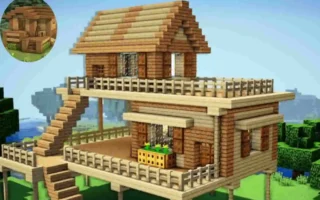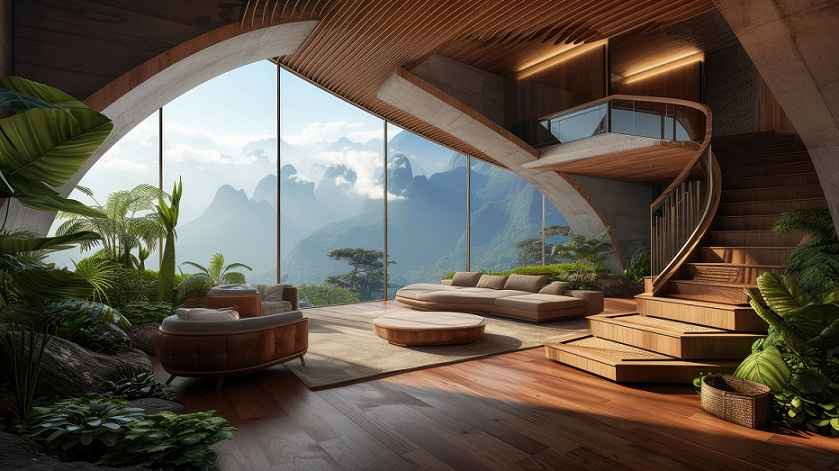
There’s something undeniably enchanting about timber frame houses. They combine the warmth of traditional craftsmanship with modern architectural design. With their open floor plans, energy efficiency, and longevity, timber frame homes are a perfect choice for those seeking a sustainable, unique living space.
Building a timber frame house is also cost-effective. It can significantly reduce construction time, especially if prefabricated components are used. This guide will take you through each stage, from selecting materials to assembling the frame, ensuring you have a clear roadmap for your project.
Timber Framing Basics
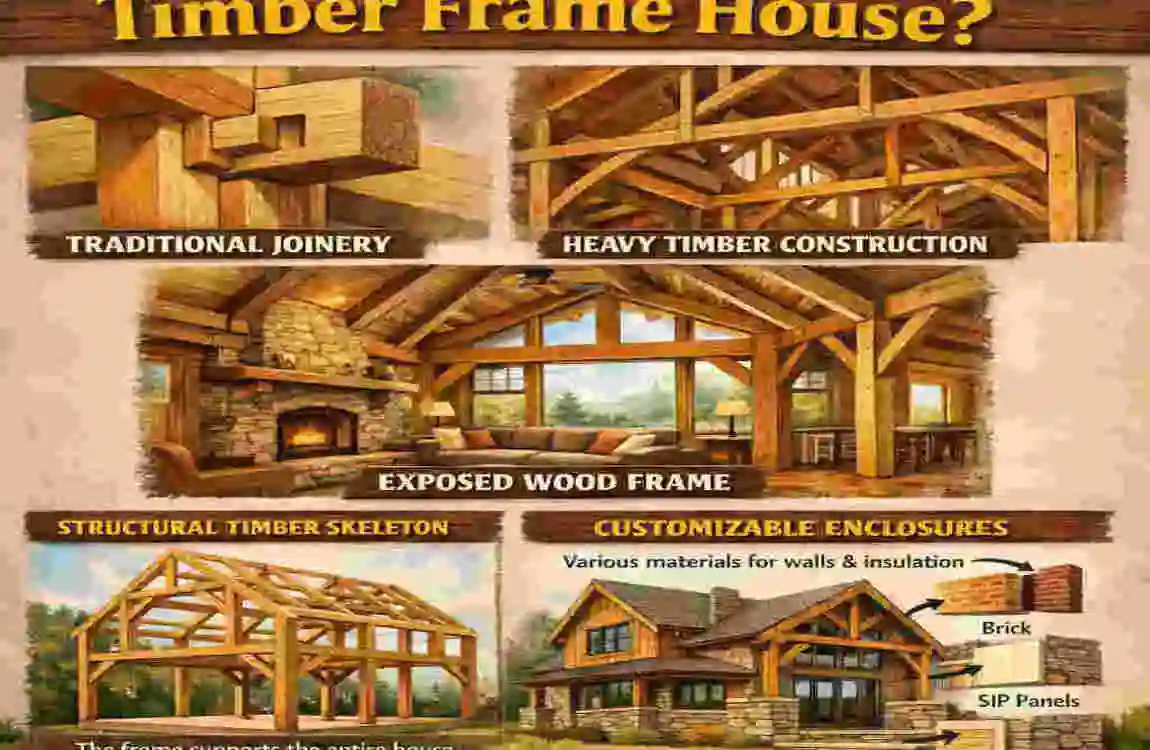
What is Timber Frame Construction?
Timber frame construction uses large, solid wood beams (typically 6×6 inches or larger) to create a sturdy skeleton for the home. Unlike conventional stick framing, which relies on smaller studs and nails, timber frames use traditional joinery techniques, such as mortise-and-tenon connections, secured with wooden pegs.
Benefits of Timber Frame Homes
- Open Floor Plans: The structural integrity of heavy timbers allows for expansive, open interior spaces without the need for load-bearing walls.
- Energy Efficiency: Thanks to their compatibility with advanced insulation systems like SIPs (Structural Insulated Panels), timber frame homes can achieve excellent thermal performance.
- Durability: When built with high-quality materials, timber frame homes can last for centuries, making them a worthwhile investment.
- Aesthetic Appeal: Exposed beams and natural wood create a warm, inviting atmosphere.
Timber frame homes are becoming increasingly popular among custom homebuilders and DIY enthusiasts. If you’re considering building one, you’re in for an exciting and rewarding journey!
Essential Timber Materials
The backbone of your timber frame home lies in the materials you choose. Let’s explore the key options:
Primary Timber Choices
- Douglas Fir: Known for its strength and straight grain, this is a top choice for structural elements like posts and beams.
- Eastern White Pine: A lightweight option, ideal for rafters or non-load-bearing components.
- Oak: Extremely durable and perfect for braces and girts.
Material Specifications
- Moisture Content: Ensure timbers are air-dried to around 19% moisture to prevent shrinkage.
- Grading: Opt for #1 or better for structural integrity.
- Quantity: For a 1,500 sq ft home, you’ll need approximately 20-30 tons of timber.
Common Dimensions
- Posts & Beams: 8×8 Douglas Fir
- Braces & Girts: 6×8 Oak
- Rafters & Trusses: Glulam beams or solid sawn Pine
Joinery and Fastening Supplies
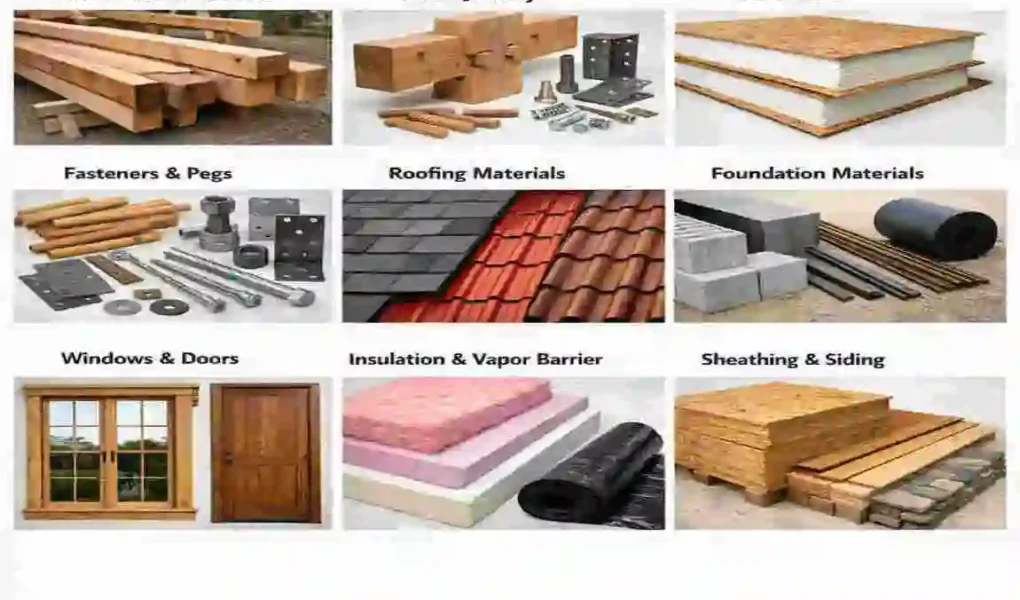
One of the defining features of timber frame construction is the use of traditional joinery. Here’s what you’ll need:
- Mortise-and-Tenon Joints: These are precision-cut joints that fit together like puzzle pieces.
- Wooden Pegs: Typically made from oak, these pegs (1-1.5 inches thick) secure the joints. You’ll need around 500-1,000 pegs for a standard home.
- Modern Alternatives: For hybrid designs, steel plates or bolts can be used.
Tools required include chisels, drawknives, and mallets. Additionally, epoxy can fill any gaps in the joinery to maintain a tight fit.
Foundation and Subfloor Materials
A strong foundation is crucial for supporting your timber frame home. Consider these options:
Foundation Types
- Poured Concrete: This is the most common choice, offering stability and longevity.
- Stone Piers: An eco-friendly alternative, often used in traditional builds.
For subfloors, use 2-inch tongue-and-groove plywood or OSB (oriented strand board) over the joists. A gravel base can prevent settling and improve drainage.
Insulation and Enclosure Systems
Proper insulation is key to making your timber frame home energy-efficient. Here are three popular options:
Enclosure Type Materials R-Value Cost per sq ft
SIPs Foam + OSB R-25-40 $8-12
Stud Infill Wool + Plywood R-20-30 $5-8
Larsen Truss 2×4 + Rigid Foam R-30+ $7-10
- SIPs: These panels are prefabricated and fit precisely into the timber-frame bays.
- Stud Infill: Rock wool or eco-wool between studs is a more affordable alternative.
- Larsen Truss: Combines rigid foam with wooden framing for excellent thermal performance.
Roofing Materials
The roof of your timber frame home serves both functional and aesthetic purposes. Common options include:
- Standing-Seam Metal: Durable and modern.
- Cedar Shakes: Offers a rustic look.
- Asphalt Shingles: Affordable and versatile.
Add synthetic felt underlayment and ridge vents for proper airflow.
Step-by-Step Build Guide
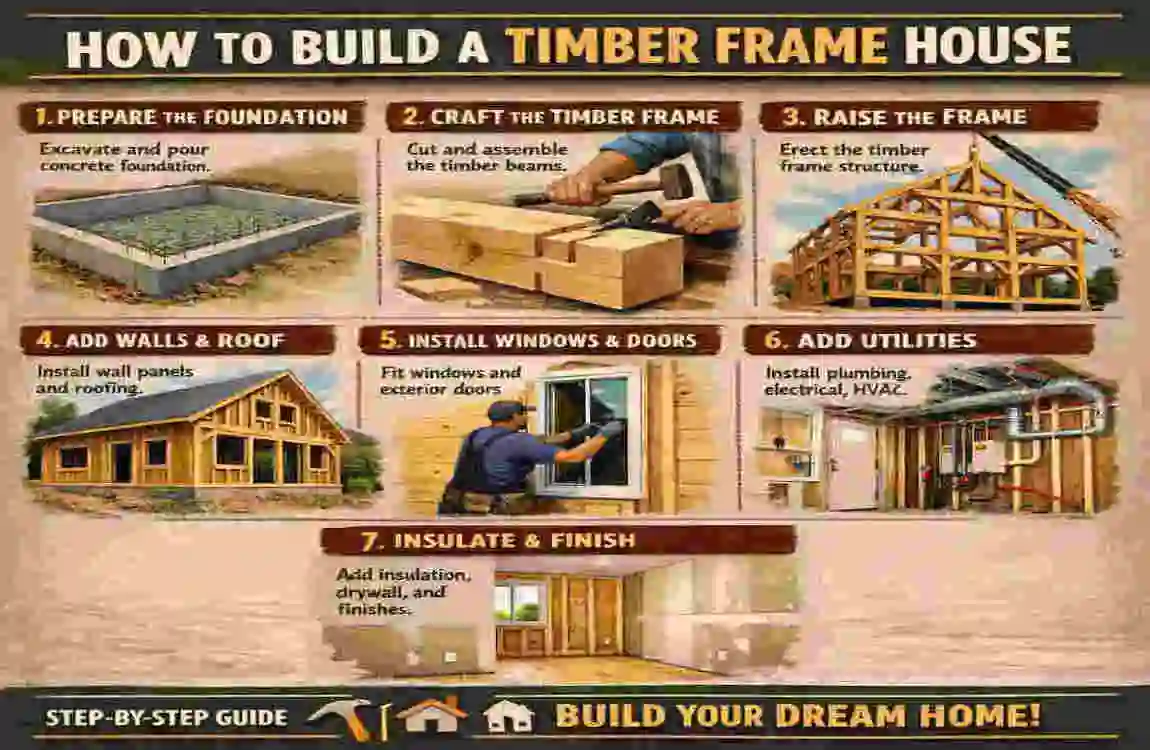
Here’s a simplified outline for how to build a timber frame house:
- Design and plan: Work with an architect or use specialized software like TimberFrameIQ.
- Source Materials: Purchase high-quality timber and other supplies.
- Cut Joinery: This is typically done off-site in a controlled environment.
- Assemble Frame: Use a crane to raise the frame (1-2 weeks).
- Insulate and Enclose: install SIPs or other insulation systems.
- Finish Interiors: Add drywall, flooring, and fixtures.
Sustainability Tips
Building a timber frame home can align with sustainable practices:
- Use FSC-certified timber to ensure responsible forestry.
- SIPs reduce energy consumption by up to 50%.
- Repurpose leftover materials, such as using offcuts for furniture.
Common Mistakes to Avoid
- Undersized Timbers: Always consult an engineer to ensure your dimensions meet load requirements.
- Improper Drying: Kiln-dried or air-dried timber prevents shrinkage or cracking.
- Neglecting Weatherproofing: Insufficient sealing can lead to moisture problems.
How to Build a Timber Frame House – FAQ
What is a timber frame house?
A timber frame house uses a wooden structural framework (posts and beams) to support the building instead of brick or concrete walls.
Is timber framing strong and durable?
Yes, properly treated timber is strong, long-lasting, and can withstand harsh weather conditions.
What are the basic steps to build one?
Design the plan → prepare the foundation → build the timber frame → add walls and roof → install insulation → finish interior and exterior.
What type of wood is used?
Common choices include softwoods like pine and spruce, or hardwoods like oak for stronger frames.
Is a timber frame house cheaper?
It can be cost-effective due to faster construction, but costs depend on materials and design.
How long does it take to build?
Usually faster than traditional houses—around 3 to 6 months for basic construction.
Is insulation good in timber frame homes?
Yes, they offer excellent insulation, making them energy-efficient.
Do timber houses need maintenance?
Yes, periodic treatment against moisture, pests, and rot is required.
Can I build it myself?
Small projects are possible DIY, but full houses usually require professional builders and engineers.