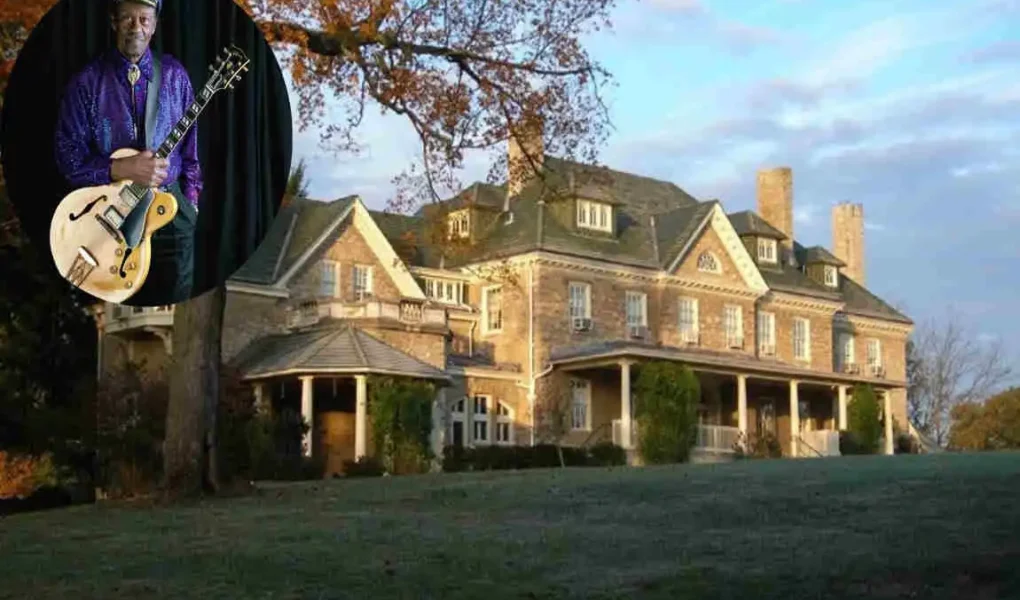
<p><span data-preserver-spaces="true">Have you ever wondered what happens to the grand estates of legends once the music finally stops? When we think of rock ‘n’ roll royalty, we often picture bright lights, screaming fans, and eternal fame. But behind the curtain of celebrity, there are physical places that hold the secrets of these icons. One such place is </span><strong><span data-preserver-spaces="true">Berry Park</span></strong><span data-preserver-spaces="true">, the famous </span><strong><span data-preserver-spaces="true">Chuck Berry house wentzville</span></strong><span data-preserver-spaces="true">.</span></p>
<p><span data-preserver-spaces="true">This isn’t just a house; it is a 17,000-square-foot monument to a man who literally defined a genre. Sitting on 35 sprawling acres in Missouri, this estate was once the crown jewel of Chuck Berry’s empire. Today, however, it stands as a haunting, faded reminder of a bygone era.</span></p>
<h2><span data-preserver-spaces="true">Building Berry Park: A Rock ‘n’ Roll Fortress</span></h2>
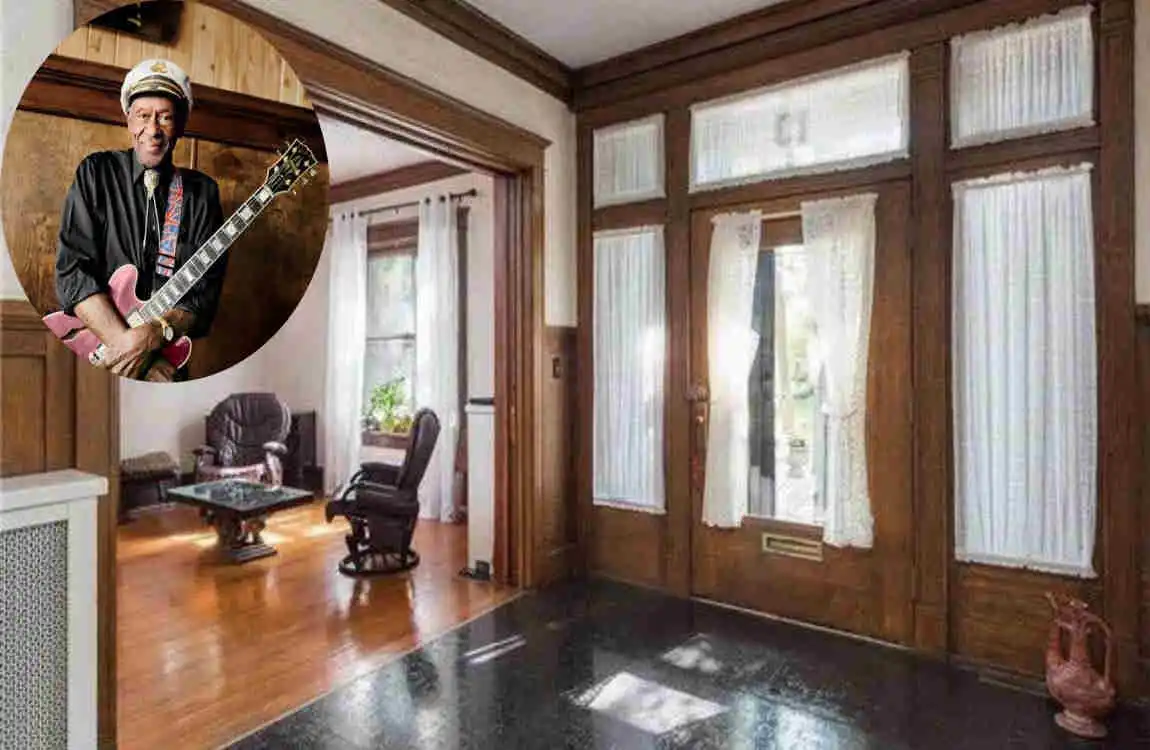
<p><span data-preserver-spaces="true">In 1961, construction began on what would become known as </span><strong><span data-preserver-spaces="true">Berry Park</span></strong><span data-preserver-spaces="true">. This was no ordinary suburban home. It was a sprawling <a href="https://comeawayhome.co.uk/bad-bunnys-iconic-puerto-rico-house-lawsuit-drama-and-viral-fame-exposed/">complex designed</a> to cater to every whim of a rock star. When people talk about the </span><strong><span data-preserver-spaces="true">Chuck Berry house in Wentzville</span></strong><span data-preserver-spaces="true">, they are usually referring to this massive 17,000-square-foot mansion that became the center of his universe.</span></p>
<h3><span data-preserver-spaces="true">Architectural Marvels and Unique Features</span></h3>
<p><span data-preserver-spaces="true">Berry Park was designed to be a playground. One of the most famous features was the </span><strong><span data-preserver-spaces="true">guitar-shaped swimming pool</span></strong><span data-preserver-spaces="true">. Imagine looking down from a plane and seeing a massive guitar shimmering in the Missouri sun! It was a bold statement of his identity.</span></p>
<p><span data-preserver-spaces="true">But the estate included much more than just a pool:</span></p>
<ul>
<li><strong><span data-preserver-spaces="true">A Private Nightclub:</span></strong><span data-preserver-spaces="true"> Berry built his own club on the property so he could host performances whenever he wanted.</span></li>
<li><strong><span data-preserver-spaces="true">Guest Cottages:</span></strong><span data-preserver-spaces="true"> He built several smaller homes on the 35-acre lot to house friends, family, and touring musicians.</span></li>
<li><strong><span data-preserver-spaces="true">Recording Studios:</span></strong><span data-preserver-spaces="true"> He wanted the ability to capture his musical genius without ever having to leave his front gate.</span></li>
</ul>
<h3><span data-preserver-spaces="true">A Sanctuary During Segregation</span></h3>
<p><span data-preserver-spaces="true">It is important to remember the social climate of the 1960s. Many venues were still segregated, and Black artists often faced discrimination. Berry Park was a “safe zone.” It was a place where stars of all races could gather, perform, and relax. It was a rival to the segregated venues of the time, proving that Chuck Berry didn’t need the mainstream establishment to succeed.</span></p>
<h3><span data-preserver-spaces="true">The Darker Side of the Design</span></h3>
<p><span data-preserver-spaces="true">While the house was a marvel, it also had some controversial features. Years later, it was revealed that the house and surrounding buildings contained </span><strong><span data-preserver-spaces="true">hidden cameras</span></strong><span data-preserver-spaces="true">. While Berry claimed these were for security, they would later become a central part of the scandals that tarnished his reputation. Even in the building phase, Berry’s desire for total control over his environment was evident.</span></p>
<h2><span data-preserver-spaces="true">The Golden Era: Peak Years at the Mansion</span></h2>
<p><img class="aligncenter wp-image-6730 size-full" src="https://comeawayhome.co.uk/wp-content/uploads/2026/02/Untitleddesign95_imresizer-ezgif.com-jpg-to-webp-converter.webp" alt="chuck berry house wentzville" width="1150" height="750" /></p>
<p><span data-preserver-spaces="true">From the 1960s through the 1980s, the </span><strong><span data-preserver-spaces="true">Chuck Berry house in Wentzville</span></strong><span data-preserver-spaces="true"> was the place to be. It was a bustling hub of activity where the legends of rock ‘n’ roll would often stop by. If those walls could talk, they would tell stories of late-night jam sessions, lavish parties, and the quiet moments of a man who changed the world.</span></p>
<h3><span data-preserver-spaces="true">Life at Berry Park</span></h3>
<p><span data-preserver-spaces="true">For Berry, the mansion was more than a status symbol; it was his family home. He raised his children there and tried to maintain a sense of normalcy amidst the chaos of fame. He was known to be a hands-on owner, often seen working on the grounds or tinkering with equipment. He wasn’t just the “King of Rock ‘n’ Roll”; he was the master of Berry Park.</span></p>
<h3><span data-preserver-spaces="true">The Heartbeat of Music</span></h3>
<p><span data-preserver-spaces="true">During these decades, Berry Park was a living, breathing entity. Musicians would travel from all over to record in his studio. The estate represented the height of his power and influence. It was a symbol of Black excellence and musical innovation.</span></p>
<h3><span data-preserver-spaces="true">The 1989 Fire: A Turning Point</span></h3>
<p><span data-preserver-spaces="true">Every story has a tragic middle, and for the </span><strong><span data-preserver-spaces="true">Chuck Berry House in Wentzville</span></strong><span data-preserver-spaces="true">, that moment came in 1989. A devastating fire broke out on the <a href="https://comeawayhome.co.uk/chris-ashton-house-inside-the-rugby-legends-luxe-property-with-saracens-owner-nigel-wray/">property</a>. While the main structure survived, the fire destroyed his recording studio and—most tragically—many of his </span><strong><span data-preserver-spaces="true">master tapes</span></strong><span data-preserver-spaces="true">.</span></p>
<p><span data-preserver-spaces="true">This was a massive blow to Berry. Those tapes represented years of work and unreleased music. Many historians believe that this fire marked the beginning of the end for the “glory days” of Berry Park. The energy of the estate began to shift from a vibrant, creative hub to a more reclusive and guarded fortress.</span></p>
<h2><span data-preserver-spaces="true">Scandals, Legal Woes, and the Slow Decline</span></h2>
<p><span data-preserver-spaces="true">As we move into the 1990s, the narrative of the </span><strong><span data-preserver-spaces="true">Chuck Berry house in Wentzville</span></strong><span data-preserver-spaces="true"> takes a darker turn. While the mansion remained a landmark, the man living inside it was increasingly embroiled in legal battles and public controversy.</span></p>
<h3><span data-preserver-spaces="true">The Restroom Camera Scandal</span></h3>
<p><span data-preserver-spaces="true">One of the biggest stains on Berry’s legacy involved his nearby restaurant, </span><strong><span data-preserver-spaces="true">Southern Air</span></strong><span data-preserver-spaces="true">. In the early 1990s, it was discovered that Berry had installed secret cameras in the women’s restrooms. While this happened at the restaurant, the fallout directly impacted the lore of Berry Park.</span></p>
<p><span data-preserver-spaces="true">Law enforcement raided the <a href="https://comeawayhome.co.uk/inside-gambino-house-carlos-secret-brooklyn-mansion-mafia-legacy/">mansion</a> as part of the investigation. They found hours of footage, much of which was highly inappropriate. This scandal led to multiple lawsuits and a significant payout to the victims. The public’s perception of the rock legend shifted, and the “fortress” of Berry Park began to feel more like a place of isolation and secrecy.</span></p>
<h3><span data-preserver-spaces="true">A Decline in Maintenance</span></h3>
<p><span data-preserver-spaces="true">As Berry aged, the massive 17,000-square-foot home became harder to maintain. The costs of keeping up a 35-acre estate are astronomical. Over time, the once-pristine grounds began to grow wild. The guitar-shaped pool, once a symbol of his success, started to collect leaves and debris.</span></p>
<h3><span data-preserver-spaces="true">The Passing of a Legend</span></h3>
<p><span data-preserver-spaces="true">When Chuck Berry passed away in 2017 at the age of 90, he was found in his home at Berry Park. His death marked the end of an era for music, but it also left the future of the </span><strong><span data-preserver-spaces="true">Chuck Berry house wentzville</span></strong><span data-preserver-spaces="true"> in limbo. Without his presence to hold it together, the estate quickly fell into a state of total neglect.</span></p>
<h2><span data-preserver-spaces="true">The Current State: A Haunted Monument</span></h2>
<p><span data-preserver-spaces="true">If you were to visit the </span><strong><span data-preserver-spaces="true">Chuck Berry house in Wentzville</span></strong><span data-preserver-spaces="true"> today, you would see a very different sight from the one from the 1970s. The estate has become a favorite spot for “urban explorers” and fans who want to see the ruins of greatness.</span></p>
<h3><span data-preserver-spaces="true">Vivid Decay and Vandalism</span></h3>
<p><span data-preserver-spaces="true">The grounds are now heavily overgrown. Weeds have pushed through the cracks of the tennis courts and the driveway. The interior of the mansion, once filled with expensive furniture and musical history, has been picked over by vandals and thieves.</span></p>
<p><span data-preserver-spaces="true">Photos from explorers show:</span></p>
<ul>
<li><strong><span data-preserver-spaces="true">Graffiti on the walls</span></strong><span data-preserver-spaces="true"> where fans have left their marks.</span></li>
<li><a href="https://comeawayhome.co.uk/natural-remedies-mold-and-mildew-at-home/"><strong><span data-preserver-spaces="true">Broken windows</span></strong></a><span data-preserver-spaces="true"> that let in the Missouri weather.</span></li>
<li><strong><span data-preserver-spaces="true">Peeling wallpaper</span></strong><span data-preserver-spaces="true"> and rotting floorboards.</span></li>
<li><strong><span data-preserver-spaces="true">The guitar pool</span></strong><span data-preserver-spaces="true">, now a grey, empty concrete pit.</span></li>
</ul>
<h3><span data-preserver-spaces="true">Ownership and Trespassing Risks</span></h3>
<p><span data-preserver-spaces="true">As of 2026, the ownership status of the property remains a legal tangle involving his estate and heirs. Because the house is technically private property, trespassing is a significant risk. Local police often patrol the area to keep curious onlookers away. Despite the “No Trespassing” signs, the allure of the </span><strong><span data-preserver-spaces="true">Chuck Berry house in Wentzville</span></strong><span data-preserver-spaces="true"> continues to draw people in.</span></p>
<h3><span data-preserver-spaces="true">The Preservation Debate</span></h3>
<p><span data-preserver-spaces="true">There is a growing movement among music historians to save Berry Park. They argue that it should be treated with the same respect as Elvis Presley’s </span><strong><span data-preserver-spaces="true">Graceland</span></strong><span data-preserver-spaces="true">. However, the sheer cost of restoration is a major hurdle. To bring a 17,000-square-foot mansion back from this level of decay would require millions of dollars.</span></p>
<h2><span data-preserver-spaces="true">Comparing the Past and Present</span></h2>
<p><span data-preserver-spaces="true">To give you a better idea of how much has changed, let’s look at a quick comparison of the estate during its peak and its current state.</span></p>
<p><span data-preserver-spaces="true">FeaturePeak Era Glory (1960s-1980s)Abandoned Today (2026)</span></p>
<p><strong><span data-preserver-spaces="true">Mansion Size</span></strong><span data-preserver-spaces="true">: 17,000 sq ft of luxury. Vandalized, decaying, and empty</span></p>
<p><strong><span data-preserver-spaces="true">The Pool</span></strong><span data-preserver-spaces="true"> Iconic guitar shape, crystal clear Filled with dirt, overgrown, and cracked</span></p>
<p><strong><span data-preserver-spaces="true">Nightclub</span></strong><span data-preserver-spaces="true"> Hosted world-famous stars Roofless ruins, reclaimed by nature</span></p>
<p><strong><span data-preserver-spaces="true">Grounds</span></strong><span data-preserver-spaces="true"> 35 acres of manicured lawns, dense brush, and wild overgrowth</span></p>
<p><strong><span data-preserver-spaces="true">Cultural Value</span></strong><span data-preserver-spaces="true">: A global rock ‘n’ roll pilgrimage site A subject of preservation debates</span></p>
<h2><span data-preserver-spaces="true">The Rock ‘n’ Roll Legacy of Berry Park</span></h2>
<p><span data-preserver-spaces="true">Why does the </span><strong><span data-preserver-spaces="true">Chuck Berry house in Wentzville</span></strong><span data-preserver-spaces="true"> matter so much? It’s because Chuck Berry wasn’t just a singer; he was the architect of modern music. Every guitar riff you hear today owes a debt to him. Berry Park was the physical manifestation of his success.</span></p>
<h3><span data-preserver-spaces="true">Influence on Music Tourism</span></h3>
<p><span data-preserver-spaces="true">When we look at sites like Graceland or Paisley Park (Prince’s home), we see how a house can become a temple for fans. Berry Park had the potential to be that temple. It represents the rise of a Black artist to the very top of a world that didn’t always want him there.</span></p>
<h3><span data-preserver-spaces="true">National Register Context</span></h3>
<p><span data-preserver-spaces="true">Interestingly, while Chuck Berry’s childhood home in St. Louis is on the </span><strong><span data-preserver-spaces="true">National Register of Historic Places</span></strong><span data-preserver-spaces="true">, the Wentzville <a href="https://comeawayhome.co.uk/gerry-beckleys-sherman-oaks-mansion-inside-the-america-singers-2-2m-tropical-retreat/">mansion</a> is not. This has made preservation efforts even more difficult. Without that official status, it is harder to get government grants or protections to keep the building from being demolished.</span></p>
<h3><span data-preserver-spaces="true">A Symbol of the “Real” Rock ‘n’ Roll</span></h3>
<p><span data-preserver-spaces="true">Unlike the polished museums of Nashville or Cleveland, the </span><strong><span data-preserver-spaces="true">Chuck Berry house in Wentzville</span></strong><span data-preserver-spaces="true">, in its current state, feels “real.” It shows the messy, complicated, and sometimes tragic nature of fame. It isn’t a sanitized version of history; it is a raw look at what happens when a legend leaves the stage.</span></p>
<h2><span data-preserver-spaces="true">How to Explore and Help Preservation</span></h2>
<p><img class="aligncenter wp-image-6729 size-full" src="https://comeawayhome.co.uk/wp-content/uploads/2026/02/Untitleddesign96_imresizer-ezgif.com-jpg-to-webp-converter.webp" alt="chuck berry house wentzville" width="1150" height="750" /></p>
<p><span data-preserver-spaces="true">You might be wondering, “Can I visit the house?” The short answer is: </span><strong><span data-preserver-spaces="true">not legally</span></strong><span data-preserver-spaces="true">. However, there are ways to engage with this history without breaking the law.</span></p>
<h3><span data-preserver-spaces="true">Virtual Exploration</span></h3>
<p><span data-preserver-spaces="true">Thanks to the internet, you don’t have to trespass to see the </span><strong><span data-preserver-spaces="true">Chuck Berry house in Wentzville</span></strong><span data-preserver-spaces="true">.</span></p>
<ol>
<li><strong><span data-preserver-spaces="true">Google Maps:</span></strong><span data-preserver-spaces="true"> You can use satellite view to see the outline of the guitar-shaped pool and the layout of the 35-acre estate.</span></li>
<li><strong><span data-preserver-spaces="true">Urban Explorer Videos:</span></strong><span data-preserver-spaces="true"> Many photographers have documented the <a href="https://comeawayhome.co.uk/sintered-stone-the-eco-friendly-interior-trend-for-homes/">interior</a> of the house. Watching these videos is a great way to see the decay without the risk of arrest or injury.</span></li>
<li><strong><span data-preserver-spaces="true">Documentaries:</span></strong><span data-preserver-spaces="true"> Several films about Chuck Berry’s life feature footage of Berry Park during its better days.</span></li>
</ol>
<h3><span data-preserver-spaces="true">Supporting Local Efforts</span></h3>
<p><span data-preserver-spaces="true">If you want to see the mansion preserved, you can look into St. Louis-based historical societies. These groups often advocate for the protection of local landmarks. Sharing the story of the </span><strong><span data-preserver-spaces="true">Chuck Berry house wentzville</span></strong><span data-preserver-spaces="true"> on social media also helps keep the conversation alive. The more people who care about it, the more likely a donor or a foundation will step in to save it.</span></p>
<h2><span data-preserver-spaces="true">The Final Chord: A Legacy That Won’t Fade</span></h2>
<p><span data-preserver-spaces="true">The </span><strong><span data-preserver-spaces="true">Chuck Berry house in Wentzville</span></strong><span data-preserver-spaces="true"> is more than just bricks and mortar. It is a story of ambition, talent, scandal, and eventually, silence. It stands as a faded monument to a man who changed the world with six strings and a “duck walk.”</span></p>
<p><span data-preserver-spaces="true">Even though the paint is peeling and the <a href="https://comeawayhome.co.uk/inside-marysol-pattons-haunted-coconut-grove-house-tour-dark-secrets-pool-house-glow-up/">pool</a> is empty, the spirit of Berry Park remains. It reminds us that even the greatest empires can crumble, but the music created within those walls will live on forever. Whether it eventually becomes a museum or is reclaimed by the Missouri woods, the </span><strong><span data-preserver-spaces="true">Chuck Berry house wentzville</span></strong><span data-preserver-spaces="true"> will always be a sacred site for those who love rock ‘n’ roll.</span></p>
<h2><span data-sheets-root="1">Where Does Chuck Berry Currently Live?</span></h2>
<p>Chuck Berry passed away in 2017, so he does not currently live anywhere. He resided at his Berry Park estate near Wentzville, Missouri, until his death there on March 18, 2017.</p>
Have you ever wondered what happens to the grand estates of legends once the music finally stops? When we think of rock ‘n’ roll royalty, we often picture bright lights, screaming fans, and eternal fame. But behind the curtain of celebrity, there are physical places that hold the secrets of these icons. One such place is Berry Park, the famous Chuck Berry house wentzville.
This isn’t just a house; it is a 17,000-square-foot monument to a man who literally defined a genre. Sitting on 35 sprawling acres in Missouri, this estate was once the crown jewel of Chuck Berry’s empire. Today, however, it stands as a haunting, faded reminder of a bygone era.
Building Berry Park: A Rock ‘n’ Roll Fortress
In 1961, construction began on what would become known as Berry Park. This was no ordinary suburban home. It was a sprawling complex designed to cater to every whim of a rock star. When people talk about the Chuck Berry house in Wentzville, they are usually referring to this massive 17,000-square-foot mansion that became the center of his universe.
Architectural Marvels and Unique Features
Berry Park was designed to be a playground. One of the most famous features was the guitar-shaped swimming pool. Imagine looking down from a plane and seeing a massive guitar shimmering in the Missouri sun! It was a bold statement of his identity.
But the estate included much more than just a pool:
- A Private Nightclub: Berry built his own club on the property so he could host performances whenever he wanted.
- Guest Cottages: He built several smaller homes on the 35-acre lot to house friends, family, and touring musicians.
- Recording Studios: He wanted the ability to capture his musical genius without ever having to leave his front gate.
A Sanctuary During Segregation
It is important to remember the social climate of the 1960s. Many venues were still segregated, and Black artists often faced discrimination. Berry Park was a “safe zone.” It was a place where stars of all races could gather, perform, and relax. It was a rival to the segregated venues of the time, proving that Chuck Berry didn’t need the mainstream establishment to succeed.
The Darker Side of the Design
While the house was a marvel, it also had some controversial features. Years later, it was revealed that the house and surrounding buildings contained hidden cameras. While Berry claimed these were for security, they would later become a central part of the scandals that tarnished his reputation. Even in the building phase, Berry’s desire for total control over his environment was evident.
The Golden Era: Peak Years at the Mansion
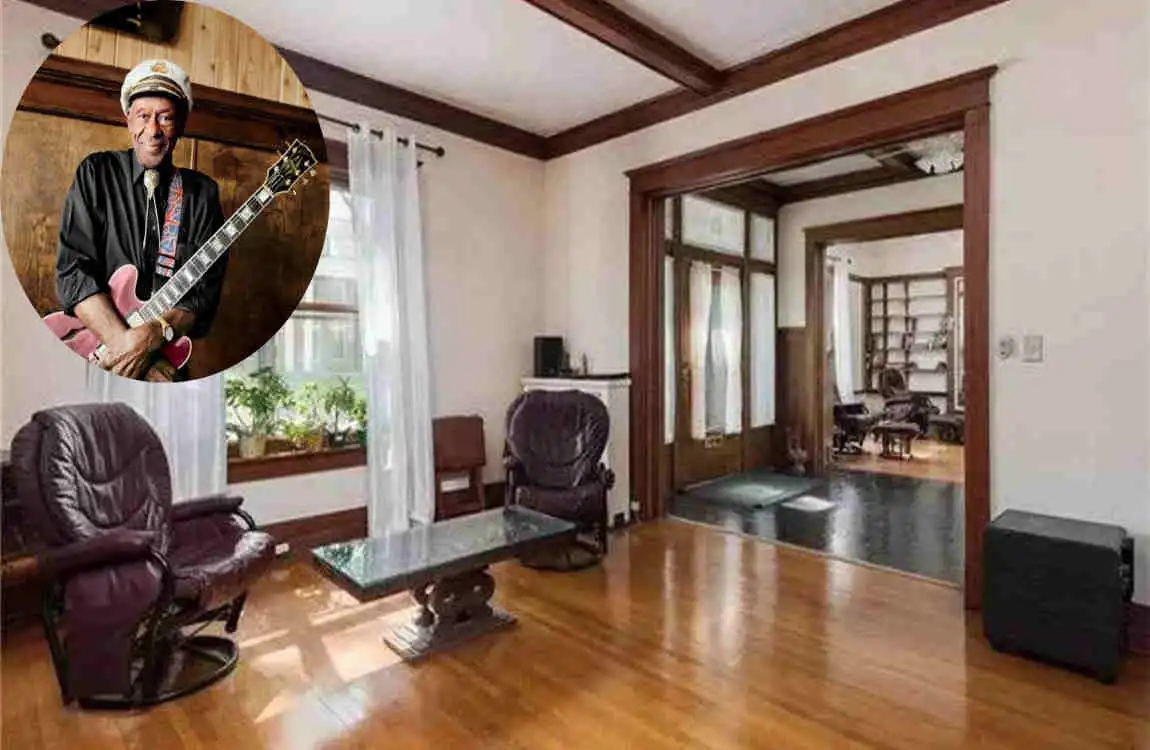
From the 1960s through the 1980s, the Chuck Berry house in Wentzville was the place to be. It was a bustling hub of activity where the legends of rock ‘n’ roll would often stop by. If those walls could talk, they would tell stories of late-night jam sessions, lavish parties, and the quiet moments of a man who changed the world.
Life at Berry Park
For Berry, the mansion was more than a status symbol; it was his family home. He raised his children there and tried to maintain a sense of normalcy amidst the chaos of fame. He was known to be a hands-on owner, often seen working on the grounds or tinkering with equipment. He wasn’t just the “King of Rock ‘n’ Roll”; he was the master of Berry Park.
The Heartbeat of Music
During these decades, Berry Park was a living, breathing entity. Musicians would travel from all over to record in his studio. The estate represented the height of his power and influence. It was a symbol of Black excellence and musical innovation.
The 1989 Fire: A Turning Point
Every story has a tragic middle, and for the Chuck Berry House in Wentzville, that moment came in 1989. A devastating fire broke out on the property. While the main structure survived, the fire destroyed his recording studio and—most tragically—many of his master tapes.
This was a massive blow to Berry. Those tapes represented years of work and unreleased music. Many historians believe that this fire marked the beginning of the end for the “glory days” of Berry Park. The energy of the estate began to shift from a vibrant, creative hub to a more reclusive and guarded fortress.
Scandals, Legal Woes, and the Slow Decline
As we move into the 1990s, the narrative of the Chuck Berry house in Wentzville takes a darker turn. While the mansion remained a landmark, the man living inside it was increasingly embroiled in legal battles and public controversy.
The Restroom Camera Scandal
One of the biggest stains on Berry’s legacy involved his nearby restaurant, Southern Air. In the early 1990s, it was discovered that Berry had installed secret cameras in the women’s restrooms. While this happened at the restaurant, the fallout directly impacted the lore of Berry Park.
Law enforcement raided the mansion as part of the investigation. They found hours of footage, much of which was highly inappropriate. This scandal led to multiple lawsuits and a significant payout to the victims. The public’s perception of the rock legend shifted, and the “fortress” of Berry Park began to feel more like a place of isolation and secrecy.
A Decline in Maintenance
As Berry aged, the massive 17,000-square-foot home became harder to maintain. The costs of keeping up a 35-acre estate are astronomical. Over time, the once-pristine grounds began to grow wild. The guitar-shaped pool, once a symbol of his success, started to collect leaves and debris.
The Passing of a Legend
When Chuck Berry passed away in 2017 at the age of 90, he was found in his home at Berry Park. His death marked the end of an era for music, but it also left the future of the Chuck Berry house wentzville in limbo. Without his presence to hold it together, the estate quickly fell into a state of total neglect.
The Current State: A Haunted Monument
If you were to visit the Chuck Berry house in Wentzville today, you would see a very different sight from the one from the 1970s. The estate has become a favorite spot for “urban explorers” and fans who want to see the ruins of greatness.
Vivid Decay and Vandalism
The grounds are now heavily overgrown. Weeds have pushed through the cracks of the tennis courts and the driveway. The interior of the mansion, once filled with expensive furniture and musical history, has been picked over by vandals and thieves.
Photos from explorers show:
- Graffiti on the walls where fans have left their marks.
- Broken windows that let in the Missouri weather.
- Peeling wallpaper and rotting floorboards.
- The guitar pool, now a grey, empty concrete pit.
Ownership and Trespassing Risks
As of 2026, the ownership status of the property remains a legal tangle involving his estate and heirs. Because the house is technically private property, trespassing is a significant risk. Local police often patrol the area to keep curious onlookers away. Despite the “No Trespassing” signs, the allure of the Chuck Berry house in Wentzville continues to draw people in.
The Preservation Debate
There is a growing movement among music historians to save Berry Park. They argue that it should be treated with the same respect as Elvis Presley’s Graceland. However, the sheer cost of restoration is a major hurdle. To bring a 17,000-square-foot mansion back from this level of decay would require millions of dollars.
Comparing the Past and Present
To give you a better idea of how much has changed, let’s look at a quick comparison of the estate during its peak and its current state.
FeaturePeak Era Glory (1960s-1980s)Abandoned Today (2026)
Mansion Size: 17,000 sq ft of luxury. Vandalized, decaying, and empty
The Pool Iconic guitar shape, crystal clear Filled with dirt, overgrown, and cracked
Nightclub Hosted world-famous stars Roofless ruins, reclaimed by nature
Grounds 35 acres of manicured lawns, dense brush, and wild overgrowth
Cultural Value: A global rock ‘n’ roll pilgrimage site A subject of preservation debates
The Rock ‘n’ Roll Legacy of Berry Park
Why does the Chuck Berry house in Wentzville matter so much? It’s because Chuck Berry wasn’t just a singer; he was the architect of modern music. Every guitar riff you hear today owes a debt to him. Berry Park was the physical manifestation of his success.
Influence on Music Tourism
When we look at sites like Graceland or Paisley Park (Prince’s home), we see how a house can become a temple for fans. Berry Park had the potential to be that temple. It represents the rise of a Black artist to the very top of a world that didn’t always want him there.
National Register Context
Interestingly, while Chuck Berry’s childhood home in St. Louis is on the National Register of Historic Places, the Wentzville mansion is not. This has made preservation efforts even more difficult. Without that official status, it is harder to get government grants or protections to keep the building from being demolished.
A Symbol of the “Real” Rock ‘n’ Roll
Unlike the polished museums of Nashville or Cleveland, the Chuck Berry house in Wentzville, in its current state, feels “real.” It shows the messy, complicated, and sometimes tragic nature of fame. It isn’t a sanitized version of history; it is a raw look at what happens when a legend leaves the stage.
How to Explore and Help Preservation
You might be wondering, “Can I visit the house?” The short answer is: not legally. However, there are ways to engage with this history without breaking the law.
Virtual Exploration
Thanks to the internet, you don’t have to trespass to see the Chuck Berry house in Wentzville.
- Google Maps: You can use satellite view to see the outline of the guitar-shaped pool and the layout of the 35-acre estate.
- Urban Explorer Videos: Many photographers have documented the interior of the house. Watching these videos is a great way to see the decay without the risk of arrest or injury.
- Documentaries: Several films about Chuck Berry’s life feature footage of Berry Park during its better days.
Supporting Local Efforts
If you want to see the mansion preserved, you can look into St. Louis-based historical societies. These groups often advocate for the protection of local landmarks. Sharing the story of the Chuck Berry house wentzville on social media also helps keep the conversation alive. The more people who care about it, the more likely a donor or a foundation will step in to save it.
The Final Chord: A Legacy That Won’t Fade
The Chuck Berry house in Wentzville is more than just bricks and mortar. It is a story of ambition, talent, scandal, and eventually, silence. It stands as a faded monument to a man who changed the world with six strings and a “duck walk.”
Even though the paint is peeling and the pool is empty, the spirit of Berry Park remains. It reminds us that even the greatest empires can crumble, but the music created within those walls will live on forever. Whether it eventually becomes a museum or is reclaimed by the Missouri woods, the Chuck Berry house wentzville will always be a sacred site for those who love rock ‘n’ roll.
Where Does Chuck Berry Currently Live?
Chuck Berry passed away in 2017, so he does not currently live anywhere. He resided at his Berry Park estate near Wentzville, Missouri, until his death there on March 18, 2017.