Picture this: you wake to the gentle Mediterranean sun streaming through the wooden shutters of your newly purchased Italian property. Whether you have invested in a rustic, centuries-old Tuscan villa surrounded by olive groves or a sleek, contemporary apartment in the bustling heart of Milan, the 2026 property boom in Italy has officially captured your heart. A massive wave of expats and locals alike is currently sweeping the nation, eager to breathe new life into stunning historic properties. But before you can comfortably sip your morning espresso and admire your new living space, you have to tackle the most transformative renovation project of all: painting the walls.
If you are planning a renovation, you need to define your scope carefully. For this comprehensive guide, we are focusing on a standard 1,500-square-foot home interior. In European measurements, that translates to roughly 139 square meters. We are looking strictly at the interior spaces—this means your living room walls, bedroom ceilings, hallway trims, and baseboards, while excluding the exterior stucco or brick facades for now.
| Cost Tier | Per Sqm Rate | Total for 1,500 Sq Ft (139 sqm) | Includes | Best Regions |
|---|---|---|---|---|
| Budget | €8–€12 | €12,000–€18,000 | Basic washable paint, minimal prep, 2 coats | South (Sicily, Puglia) |
| Standard | €13–€20 | €18,000–€28,000 | Acrylic/enamel, repairs, 3 coats | Central (Rome, Florence) |
| Premium | €20–€30+ | €28,000–€42,000+ | Anti-mold/thermal paints, effects like Venetian | North (Milan, Turin) |
Average Costs: Total Price for a 1,500 Sq Ft House Interior
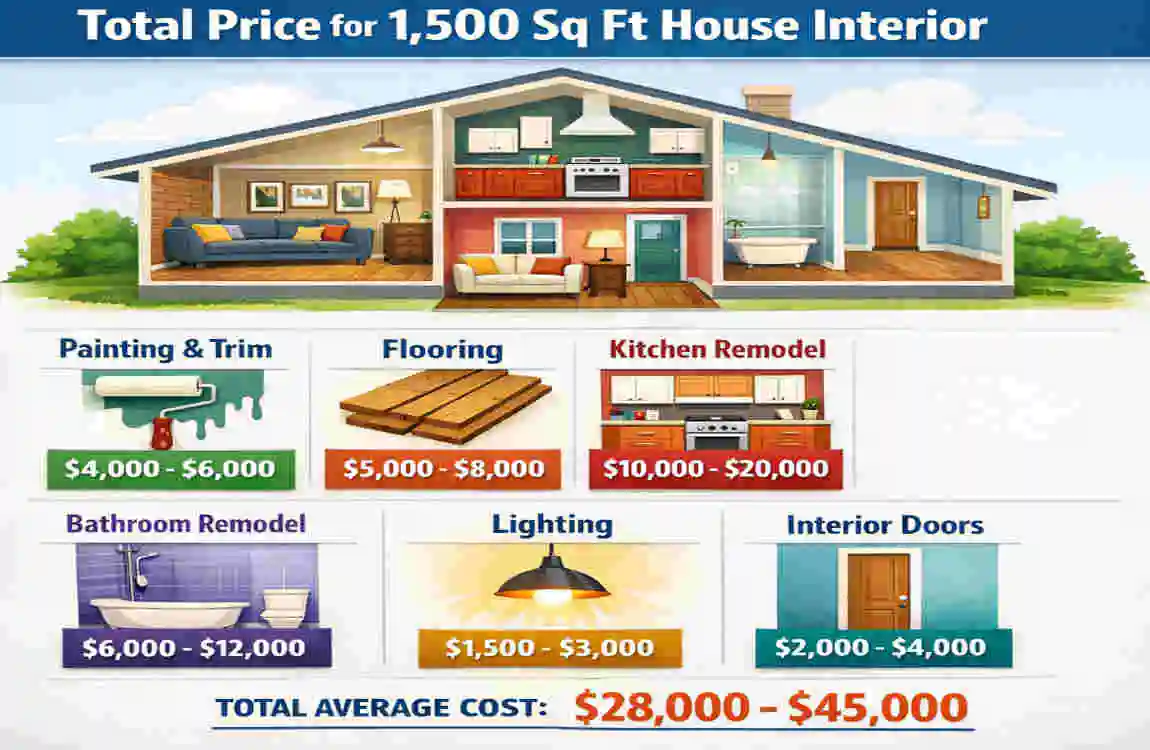
When you start crunching the numbers for your Italian dream home, the estimates can feel overwhelming. The secret to keeping your sanity is to break the total down into per-square-meter rates.
Across Italy, professional painters generally charge between €5 and €30 per square meter, depending entirely on the quality of the finish and the complexity of the job. For the national average, you will typically see rates between €15 and €25 per square meter. This sweet spot usually covers both the crew’s physical labor and the standard materials required to get the job done. If we apply that basic math to a 139 square meter (1,500 sq ft) home, the baseline costs seem quite low—around €2,085 to €3,475. However, this is just the floor space’s surface area! When you scale that up to account for the actual surface area of all the walls, the ceilings in every room, the intricate trims, and standard 2026 inflation rates, the fully realized, realistic costs for an entire home interior jump into the thousands.
Let us look closely at the three main pricing tiers you will encounter in the Italian market:
The Low-End Budget (€12,000 total): If you are trying to save your euros, this budget tier is for you. This price point usually includes basic, standard washable white paint. You can expect about two coats of paint and minimal surface preparation. This budget is highly common in the more affordable southern regions of Italy, where labor rates remain lower. It is perfect if your walls are already in good condition and need a quick, clean refresh.
The Mid-Range Standard (€18,000- €22,000): This is where most homeowners fall. At this price point, you are upgrading to high-quality acrylic or durable enamel paints. The painters will apply three solid coats for a rich, deep finish. This tier also accounts for standard urban labor rates in cities such as Florence and Turin. It includes thorough preparation, ensuring minor cracks and holes are patched up beautifully before the rolling begins.
The High-End Luxury (€25,000-€30,000): If you want nothing but the best, welcome to the luxury tier. This budget allows you to select Premium anti-mold paints or stunning thermal coatings. It even covers highly specialized decorative techniques, such as the famous Venetian plaster effects (stucco veneziano), which add incredible texture to your walls. You will often see these prices in the affluent northern regions, such as Lombardy or the areas around Lake Como.
Quick Cost Reference Guide
Cost Tier Total for 1,500 Sq Ft Per Sqm Rate Best For
Budget €12,000-€15,000 €8-€12 A simple, clean refresh before moving in
Standard €18,000-€22,000 €13-€16 Everyday family homes and modern apartments
Luxury €25,000+ €18-€30 High-end villas requiring specialized finishes
It is also vital to remember the regional price shifts. Painting a home in the North (like Milan) will generally cost you about 20% more than the national average, pushing rates to €20+ per square meter. Conversely, heading down to the beautiful southern region of Puglia might score you a 15% discount, bringing rates closer to €10 per square meter.
Cost Breakdown: Labor, Materials, and Hidden Fees
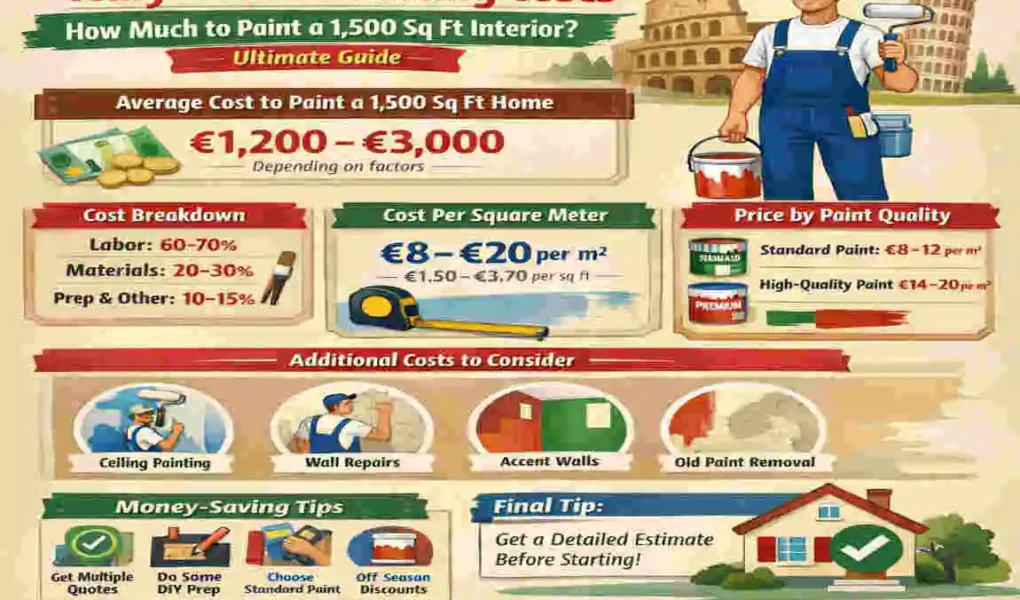
If you truly want to understand exactly how much it costs to paint a 1500 sq ft house interior in Italy, you need to peek behind the curtain and see how a contractor builds your quote. A final invoice is never just a single, arbitrary number; it is a carefully calculated mix of labor, supplies, prep work, and government taxes.
The Heavy Hitter: Labor Costs (60-70% of total)
You are not just paying for someone to splash color on a wall; you are paying for their time, expertise, and physical effort. In Italy, labor makes up the lion’s share of your painting bill, accounting for 60% to 70% of the total cost. You can expect to pay between €8 and €20 per square meter for labor alone. For a 1,500 sq ft (139 sqm) interior, a professional crew of 2 to 4 painters will typically need 5 to 10 full working days to complete the job to a high standard. They take their craft seriously, ensuring crisp lines and smooth finishes.
The Foundation: Material Costs (20-30% of total)
The type of paint you choose dramatically swings your final price. Italian paint stores (colorifici) offer a vast array of options. Paint and supplies will eat up about 20% to 30% of your budget. Here is a closer look at what goes on your walls:
Paint Type Average Cost/sqm Key Features and Benefits
Washable White (Traspirante) €1-€2 The basic standard. Breathable, affordable, and perfect for ceilings or low-traffic rooms.
Acrylic / Enamel €2.5-€5 Highly durable, easy to wipe down, and available in thousands of rich, vibrant colors.
Thermal / Anti-Condensation €4-€5 Premium option. Helps prevent mold in humid climates and older stone buildings.
The Unseen Work: Prep and Extras (10-20% of total)
Never underestimate the condition of your current walls. Historic Italian homes are famous for their charm, but they are equally famous for crumbling plaster and hidden moisture damage. Proper preparation—which includes heavy sanding, applying high-quality primers, and repairing cracks—will add about €2-€5 per square meter to your bill. Skipping this step is a recipe for disaster, as new paint will peel off a poorly prepared surface within months.
The Tax Man: Understanding VAT (IVA)
In Italy, the Value Added Tax (IVA) is a fact of every transaction. Generally, standard services are subject to a 22% IVA. However, there is excellent news for homeowners! If your painting project is part of a larger, official home renovation, you can often qualify for a reduced IVA rate of just 10%. Furthermore, depending on the current 2026 tax laws, you might even be eligible for government incentives such as the “Superbonus” or “Bonus Ristrutturazioni,” which can offer massive tax deductions over 10 years.
Pro Tip for Expats: Always get at least three written quotes (preventivi) from different local contractors. Also, if your beautiful Italian property features soaring, double-height ceilings, remember to factor in the cost of renting scaffolding (ponteggi), which can easily add an extra €500 or more to your final bill.
Factors Affecting Italy Interior Painting Prices
You might be wondering why two identical 1,500-square-foot houses on the same street can receive completely different painting quotes. The truth is, square footage only tells half the story. Several unique variables can either inflate or deflate your final costs.
Unique House Specifics
Italian architecture is incredibly diverse. If you bought a historic palazzo apartment with soaring 4-meter (13-foot) high ceilings, your painters will need special ladders, scaffolding, and much more time to cover the vertical space. High ceilings generally increase your costs by about 15%. Similarly, if your home features intricate crown molding, antique wooden trims, or ornate ceiling medallions, the painters must perform detailed, delicate brushwork. This level of craftsmanship can bump your price up by 20%. Finally, if your 1,500 sq ft is spread across three tight stories rather than one open floor plan, the complex logistics of moving equipment up and down narrow Italian staircases will usually add a 10% Premium.
Your Specific Paint Choices
Are you covering dark, navy blue walls with a bright, airy white? If so, your painters cannot just apply a single coat and walk away. They will likely need a heavy primer, followed by three coats of Premium paint, to completely mask the old color. Moving from one coat to three coats effectively doubles the labor time and heavily increases material costs. Additionally, if you are environmentally conscious and request specialized eco-friendly or organic paints, expect to pay a Premium of about €2 extra per square meter.
The Impact of Location
Where you live in Italy matters immensely. Urban centers carry a heavy Premium. If your property is located in the heart of Rome, Milan, or Florence, the sheer cost of living, parking the work vans, and securing permits drives the labor rates up to €25 per square meter. On the flip side, if you are renovating a quiet farmhouse in a rural Umbrian village, you will find incredibly skilled local artisans offering their services for much less.
The Seasonality Factor
Did you know that when you paint, it matters just as much as how you paint? Summer is the peak season for renovations in Italy. Everyone wants their home ready for the August holidays (Ferragosto). Because contractors are swamped with work, they charge Premium rates. If you can schedule your interior painting project during the off-peak winter months (January or February), you can save 10% to 15% simply because contractors are eager to keep their crews busy during the slow season.
The Reality of Inflation
As we navigate 2026, it is important to note that global economic factors influence local home improvement projects. Due to recent hikes in raw material costs and transportation costs across Europe, painting rates in Italy have risen by a steady 5% compared to 2025. Budgeting with the most current figures is essential to avoid nasty surprises.
Regional Price Comparison Across Italy
Italy may be one unified country, but economically and culturally, it often operates like several different nations. The cost of a cappuccino varies by location, and so does the cost of home renovations. Tailoring your budget to your specific region is crucial.
The Industrial North (Milan, Turin, Venice)
The northern regions of Lombardy, Piedmont, and Veneto are Italy’s economic engines. The standard of living is exceptionally high, and the demand for Premium home renovations is constant. If you are painting your 1,500 sq ft interior in this region, you must prepare for top-tier pricing. Expect to pay between €20 and €30 per square meter. Homeowners here often opt for high-end finishes, which further drive up the regional average.
The Balanced Center (Rome, Florence, Tuscany)
Central Italy, home to breathtaking historic art and rolling vineyards, offers a balanced middle ground. While major tourist hubs like central Rome will command high prices, the broader regions of Tuscany and Lazio are slightly more moderate than the industrial north. You can generally expect rates to range from €15 to €25 per square meter. Finding a reliable contractor here is relatively easy, but you must book well in advance, especially during the spring.
The Affordable South (Naples, Puglia, Sicily)
Suppose you want your renovation budget to stretch as far as possible, head south. The regions of Campania, Puglia, Calabria, and the island of Sicily boast a lower overall cost of living. Consequently, labor rates are significantly more affordable. In the south, you can easily find highly experienced, traditional painters charging between €10 and €18 per square meter. This allows you to either save thousands of euros overall or reallocate that budget to choose much higher-quality paints than you could afford up north.
DIY vs. Professional: Cost Savings Analysis
For the budget-conscious reader, the ultimate question always arises: Should I roll up my sleeves and paint the house myself? Tackling a 1,500 sq ft home is a massive undertaking. Still, it can yield significant financial savings if you have the stamina. Let us break down the great DIY-versus-Professional debate.
The DIY Route: Sweat Equity
If you decide to do it yourself, you eliminate the massive 60-70% labor fee from your budget. For a 139 sqm home, you will likely spend between €3,000 and €6,000 strictly on high-quality materials, drop cloths, tape, and tools (roughly €2 to €4 per square foot). However, you must be realistic about the risks. DIY painting often results in a less-than-perfect finish, especially if you are not accustomed to cutting in sharp lines around ceilings and trims. Furthermore, time is money. A professional crew might knock this job out in 5 days; a solo DIYer working evenings and weekends could easily spend 3 to 4 exhausting weeks living in a chaotic construction zone. You will also need to buy all your own tools, including heavy-duty rollers (€50+), extension poles, sturdy ladders, and hundreds of euros worth of paint.
The Professional Route: Peace of Mind
Hiring a professional crew will cost you the standard average of €18,000 for a mid-range finish. While it is significantly more expensive, you are paying for speed, perfection, and peace of mind. Professionals bring their own expensive equipment, handle the messy cleanup, and, most importantly, offer a warranty on their work. If the paint starts peeling a month later, they will return to fix it.
Finding the Break-Even Point
As a general rule of thumb, DIY is a fantastic, viable option if you are painting a small apartment under 800 square feet. The physical toll is manageable, and the savings are immediate. However, once you cross the 1,500 sq ft threshold, the sheer exhaustion, the required time commitment, and the complex logistics of managing that much wall space make hiring a professional crew the much smarter investment for your sanity and your property’s value.
Tips to Save on Painting a 1500 Sq Ft House Interior in Italy
If you have decided to hire a professional but still want to keep your costs strictly under control, do not worry. There are several highly actionable hacks you can use to shrink that final invoice without sacrificing the beauty of your home.
Negotiate Bulk Paint Buys: Painters often buy their materials from specialized trade stores at a heavy discount. Ask your contractor to purchase the paint using their trade discount, but insist on choosing a solid mid-tier enamel rather than the most expensive luxury brand. You will get great durability without the Premium markup.
Put in the Prep Work Yourself: As we learned, prep work is expensive. You can save €1 to €2 per square meter by doing the grunt work before the crew arrives. Spend a weekend filling small nail holes with spackle, lightly sanding rough patches, and moving all your heavy furniture into the center of the room. Time saved for the painters is money saved for you.
Bundle Your Renovations: If you are also redoing the floors or updating the plumbing, bundle the painting into the same official renovation project. As mentioned earlier, this allows you to legally qualify for the reduced 10% VAT (IVA) rate instead of the standard 22%, saving you thousands of euros instantly.
Leverage Local Apps: Do not just hire the first flyer you see on a café bulletin board. Use modern Italian trade apps like Imielettri.it or ProntoPro to post your job details and receive competitive, transparent quotes from multiple vetted painters in your specific area.
Common Mistakes and How to Avoid Them
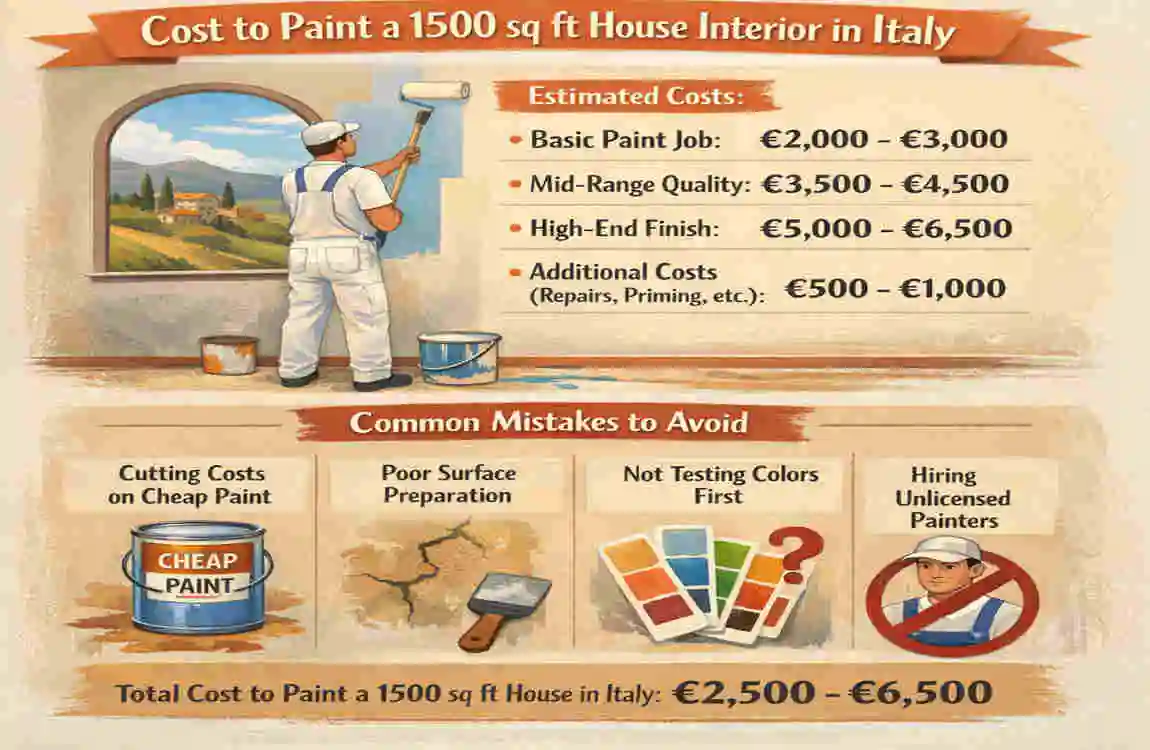
Renovating in a foreign country can be intimidating, and simple missteps can inadvertently inflate your Italian house-painting costs to astronomical levels. Keep an eye out for these massive pitfalls.
Skipping the Primer: Many homeowners try to save money by telling the painters to skip the primer and paint directly over the old walls. This is a catastrophic mistake. Old Italian walls are notoriously thirsty and often hold moisture. Without a primer, the new paint will soak in unevenly, bubble, and eventually peel. Fixing this disaster will easily add € 2,000 in repair costs down the line. Always insist on a high-quality primer.
Opting for the Cheapest Paint: Buying the absolute cheapest bucket of paint at the hardware store feels like a win today, but it is a guaranteed loss tomorrow. Cheap paints lack the strong binders and rich pigments found in quality brands. They will fade in the harsh Italian sunlight, scuff easily when bumped, and likely need a complete repaint in just two short years.
Operating Without a Contract: In Italy, it can be tempting to agree to a cash-in-hand, under-the-table deal (known locally as lavoro in nero). Never do this. Without a legally binding, detailed written contract outlining the exact scope of work, the paint brands to be used, and the timeline, you have absolutely zero protection. Verbal disputes over unfinished edges or messy cleanups can easily add 20% to your total cost, forcing you to hire someone else to finish the job.
FAQs: Quick Answers on Italy Painting Costs
To help you digest all this information, we have compiled the most frequently asked questions regarding interior painting in Italy.
How much does it cost to paint the interior of a 1,500 sq ft house in Italy?
For a 1,500 sq ft (approx. 139 sqm) home, you can expect the total cost to range from €12,000 for a basic, budget-friendly refresh to €30,000 for a luxury, high-end finish with Premium paints. The national average sits comfortably between €18,000 and €22,000.
What is the average cost per square meter in Rome?
Because Rome is a bustling, high-demand metropolitan center, you should expect urban Premium pricing. Standard painting in Rome typically costs between €20 and €25 per square meter for labor and basic materials.
How much time is required to paint a 1,500 sq ft interior?
If you hire a professional crew of two to four people, they will generally need 5 to 10 full working days to properly prep, prime, and apply multiple coats of paint to an empty 1,500 sq ft home.
Are eco-friendly paints worth the extra cost?
Yes, particularly if you have young children, pets, or suffer from allergies. Eco-friendly paints emit zero or very low VOCs (volatile organic compounds). They will typically add about €2-€3 per square meter to your overall material costs. Still, the improved indoor air quality is highly beneficial.
Do I have to pay extra for scaffolding?
Yes. If your property has ceilings higher than the standard 2.7 to 3 meters, your painters will need to rent and set up indoor scaffolding to reach the upper walls and ceilings safely. You should budget an additional €500 or more for this equipment.
Can I live in the house while it is being painted?
It is possible, but it is highly disruptive. The painters will need to seal off rooms with plastic sheeting, and the smell of fresh paint can be overwhelming. For a full 1,500 sq ft interior job, it is highly recommended that you vacate the property for the week to allow the crew to work efficiently.
Is the VAT (IVA) always 10% for painting?
No. The standard IVA in Italy is 22%. You only qualify for the reduced 10% IVA rate if the painting is part of a broader, officially registered home renovation or restoration project.
Should I buy the paint myself or let the painter do it?
It is almost always better to let the professional painter buy the supplies. They have access to commercial-grade products and trade discounts that the general public cannot access at retail hardware stores.
What exactly is thermal or anti-condensation paint?
This is a highly specialized paint loaded with microscopic ceramic spheres. It is designed to insulate the wall slightly, reducing sharp temperature differences that lead to heavy condensation and eventual mold growth. It is highly recommended for older stone houses or properties located in damp regions.
How do I find a reliable, trustworthy painter in Italy?
Word of mouth is powerful in Italy, so ask your local neighbors or your real estate agent for personal recommendations. Alternatively, use trusted online platforms like ProntoPro to view verified reviews and compare multiple written quotes.
Are there any hidden fees I should watch out for?
Always check if the quote includes the final cleanup (pulizia finale) and the legal disposal of hazardous waste materials (like empty chemical paint buckets). If these are not clearly stated in the contract, you might be hit with a surprise bill at the end of the project.