<p><span data-preserver-spaces="true">If you own an older home, plan to buy one, or are preparing for a major renovation, rewiring may not be the most exciting topic. But it is one of the most important parts of keeping a house safe and up to date. Old wiring can become a real problem over time. It can struggle to handle modern appliances, trip more often, and in some cases create serious safety risks.</span></p>
<p><span data-preserver-spaces="true">That is why so many homeowners search for </span><strong><span data-preserver-spaces="true">the cost of rewiring a 3-bed house in the UK</span></strong><span data-preserver-spaces="true">. A three-bedroom house is one of the most common property sizes in the UK, so it makes sense that people want a clear idea of what they may have to spend. The truth is that rewiring is not a small job. It involves real labor, materials, testing, and usually some repair work afterward. Still, it is often worth the investment because it improves safety, supports modern living, and may help the property meet current regulations.</span></p>
<p><span data-preserver-spaces="true">The same goes for the amount of work required, the electrician you hire, and whether the job includes extras such as plaster repair or a new consumer unit.</span></p>
<h2><span data-preserver-spaces="true">What Does Rewiring a House Actually Mean?</span></h2>
<h3><span data-preserver-spaces="true">Full vs partial rewiring<img class="alignnone size-full wp-image-7172" src="https://comeawayhome.co.uk/wp-content/uploads/2026/06/43d05605-ba5b-4ec2-a._imresizer-ezgif.com-jpg-to-webp-converter.webp" alt="how much does it cost to rewire a 3 bed house uk" width="1150" height="750" /></span></h3>
<p><span data-preserver-spaces="true">When people hear the word </span><strong><span data-preserver-spaces="true">rewiring</span></strong><span data-preserver-spaces="true">, they sometimes imagine a few new cables being added here and there. In reality, it can mean very different things depending on the job.</span></p>
<p><span data-preserver-spaces="true">A </span><strong><span data-preserver-spaces="true">partial rewire</span></strong><span data-preserver-spaces="true"> usually means replacing only certain parts of the <a href="https://comeawayhome.co.uk/electrical-problems-older-homes/">electrical</a> system. That might include one floor, one room, a new kitchen, or a problem area with old wiring. A partial rewire is often used when the rest of the home is still in decent condition.</span></p>
<p><span data-preserver-spaces="true">A </span><strong><span data-preserver-spaces="true">full rewire</span></strong><span data-preserver-spaces="true">, on the other hand, means replacing most or all of the electrical wiring in the house. This is a much bigger project. It usually includes new cables, sockets, light switches, and circuits, and often a new consumer unit.</span></p>
<p><span data-preserver-spaces="true">If you are asking </span><strong><span data-preserver-spaces="true">how much it costs to rewire a 3-bed house in the UK</span></strong><span data-preserver-spaces="true">, you are usually talking about a full rewire, as that is the standard estimate most homeowners need.</span></p>
<h3><span data-preserver-spaces="true">What is included in a full rewire?</span></h3>
<p><span data-preserver-spaces="true">A full rewire usually includes the main electrical components that keep the home functioning safely and properly. These often include:</span></p>
<ul>
<li><strong><span data-preserver-spaces="true">New wiring system</span></strong></li>
<li><strong><span data-preserver-spaces="true">Consumer unit replacement</span></strong></li>
<li><strong><span data-preserver-spaces="true">Sockets and switches</span></strong></li>
<li><strong><span data-preserver-spaces="true">Lighting circuits</span></strong></li>
<li><strong><span data-preserver-spaces="true">Power circuits for appliances</span></strong></li>
<li><strong><span data-preserver-spaces="true">Earthing and bonding updates</span></strong></li>
<li><strong><span data-preserver-spaces="true">Testing and certification</span></strong></li>
</ul>
<p><span data-preserver-spaces="true">The electrician may need to cut channels into walls to run new cables. This is sometimes called </span><strong><span data-preserver-spaces="true">chasing</span></strong><span data-preserver-spaces="true"> the walls. They may also need to lift floorboards, work in lofts, or access hidden spaces to replace old wiring.</span></p>
<h3><span data-preserver-spaces="true">What is not included?</span></h3>
<p><span data-preserver-spaces="true">A full rewire usually does </span><strong><span data-preserver-spaces="true">not</span></strong><span data-preserver-spaces="true"> include decorative or finishing work unless you agree to it separately. That means:</span></p>
<ul>
<li><strong><span data-preserver-spaces="true">Plastering</span></strong></li>
<li><strong><span data-preserver-spaces="true">Painting</span></strong></li>
<li><strong><span data-preserver-spaces="true">Wallpaper repair</span></strong></li>
<li><strong><span data-preserver-spaces="true">Furniture replacement</span></strong></li>
<li><strong><span data-preserver-spaces="true">Full refurbishment work</span></strong></li>
</ul>
<p><span data-preserver-spaces="true">This matters because many homeowners assume rewiring includes putting everything back exactly as it was. It usually does not. Once the wires are replaced, the walls and finishes often need attention from other trades.</span></p>
<h3><span data-preserver-spaces="true">When does a rewire become necessary?</span></h3>
<p><span data-preserver-spaces="true">Most homes do not need rewiring every few years. But if the wiring is old, damaged, or no longer suitable for modern use, it may need to be replaced.</span></p>
<p><span data-preserver-spaces="true">Many electricians recommend checking the wiring in homes </span><strong><span data-preserver-spaces="true">25 to 30 years old or older</span></strong><span data-preserver-spaces="true">, especially if the system has not been updated. Older properties may still have outdated cabling, old fuse boxes, or systems that cannot safely handle modern demands.</span></p>
<h3><span data-preserver-spaces="true">UK safety standards</span></h3>
<p><span data-preserver-spaces="true">In the UK, electrical work must meet current safety standards. This is where </span><strong><span data-preserver-spaces="true">Part P</span></strong><span data-preserver-spaces="true"> of the Building Regulations becomes important. It deals with electrical safety in homes and helps ensure the work is done properly by a qualified person.</span></p>
<p><span data-preserver-spaces="true">A full rewire should always be tested and certified by a competent electrician. That provides proof that the work was carried out to the required standard.</span></p>
<h2><span data-preserver-spaces="true">Average Cost to Rewire a 3 Bed House in the UK</span></h2>
<h3><span data-preserver-spaces="true">Main cost range</span></h3>
<p><span data-preserver-spaces="true">So, </span><strong><span data-preserver-spaces="true">how much does it cost to rewire a 3-bed house in the UK</span></strong><span data-preserver-spaces="true">?</span></p>
<p><span data-preserver-spaces="true">A rough 2026 estimate is:</span></p>
<ul>
<li><strong><span data-preserver-spaces="true">£3,500 to £7,500</span></strong><span data-preserver-spaces="true"> for a basic to mid-range rewire</span></li>
<li><strong><span data-preserver-spaces="true">£7,500 to £12,000+</span></strong><span data-preserver-spaces="true"> for larger, more complex, or higher-spec properties</span></li>
</ul>
<p><span data-preserver-spaces="true">That is a broad range, but it reflects the way real jobs vary. A simple house with easy access and a straightforward layout will cost less. A house with multiple <a href="https://comeawayhome.co.uk/six-story-house-with-slide-guide/">floors</a>, difficult walls, lots of sockets, and a more complex layout will cost more.</span></p>
<h3><span data-preserver-spaces="true">Empty house vs occupied housef</span></h3>
<p><span data-preserver-spaces="true">One of the biggest factors is whether the home is empty.</span></p>
<p><span data-preserver-spaces="true">A vacant house is usually cheaper and faster to rewire because the electrician does not need to work around furniture, appliances, or people living in the space. That makes access easier and reduces labor time.</span></p>
<p><span data-preserver-spaces="true">An occupied house is more complicated. The electrician may need to move furniture, protect rooms, work around daily routines, and possibly create temporary power arrangements. That often increases the final bill.</span></p>
<h3><span data-preserver-spaces="true">Why do prices vary so much?</span></h3>
<p><span data-preserver-spaces="true">Several things affect the total cost:</span></p>
<ul>
<li><strong><span data-preserver-spaces="true">Location</span></strong></li>
<li><strong><span data-preserver-spaces="true">Age of the property</span></strong></li>
<li><strong><span data-preserver-spaces="true">Size of the electrical system</span></strong></li>
<li><strong><span data-preserver-spaces="true">Number of sockets and lighting points</span></strong></li>
<li><strong><span data-preserver-spaces="true">Condition of the walls and floors</span></strong></li>
<li><strong><span data-preserver-spaces="true">Whether the house is occupied</span></strong></li>
<li><strong><span data-preserver-spaces="true">Type of materials chosen</span></strong></li>
</ul>
<p><span data-preserver-spaces="true">So if you ask one electrician and get a much higher price than another, that does not automatically mean someone is overcharging. They may just be pricing a different type of job.</span></p>
<h3><span data-preserver-spaces="true">A realistic mindset for homeowners</span></h3>
<p><span data-preserver-spaces="true">It helps to think of rewiring as a safety and long-term value project, not just a repair. A good rewire can protect your home, support modern appliances, and reduce the chance of dangerous faults. That is why many homeowners see it as money well spent rather than money lost.</span></p>
<h2><span data-preserver-spaces="true">Cost Breakdown of Rewiring a 3 Bedroom House</span></h2>
<h3><span data-preserver-spaces="true">Labour costs</span></h3>
<p><span data-preserver-spaces="true">Labor is usually the biggest part of the bill.</span></p>
<p><span data-preserver-spaces="true">Electricians in the UK often charge between </span><strong><span data-preserver-spaces="true">£150 andand £300 per day</span></strong><span data-preserver-spaces="true">. However, that can vary depending on the region, experience, and job complexity. A full rewire on a 3-bedroom house may take </span><strong><span data-preserver-spaces="true">5 to 10 working days</span></strong><span data-preserver-spaces="true">, sometimes more if the property is tricky or the job includes extra work.</span></p>
<p><span data-preserver-spaces="true">That means labor alone may end up around:</span></p>
<ul>
<li><strong><span data-preserver-spaces="true">£2,000 to £5,000+</span></strong></li>
</ul>
<p><span data-preserver-spaces="true">If the electrician works with an assistant or a team, the labor cost may be spread differently. However, the overall total still reflects time and skill.</span></p>
<h3><span data-preserver-spaces="true">Materials costs</span></h3>
<p><span data-preserver-spaces="true">The materials needed for a full rewire can add up quickly. These include:</span></p>
<ul>
<li><strong><span data-preserver-spaces="true">Wiring cables</span></strong></li>
<li><strong><span data-preserver-spaces="true">Sockets</span></strong></li>
<li><strong><span data-preserver-spaces="true">Switches</span></strong></li>
<li><strong><span data-preserver-spaces="true">Lighting circuits</span></strong></li>
<li><strong><span data-preserver-spaces="true">Consumer unit</span></strong></li>
<li><strong><span data-preserver-spaces="true">Earthing materials</span></strong></li>
<li><strong><span data-preserver-spaces="true">Fixings and accessories</span></strong></li>
</ul>
<p><span data-preserver-spaces="true">A new consumer unit, often called the fuse box, can cost between </span><strong><span data-preserver-spaces="true">£300 and £600</span></strong><span data-preserver-spaces="true">, or more, depending on the specification.</span></p>
<p><span data-preserver-spaces="true">Sockets and switches may cost </span><strong><span data-preserver-spaces="true">£5 to £20 each</span></strong><span data-preserver-spaces="true">, but once you start counting the full house, the total rises fast. Lighting circuits and accessories also add to the cost.</span></p>
<p><span data-preserver-spaces="true">For a 3-bedroom home, material costs often sit around:</span></p>
<ul>
<li><strong><span data-preserver-spaces="true">£800 to £2,000+</span></strong></li>
</ul>
<h3><span data-preserver-spaces="true">Additional costs</span></h3>
<p><span data-preserver-spaces="true">A rewire does not stop at the electrical side. There are usually extra jobs that come with it.</span></p>
<h4><span data-preserver-spaces="true">Plaster repair</span></h4>
<p><span data-preserver-spaces="true">Electricians often need to chase walls or lift sections of flooring to run new wiring. Once the wiring is in place, the damage needs to be repaired. That means plastering or patching.</span></p>
<p><span data-preserver-spaces="true">This is often a separate cost unless you have arranged a combined package.</span></p>
<h4><span data-preserver-spaces="true">Skip hire and waste removal.</span></h4>
<p><span data-preserver-spaces="true">Old cables, damaged fittings, plaster debris, and other waste need to be removed. Skip hire can cost between </span><strong><span data-preserver-spaces="true">£200 and £400</span></strong><span data-preserver-spaces="true">, depending on the area and the size of the skip.</span></p>
<h4><span data-preserver-spaces="true">Testing and certification</span></h4>
<p><span data-preserver-spaces="true">A full rewire should be tested and certified. This includes checking the circuits, safety devices, and overall installation. If your home also needs an </span><strong><span data-preserver-spaces="true">EICR</span></strong><span data-preserver-spaces="true"> or a completion certificate, that may add to the price.</span></p>
<h3><span data-preserver-spaces="true">Example cost table</span></h3>
<p><span data-preserver-spaces="true">Item Estimated Cost</span></p>
<p><span data-preserver-spaces="true">Labour £2,000 – £5,000 </span></p>
<p><span data-preserver-spaces="true">Materials £800 – £2,000 </span></p>
<p><span data-preserver-spaces="true">Consumer Unit £300 – £600 </span></p>
<p><span data-preserver-spaces="true">Repairs & Finishing £500 – £2,000 </span></p>
<p><strong><span data-preserver-spaces="true">Total</span></strong> <strong><span data-preserver-spaces="true">£3,500 – £9,500</span></strong></p>
<p><span data-preserver-spaces="true">That table gives a practical picture of what many homeowners can expect. Of course, complex homes may go higher.</span></p>
<h2><span data-preserver-spaces="true">Factors That Affect Rewiring Costs</span></h2>
<h3><span data-preserver-spaces="true">Size of the property</span></h3>
<p><span data-preserver-spaces="true">A 3-<a href="https://comeawayhome.co.uk/bedroom-headboard-false-wall-with-led-magic/">bedroom</a> house is usually bigger than a small flat, so there are more rooms to work through and more points to wire. More space means more labor and materials.</span></p>
<h3><span data-preserver-spaces="true">Age of the electrical system</span></h3>
<p><span data-preserver-spaces="true">Older systems are often harder to replace. They may contain outdated wiring, hidden junctions, or old installation methods that take longer to remove. If the property has not been modernized in decades, the job may be more involved.</span></p>
<h3><span data-preserver-spaces="true">Number of rooms and circuits</span></h3>
<p><span data-preserver-spaces="true">A home with more sockets, more lighting points, extra bathrooms, a large kitchen, or outbuildings will generally cost more to rewire. Every extra circuit adds materials and labor.</span></p>
<h3><span data-preserver-spaces="true">Accessibility</span></h3>
<p><span data-preserver-spaces="true">Access makes a huge difference. If the electrician can easily reach the loft, underfloor spaces, and cable routes, the job may be simpler. If the layout is awkward or access is limited, the work takes longer.</span></p>
<h3><span data-preserver-spaces="true">Wall type</span></h3>
<p><span data-preserver-spaces="true">Different wall types can change the difficulty of the job.</span></p>
<ul>
<li><strong><span data-preserver-spaces="true">Plasterboard walls</span></strong><span data-preserver-spaces="true"> may be easier to work with</span></li>
<li><strong><span data-preserver-spaces="true">Brick walls</span></strong><span data-preserver-spaces="true"> can take more time because chasing is harder</span></li>
<li><strong><span data-preserver-spaces="true">Thick solid walls</span></strong><span data-preserver-spaces="true"> may increase both labor and repair costs</span></li>
</ul>
<h3><span data-preserver-spaces="true">Location</span></h3>
<p><span data-preserver-spaces="true">Where you live matters a lot; labor in London and some parts of the South East tends to be more expensive than in many parts of Northern England or rural areas. Travel time, local demand, and overheads all affect the price.</span></p>
<h3><span data-preserver-spaces="true">Occupied vs empty property</span></h3>
<p><span data-preserver-spaces="true">As mentioned earlier, an occupied house usually costs more to rewire because the work is slower and more disruptive. If the house is empty, the electrician can work more freely and often complete the job faster.</span></p>
<h2><span data-preserver-spaces="true">Cost by Property Condition</span></h2>
<h3><span data-preserver-spaces="true">Empty house rewire</span></h3>
<p><span data-preserver-spaces="true">An empty house is usually the easiest and cheapest type of rewire.</span></p>
<p><span data-preserver-spaces="true">Why?</span></p>
<ul>
<li><span data-preserver-spaces="true">No furniture to move</span></li>
<li><span data-preserver-spaces="true">Better access to rooms</span></li>
<li><span data-preserver-spaces="true">Faster daily work</span></li>
<li><span data-preserver-spaces="true">Less disruption</span></li>
<li><span data-preserver-spaces="true">Easier cleanup</span></li>
</ul>
<p><span data-preserver-spaces="true">If you are already renovating or planning to move out temporarily, rewiring during that period can save time and reduce labor costs.</span></p>
<h3><span data-preserver-spaces="true">Occupied house rewire</span></h3>
<p><span data-preserver-spaces="true">A house that is still lived in creates more complications.</span></p>
<p><span data-preserver-spaces="true">The electrician may need to protect furniture, work room by room, and restore partial power during the job. That can make the process slower and more expensive.</span></p>
<p><span data-preserver-spaces="true">You also need to think about daily life. Power may be off in certain rooms at times, which can be inconvenient for everyone in the house.</span></p>
<h3><span data-preserver-spaces="true">Renovation projects</span></h3>
<p><span data-preserver-spaces="true">If the rewiring is part of a larger renovation, there may be opportunities to save money. Electrical work can be coordinated with plastering, flooring, kitchen fitting, or bathroom updates. That can reduce the number of separate visits from different trades.</span></p>
<p><span data-preserver-spaces="true">A renovation is often the best time to rewire because the house is already being opened up in parts.</span></p>
<h2><span data-preserver-spaces="true">Signs Your 3 Bed House Needs Rewiring</span></h2>
<p><span data-preserver-spaces="true">You do not always need a full survey to notice warning signs. Many homes show clues that the wiring is no longer suitable.</span></p>
<h3><span data-preserver-spaces="true">Common signs to watch for</span></h3>
<ul>
<li><strong><span data-preserver-spaces="true">Frequent tripping of circuits</span></strong></li>
<li><strong><span data-preserver-spaces="true">Flickering lights</span></strong></li>
<li><strong><span data-preserver-spaces="true">Burn marks around sockets</span></strong></li>
<li><strong><span data-preserver-spaces="true">Old rubber or fabric cables</span></strong></li>
<li><strong><span data-preserver-spaces="true">No RCD protection</span></strong></li>
<li><strong><span data-preserver-spaces="true">Buzzing or warm sockets</span></strong></li>
<li><strong><span data-preserver-spaces="true">Outdated fuse box</span></strong></li>
<li><strong><span data-preserver-spaces="true">Power cuts in specific rooms</span></strong></li>
</ul>
<p><span data-preserver-spaces="true">If you see one or more of these signs, it is a good idea to get the wiring checked by a qualified electrician.</span></p>
<h3><span data-preserver-spaces="true">Age matters too</span></h3>
<p><span data-preserver-spaces="true">Even if the house appears to be working fine, age alone is a reason to inspect the wiring. If the system is </span><strong><span data-preserver-spaces="true">25 to 30 years old or more</span></strong><span data-preserver-spaces="true">, you should not assume it is still safe just because the lights come on.</span></p>
<p><span data-preserver-spaces="true">Electrical systems wear over time, and older wiring may not meet current standards for modern usage.</span></p>
<h2><span data-preserver-spaces="true">UK Regulations and Safety Standards</span></h2>
<h3><span data-preserver-spaces="true">Why regulations matter</span></h3>
<p><span data-preserver-spaces="true">Electrical work in the UK is tightly linked to safety rules. This is a good thing. It helps protect people from poor installation, fire risk, and hidden faults.</span></p>
<h3><span data-preserver-spaces="true">Part P of the Building Regulations</span></h3>
<p><strong><span data-preserver-spaces="true">Part P</span></strong><span data-preserver-spaces="true"> applies to electrical safety in homes. It means certain electrical work must meet building standards. In many cases, it must be carried out or certified by a qualified professional.</span></p>
<h3><span data-preserver-spaces="true">Certified electricians only</span></h3>
<p><span data-preserver-spaces="true">A full rewire is not a job for guesswork. It should be done by a properly trained, certified electrician who understands current standards and can test the system after the work is complete.</span></p>
<h3><span data-preserver-spaces="true">EICR and certification</span></h3>
<p><span data-preserver-spaces="true">An </span><strong><span data-preserver-spaces="true">Electrical Installation Condition Report (EICR)</span></strong><span data-preserver-spaces="true"> checks the condition of the electrical installation. It is useful for spotting faults and deciding whether a rewire is needed. After the work is completed, you should also receive the right completion paperwork and test results.</span></p>
<h3><span data-preserver-spaces="true">Why outdated wiring is risky</span></h3>
<p><span data-preserver-spaces="true">Old wiring may not have the right protection for modern life. Homes now use more gadgets, appliances, power points, and high-demand equipment than they did decades ago. That increases the risk if the system is outdated.</span></p>
<h2><span data-preserver-spaces="true">How Long Does It Take to Rewire a 3 Bed House?</span></h2>
<h3><span data-preserver-spaces="true">Average timeline</span></h3>
<p><span data-preserver-spaces="true">A full rewire for a 3-bedroom house usually takes around </span><strong><span data-preserver-spaces="true">5 to 10 working days</span></strong><span data-preserver-spaces="true">.</span></p>
<p><span data-preserver-spaces="true">That is just the electrical part. If the job involves extensive repair work, difficult access, or additional changes, it may take longer.</span></p>
<h3><span data-preserver-spaces="true">What affects the timeline?</span></h3>
<ul>
<li><strong><span data-preserver-spaces="true">House size</span></strong></li>
<li><strong><span data-preserver-spaces="true">Number of rooms</span></strong></li>
<li><strong><span data-preserver-spaces="true">Property layout</span></strong></li>
<li><strong><span data-preserver-spaces="true">Wall type</span></strong></li>
<li><strong><span data-preserver-spaces="true">Occupied vs empty home</span></strong></li>
<li><strong><span data-preserver-spaces="true">Complexity of circuits</span></strong></li>
<li><strong><span data-preserver-spaces="true">Testing and inspection time</span></strong></li>
</ul>
<p><span data-preserver-spaces="true">If the house is empty and straightforward, the work may move faster. If the house is occupied and the layout is awkward, it will take longer.</span></p>
<h3><span data-preserver-spaces="true">Testing stage</span></h3>
<p><span data-preserver-spaces="true">After the cables, sockets, and consumer unit are installed, the system still needs proper testing. That final step is essential and should not be rushed.</span></p>
<h2><span data-preserver-spaces="true">How to Save Money on House Rewiring</span></h2>
<p><span data-preserver-spaces="true">Rewiring is not cheap, but there are smart ways to control the cost.</span></p>
<h3><span data-preserver-spaces="true">Get several quotes</span></h3>
<p><span data-preserver-spaces="true">Always compare at least three written quotes. That helps you understand the local price range and spot any unusually high or suspiciously low prices.</span></p>
<h3><span data-preserver-spaces="true">Rewire during renovation</span></h3>
<p><span data-preserver-spaces="true">If you are already planning plastering, kitchen work, or room updates, combine the jobs if possible. That can reduce labor duplication.</span></p>
<h3><span data-preserver-spaces="true">Clear the house first.</span></h3>
<p><span data-preserver-spaces="true">Moving <a href="https://comeawayhome.co.uk/embrace-charm-vintage-furniture-home/">furniture</a>, boxes, and clutter out of the way before the electrician starts can save time. Less time means less labor cost in many cases.</span></p>
<h3><span data-preserver-spaces="true">Choose sensible materials</span></h3>
<p><span data-preserver-spaces="true">You do not always need the most expensive fittings. Mid-range materials often offer a good balance of quality and value.</span></p>
<h3><span data-preserver-spaces="true">Avoid emergency jobs</span></h3>
<p><span data-preserver-spaces="true">If you wait until the wiring fails, you may end up paying more for urgent work. Planning usually saves money.</span></p>
<h3><span data-preserver-spaces="true">Practical savings list</span></h3>
<ol>
<li><strong><span data-preserver-spaces="true">Get quotes early</span></strong></li>
<li><strong><span data-preserver-spaces="true">Bundle electrical and repair work</span></strong></li>
<li><strong><span data-preserver-spaces="true">Prepare the house before work starts</span></strong></li>
<li><strong><span data-preserver-spaces="true">Use good-quality but not luxury fittings</span></strong></li>
<li><strong><span data-preserver-spaces="true">Plan rewiring before an emergency happens</span></strong></li>
</ol>
<p><span data-preserver-spaces="true">These steps can make a real difference to the final bill.</span></p>
<h2><span data-preserver-spaces="true">Hiring a Qualified Electrician in the UK<img class="alignnone size-full wp-image-7171" src="https://comeawayhome.co.uk/wp-content/uploads/2026/06/48313f50-ae75-4ce8-a._imresizer-ezgif.com-jpg-to-webp-converter.webp" alt="how much does it cost to rewire a 3 bed house uk" width="1150" height="750" /></span></h2>
<h3><span data-preserver-spaces="true">Why qualification matters</span></h3>
<p><span data-preserver-spaces="true">A rewire affects the safety of the whole house. That is why the <a href="https://comeawayhome.co.uk/does-rewiring-a-3-bed-house-in-the-uk-cost-a-lot/">electrician</a> should be properly trained, insured, and experienced with domestic rewiring.</span></p>
<h3><span data-preserver-spaces="true">What to check</span></h3>
<p><span data-preserver-spaces="true">Look for:</span></p>
<ul>
<li><strong><span data-preserver-spaces="true">NICEIC registration</span></strong></li>
<li><strong><span data-preserver-spaces="true">NAPIT registration</span></strong></li>
<li><strong><span data-preserver-spaces="true">Written quote</span></strong></li>
<li><strong><span data-preserver-spaces="true">Insurance cover</span></strong></li>
<li><strong><span data-preserver-spaces="true">Guarantee or warranty</span></strong></li>
<li><strong><span data-preserver-spaces="true">Clear scope of work</span></strong></li>
</ul>
<h3><span data-preserver-spaces="true">Red flags to avoid</span></h3>
<p><span data-preserver-spaces="true">Be careful if someone offers a very low price but cannot show proper certification or gives vague answers about testing and compliance. That may seem cheaper at first, but it can become expensive later if the work is not done correctly.</span></p>
<h3><span data-preserver-spaces="true">Good questions to ask</span></h3>
<ul>
<li><span data-preserver-spaces="true">How long will the job take?</span></li>
<li><span data-preserver-spaces="true">What is included in the quote?</span></li>
<li><span data-preserver-spaces="true">Will plaster repairs be separate?</span></li>
<li><span data-preserver-spaces="true">Do you provide certification?</span></li>
<li><span data-preserver-spaces="true">Are you insured for domestic rewiring?</span></li>
</ul>
<p><span data-preserver-spaces="true">A good electrician should be able to answer clearly and confidently.</span></p>
<h2><span data-preserver-spaces="true">Frequently Asked Questions</span></h2>
<h3><span data-preserver-spaces="true"> How much does it cost to rewire a 3-bed house in the UK?</span></h3>
<p><span data-preserver-spaces="true">A typical range is </span><strong><span data-preserver-spaces="true">£3,500 to £7,500</span></strong><span data-preserver-spaces="true"> for many standard homes, though complex or higher-spec properties can reach </span><strong><span data-preserver-spaces="true">£ 12,000 or more</span></strong><span data-preserver-spaces="true">.</span></p>
<h3><span data-preserver-spaces="true"> Does rewiring include plastering?</span></h3>
<p><span data-preserver-spaces="true">Usually not. Plaster repairs are often billed separately unless you have agreed to a full package with the contractor.</span></p>
<h3><span data-preserver-spaces="true"> Can I stay in my house during rewiring?</span></h3>
<p><span data-preserver-spaces="true">Yes, you can, but it is often inconvenient. Some homeowners choose to move out temporarily if the work is extensive.</span></p>
<h3><span data-preserver-spaces="true">How often should a house be rewired?</span></h3>
<p><span data-preserver-spaces="true">Many UK homes should be inspected carefully around every </span><strong><span data-preserver-spaces="true">25 to 30 years</span></strong><span data-preserver-spaces="true">. However, this depends on the condition of the wiring and the property itself.</span></p>
<h3><span data-preserver-spaces="true"> Is rewiring a house worth it?</span></h3>
<p><span data-preserver-spaces="true">Yes, in most cases it is. Rewiring improves safety, helps the home meet current standards, and supports modern electrical demand.</span></p>
<h3><span data-preserver-spaces="true">Is an EICR enough instead of rewiring?</span></h3>
<p><span data-preserver-spaces="true">Not always. An EICR can show whether there are serious problems, but if the wiring is too old or unsafe, a full rewire may still be needed.</span></p>
<table class="w-fit min-w-(--thread-content-width)" data-start="101" data-end="776">
<thead data-start="101" data-end="149">
<tr data-start="101" data-end="149">
<th class="last:pe-10" data-start="101" data-end="112" data-col-size="sm"><strong data-start="103" data-end="111">Item</strong></th>
<th class="last:pe-10" data-start="112" data-end="136" data-col-size="sm"><strong data-start="114" data-end="135">Typical Cost (UK)</strong></th>
<th class="last:pe-10" data-start="136" data-end="149" data-col-size="md"><strong data-start="138" data-end="147">Notes</strong></th>
</tr>
</thead>
<tbody data-start="198" data-end="776">
<tr data-start="198" data-end="287">
<td data-start="198" data-end="226" data-col-size="sm">Full rewire (3-bed house)</td>
<td data-start="226" data-end="244" data-col-size="sm">£4,500 – £8,000</td>
<td data-start="244" data-end="287" data-col-size="md">Standard semi-detached or terraced home</td>
</tr>
<tr data-start="288" data-end="377">
<td data-start="288" data-end="312" data-col-size="sm">Larger/older property</td>
<td data-start="312" data-end="332" data-col-size="sm">£6,000 – £10,000+</td>
<td data-start="332" data-end="377" data-col-size="md">More complex wiring, easier access issues</td>
</tr>
<tr data-start="378" data-end="469">
<td data-start="378" data-end="405" data-col-size="sm">Small/modern 3-bed house</td>
<td data-start="405" data-end="423" data-col-size="sm">£3,500 – £6,000</td>
<td data-start="423" data-end="469" data-col-size="md">Easier installation, fewer upgrades needed</td>
</tr>
<tr data-start="470" data-end="542">
<td data-start="470" data-end="486" data-col-size="sm">Extra sockets</td>
<td data-start="486" data-end="510" data-col-size="sm">£70 – £120 per socket</td>
<td data-start="510" data-end="542" data-col-size="md">Depends on electrician rates</td>
</tr>
<tr data-start="543" data-end="621">
<td data-start="543" data-end="574" data-col-size="sm">New consumer unit (fuse box)</td>
<td data-start="574" data-end="588" data-col-size="sm">£400 – £700</td>
<td data-start="588" data-end="621" data-col-size="md">Often included in full rewire</td>
</tr>
<tr data-start="622" data-end="706">
<td data-start="622" data-end="646" data-col-size="sm">Lighting installation</td>
<td data-start="646" data-end="669" data-col-size="sm">£50 – £100 per point</td>
<td data-start="669" data-end="706" data-col-size="md">Varies by fittings and complexity</td>
</tr>
<tr data-start="707" data-end="776">
<td data-start="707" data-end="733" data-col-size="sm">Testing & certification</td>
<td data-start="733" data-end="747" data-col-size="sm">£150 – £300</td>
<td data-start="747" data-end="776" data-col-size="md">Required after completion</td>
</tr>
</tbody>
</table>
If you own an older home, plan to buy one, or are preparing for a major renovation, rewiring may not be the most exciting topic. But it is one of the most important parts of keeping a house safe and up to date. Old wiring can become a real problem over time. It can struggle to handle modern appliances, trip more often, and in some cases create serious safety risks.
That is why so many homeowners search for the cost of rewiring a 3-bed house in the UK. A three-bedroom house is one of the most common property sizes in the UK, so it makes sense that people want a clear idea of what they may have to spend. The truth is that rewiring is not a small job. It involves real labor, materials, testing, and usually some repair work afterward. Still, it is often worth the investment because it improves safety, supports modern living, and may help the property meet current regulations.
The same goes for the amount of work required, the electrician you hire, and whether the job includes extras such as plaster repair or a new consumer unit.
What Does Rewiring a House Actually Mean?
Full vs partial rewiring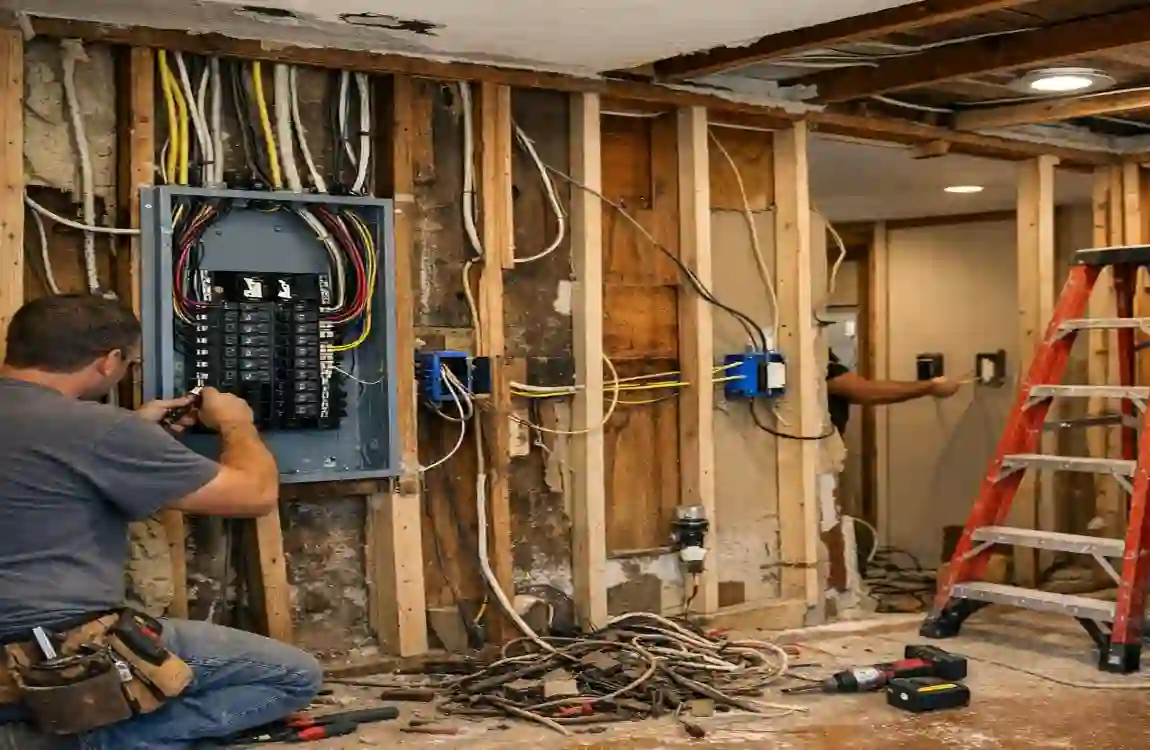
When people hear the word rewiring, they sometimes imagine a few new cables being added here and there. In reality, it can mean very different things depending on the job.
A partial rewire usually means replacing only certain parts of the electrical system. That might include one floor, one room, a new kitchen, or a problem area with old wiring. A partial rewire is often used when the rest of the home is still in decent condition.
A full rewire, on the other hand, means replacing most or all of the electrical wiring in the house. This is a much bigger project. It usually includes new cables, sockets, light switches, and circuits, and often a new consumer unit.
If you are asking how much it costs to rewire a 3-bed house in the UK, you are usually talking about a full rewire, as that is the standard estimate most homeowners need.
What is included in a full rewire?
A full rewire usually includes the main electrical components that keep the home functioning safely and properly. These often include:
- New wiring system
- Consumer unit replacement
- Sockets and switches
- Lighting circuits
- Power circuits for appliances
- Earthing and bonding updates
- Testing and certification
The electrician may need to cut channels into walls to run new cables. This is sometimes called chasing the walls. They may also need to lift floorboards, work in lofts, or access hidden spaces to replace old wiring.
What is not included?
A full rewire usually does not include decorative or finishing work unless you agree to it separately. That means:
- Plastering
- Painting
- Wallpaper repair
- Furniture replacement
- Full refurbishment work
This matters because many homeowners assume rewiring includes putting everything back exactly as it was. It usually does not. Once the wires are replaced, the walls and finishes often need attention from other trades.
When does a rewire become necessary?
Most homes do not need rewiring every few years. But if the wiring is old, damaged, or no longer suitable for modern use, it may need to be replaced.
Many electricians recommend checking the wiring in homes 25 to 30 years old or older, especially if the system has not been updated. Older properties may still have outdated cabling, old fuse boxes, or systems that cannot safely handle modern demands.
UK safety standards
In the UK, electrical work must meet current safety standards. This is where Part P of the Building Regulations becomes important. It deals with electrical safety in homes and helps ensure the work is done properly by a qualified person.
A full rewire should always be tested and certified by a competent electrician. That provides proof that the work was carried out to the required standard.
Average Cost to Rewire a 3 Bed House in the UK
Main cost range
So, how much does it cost to rewire a 3-bed house in the UK?
A rough 2026 estimate is:
- £3,500 to £7,500 for a basic to mid-range rewire
- £7,500 to £12,000+ for larger, more complex, or higher-spec properties
That is a broad range, but it reflects the way real jobs vary. A simple house with easy access and a straightforward layout will cost less. A house with multiple floors, difficult walls, lots of sockets, and a more complex layout will cost more.
Empty house vs occupied housef
One of the biggest factors is whether the home is empty.
A vacant house is usually cheaper and faster to rewire because the electrician does not need to work around furniture, appliances, or people living in the space. That makes access easier and reduces labor time.
An occupied house is more complicated. The electrician may need to move furniture, protect rooms, work around daily routines, and possibly create temporary power arrangements. That often increases the final bill.
Why do prices vary so much?
Several things affect the total cost:
- Location
- Age of the property
- Size of the electrical system
- Number of sockets and lighting points
- Condition of the walls and floors
- Whether the house is occupied
- Type of materials chosen
So if you ask one electrician and get a much higher price than another, that does not automatically mean someone is overcharging. They may just be pricing a different type of job.
A realistic mindset for homeowners
It helps to think of rewiring as a safety and long-term value project, not just a repair. A good rewire can protect your home, support modern appliances, and reduce the chance of dangerous faults. That is why many homeowners see it as money well spent rather than money lost.
Cost Breakdown of Rewiring a 3 Bedroom House
Labour costs
Labor is usually the biggest part of the bill.
Electricians in the UK often charge between £150 andand £300 per day. However, that can vary depending on the region, experience, and job complexity. A full rewire on a 3-bedroom house may take 5 to 10 working days, sometimes more if the property is tricky or the job includes extra work.
That means labor alone may end up around:
If the electrician works with an assistant or a team, the labor cost may be spread differently. However, the overall total still reflects time and skill.
Materials costs
The materials needed for a full rewire can add up quickly. These include:
- Wiring cables
- Sockets
- Switches
- Lighting circuits
- Consumer unit
- Earthing materials
- Fixings and accessories
A new consumer unit, often called the fuse box, can cost between £300 and £600, or more, depending on the specification.
Sockets and switches may cost £5 to £20 each, but once you start counting the full house, the total rises fast. Lighting circuits and accessories also add to the cost.
For a 3-bedroom home, material costs often sit around:
Additional costs
A rewire does not stop at the electrical side. There are usually extra jobs that come with it.
Plaster repair
Electricians often need to chase walls or lift sections of flooring to run new wiring. Once the wiring is in place, the damage needs to be repaired. That means plastering or patching.
This is often a separate cost unless you have arranged a combined package.
Skip hire and waste removal.
Old cables, damaged fittings, plaster debris, and other waste need to be removed. Skip hire can cost between £200 and £400, depending on the area and the size of the skip.
Testing and certification
A full rewire should be tested and certified. This includes checking the circuits, safety devices, and overall installation. If your home also needs an EICR or a completion certificate, that may add to the price.
Example cost table
Item Estimated Cost
Labour £2,000 – £5,000
Materials £800 – £2,000
Consumer Unit £300 – £600
Repairs & Finishing £500 – £2,000
Total £3,500 – £9,500
That table gives a practical picture of what many homeowners can expect. Of course, complex homes may go higher.
Factors That Affect Rewiring Costs
Size of the property
A 3-bedroom house is usually bigger than a small flat, so there are more rooms to work through and more points to wire. More space means more labor and materials.
Age of the electrical system
Older systems are often harder to replace. They may contain outdated wiring, hidden junctions, or old installation methods that take longer to remove. If the property has not been modernized in decades, the job may be more involved.
Number of rooms and circuits
A home with more sockets, more lighting points, extra bathrooms, a large kitchen, or outbuildings will generally cost more to rewire. Every extra circuit adds materials and labor.
Accessibility
Access makes a huge difference. If the electrician can easily reach the loft, underfloor spaces, and cable routes, the job may be simpler. If the layout is awkward or access is limited, the work takes longer.
Wall type
Different wall types can change the difficulty of the job.
- Plasterboard walls may be easier to work with
- Brick walls can take more time because chasing is harder
- Thick solid walls may increase both labor and repair costs
Location
Where you live matters a lot; labor in London and some parts of the South East tends to be more expensive than in many parts of Northern England or rural areas. Travel time, local demand, and overheads all affect the price.
Occupied vs empty property
As mentioned earlier, an occupied house usually costs more to rewire because the work is slower and more disruptive. If the house is empty, the electrician can work more freely and often complete the job faster.
Cost by Property Condition
Empty house rewire
An empty house is usually the easiest and cheapest type of rewire.
Why?
- No furniture to move
- Better access to rooms
- Faster daily work
- Less disruption
- Easier cleanup
If you are already renovating or planning to move out temporarily, rewiring during that period can save time and reduce labor costs.
Occupied house rewire
A house that is still lived in creates more complications.
The electrician may need to protect furniture, work room by room, and restore partial power during the job. That can make the process slower and more expensive.
You also need to think about daily life. Power may be off in certain rooms at times, which can be inconvenient for everyone in the house.
Renovation projects
If the rewiring is part of a larger renovation, there may be opportunities to save money. Electrical work can be coordinated with plastering, flooring, kitchen fitting, or bathroom updates. That can reduce the number of separate visits from different trades.
A renovation is often the best time to rewire because the house is already being opened up in parts.
Signs Your 3 Bed House Needs Rewiring
You do not always need a full survey to notice warning signs. Many homes show clues that the wiring is no longer suitable.
Common signs to watch for
- Frequent tripping of circuits
- Flickering lights
- Burn marks around sockets
- Old rubber or fabric cables
- No RCD protection
- Buzzing or warm sockets
- Outdated fuse box
- Power cuts in specific rooms
If you see one or more of these signs, it is a good idea to get the wiring checked by a qualified electrician.
Age matters too
Even if the house appears to be working fine, age alone is a reason to inspect the wiring. If the system is 25 to 30 years old or more, you should not assume it is still safe just because the lights come on.
Electrical systems wear over time, and older wiring may not meet current standards for modern usage.
UK Regulations and Safety Standards
Why regulations matter
Electrical work in the UK is tightly linked to safety rules. This is a good thing. It helps protect people from poor installation, fire risk, and hidden faults.
Part P of the Building Regulations
Part P applies to electrical safety in homes. It means certain electrical work must meet building standards. In many cases, it must be carried out or certified by a qualified professional.
Certified electricians only
A full rewire is not a job for guesswork. It should be done by a properly trained, certified electrician who understands current standards and can test the system after the work is complete.
EICR and certification
An Electrical Installation Condition Report (EICR) checks the condition of the electrical installation. It is useful for spotting faults and deciding whether a rewire is needed. After the work is completed, you should also receive the right completion paperwork and test results.
Why outdated wiring is risky
Old wiring may not have the right protection for modern life. Homes now use more gadgets, appliances, power points, and high-demand equipment than they did decades ago. That increases the risk if the system is outdated.
How Long Does It Take to Rewire a 3 Bed House?
Average timeline
A full rewire for a 3-bedroom house usually takes around 5 to 10 working days.
That is just the electrical part. If the job involves extensive repair work, difficult access, or additional changes, it may take longer.
What affects the timeline?
- House size
- Number of rooms
- Property layout
- Wall type
- Occupied vs empty home
- Complexity of circuits
- Testing and inspection time
If the house is empty and straightforward, the work may move faster. If the house is occupied and the layout is awkward, it will take longer.
Testing stage
After the cables, sockets, and consumer unit are installed, the system still needs proper testing. That final step is essential and should not be rushed.
How to Save Money on House Rewiring
Rewiring is not cheap, but there are smart ways to control the cost.
Get several quotes
Always compare at least three written quotes. That helps you understand the local price range and spot any unusually high or suspiciously low prices.
Rewire during renovation
If you are already planning plastering, kitchen work, or room updates, combine the jobs if possible. That can reduce labor duplication.
Clear the house first.
Moving furniture, boxes, and clutter out of the way before the electrician starts can save time. Less time means less labor cost in many cases.
Choose sensible materials
You do not always need the most expensive fittings. Mid-range materials often offer a good balance of quality and value.
Avoid emergency jobs
If you wait until the wiring fails, you may end up paying more for urgent work. Planning usually saves money.
Practical savings list
- Get quotes early
- Bundle electrical and repair work
- Prepare the house before work starts
- Use good-quality but not luxury fittings
- Plan rewiring before an emergency happens
These steps can make a real difference to the final bill.
Hiring a Qualified Electrician in the UK
Why qualification matters
A rewire affects the safety of the whole house. That is why the electrician should be properly trained, insured, and experienced with domestic rewiring.
What to check
Look for:
- NICEIC registration
- NAPIT registration
- Written quote
- Insurance cover
- Guarantee or warranty
- Clear scope of work
Red flags to avoid
Be careful if someone offers a very low price but cannot show proper certification or gives vague answers about testing and compliance. That may seem cheaper at first, but it can become expensive later if the work is not done correctly.
Good questions to ask
- How long will the job take?
- What is included in the quote?
- Will plaster repairs be separate?
- Do you provide certification?
- Are you insured for domestic rewiring?
A good electrician should be able to answer clearly and confidently.
Frequently Asked Questions
How much does it cost to rewire a 3-bed house in the UK?
A typical range is £3,500 to £7,500 for many standard homes, though complex or higher-spec properties can reach £ 12,000 or more.
Does rewiring include plastering?
Usually not. Plaster repairs are often billed separately unless you have agreed to a full package with the contractor.
Can I stay in my house during rewiring?
Yes, you can, but it is often inconvenient. Some homeowners choose to move out temporarily if the work is extensive.
How often should a house be rewired?
Many UK homes should be inspected carefully around every 25 to 30 years. However, this depends on the condition of the wiring and the property itself.
Is rewiring a house worth it?
Yes, in most cases it is. Rewiring improves safety, helps the home meet current standards, and supports modern electrical demand.
Is an EICR enough instead of rewiring?
Not always. An EICR can show whether there are serious problems, but if the wiring is too old or unsafe, a full rewire may still be needed.
| Item |
Typical Cost (UK) |
Notes |
| Full rewire (3-bed house) |
£4,500 – £8,000 |
Standard semi-detached or terraced home |
| Larger/older property |
£6,000 – £10,000+ |
More complex wiring, easier access issues |
| Small/modern 3-bed house |
£3,500 – £6,000 |
Easier installation, fewer upgrades needed |
| Extra sockets |
£70 – £120 per socket |
Depends on electrician rates |
| New consumer unit (fuse box) |
£400 – £700 |
Often included in full rewire |
| Lighting installation |
£50 – £100 per point |
Varies by fittings and complexity |
| Testing & certification |
£150 – £300 |
Required after completion |