<p>Selling a house is one of the most significant financial decisions you’ll make in your lifetime. Whether you’re upgrading, downsizing, or relocating, understanding <a href="https://hoa.org.uk/advice/guides-for-homeowners/i-am-selling/step-by-step-guide-to-selling-your-home/"><strong>how to sell a house</strong></a> effectively can save you time, money, and stress. In 2026, the housing market is evolving with new challenges and opportunities, making it vital to stay informed about the best strategies to maximize profits and sell your house fast.</p>
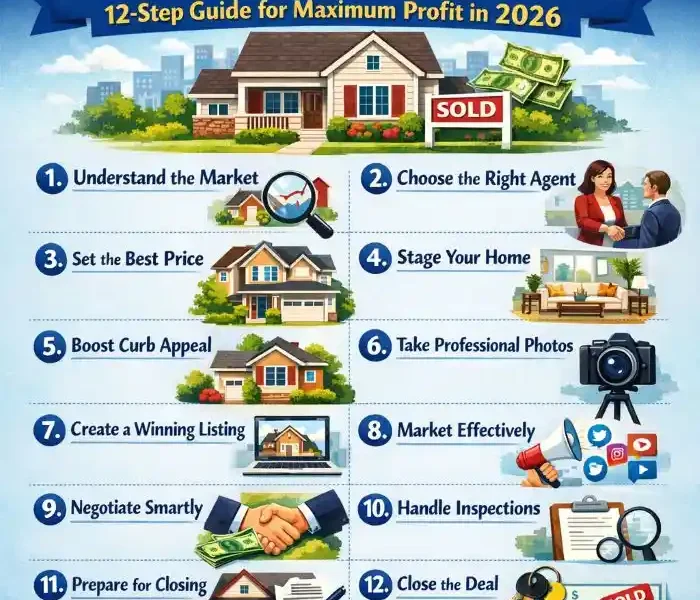
<p>In this guide, we’ll walk you through <strong>12 actionable steps</strong> to ensure a smooth house-selling process. From pricing strategies to staging tips, we’ll provide expert insights to help you avoid common pitfalls and secure the best possible deal. Let’s dive in!</p>
<p>Did you know that in 2026, the average time a home spends on the market is just <strong>45 days</strong>? This is a testament to the evolving real estate trends, and it shows how crucial it is to present your property in the best light. Homeowners who adopt the right strategies can significantly reduce their time on the market while earning top dollar.</p>
<p>Knowing <strong>how to sell a house</strong> doesn’t just benefit individual sellers—it’s also essential for businesses, including real estate investors and developers. Whether you’re selling your first home or managing a portfolio, this guide will help you navigate the process with confidence.</p>
<p>By the end of this article, you’ll understand:</p>
<ul>
<li>How to price your house competitively</li>
<li>The best ways to stage and market your property</li>
<li>Key steps to closing the sale smoothly</li>
</ul>
<p>Ready to transform your <a href="https://comeawayhome.co.uk/standard-flag-size-for-house/">house</a>-selling experience? Let’s get started!</p>
<h2 id="step-1-decide-if-when-to-sell">Decide If/When to Sell</h2>
<p><img class="aligncenter wp-image-6990 size-full" src="https://comeawayhome.co.uk/wp-content/uploads/2026/05/5e86935b-a65f-4b97-a2e6-2f6cf23d6cbax-ezgif.com-jpg-to-webp-converter.webp" alt="how to sell a house" width="700" height="700" /></p>
<p>The first step in selling your house is deciding whether it’s the right time. Timing can significantly impact your sale price and the speed at which you close the deal.</p>
<h4 id="-factors-to-consider-"><strong>Factors to Consider</strong></h4>
<ul>
<li><strong>Personal Finances</strong>: Are you financially prepared to move? Consider costs like repairs, staging, and moving expenses.</li>
<li><strong>Market Timing</strong>: Is it a <strong>seller’s market</strong> (high demand, low inventory) or a <strong>buyer’s market</strong> (low demand, high inventory)?</li>
</ul>
<p>Here’s a quick comparison of seller’s vs. buyer’s market:</p>
<table>
<thead>
<tr>
<th><strong>Market Type</strong></th>
<th><strong>Characteristics</strong></th>
<th><strong>Benefits for Sellers</strong></th>
</tr>
</thead>
<tbody>
<tr>
<td>Seller’s Market</td>
<td>High demand, fewer homes available</td>
<td>Higher offers, faster sales</td>
</tr>
<tr>
<td>Buyer’s Market</td>
<td>More homes available, less competition</td>
<td>Buyers have negotiating leverage</td>
</tr>
</tbody>
</table>
<h4 id="-checklist-signs-it-s-time-to-sell-your-house-"><strong>Checklist: Signs It’s Time to Sell Your House</strong></h4>
<ol>
<li>Your home no longer fits your needs.</li>
<li>You have enough equity to cover selling costs.</li>
<li>The local market is favorable for sellers.</li>
<li>You’re financially ready to buy or rent elsewhere.</li>
<li>Your lifestyle requires a location change.</li>
</ol>
<h2 id="step-2-understand-your-local-market">Understand Your Local Market</h2>
<p>Knowing your local housing market is key to pricing your house correctly and attracting buyers quickly.</p>
<h4 id="-research-comparable-sales-comps-"><strong>Research Comparable Sales (Comps)</strong></h4>
<p>Comps are homes similar to yours that have recently sold in your area. They provide a benchmark for setting your price. Use tools like Zillow, local MLS platforms, or free estimators to gather data.</p>
<h4 id="-key-market-metrics-to-track-"><strong>Key Market Metrics to Track</strong></h4>
<p>Here’s a table of important metrics to evaluate:</p>
<table>
<thead>
<tr>
<th><strong>Metric</strong></th>
<th><strong>Description</strong></th>
</tr>
</thead>
<tbody>
<tr>
<td>Median Home Prices</td>
<td>Average selling price in your area</td>
</tr>
<tr>
<td>Inventory Levels</td>
<td>Number of homes available for sale</td>
</tr>
<tr>
<td>Days on Market</td>
<td>Average time homes stay listed</td>
</tr>
</tbody>
</table>
<p>By understanding these metrics, you’ll gain insight into buyer preferences and how to position your property for success.</p>
<h2 id="step-3-choose-your-selling-strategy">Choose Your Selling Strategy</h2>
<p>Deciding how to sell your house depends on your goals, timeline, and budget. Here are the three most common strategies:</p>
<table>
<thead>
<tr>
<th><strong>Strategy</strong></th>
<th><strong>Pros</strong></th>
<th><strong>Cons</strong></th>
<th><strong>Best For</strong></th>
</tr>
</thead>
<tbody>
<tr>
<td><strong>With Realtor</strong></td>
<td>Expertise, MLS exposure</td>
<td>5-6% commission</td>
<td>First-time sellers</td>
</tr>
<tr>
<td><strong>FSBO (For Sale by Owner)</strong></td>
<td>Save on fees</td>
<td>Less visibility, more work</td>
<td>Experienced sellers</td>
</tr>
<tr>
<td><strong>Cash Buyers/iBuyers</strong></td>
<td>Sell house fast</td>
<td>Lower offers</td>
<td>Urgent sales</td>
</tr>
</tbody>
</table>
<h4 id="-how-to-choose-"><strong>How to Choose</strong></h4>
<ul>
<li><strong>Short on time?</strong> Opt for cash buyers or iBuyers.</li>
<li><strong>Want maximum profit?</strong> Hire a trusted realtor.</li>
<li><strong>Confident in your skills?</strong> FSBO might work for you.</li>
</ul>
<h2 id="step-4-price-your-house-right">Price Your House Right</h2>
<p>Pricing your home competitively is critical to attracting buyers and receiving offers quickly.</p>
<h4 id="-how-to-determine-the-right-price-"><strong>How to Determine the Right Price</strong></h4>
<ul>
<li>Use comps to see what similar homes are selling for.</li>
<li>Adjust for your home’s condition, size, and unique features.</li>
</ul>
<h4 id="-common-pricing-mistakes-to-avoid-"><strong>Common Pricing Mistakes to Avoid</strong></h4>
<ol>
<li>Overpricing: Discourages potential buyers.</li>
<li>Underpricing: Leaves money on the table.</li>
<li>Ignoring market trends: Fails to account for buyer demand.</li>
</ol>
<h2 id="step-5-prepare-and-stage-your-home">Prepare and Stage Your Home</h2>
<p>First impressions matter. A well-prepared and staged home can boost offers by <strong>1-5%</strong>, according to real estate experts.</p>
<h4 id="-action-plan-for-staging-"><strong>Action Plan for Staging</strong></h4>
<ul>
<li><strong>Declutter</strong>: Remove personal items and excess furniture.</li>
<li><strong>Curb Appeal</strong>: Mow the lawn, paint the front door, and tidy up landscaping.</li>
<li><strong>Repairs</strong>: Fix minor issues like dripping faucets or squeaky doors.</li>
</ul>
<h4 id="-before-and-after-checklist-"><strong>Before and After Checklist</strong></h4>
<ul>
<li>Clean all surfaces and windows.</li>
<li>Add neutral decor to appeal to a wider audience.</li>
<li>Highlight the home’s best features (e.g., fireplace or large windows).</li>
</ul>
<h2 id="step-6-gather-essential-documents">Gather Essential Documents</h2>
<p>Transparency speeds up the sale process. Make sure you have these documents ready:</p>
<h4 id="-documents-to-prepare-"><strong>Documents to Prepare</strong></h4>
<ul>
<li>Deed and title report</li>
<li>HOA (Homeowners Association) documents</li>
<li>Seller’s disclosures</li>
<li>Recent utility bills</li>
</ul>
<p>Having these on hand reassures buyers and simplifies closing.</p>
<h2 id="step-7-hire-pros-if-needed-">Hire Pros (If Needed)</h2>
<p>Real estate professionals can streamline the process and maximize your home’s value.</p>
<h4 id="-key-roles-to-consider-"><strong>Key Roles to Consider</strong></h4>
<ul>
<li><strong>Realtor</strong>: Provides market expertise.</li>
<li><strong>Photographer</strong>: Captures high-quality images for listings.</li>
<li><strong>Inspector</strong>: Identifies potential issues before buyers do.</li>
</ul>
<h2 id="step-8-market-your-property-effectively">Market Your Property Effectively</h2>
<p>Marketing is the key to attracting buyers. Use high-ROI tactics like:</p>
<ul>
<li>Listing on the MLS.</li>
<li>Posting on social media.</li>
<li>Hosting open houses.</li>
</ul>
<h2 id="step-9-handle-showings-and-offers">Handle Showings and Offers</h2>
<p>Be prepared for both virtual and in-person showings. When offers come in, negotiate effectively to secure the best deal.</p>
<h2 id="step-10-navigate-inspections-and-appraisal">Navigate Inspections and Appraisal</h2>
<p>Home inspections and appraisals are standard steps in the selling process. Anticipate buyer requests and be ready to address any appraisal gaps.</p>
<h2 id="step-11-close-the-sale-smoothly">Close the Sale Smoothly</h2>
<p>The closing process involves finalizing paperwork and transferring ownership. Use a checklist to ensure everything goes smoothly.</p>
<h2 id="step-12-post-sale-tasks">Post-Sale Tasks</h2>
<p>After the sale, focus on post-sale responsibilities such as:</p>
<ul>
<li>Filing taxes related to the sale.</li>
<li>Planning your move.</li>
<li>Exploring investment opportunities like 1031 exchanges.</li>
</ul>
<h2 id="common-mistakes-to-avoid">Common Mistakes to Avoid</h2>
<p>Here’s a list of common pitfalls to watch out for:</p>
<ol>
<li>Skipping staging.</li>
<li>Overpricing your home.</li>
<li>Not vetting offers properly.</li>
<li>Ignoring market trends.</li>
</ol>
<h2 id="faqs-how-to-sell-a-house">FAQs: How to Sell a House</h2>
<ol>
<li><strong>How long does it take to sell a house?</strong><br />
On average, 45 days in 2026.</li>
<li><strong>Can I sell house without realtor?</strong><br />
Yes, FSBO is an option, but it requires more effort.</li>
</ol>
<h2 id="conclusion-and-next-steps">Conclusion and Next Steps</h2>
<p>Selling a house doesn’t have to be overwhelming. By following these <strong>12 steps</strong>, you’ll be well on your way to a successful sale. Ready to take action? Start with our free downloadable checklist to ensure you don’t miss a single step in the process.</p>
<p>Good luck, and happy selling!</p>
<p><a href="https://comeawayhome.co.uk/">House</a></p>
Selling a house is one of the most significant financial decisions you’ll make in your lifetime. Whether you’re upgrading, downsizing, or relocating, understanding how to sell a house effectively can save you time, money, and stress. In 2026, the housing market is evolving with new challenges and opportunities, making it vital to stay informed about the best strategies to maximize profits and sell your house fast.
In this guide, we’ll walk you through 12 actionable steps to ensure a smooth house-selling process. From pricing strategies to staging tips, we’ll provide expert insights to help you avoid common pitfalls and secure the best possible deal. Let’s dive in!
Did you know that in 2026, the average time a home spends on the market is just 45 days? This is a testament to the evolving real estate trends, and it shows how crucial it is to present your property in the best light. Homeowners who adopt the right strategies can significantly reduce their time on the market while earning top dollar.
Knowing how to sell a house doesn’t just benefit individual sellers—it’s also essential for businesses, including real estate investors and developers. Whether you’re selling your first home or managing a portfolio, this guide will help you navigate the process with confidence.
By the end of this article, you’ll understand:
- How to price your house competitively
- The best ways to stage and market your property
- Key steps to closing the sale smoothly
Ready to transform your house-selling experience? Let’s get started!
Decide If/When to Sell
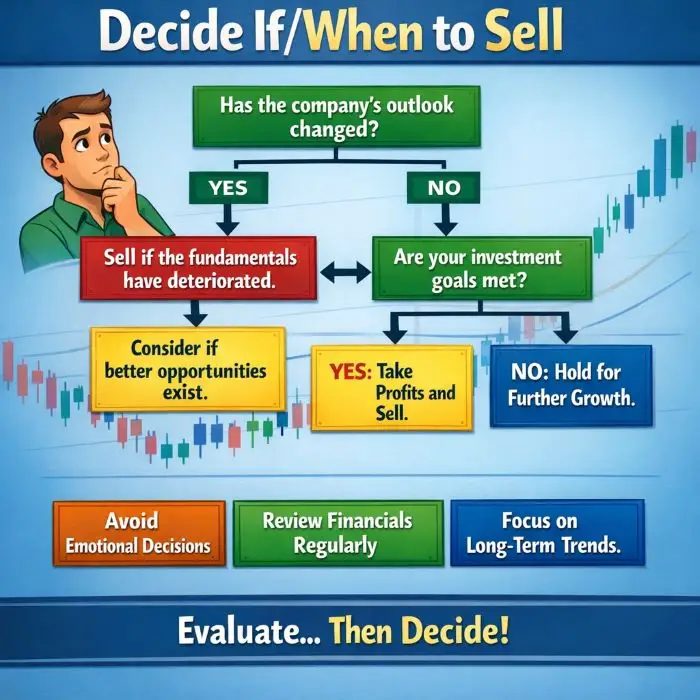
The first step in selling your house is deciding whether it’s the right time. Timing can significantly impact your sale price and the speed at which you close the deal.
Factors to Consider
- Personal Finances: Are you financially prepared to move? Consider costs like repairs, staging, and moving expenses.
- Market Timing: Is it a seller’s market (high demand, low inventory) or a buyer’s market (low demand, high inventory)?
Here’s a quick comparison of seller’s vs. buyer’s market:
| Market Type |
Characteristics |
Benefits for Sellers |
| Seller’s Market |
High demand, fewer homes available |
Higher offers, faster sales |
| Buyer’s Market |
More homes available, less competition |
Buyers have negotiating leverage |
Checklist: Signs It’s Time to Sell Your House
- Your home no longer fits your needs.
- You have enough equity to cover selling costs.
- The local market is favorable for sellers.
- You’re financially ready to buy or rent elsewhere.
- Your lifestyle requires a location change.
Understand Your Local Market
Knowing your local housing market is key to pricing your house correctly and attracting buyers quickly.
Research Comparable Sales (Comps)
Comps are homes similar to yours that have recently sold in your area. They provide a benchmark for setting your price. Use tools like Zillow, local MLS platforms, or free estimators to gather data.
Key Market Metrics to Track
Here’s a table of important metrics to evaluate:
| Metric |
Description |
| Median Home Prices |
Average selling price in your area |
| Inventory Levels |
Number of homes available for sale |
| Days on Market |
Average time homes stay listed |
By understanding these metrics, you’ll gain insight into buyer preferences and how to position your property for success.
Choose Your Selling Strategy
Deciding how to sell your house depends on your goals, timeline, and budget. Here are the three most common strategies:
| Strategy |
Pros |
Cons |
Best For |
| With Realtor |
Expertise, MLS exposure |
5-6% commission |
First-time sellers |
| FSBO (For Sale by Owner) |
Save on fees |
Less visibility, more work |
Experienced sellers |
| Cash Buyers/iBuyers |
Sell house fast |
Lower offers |
Urgent sales |
How to Choose
- Short on time? Opt for cash buyers or iBuyers.
- Want maximum profit? Hire a trusted realtor.
- Confident in your skills? FSBO might work for you.
Price Your House Right
Pricing your home competitively is critical to attracting buyers and receiving offers quickly.
How to Determine the Right Price
- Use comps to see what similar homes are selling for.
- Adjust for your home’s condition, size, and unique features.
Common Pricing Mistakes to Avoid
- Overpricing: Discourages potential buyers.
- Underpricing: Leaves money on the table.
- Ignoring market trends: Fails to account for buyer demand.
Prepare and Stage Your Home
First impressions matter. A well-prepared and staged home can boost offers by 1-5%, according to real estate experts.
Action Plan for Staging
- Declutter: Remove personal items and excess furniture.
- Curb Appeal: Mow the lawn, paint the front door, and tidy up landscaping.
- Repairs: Fix minor issues like dripping faucets or squeaky doors.
Before and After Checklist
- Clean all surfaces and windows.
- Add neutral decor to appeal to a wider audience.
- Highlight the home’s best features (e.g., fireplace or large windows).
Gather Essential Documents
Transparency speeds up the sale process. Make sure you have these documents ready:
Documents to Prepare
- Deed and title report
- HOA (Homeowners Association) documents
- Seller’s disclosures
- Recent utility bills
Having these on hand reassures buyers and simplifies closing.
Hire Pros (If Needed)
Real estate professionals can streamline the process and maximize your home’s value.
Key Roles to Consider
- Realtor: Provides market expertise.
- Photographer: Captures high-quality images for listings.
- Inspector: Identifies potential issues before buyers do.
Market Your Property Effectively
Marketing is the key to attracting buyers. Use high-ROI tactics like:
- Listing on the MLS.
- Posting on social media.
- Hosting open houses.
Handle Showings and Offers
Be prepared for both virtual and in-person showings. When offers come in, negotiate effectively to secure the best deal.
Navigate Inspections and Appraisal
Home inspections and appraisals are standard steps in the selling process. Anticipate buyer requests and be ready to address any appraisal gaps.
Close the Sale Smoothly
The closing process involves finalizing paperwork and transferring ownership. Use a checklist to ensure everything goes smoothly.
Post-Sale Tasks
After the sale, focus on post-sale responsibilities such as:
- Filing taxes related to the sale.
- Planning your move.
- Exploring investment opportunities like 1031 exchanges.
Common Mistakes to Avoid
Here’s a list of common pitfalls to watch out for:
- Skipping staging.
- Overpricing your home.
- Not vetting offers properly.
- Ignoring market trends.
FAQs: How to Sell a House
- How long does it take to sell a house?
On average, 45 days in 2026.
- Can I sell house without realtor?
Yes, FSBO is an option, but it requires more effort.
Conclusion and Next Steps
Selling a house doesn’t have to be overwhelming. By following these 12 steps, you’ll be well on your way to a successful sale. Ready to take action? Start with our free downloadable checklist to ensure you don’t miss a single step in the process.
Good luck, and happy selling!
House