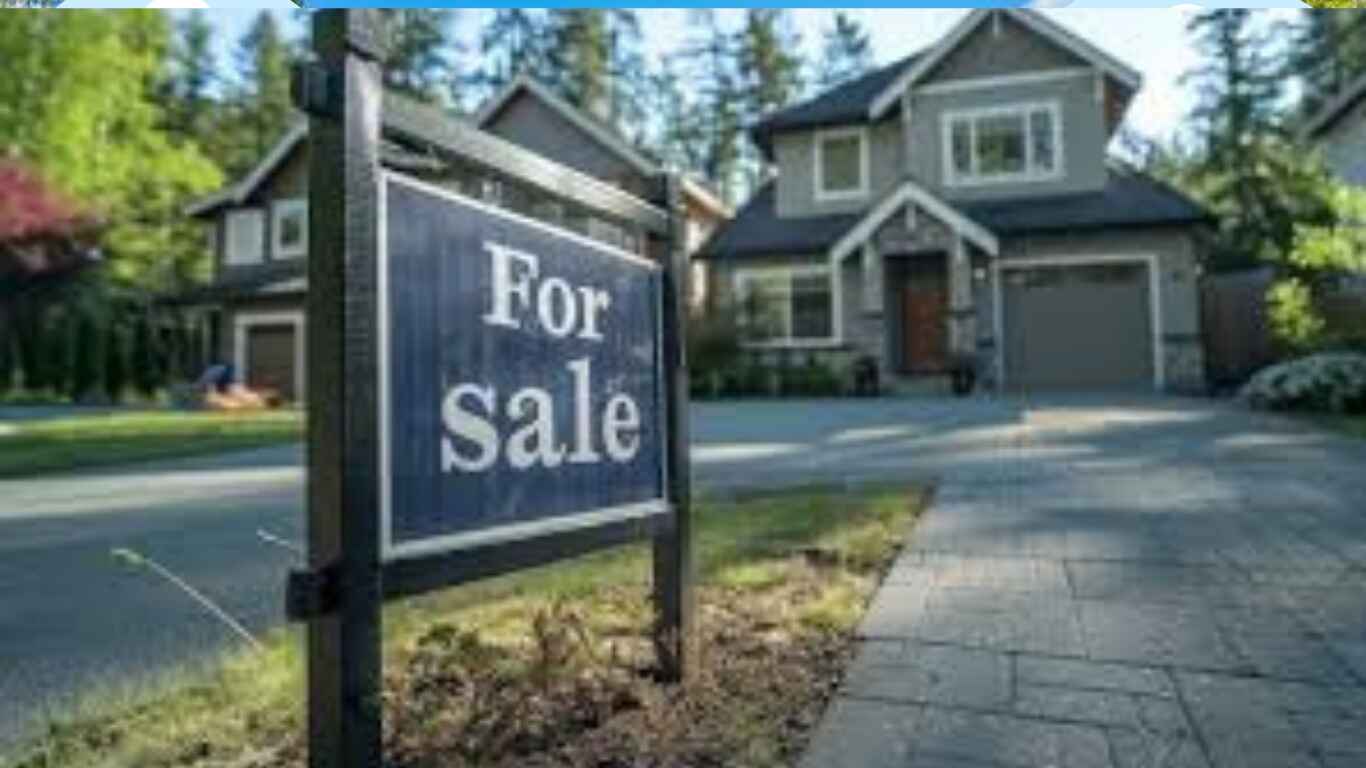
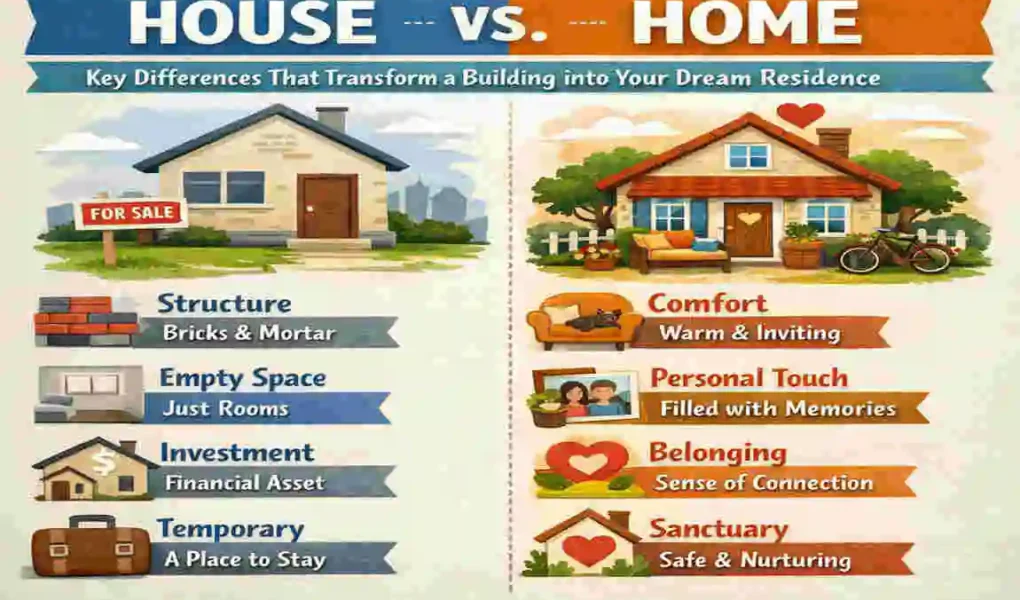
Have you ever moved into a new house, excited about the fresh start, but feeling like something was missing? Over time, as you add personal touches, host family dinners, and create memories, that house slowly transforms into a home. This transition is something most people can relate to, and it perfectly encapsulates the heart of the question: “What’s the difference between home and house?”
At first glance, the words “house” and “home” might seem interchangeable. However, they hold vastly different meanings. A house is simply a physical structure made of bricks, cement, and wood. A home, on the other hand, carries an emotional resonance—it’s where love, memories, and a sense of belonging thrive.
| Aspect | House | Home |
|---|---|---|
| Definition | A physical building or structure for shelter and living. | A place filled with emotional warmth, belonging, and personal meaning. |
| Nature | Tangible and structural (bricks, walls, roof). | Intangible and emotional (relationships, memories, comfort). |
| Focus | Architecture, size, location, and functionality. | Personalization, routines, and sense of security. |
| Ownership | Often viewed as a property or investment asset. | Felt through residency and attachment, regardless of ownership. |
| Transformation | Can be bought, sold, or renovated as a commodity. | Created over time through decor, family, and experiences. |
| Example | A 4-bedroom property listed for sale. | The same property after adding family photos and cozy routines. |
Literal Definitions
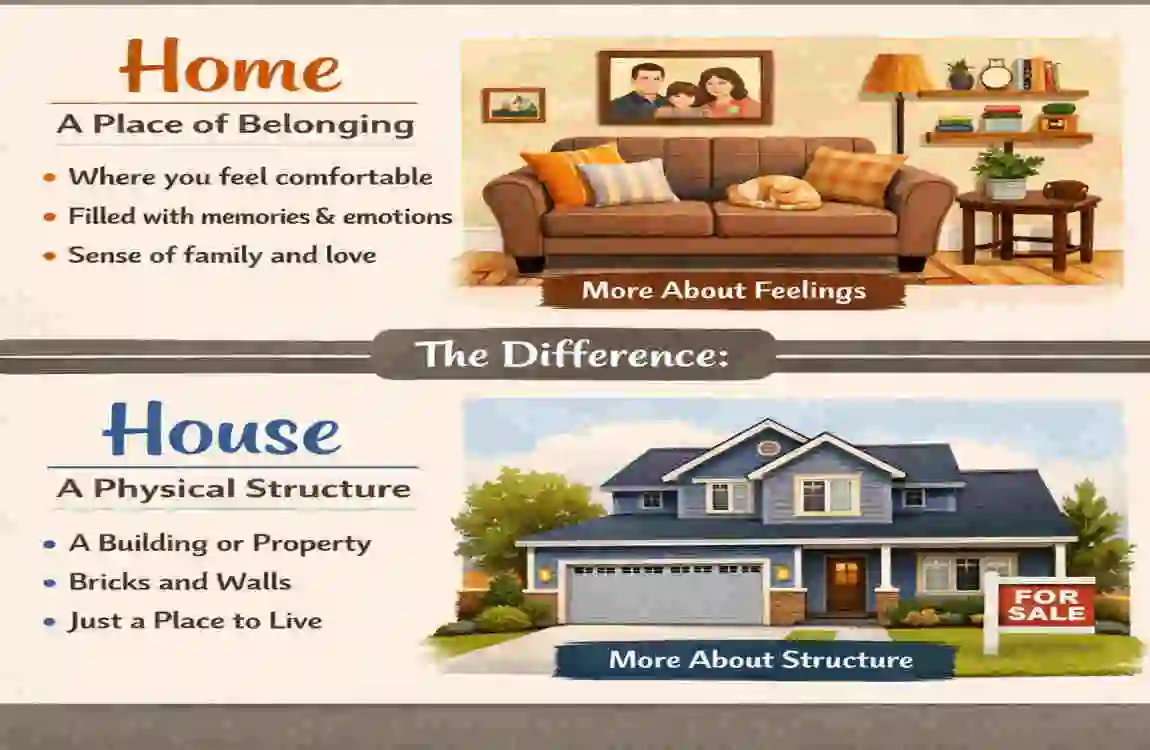
Let’s start by breaking down the literal meanings of ” luxury house” and “home.” Understanding their definitions helps set the stage for exploring their deeper, more emotional implications.
Dictionary Definitions
- A house refers to a physical structure designed for human habitation. It’s primarily a tangible object—a building that provides shelter.
- A home, in contrast, is a place of emotional and personal connection. It’s where you feel safe, comfortable, and rooted.
Etymology
Words have histories, and the origins of “house” and “home” offer fascinating insights:
- The word “house” comes from the Old English term “hūs,” meaning “shelter.”
- The term home derives from “hām,” meaning a “settled place” or “village,” emphasizing its connection to community and belonging.
Comparison Table
For clarity, here’s a side-by-side comparison of their key distinctions:
AspectHouseHome
Definition: Physical structure providing shelter, Emotional space filled with belonging.
Scope Tangible, built with bricks and mortar Intangible, created through memories and personal touches
Focus on functionality and design , comfort, love, and relationships
While a house is something you can buy or build, a home is something you create.
Structural vs. Emotional Aspects
When thinking about a house, it’s natural to focus on its physical components—its architecture, materials, and layout. In contrast, a home is defined by its emotional essence, shaped by the people living in it and the memories they create.
The House as Physical Architecture
A house represents the tangible elements of a living space. Features like:
- Design (modern, colonial, traditional)
- Materials (brick, wood, or concrete)
- Layout (number of bedrooms, bathrooms, and square footage)
These aspects make a house functional and aesthetically pleasing. However, without personalization, it might feel cold or impersonal.
The Home as a Personal Space
A home emerges when you infuse a living space with personality and warmth. This could include:
- Decorating with family photos or heirlooms
- Establishing daily rituals, like family movie nights
- Adding cozy touches like soft lighting or a favorite armchair
The Role of Renovations
Renovations often act as a bridge between a house and a home. By tweaking spaces to suit your lifestyle—whether that’s adding a reading nook or redoing the kitchen to accommodate family gatherings—you’re turning a functional space into a personal sanctuary.
Historical Evolution
The distinction between houses and homes isn’t just a modern concept—it has evolved significantly throughout history.
Houses in Ancient Times
In ancient societies, houses were often symbols of status and wealth. For example:
- Roman villas showcased the affluence of elite families.
- Castles and palaces reflected power and hierarchy.
These structures served functional purposes but were also designed to impress, with little emphasis on emotional attachment.
Homes in the Modern Era
The concept of home as a private sanctuary gained prominence during the Industrial Revolution. With urbanization and industrial growth, people began to value homes as places to escape the chaos of city life. Today, the trend continues with movements like tiny homes and minimalist living, emphasizing comfort and sustainability over grandeur.
Psychological Impact
The emotional difference between a luxury house and a home can have profound psychological effects. When we feel at home, there’s a sense of security and comfort that contributes to our well-being.
The Concept of “Home Attachment”
Studies have shown that people who feel emotionally connected to their living spaces experience:
- Greater happiness and mental health benefits
- Improved relationships within the family
- Reduced stress levels
House Poverty and Urban Stress
On the flip side, living in a house that doesn’t feel like home—perhaps due to financial strain or lack of personalization—can lead to:
- “House poverty,” where individuals feel burdened by the costs of maintaining a house
- Emotional detachment, especially in fast-paced urban settings like Lahore
The emotional connection to a home goes beyond aesthetics—it’s about creating a space where you can truly be yourself.
Real Estate Perspective
From a real estate perspective, the terms “house” and “home” take on different meanings, especially when considering investments and lifestyle choices.
Houses as Investments
For many buyers, a house is viewed as a financial asset. Key factors include:
- Return on Investment (ROI)
- Market trends and appreciation rates
- Resale value and neighborhood desirability
Homes as Lifestyle Purchases
On the other hand, homes are often purchased with emotional factors in mind:
- Proximity to family and community
- Comfort and livability
- Spaces designed for specific needs, like home offices or playrooms
Real Estate Trends
In 2026, market trends show a growing preference for properties that combine smart technology with cozy, home-like features. Buyers are increasingly looking for spaces that feel both modern house and welcoming.
Design and Customization
Turning a house into a home often comes down to design and personalization. Here are some ways to make your space truly yours:
Ways to Personalize Your Space
- Lighting: Use warm, adjustable lights to create a cozy ambiance.
- Colors: Choose a color palette that reflects your personality—soft pastels for calm, vibrant colors for energy.
- Multifunctional Spaces: Create rooms that serve multiple purposes, like a guest bedroom that doubles as a home office.
- Artwork and Decor: Display items that hold sentimental value or showcase your interests.
- Smart Home Features: Integrate smart technology for convenience and modernity.
These small but meaningful changes can transform any house into a space that feels like home.
Legal and Financial Differences
The legal and financial aspects of owning a house versus creating a home also differ significantly.
House Ownership
Owning a house involves:
- Property titles and deeds
- Mortgage payments and taxes
- Legal responsibilities for maintenance
Home Equity
A home is more than just an asset—it’s also a source of emotional and financial stability. Home equity can be used for investments, education, or retirement, making it a valuable long-term resource.
Cultural Variations
Cultural perspectives further shape the distinction between houses and homes.
Western vs. South Asian Views
- In Western cultures, houses are often seen as individual assets, with emphasis on independence.
- In South Asian cultures, homes are viewed as family-centric spaces that emphasize shared living and traditions.
Lahore’s Changing Landscape
In cities like Lahore, traditional joint family homes are gradually giving way to nuclear family setups. Despite this shift, the emotional importance of home remains deeply rooted in cultural values.
Modern Trends
As we move further into 2026, new trends are redefining what it means to have a home. For example:
- Eco-Friendly Houses: Sustainable materials and designs are being used to create wellness-focused homes.
- Remote Work Spaces: With more people working from home, multifunctional and comfortable spaces are in high demand.
- Smart Homes: Technology is blurring the line between houses and homes, making it easier than ever to customize living spaces.
Practical Tips to Turn a House into a Home
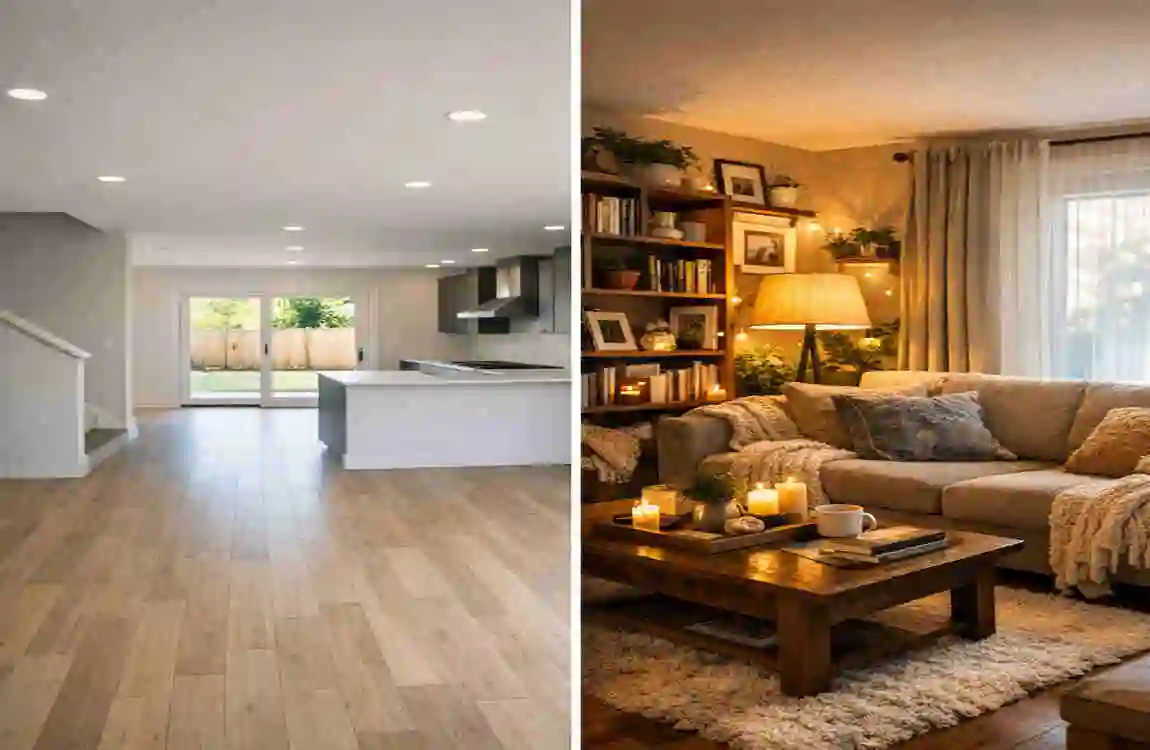
Ready to make your house feel like home? Here’s a simple checklist:
- Declutter and organize your space.
- Add personal artifacts, such as family photos or travel souvenirs.
- Establish rituals, like morning coffee spots or family game nights.
- Invest in comfortable furniture and decor.
- Use scents, like candles or diffusers, to make your home inviting.
These small steps can have a big impact on how you feel in your living space.
Difference Between Home and House – FAQ
What is a house?
A: A house is a physical building or structure where people live.
What is a home?
A: A home is a place where you feel comfortable, safe, and emotionally connected—it may or may not be a house.
Is every house a home?
A: Not necessarily. A house becomes a home when it has personal meaning and emotional attachment.
Can a home be something other than a house?
A: Yes, a home can be an apartment, condo, or any place where you feel a sense of belonging.
What is the main difference between a house and a home?
A: A house is a physical property, while a home is about feelings, comfort, and personal connection.
Why do people say “home is where the heart is”?
A: It means a home is defined by emotions and relationships, not just the building.
Can you buy a home and a house at the same time?
A: You can buy a house, but turning it into a home depends on how you live in and personalize it.
Which term is used in real estate?
A: “House” is commonly used for property listings, while “home” is often used in a more emotional or lifestyle context.
If you want, I can expand this into a detailed article or SEO blog post.