Did you know that as we navigate through 2026, homes equipped with a well-designed plumbing system save up to 30% on their monthly water bills? It is a staggering statistic, yet recent studies show that nearly 40% of newly built modern homes still lack these essential, money-saving features.
When you think about building or upgrading a home, you should focus on beautiful kitchens, spacious living rooms, or smart security cameras. But what about the pipes hidden behind your walls? Common plumbing pitfalls in new builds—like hidden leaks, poor water pressure, and massive energy inefficiency—can quickly turn your dream home into a costly nightmare.
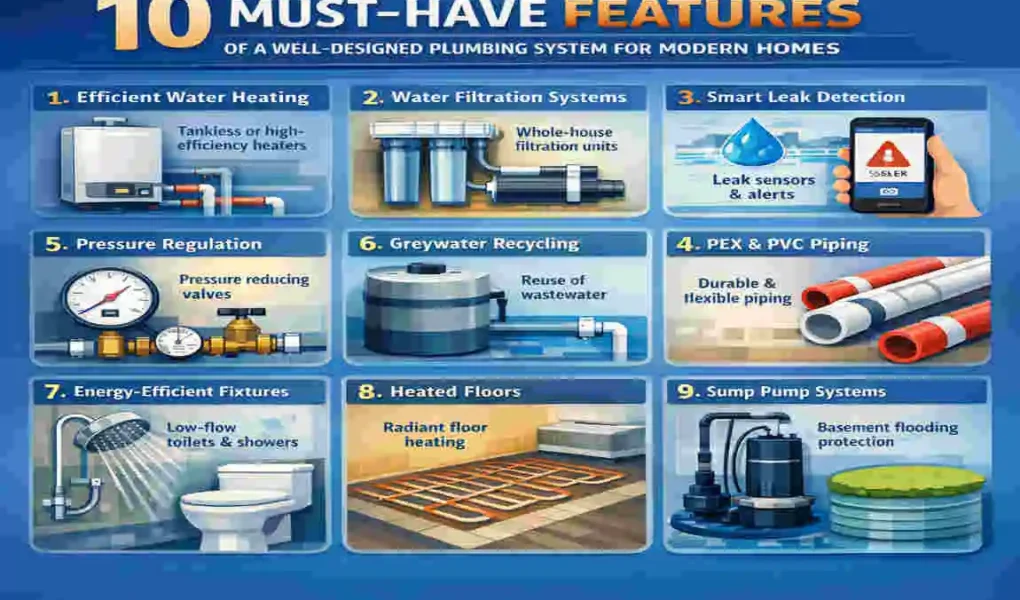
You deserve a home that works with you, not against you. In this comprehensive guide, we will explore why a well-designed plumbing system is essential for modern homes. We are going to explore the top ten features that transform an ordinary house into an eco-friendly, cost-saving sanctuary.
| Feature | Well-Designed Plumbing System (2026 Modern Homes) | Traditional Plumbing System | Key Benefits & Savings |
|---|---|---|---|
| Piping Material | PEX or CPVC (flexible, corrosion-resistant) | Galvanized steel or old copper | 50+ year lifespan; 20-30% install cost savings |
| Leak Detection | Smart Wi-Fi sensors (e.g., app alerts) | None/manual checks | Prevents $5K-$15K damage; real-time notifications |
| Water Flow | Low-flow fixtures (1.0-1.5 GPM) | High-flow (2.5+ GPM) | 40-50% water savings; meets eco-codes |
| Filtration | Whole-house RO + UV | Basic or none | 99% contaminant removal; healthier water |
| Energy Efficiency | Tankless/heat pump heaters + zoning | Standard tank heaters | 30-50% energy bill reduction |
| Greywater Recycling | Integrated reuse for irrigation | No recycling | 30-40% water reuse; sustainable for Lahore climates |
| Backflow Prevention | Automatic devices | Rare/manual | Protects water supply; code-compliant |
| Controls | Touchless sensors + AI monitoring | Manual knobs | Hygiene boost; predicts issues via app |
Why a Well-Designed Plumbing System Matters
We live in an era when technology touches every part of our lives. The rise of smart homes, combined with growing concerns about water scarcity and strict new energy codes, means that standard plumbing no longer cuts it.
A well-designed plumbing system matters today more than ever because it directly impacts your wallet, your comfort, and your peace of mind. First and foremost, we are looking at incredible durability. When you use modern materials, you do not have to worry about pipes bursting in the middle of the night.
Furthermore, home plumbing efficiency is no longer just a buzzword. It is a necessity. Efficient setups lower your monthly utility bills and reduce the strain on local water supplies. Sustainable plumbing also protects your family’s health by ensuring clean, contaminant-free water flows from every tap.
Let us talk about your return on investment. Upgrading to modern standards significantly boosts your property value. For instance, installing modern flexible piping can last upwards of 50 years, meaning you might never have to repipe your home again.
If you want to future-proof your living space, embracing a highly efficient plumbing framework is the smartest move you can make. Upgrade your home plumbing today, and you will reap the rewards for decades.
High-Efficiency Piping Materials
The core of any well-designed plumbing system starts with the actual pipes running through your walls. In the past, copper was the gold standard. However, in 2026, cross-linked polyethylene—better known as PEX—has taken the crown.
PEX is a highly durable, flexible plastic tubing. Unlike rigid copper pipes, PEX can bend around corners. This flexibility means your plumber needs fewer fittings, drastically reducing the risk of leaks behind your drywall. Furthermore, PEX is highly corrosion-resistant. You will never have to worry about rust ruining your water supply.
The pros of using high-efficiency materials are undeniable. They are highly cost-effective, much faster to install, and wonderfully freeze-resistant. Because PEX can expand slightly, a sudden freeze is far less likely to cause a catastrophic burst compared to rigid metal pipes.
We are also seeing a modern twist in today’s sustainable homes. Plumbers now use UV-resistant piping for homes that rely on outdoor solar water heating. These specially coated pipes can withstand harsh sunlight without breaking down.
Consider a recent home retrofit case study right here in Lahore. An older home plagued by low water pressure and constant pinhole leaks was entirely repiped using high-efficiency PEX. The project took half the time a copper installation would have required. The homeowners immediately noticed stronger water pressure, no leaks, and cleaner water.
Smart Water Leak Detectors
Imagine being miles away from home on a family vacation, only to receive an instant notification on your smartphone that a pipe has started leaking in your basement. Thanks to smart water leak detectors, this level of control is now a standard feature in a well-designed plumbing system.
Today’s smart detectors use ultra-fast Wi-Fi sensors to continuously monitor your water flow. Leading 2026 models, like the latest offerings from Moen Flo and similar brands, actually learn your family’s daily water habits. They know the difference between a long shower and a burst pipe.
How does it work? These compact devices attach directly to your main water line. If the sensor detects an unusual flow of water, it sends real-time alerts straight to a mobile app on your phone. Even better, many of these devices feature an automatic shut-off valve. If a major leak occurs, the system instantly turns off your home’s water supply, stopping the flood in its tracks.
The financial savings are massive. Water damage is one of the most expensive home repairs you can face. By installing a smart leak detector, you can easily prevent tens of thousands of dollars in water damage, ruined furniture, and mold remediation.
Additionally, these smart water guards integrate seamlessly with modern home automation hubs like Google Nest or Apple HomeKit. You can check your daily water usage with a simple voice command, giving you ultimate control over your home’s efficiency.
Low-Flow Fixtures and Aerators
If you want to cut down your water bill without sacrificing comfort, low-flow fixtures are your best friend. A well-designed plumbing system always utilizes these clever devices to maximize efficiency without making your showers feel weak or trickling.
Let us look at the details. Modern low-flow faucets often run at just 1.0 gallon per minute (GPM), compared to older models that waste over double that amount. When shopping for these fixtures, always look for the WaterSense label. This certification ensures the fixture meets strict water-efficiency and performance standards.
You might worry that less water means lower pressure, but that is not true. These fixtures use special components called aerators. An aerator forces air into the water stream, creating a thick, bubbling flow. This gives you the sensation of high water pressure while actually using a fraction of the liquid.
The impact on your household budget is immediate. By simply swapping out your showerheads and bathroom faucets, you can easily cut your family’s water usage by up to 50%.
This is a major trend for eco-friendly, net-zero homes in 2026. Conserving water not only saves you money but also protects vital local water resources. It is a simple upgrade that delivers enormous environmental and financial benefits.
Advanced Water Filtration Integration
Clean, safe drinking water is a fundamental human need. In a modern, well-designed plumbing system, advanced water filtration is not an afterthought; it is built right into the home’s architecture.
There are a few main types of built-in filtration setups. Whole-house Reverse Osmosis (RO) systems push water through an incredibly fine membrane, stripping away microscopic impurities before the water even reaches your taps. For an added layer of safety, many homes now include Ultraviolet (UV) purifiers, which use safe light waves to neutralize harmful bacteria and viruses.
The health benefits of these integrated systems are immense. Tap water can often carry hidden dangers. Advanced filters actively remove dangerous contaminants, including heavy metals, chlorine, and harmful forever chemicals like PFAS. You can feel completely confident every time you fill your child’s glass from the kitchen sink.
The big 2026 trend in this space is smart filtration technology. Your water filter connects to your home’s Wi-Fi to provide detailed usage tracking. Instead of guessing when to change your filter, your smartphone will notify you exactly when the filter cartridge has reached the end of its lifespan.
By integrating filtration directly into your main plumbing lines, you protect your appliances from hard water buildup, improve the taste of your meals, and keep your family incredibly healthy.
Greywater Recycling Systems
Have you ever thought about how much relatively clean water goes straight down the drain when you wash your hands or take a quick shower? Greywater recycling systems capture this gently used water and put it to work a second time, marking a massive leap forward in sustainable living.
Setting up a greywater system involves installing special diverter valves in your well-designed plumbing system. These valves take the runoff from your showers, bathtubs, and bathroom sinks—water that is perfectly safe for non-drinking purposes—and redirect it to your garden or lawn for irrigation.
The potential for savings is spectacular. In arid areas with scarce rainfall, such as parts of Punjab, a greywater system can facilitate up to 40% water reuse. Instead of using expensive, purified drinking water to keep your grass green, you are utilizing water you have already paid for.
Of course, dealing with greywater requires some care. You must ensure you are using environmentally friendly soaps that will not harm your plants. Furthermore, you should always check local regulations and compliance tips before installing a system, as building codes dictate how greywater must be stored and distributed.
Incorporating greywater recycling turns your home into a self-sustaining oasis. It is a brilliant way to respect nature while drastically slashing your outdoor watering costs.
Mid-Post Boost: Real-Home Transformations
Sometimes, seeing is believing. Upgrading to a well-designed plumbing system is an investment that pays for itself. Take a look at the incredible financial difference these modern upgrades make over time.
Table: Average Cost vs. 10-Year Savings for Plumbing Upgrades
Plumbing Upgrade Feature: Estimated Initial Cost, Estimated 10-Year Savings, Added Value to Home
Smart Leak Detector Moderate Extremely High (Prevents Damage) High
Low-Flow Aerators Very Low High (Lower Water Bills) Moderate
Tankless Water Heater High High (Energy Savings) High
Greywater Recycling High Moderate to High (Water Bills) Very High
Whole-House Filtration Moderate Moderate (Eliminates Bottled Water) High
Consider the story of a local family who recently transformed their property. Before their upgrade, they suffered from inconsistent water temperatures, skyrocketing energy bills, and a flooded basement caused by a tiny, undetected leak.
After investing in top-tier plumbing upgrades—including smart leak sensors, zoned piping, and a tankless heater—their monthly utility bills dropped by an astonishing 35%. Their home runs smoothly, quietly, and efficiently. If you are looking to experience a similar transformation, reach out to explore the Top Plumbing Services in Lahore for a comprehensive consultation.
Insulated and Zoned Piping
Just like you insulate your walls to keep your house warm in the winter, a well-designed plumbing system requires thoroughly insulated pipes. Leaving your pipes bare is a massive waste of energy and a huge risk during cold weather.
The benefits of pipe insulation are twofold. First, it acts as a protective blanket, preventing your pipes from freezing and bursting during unexpected cold snaps. Second, it keeps your hot water hot as it travels from your heater to your shower. Without insulation, heat escapes through the pipe walls, meaning your heater has to work twice as hard.
Another brilliant modern feature is plumbing zoning. Just as you can control the air conditioning in different rooms of your house, zoned plumbing creates dedicated circuits for different areas.
By running separate, dedicated hot and cold lines to specific zones—like the main bathroom versus the kitchen—you get faster hot water delivery. You waste far less water waiting for the shower to warm up. This targeted approach to water delivery is the hallmark of true home plumbing efficiency.
High-Performance Water Heaters
Nobody likes stepping into a freezing shower when the hot water has run out. A truly well-designed plumbing system tosses out the bulky, inefficient water tanks of the past. It replaces them with sleek, high-performance technology.
Today, homeowners have two incredible options: tankless water heaters and heat pump water heaters. Tankless models are fantastic because they heat water strictly on demand. When you turn on the tap, powerful elements flash-heat the water instantly. You get an endless supply of hot water, and you never pay to keep a giant tank of water hot while you sleep or are away at work.
Heat pump models, on the other hand, pull warmth directly from the surrounding air to heat your water, acting like a refrigerator running in reverse. They are marvels of modern engineering.
The efficiency of these modern units is mind-blowing. Many boast a 99% thermal efficiency rating. Furthermore, in 2026, many of these systems will be ready for direct solar integration. You can connect your water heater directly to your rooftop solar panels, practically eliminating your water-heating costs while drastically reducing your carbon footprint.
Backflow Prevention Devices
Water should only flow in one direction: into your home and out through the drains. But under certain circumstances, a dangerous reversal can happen. This is why backflow prevention devices are a non-negotiable part of a well-designed plumbing system.
Backflow occurs when there is a sudden drop in water pressure in the main city lines—perhaps due to a burst street pipe or a fire truck opening a hydrant nearby. This pressure drop can literally suck dirty, contaminated water from your irrigation system, swimming pool, or appliances backward into your home’s clean drinking water supply.
A backflow prevention device is a specialized, one-way valve installed at critical cross-connection points. It physically blocks water from reversing course.
Safety is the absolute priority here. These valves protect your family from consuming harmful pesticides, fertilizers, and dangerous bacteria. Because of the vital health protection they offer, these devices are absolutely mandatory in all modern building codes. A professional installation ensures your clean water supply remains sparkling, safe, and completely uncompromised.
Touchless and Sensor-Activated Controls
What was once considered a luxury feature reserved for high-end hotels has now become a staple in modern homes. Touchless and sensor-activated controls represent the perfect marriage of hygiene and convenience in your well-designed plumbing system.
In a post-pandemic world, we are all much more aware of how germs spread. Think about cooking in your kitchen. Your hands are covered in raw chicken juice, and you need to wash them. With a traditional faucet, you have to grab the handle, which can leave behind dangerous bacteria. With a touchless faucet, a simple wave of your hand or a tap of your wrist instantly activates the water flow.
These sensors are incredibly precise, turning off the water the second you move your hands away, which naturally saves gallons of water every single week.
Beyond the hygiene aspect, there is a massive luxury appeal. The latest 2026 models take this a step further with voice-activated technology. You can literally talk to your smart home assistant, like Alexa or Google Assistant, and say, “Dispense exactly two cups of warm water.” The faucet will comply perfectly. It is a stunning feature that makes everyday kitchen and bathroom tasks feel incredibly futuristic.
Eco-Monitoring and Automation Hub
To truly tie everything together, a modern home needs a brain. The final, crowning feature of a well-designed plumbing system is a centralized eco-monitoring and automation hub. This is where plumbing meets advanced computer science.
Instead of dealing with multiple apps for your leak detector, water heater, and smart filters, an automation hub brings it all into one central dashboard. This elegant touch-screen panel—often mounted in the kitchen or accessed via a master tablet—gives you a complete, real-time overview of your home’s entire water ecosystem.
These hubs utilize powerful Artificial Intelligence to track your usage trends. The AI can actually predict issues before they happen. For example, you might notice that your water pressure drops slightly every Tuesday morning, suggesting a slow, hidden leak or a failing valve. It then alerts you to schedule a maintenance check.
Furthermore, these systems are built to be future-proof. Current models are fully 5G-ready, ensuring they can handle the lightning-fast data transfers required for software upgrades through 2030 and beyond. By installing a centralized hub, you turn passive pipes into a proactive, money-saving, and highly intelligent home network.
Common Myths About Well-Designed Plumbing Systems
When it comes to home improvements, bad advice is everywhere. Let us build some trust by busting a few common myths about modern plumbing setups with hard facts.
- Low-flow fixtures mean you get low water pressure.
- The Fact: As we discussed earlier, modern aerators mix air into the water. This actually increases the force and spray coverage of the water. You get a powerful, satisfying shower while using half the water.
- Plumbing pipes last forever, so you never need to upgrade.
- The Fact: Older materials like galvanized steel rust from the inside out, and older copper can develop pinhole leaks. Upgrading to modern PEX materials guarantees longevity and prevents sudden disasters.
- Smart plumbing tech is too complicated to use.
- The Fact: Today’s smart home water hubs are designed with extreme simplicity in mind. If you know how to use a basic smartphone app to check the weather, you can easily monitor your home’s plumbing.
- A roll of duct tape or plumbing tape fixes any leak.
- The Fact: Tape is a temporary bandage, not a cure. A well-designed plumbing system relies on professional fittings and durable materials, eliminating the need for risky DIY patch jobs.
How to Assess and Upgrade Your Home’s Plumbing
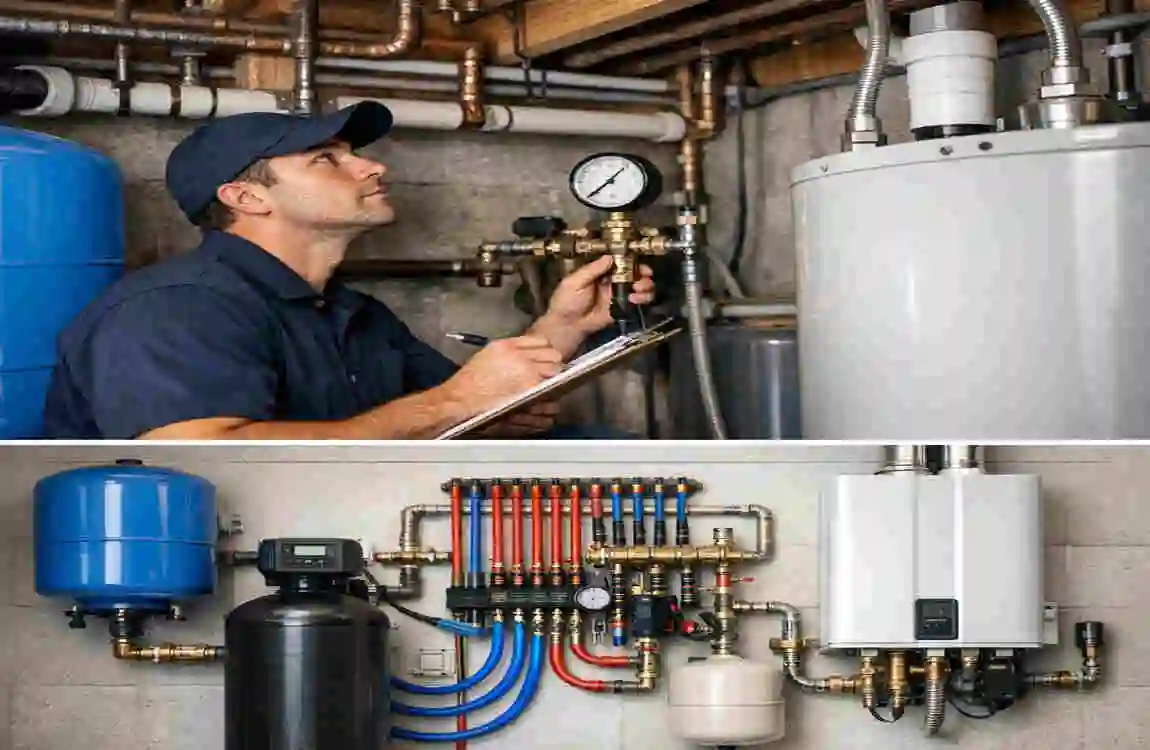
You might be reading this and wondering, “How do I know if my home needs an upgrade?” Evaluating your current setup is easier than you think. You can start with a simple DIY inspection to get a sense of your luxury home’s condition.
Your DIY 10-Point Plumbing Inspection Checklist:
- Check for visible leaks under all bathroom and kitchen sinks.
- Inspect exposed pipes in your basement or utility room for rust, green flaking, or moisture.
- Test the water pressure by turning on multiple taps simultaneously.
- Look at your water heater for rust spots or small puddles around the base.
- Listen closely to your toilets to ensure they do not run continuously after flushing.
- Check your showerheads for severe hard-water buildup and scale.
- Review your latest water bill to see if there is an unexplained spike in usage.
- Note how long it takes for hot water to reach your furthest bathroom.
- Look for water stains on your ceilings or drywall.
- Locate your main shut-off valve and verify that it actually turns easily.
If you notice low pressure, rusty pipes, or unexplained high bills during this assessment, it is time for professional help. Water systems are incredibly complex, and a tiny mistake can lead to major flooding.
Pro tips for calling the experts: Do not wait for a pipe to burst. Preventive maintenance is always cheaper than emergency disaster cleanup. If you are ready to modernize your space, do not hesitate to schedule a free consultation with our Lahore team today. We will help you design a system that fits your budget and lifestyle perfectly.
FAQs
What exactly makes a plumbing system “well-designed”? A well-designed plumbing system seamlessly integrates modern, durable materials, high-efficiency fixtures, and smart technology. It minimizes water waste, prevents catastrophic leaks, and delivers consistent hot and cold water pressure while adhering strictly to modern building codes.
How much does it cost to upgrade my home’s plumbing? Costs vary widely based on the size of your home and the specific features you choose. Installing low-flow fixtures is incredibly cheap, whereas repiping an entire house or adding a tankless water heater requires a larger upfront investment. However, the long-term savings on utility bills generally offset the initial costs within a few years.
Will smart leak detectors work if the power goes out? Most high-quality smart leak detectors feature an emergency battery backup system. Even if your home loses power during a storm, the device will still monitor your pipes and automatically shut off the main valve if a leak occurs.
Can I install a greywater recycling system in an existing home? Yes, you can! While it is easier to install during new construction, professional plumbers can successfully retrofit greywater diverter valves into an existing home’s plumbing framework to capture water from specific showers and sinks.
How long do modern PEX pipes actually last? Under normal home conditions, high-quality PEX piping is expected to last 50 years or more. It is incredibly durable, resists scaling and chlorine buildup, and will not corrode like older metal piping.