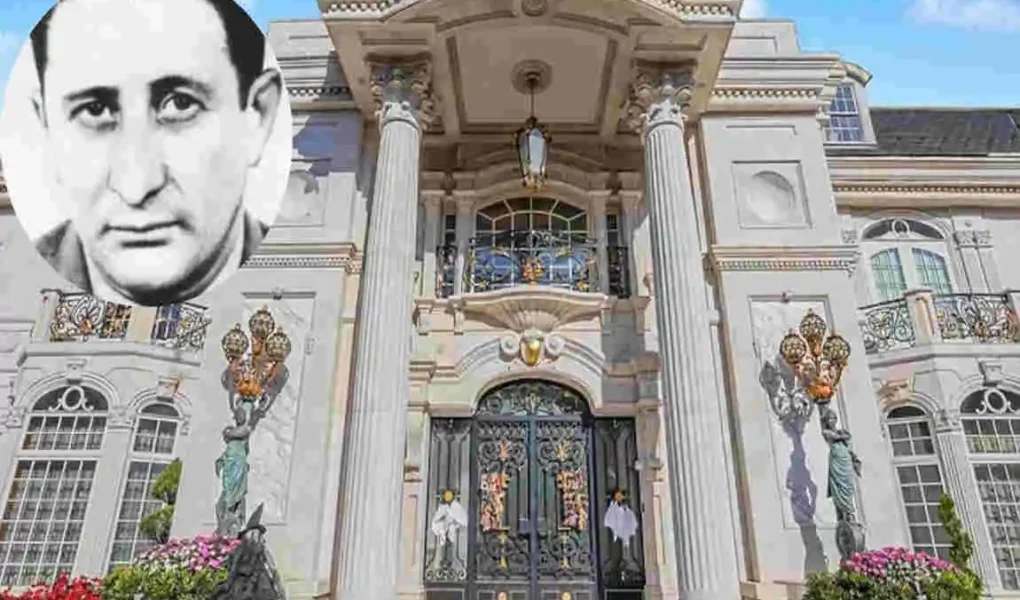
<p><span data-preserver-spaces="true">When you think of a legendary mafia “Boss of Bosses,” what comes to mind? You might imagine a sprawling estate with golden gates, a fleet of luxury cars, and armed guards patrolling a high stone wall. But if you were to drive down </span><strong><span data-preserver-spaces="true">2230 Ocean Parkway</span></strong><span data-preserver-spaces="true"> in Brooklyn, New York, you would find something completely different. You would see the </span><strong><span data-preserver-spaces="true">Gambino House</span></strong><span data-preserver-spaces="true">.</span></p>
<p><span data-preserver-spaces="true">For decades, this unassuming brick building was the nerve center for one of the most powerful criminal organizations in American history. It wasn’t a fortress; it was a home. Carlo Gambino, the man who sat at the head of the Commission and controlled the Five Families, chose to live a life that looked exactly like his neighbors. This choice wasn’t just about personal taste—it was a strategic masterpiece that allowed him to rule the underworld while hiding in plain sight.</span></p>
<h2><span data-preserver-spaces="true">The Unassuming Exterior of 2230 Ocean Parkway</span></h2>
<p><span data-preserver-spaces="true">The first thing you notice about the </span><strong><span data-preserver-spaces="true">Gambino House</span></strong><span data-preserver-spaces="true"> is how remarkably normal it looks. Located at </span><strong><span data-preserver-spaces="true">2230 Ocean Parkway</span></strong><span data-preserver-spaces="true">, this two-story brick residence was built in 1935. It spans approximately 2,724 square feet and features five <a href="https://comeawayhome.co.uk/gerry-beckleys-sherman-oaks-mansion-inside-the-america-singers-2-2m-tropical-retreat/">bedrooms</a>. By modern standards, it’s a nice family home, but it certainly doesn’t scream “billion-dollar criminal empire.”</span></p>
<h3><span data-preserver-spaces="true">A Masterclass in Modesty</span></h3>
<p><span data-preserver-spaces="true">Carlo Gambino was a man who hated the spotlight. Unlike later bosses like John Gotti, who loved expensive suits and public attention, Gambino believed that the more you showed off, the more the FBI would watch you. The </span><strong><span data-preserver-spaces="true">Gambino House</span></strong><span data-preserver-spaces="true"> reflected this philosophy perfectly.</span></p>
<p><span data-preserver-spaces="true">The house features a simple brick facade and a standard suburban layout. There are no grand gates or high-tech security fences that would distinguish it from any other house in the Bensonhurst neighborhood. By keeping his home modest, Gambino was able to maintain a low profile. He wanted the government to see him as a simple immigrant who had made a decent life for himself, not as a kingpin.</span></p>
<h3><span data-preserver-spaces="true">The Neighborhood Context: Bensonhurst and Beyond</span></h3>
<p><span data-preserver-spaces="true">To understand the </span><strong><span data-preserver-spaces="true">Gambino House</span></strong><span data-preserver-spaces="true">, you have to understand the neighborhood of Bensonhurst during the mid-20th century. At the time, it was a thriving Italian-American community. It was a place where people knew their neighbors, and loyalty was the highest currency.</span></p>
<ul>
<li><strong><span data-preserver-spaces="true">Italian Roots:</span></strong><span data-preserver-spaces="true"> The area was filled with families who had emigrated from Sicily and Southern Italy, creating a cultural bubble where Gambino felt safe and respected.</span></li>
<li><strong><span data-preserver-spaces="true">Proximity to Coney Island:</span></strong><span data-preserver-spaces="true"> The house was just a short drive from Coney Island, which was a frequent spot for family outings. Gambino was a dedicated family man, and the location allowed him to balance his “work” with his personal life.</span></li>
<li><strong><span data-preserver-spaces="true">Strategic Location:</span></strong><span data-preserver-spaces="true"> Ocean Parkway is a major thoroughfare. This allowed for easy travel to Manhattan or other parts of Brooklyn, making it simple for associates to drop by without drawing too much suspicion.</span></li>
</ul>
<h2><span data-preserver-spaces="true">Inside the Gambino House: Where Family and Business Met</span></h2>
<p><img class="aligncenter wp-image-6714 size-full" src="https://comeawayhome.co.uk/wp-content/uploads/2026/02/Untitleddesign87_imresizer-ezgif.com-jpg-to-webp-converter.webp" alt="gambino house" width="1150" height="750" /></p>
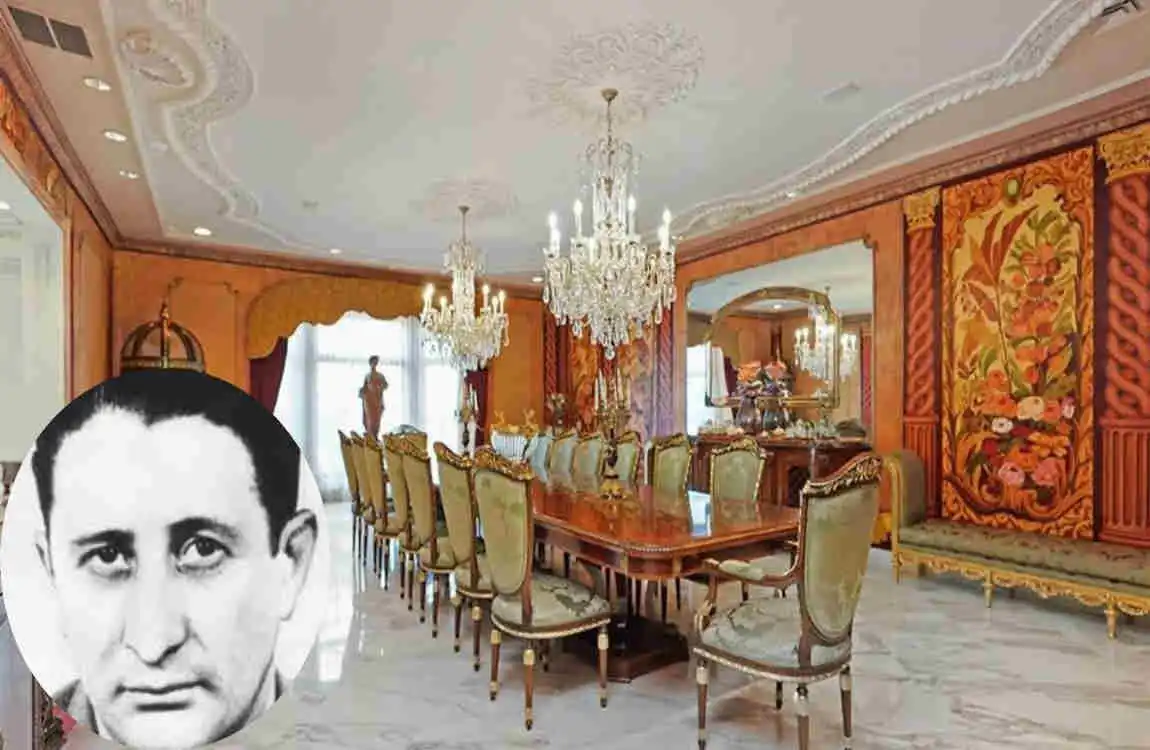
<p><span data-preserver-spaces="true">While we can’t walk through the front door today, <a href="https://comeawayhome.co.uk/inside-nick-sabans-3m-tuscaloosa-mansion-tour-the-9000-sq-ft-alabama-coach-legacy-home/">historical</a> records and accounts from those who knew the family give us a pretty good idea of what the interior of the </span><strong><span data-preserver-spaces="true">Gambino House</span></strong><span data-preserver-spaces="true"> was like. It was a place of tradition, where the smells of Sicilian cooking mingled with the hushed whispers of high-stakes strategy sessions.</span></p>
<h3><span data-preserver-spaces="true">The Heart of the Home: Catherine’s Kitchen</span></h3>
<p><span data-preserver-spaces="true">If you were to step inside during the 1960s, the first thing you would likely smell is garlic and tomato sauce. Carlo’s wife, </span><strong><span data-preserver-spaces="true">Catherine Castellano</span></strong><span data-preserver-spaces="true">, was the heart of the home. She was known as a traditional Sicilian woman who took great pride in her cooking.</span></p>
<p><span data-preserver-spaces="true">The <a href="https://comeawayhome.co.uk/benefits-of-stainless-steel-countertops-for-your-home-kitchen/">kitchen</a> wasn’t just for eating; it was a place where Gambino enforced his most famous rules. He was famously anti-narcotics, often telling his men that anyone caught dealing drugs would be killed. It is said that many of these stern lectures and family meetings took place right at the kitchen table over a plate of pasta.</span></p>
<h3><span data-preserver-spaces="true">Functional Spaces for a “Quiet Don”</span></h3>
<p><span data-preserver-spaces="true">The <a href="https://comeawayhome.co.uk/inside-heather-locklears-stunning-house-a-look-at-her-celebrity-home-and-stylish-interior/">interior</a> was likely decorated in a style typical of successful Italian-American families of the era. Think marble statues, heavy wooden furniture, and plenty of framed family photos. Gambino didn’t need a “war room” with maps and monitors. He did his best work in the living room, sitting in a comfortable chair, speaking in low tones to his underbosses like </span><strong><span data-preserver-spaces="true">Aniello Dellacroce</span></strong><span data-preserver-spaces="true">.</span></p>
<p><span data-preserver-spaces="true">RoomEstimated FeaturesMafia Tie-In</span></p>
<p><strong><span data-preserver-spaces="true">Living Room</span></strong><span data-preserver-spaces="true"> Marble statues, velvet curtains, family photos. Used for discreet strategy sessions with high-ranking members.</span></p>
<p><strong><span data-preserver-spaces="true">Kitchen</span></strong><span data-preserver-spaces="true"> Standard 1960s appliances, large wooden table, Catherine’s domain, where Gambino’s anti-drug stance was reinforced.</span></p>
<p><strong><span data-preserver-spaces="true">Bedrooms (5)</span></strong><span data-preserver-spaces="true"> Simple furnishings, religious icons. Provided space for his four children; emphasized family loyalty.</span></p>
<p><strong><span data-preserver-spaces="true">Basement</span></strong><span data-preserver-spaces="true"> finished space, potential storage. Rumored to be a spot for more private or sensitive “business” talks.</span></p>
<h3><span data-preserver-spaces="true">The Contrast with the Summer Retreat</span></h3>
<p><span data-preserver-spaces="true">It is worth noting that while the </span><strong><span data-preserver-spaces="true">Gambino House</span></strong><span data-preserver-spaces="true"> in Brooklyn was his primary residence, Carlo did own a summer home at </span><strong><span data-preserver-spaces="true">34 Club Drive in Massapequa, New York</span></strong><span data-preserver-spaces="true">. However, he spent much more time in Brooklyn. Catherine preferred the familiar streets of her neighborhood and the proximity to her extended family. This further highlights how much the Brooklyn house was a sanctuary for the family, rather than just a piece of real estate.</span></p>
<h2><span data-preserver-spaces="true">Carlo Gambino’s Rise to Power from 2230 Ocean Parkway</span></h2>
<p><img class="aligncenter wp-image-6715 size-full" src="https://comeawayhome.co.uk/wp-content/uploads/2026/02/Untitleddesign86_imresizer-ezgif.com-jpg-to-webp-converter.webp" alt="gambino house" width="1150" height="750" /></p>
<p><span data-preserver-spaces="true">How does a man living in a modest Brooklyn house become the most powerful mobster in the <a href="https://comeawayhome.co.uk/tom-cruises-9-5m-clearwater-penthouse-inside-the-scientology-stars-florida-luxury-retreat/">United States</a>? The story of Carlo Gambino is one of patience, cunning, and a ruthless ability to navigate the dangerous waters of the New York underworld.</span></p>
<h3><span data-preserver-spaces="true">From Illegal Immigrant to Boss</span></h3>
<p><span data-preserver-spaces="true">Carlo Gambino arrived in New York City in 1921 as an illegal immigrant, stowing away on a ship. He was already a “made man” in Sicily, and he quickly integrated into the American Mafia. He spent decades as a loyal soldier and captain, slowly building his influence while others fought and died in high-profile street wars.</span></p>
<p><span data-preserver-spaces="true">The turning point came in 1957. After the high-profile assassination of </span><strong><span data-preserver-spaces="true">Albert Anastasia</span></strong><span data-preserver-spaces="true"> in a barbershop, Gambino took over the family. He renamed it the Gambino crime family and began a reign that would last nearly twenty years. Most of this reign was conducted from the very house on Ocean Parkway.</span></p>
<h3><span data-preserver-spaces="true">The “Boss of Bosses” Timeline</span></h3>
<p><span data-preserver-spaces="true">To understand the scale of his influence during his time at the </span><strong><span data-preserver-spaces="true">Gambino House</span></strong><span data-preserver-spaces="true">, look at this timeline:</span></p>
<ol>
<li><strong><span data-preserver-spaces="true">1921:</span></strong><span data-preserver-spaces="true"> Gambino arrives in NYC, bringing Sicilian traditions with him.</span></li>
<li><strong><span data-preserver-spaces="true">1957:</span></strong><span data-preserver-spaces="true"> Takes over the Anastasia family, marking the birth of the Gambino era.</span></li>
<li><strong><span data-preserver-spaces="true">1959:</span></strong><span data-preserver-spaces="true"> Secures a seat on the Commission, the governing body of the American Mafia.</span></li>
<li><strong><span data-preserver-spaces="true">1960s-70s:</span></strong><span data-preserver-spaces="true"> Rules as the “Boss of Bosses,” controlling labor unions, construction, and waterfronts from his Brooklyn base.</span></li>
<li><strong><span data-preserver-spaces="true">1964:</span></strong><span data-preserver-spaces="true"> A congressional report officially lists 2230 Ocean Parkway as his address, outing him to the public as a top mafioso.</span></li>
<li><strong><span data-preserver-spaces="true">1976:</span></strong><span data-preserver-spaces="true"> Carlo Gambino dies of a heart attack in his bed at this address at the age of 74.</span></li>
</ol>
<h3><span data-preserver-spaces="true">The 1964 Outing</span></h3>
<p><span data-preserver-spaces="true">For a long time, Gambino managed to keep his home life separate from his public reputation. However, in 1964, a congressional report on organized crime specifically named the </span><strong><span data-preserver-spaces="true">Gambino House</span></strong><span data-preserver-spaces="true"> at 2230 Ocean Parkway. This was a massive moment in mafia history. It showed that the government knew exactly where he lived, yet Gambino was so careful and so well-protected by his community that they struggled to bring him down.</span></p>
<h2><span data-preserver-spaces="true">The Mafia Legacy of the Gambino House</span></h2>
<p><span data-preserver-spaces="true">The </span><strong><span data-preserver-spaces="true">Gambino House</span></strong><span data-preserver-spaces="true"> was more than just a place to sleep; it was the headquarters of a shadow government. From this address, Gambino exerted power over the Five Families of New York and criminal outfits across the country.</span></p>
<h3><span data-preserver-spaces="true">Stability Through Silence</span></h3>
<p><span data-preserver-spaces="true">One of the reasons the Gambino family became so dominant was the stability Carlo provided. By living a quiet life in a silent house, he set an example for his men. He avoided the “RICO” (Racketeer Influenced and Corrupt Organizations Act) charges that would later devastate the mob because he didn’t give the feds enough “flash” to build a case around.</span></p>
<p><span data-preserver-spaces="true">He ran his operations with a corporate-like efficiency. He preferred bribes to bullets and negotiation to war. When you think of the </span><strong><span data-preserver-spaces="true">Gambino House</span></strong><span data-preserver-spaces="true">, you should think of it as the CEO’s office. It was where the big decisions were made—decisions that affected the price of concrete in Manhattan and the flow of goods through JFK airport.</span></p>
<h3><span data-preserver-spaces="true">The Succession Drama</span></h3>
<p><span data-preserver-spaces="true">The <a href="https://comeawayhome.co.uk/bethenny-frankels-florida-house-inside-her-move-from-hamptons-luxury-to-modern-miami-retreat/">modern house</a> also witnessed the beginning of the end for the family’s peak power. Because Gambino lived such a traditional life, he chose his brother-in-law, </span><strong><span data-preserver-spaces="true">Paul Castellano</span></strong><span data-preserver-spaces="true">, as his successor. This decision caused a rift in the family, as many felt that the “street boss” </span><strong><span data-preserver-spaces="true">Aniello Dellacroce</span></strong><span data-preserver-spaces="true"> deserved the top spot.</span></p>
<p><span data-preserver-spaces="true">This tension, which started within the walls of the </span><strong><span data-preserver-spaces="true">Gambino House</span></strong><span data-preserver-spaces="true">, eventually led to the 1985 assassination of Paul Castellano outside Sparks Steak House, orchestrated by John Gotti. The transition from the modest brick house on Ocean Parkway to Castellano’s “White House” on Staten Island marked a shift in the mob’s culture—a shift that ultimately led to its decline.</span></p>
<h3><span data-preserver-spaces="true">A Pilgrimage Site for History Buffs</span></h3>
<p><span data-preserver-spaces="true">Today, the </span><strong><span data-preserver-spaces="true">Gambino House</span></strong><span data-preserver-spaces="true"> has become a sort of pilgrimage site. True crime enthusiasts, historians, and tourists often drive by to catch a glimpse of the place where the “Quiet Don” lived. It has been featured in countless books, documentaries, and podcasts about the “Goodfellas” era of the mob. It serves as a physical reminder that real power doesn’t always need to shout; sometimes, it just sits quietly on a porch in Brooklyn.</span></p>
<h2><span data-preserver-spaces="true">The Gambino House Today: Visiting a Piece of History</span></h2>
<p><span data-preserver-spaces="true">If you were to visit </span><strong><span data-preserver-spaces="true">2230 Ocean Parkway</span></strong><span data-preserver-spaces="true"> today, you might be surprised by how little has changed. The house remains a private residence, and the exterior looks very much like it did when Carlo Gambino walked through the front door.</span></p>
<h3><span data-preserver-spaces="true">Current Status and Privacy</span></h3>
<p><span data-preserver-spaces="true">The house is currently privately owned. There are no plaques on the wall, no museum tours inside, and no gift shops. It is a home where people live their daily lives. Because of this, it is incredibly important to be respectful if you decide to visit.</span></p>
<ul>
<li><strong><span data-preserver-spaces="true">Walkable Area:</span></strong><span data-preserver-spaces="true"> Ocean Parkway is a beautiful, tree-lined street with wide pedestrian paths. It’s a great place for a walk.</span></li>
<li><strong><span data-preserver-spaces="true">Respect the Owners:</span></strong><span data-preserver-spaces="true"> Do not trespass or linger on the property. Remember that the current residents have nothing to do with the house’s criminal past.</span></li>
<li><strong><span data-preserver-spaces="true">Photography:</span></strong><span data-preserver-spaces="true"> Taking a quick photo from the sidewalk is generally fine, but avoid being intrusive.</span></li>
</ul>
<h3><span data-preserver-spaces="true">Why the Interest is Growing</span></h3>
<p><span data-preserver-spaces="true">Interest in the </span><strong><span data-preserver-spaces="true">Gambino House</span></strong><span data-preserver-spaces="true"> has spiked in recent years. With the explosion of true crime podcasts and streaming documentaries, a new generation is discovering the history of the American Mafia. People are fascinated by the idea that such a powerful man lived such a normal life. It challenges our perceptions of what a “villain” looks like.</span></p>
<h2><span data-preserver-spaces="true">Comparing the Gambino House to Other Mob Mansions</span></h2>
<p><span data-preserver-spaces="true">To truly appreciate the modesty of the </span><strong><span data-preserver-spaces="true">Gambino House</span></strong><span data-preserver-spaces="true">, it helps to compare it to the homes of other famous mafia bosses. The way a boss chooses to live often tells you everything you need to know about their leadership style.</span></p>
<h3><span data-preserver-spaces="true">The “Dapper Don” vs. The “Quiet Don”</span></h3>
<p><span data-preserver-spaces="true">John Gotti, who eventually took over the Gambino family, lived in a gated mansion in Howard Beach, Queens. While it wasn’t a palace, it was much more “showy” than Carlo’s home. Gotti wanted people to see his wealth. Gambino wished to be invisible.</span></p>
<h3><span data-preserver-spaces="true">The “White House” of Staten Island</span></h3>
<p><span data-preserver-spaces="true">Paul Castellano, Gambino’s successor, built a massive mansion on Todt Hill in Staten Island that was nicknamed “The White House.” It featured a long winding driveway, a swimming pool, and grand columns. This house was a major reason why many of his soldiers turned against him; they felt he had become “too big” and had lost touch with the streets. Gambino never had that problem because he never left the neighborhood.</span></p>
<p><span data-preserver-spaces="true">Mob Boss HomeLocationStyleWhy It Mattered</span></p>
<p><strong><span data-preserver-spaces="true">Carlo Gambino</span></strong><span data-preserver-spaces="true">, Brooklyn, NY, Modest Brick House. Won loyalty by staying humble and avoiding envy.</span></p>
<p><strong><span data-preserver-spaces="true">John Gotti’s</span></strong><span data-preserver-spaces="true"> Howard Beach, NY, Gated Suburban Mansion reflected his “celebrity” status and love for the spotlight.</span></p>
<p><strong><span data-preserver-spaces="true">Paul Castellano</span></strong><span data-preserver-spaces="true">, Staten Island, NY, Palatial Estate. His “White House” alienated his soldiers and led to his downfall.</span></p>
<p><strong><span data-preserver-spaces="true">Vito Genovese’s</span></strong><span data-preserver-spaces="true"> Atlantic Highlands, NJ, Waterfront Estate showed a desire for luxury and distance from the city.</span></p>
When you think of a legendary mafia “Boss of Bosses,” what comes to mind? You might imagine a sprawling estate with golden gates, a fleet of luxury cars, and armed guards patrolling a high stone wall. But if you were to drive down 2230 Ocean Parkway in Brooklyn, New York, you would find something completely different. You would see the Gambino House.
For decades, this unassuming brick building was the nerve center for one of the most powerful criminal organizations in American history. It wasn’t a fortress; it was a home. Carlo Gambino, the man who sat at the head of the Commission and controlled the Five Families, chose to live a life that looked exactly like his neighbors. This choice wasn’t just about personal taste—it was a strategic masterpiece that allowed him to rule the underworld while hiding in plain sight.
The Unassuming Exterior of 2230 Ocean Parkway
The first thing you notice about the Gambino House is how remarkably normal it looks. Located at 2230 Ocean Parkway, this two-story brick residence was built in 1935. It spans approximately 2,724 square feet and features five bedrooms. By modern standards, it’s a nice family home, but it certainly doesn’t scream “billion-dollar criminal empire.”
A Masterclass in Modesty
Carlo Gambino was a man who hated the spotlight. Unlike later bosses like John Gotti, who loved expensive suits and public attention, Gambino believed that the more you showed off, the more the FBI would watch you. The Gambino House reflected this philosophy perfectly.
The house features a simple brick facade and a standard suburban layout. There are no grand gates or high-tech security fences that would distinguish it from any other house in the Bensonhurst neighborhood. By keeping his home modest, Gambino was able to maintain a low profile. He wanted the government to see him as a simple immigrant who had made a decent life for himself, not as a kingpin.
The Neighborhood Context: Bensonhurst and Beyond
To understand the Gambino House, you have to understand the neighborhood of Bensonhurst during the mid-20th century. At the time, it was a thriving Italian-American community. It was a place where people knew their neighbors, and loyalty was the highest currency.
- Italian Roots: The area was filled with families who had emigrated from Sicily and Southern Italy, creating a cultural bubble where Gambino felt safe and respected.
- Proximity to Coney Island: The house was just a short drive from Coney Island, which was a frequent spot for family outings. Gambino was a dedicated family man, and the location allowed him to balance his “work” with his personal life.
- Strategic Location: Ocean Parkway is a major thoroughfare. This allowed for easy travel to Manhattan or other parts of Brooklyn, making it simple for associates to drop by without drawing too much suspicion.
Inside the Gambino House: Where Family and Business Met
While we can’t walk through the front door today, historical records and accounts from those who knew the family give us a pretty good idea of what the interior of the Gambino House was like. It was a place of tradition, where the smells of Sicilian cooking mingled with the hushed whispers of high-stakes strategy sessions.
The Heart of the Home: Catherine’s Kitchen
If you were to step inside during the 1960s, the first thing you would likely smell is garlic and tomato sauce. Carlo’s wife, Catherine Castellano, was the heart of the home. She was known as a traditional Sicilian woman who took great pride in her cooking.
The kitchen wasn’t just for eating; it was a place where Gambino enforced his most famous rules. He was famously anti-narcotics, often telling his men that anyone caught dealing drugs would be killed. It is said that many of these stern lectures and family meetings took place right at the kitchen table over a plate of pasta.
Functional Spaces for a “Quiet Don”
The interior was likely decorated in a style typical of successful Italian-American families of the era. Think marble statues, heavy wooden furniture, and plenty of framed family photos. Gambino didn’t need a “war room” with maps and monitors. He did his best work in the living room, sitting in a comfortable chair, speaking in low tones to his underbosses like Aniello Dellacroce.
RoomEstimated FeaturesMafia Tie-In
Living Room Marble statues, velvet curtains, family photos. Used for discreet strategy sessions with high-ranking members.
Kitchen Standard 1960s appliances, large wooden table, Catherine’s domain, where Gambino’s anti-drug stance was reinforced.
Bedrooms (5) Simple furnishings, religious icons. Provided space for his four children; emphasized family loyalty.
Basement finished space, potential storage. Rumored to be a spot for more private or sensitive “business” talks.
The Contrast with the Summer Retreat
It is worth noting that while the Gambino House in Brooklyn was his primary residence, Carlo did own a summer home at 34 Club Drive in Massapequa, New York. However, he spent much more time in Brooklyn. Catherine preferred the familiar streets of her neighborhood and the proximity to her extended family. This further highlights how much the Brooklyn house was a sanctuary for the family, rather than just a piece of real estate.
Carlo Gambino’s Rise to Power from 2230 Ocean Parkway
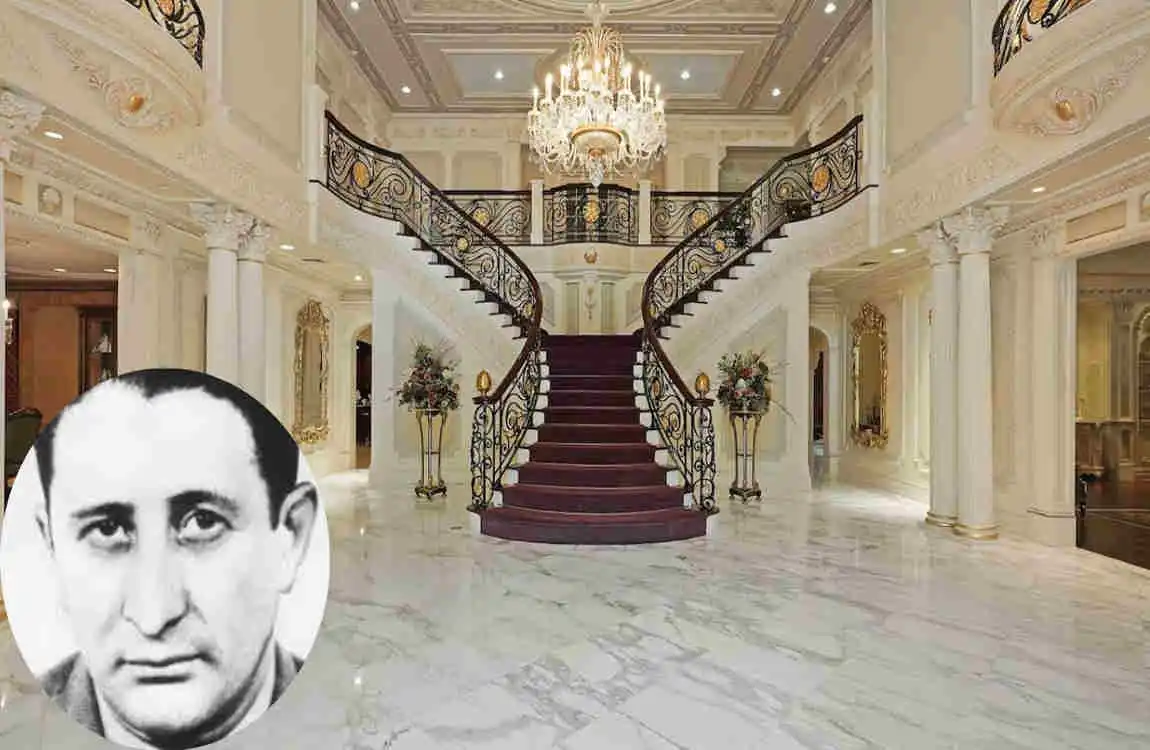
How does a man living in a modest Brooklyn house become the most powerful mobster in the United States? The story of Carlo Gambino is one of patience, cunning, and a ruthless ability to navigate the dangerous waters of the New York underworld.
From Illegal Immigrant to Boss
Carlo Gambino arrived in New York City in 1921 as an illegal immigrant, stowing away on a ship. He was already a “made man” in Sicily, and he quickly integrated into the American Mafia. He spent decades as a loyal soldier and captain, slowly building his influence while others fought and died in high-profile street wars.
The turning point came in 1957. After the high-profile assassination of Albert Anastasia in a barbershop, Gambino took over the family. He renamed it the Gambino crime family and began a reign that would last nearly twenty years. Most of this reign was conducted from the very house on Ocean Parkway.
The “Boss of Bosses” Timeline
To understand the scale of his influence during his time at the Gambino House, look at this timeline:
- 1921: Gambino arrives in NYC, bringing Sicilian traditions with him.
- 1957: Takes over the Anastasia family, marking the birth of the Gambino era.
- 1959: Secures a seat on the Commission, the governing body of the American Mafia.
- 1960s-70s: Rules as the “Boss of Bosses,” controlling labor unions, construction, and waterfronts from his Brooklyn base.
- 1964: A congressional report officially lists 2230 Ocean Parkway as his address, outing him to the public as a top mafioso.
- 1976: Carlo Gambino dies of a heart attack in his bed at this address at the age of 74.
The 1964 Outing
For a long time, Gambino managed to keep his home life separate from his public reputation. However, in 1964, a congressional report on organized crime specifically named the Gambino House at 2230 Ocean Parkway. This was a massive moment in mafia history. It showed that the government knew exactly where he lived, yet Gambino was so careful and so well-protected by his community that they struggled to bring him down.
The Mafia Legacy of the Gambino House
The Gambino House was more than just a place to sleep; it was the headquarters of a shadow government. From this address, Gambino exerted power over the Five Families of New York and criminal outfits across the country.
Stability Through Silence
One of the reasons the Gambino family became so dominant was the stability Carlo provided. By living a quiet life in a silent house, he set an example for his men. He avoided the “RICO” (Racketeer Influenced and Corrupt Organizations Act) charges that would later devastate the mob because he didn’t give the feds enough “flash” to build a case around.
He ran his operations with a corporate-like efficiency. He preferred bribes to bullets and negotiation to war. When you think of the Gambino House, you should think of it as the CEO’s office. It was where the big decisions were made—decisions that affected the price of concrete in Manhattan and the flow of goods through JFK airport.
The Succession Drama
The modern house also witnessed the beginning of the end for the family’s peak power. Because Gambino lived such a traditional life, he chose his brother-in-law, Paul Castellano, as his successor. This decision caused a rift in the family, as many felt that the “street boss” Aniello Dellacroce deserved the top spot.
This tension, which started within the walls of the Gambino House, eventually led to the 1985 assassination of Paul Castellano outside Sparks Steak House, orchestrated by John Gotti. The transition from the modest brick house on Ocean Parkway to Castellano’s “White House” on Staten Island marked a shift in the mob’s culture—a shift that ultimately led to its decline.
A Pilgrimage Site for History Buffs
Today, the Gambino House has become a sort of pilgrimage site. True crime enthusiasts, historians, and tourists often drive by to catch a glimpse of the place where the “Quiet Don” lived. It has been featured in countless books, documentaries, and podcasts about the “Goodfellas” era of the mob. It serves as a physical reminder that real power doesn’t always need to shout; sometimes, it just sits quietly on a porch in Brooklyn.
The Gambino House Today: Visiting a Piece of History
If you were to visit 2230 Ocean Parkway today, you might be surprised by how little has changed. The house remains a private residence, and the exterior looks very much like it did when Carlo Gambino walked through the front door.
Current Status and Privacy
The house is currently privately owned. There are no plaques on the wall, no museum tours inside, and no gift shops. It is a home where people live their daily lives. Because of this, it is incredibly important to be respectful if you decide to visit.
- Walkable Area: Ocean Parkway is a beautiful, tree-lined street with wide pedestrian paths. It’s a great place for a walk.
- Respect the Owners: Do not trespass or linger on the property. Remember that the current residents have nothing to do with the house’s criminal past.
- Photography: Taking a quick photo from the sidewalk is generally fine, but avoid being intrusive.
Why the Interest is Growing
Interest in the Gambino House has spiked in recent years. With the explosion of true crime podcasts and streaming documentaries, a new generation is discovering the history of the American Mafia. People are fascinated by the idea that such a powerful man lived such a normal life. It challenges our perceptions of what a “villain” looks like.
Comparing the Gambino House to Other Mob Mansions
To truly appreciate the modesty of the Gambino House, it helps to compare it to the homes of other famous mafia bosses. The way a boss chooses to live often tells you everything you need to know about their leadership style.
The “Dapper Don” vs. The “Quiet Don”
John Gotti, who eventually took over the Gambino family, lived in a gated mansion in Howard Beach, Queens. While it wasn’t a palace, it was much more “showy” than Carlo’s home. Gotti wanted people to see his wealth. Gambino wished to be invisible.
The “White House” of Staten Island
Paul Castellano, Gambino’s successor, built a massive mansion on Todt Hill in Staten Island that was nicknamed “The White House.” It featured a long winding driveway, a swimming pool, and grand columns. This house was a major reason why many of his soldiers turned against him; they felt he had become “too big” and had lost touch with the streets. Gambino never had that problem because he never left the neighborhood.
Mob Boss HomeLocationStyleWhy It Mattered
Carlo Gambino, Brooklyn, NY, Modest Brick House. Won loyalty by staying humble and avoiding envy.
John Gotti’s Howard Beach, NY, Gated Suburban Mansion reflected his “celebrity” status and love for the spotlight.
Paul Castellano, Staten Island, NY, Palatial Estate. His “White House” alienated his soldiers and led to his downfall.
Vito Genovese’s Atlantic Highlands, NJ, Waterfront Estate showed a desire for luxury and distance from the city.